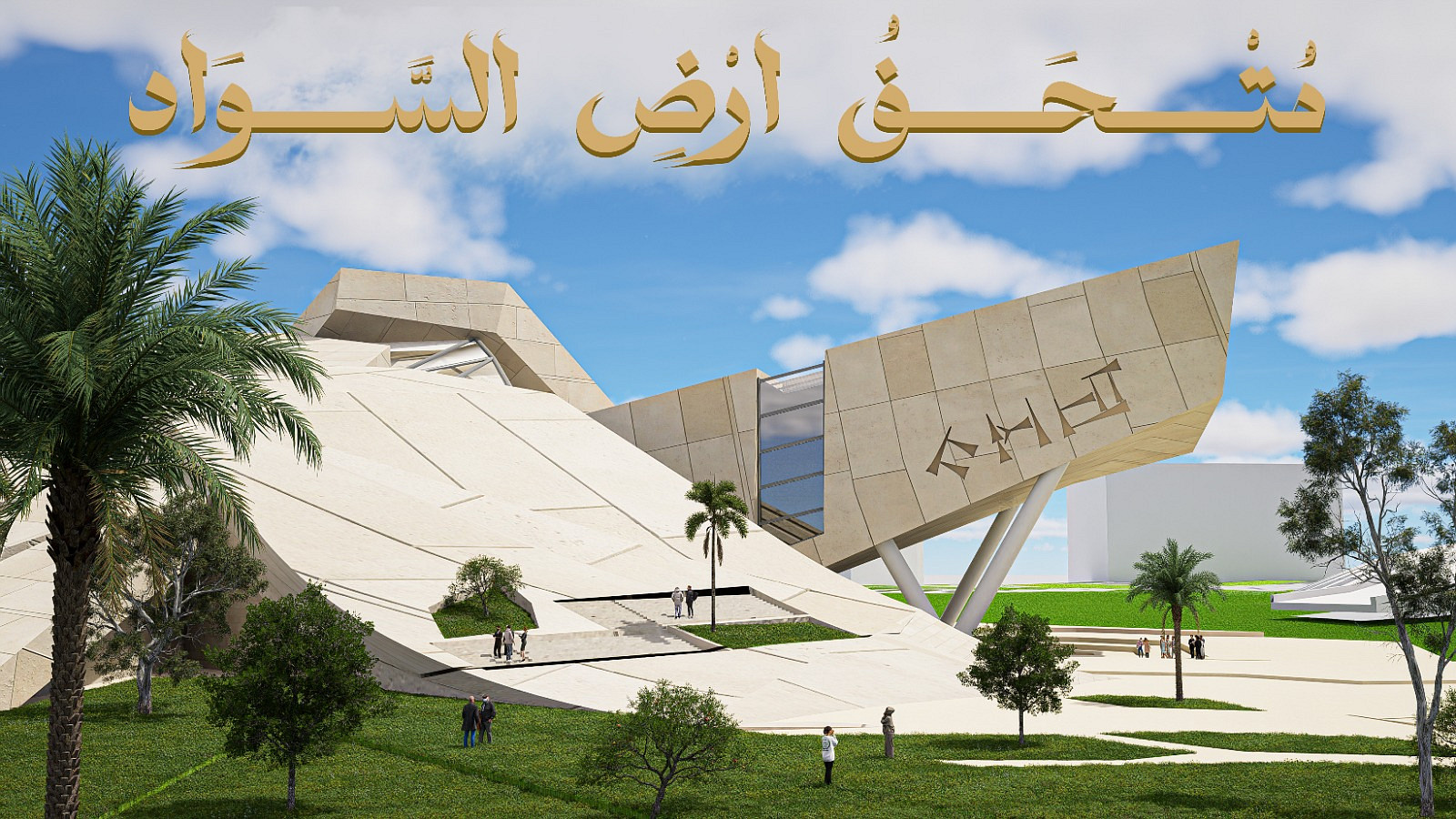
مُتْــــحَــــفُ أَرْضِ السَّــــوَاد Land of Al-Sawad Museum


Project idea
“Al-Sawad” was the historic name given to southern Mesopotamia, meaning “The Black Land.” It referred to the dark, fertile soil formed by the Tigris and Euphrates rivers, which sustained ancient Iraqi civilizations. The name symbolizes fertility, life, and the deep cultural layers of Iraq’s history, making it a powerful representation of the land that gave rise to some of the world’s earliest cities and knowledge.
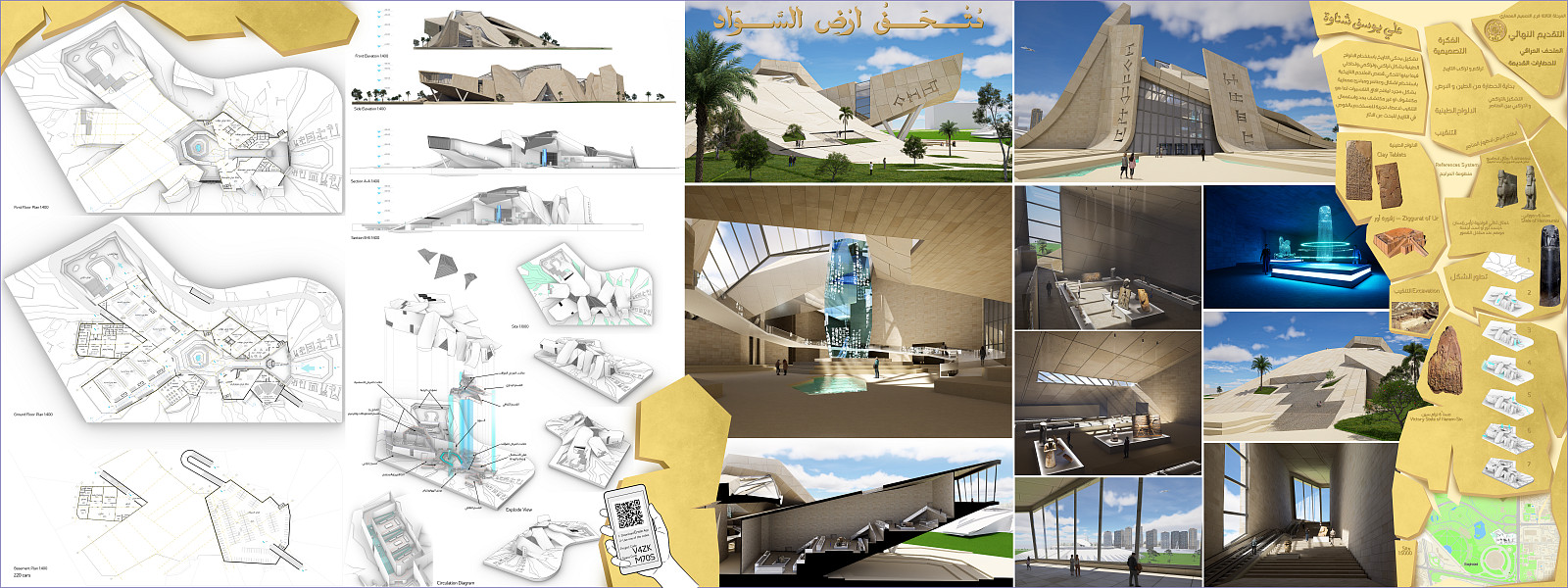
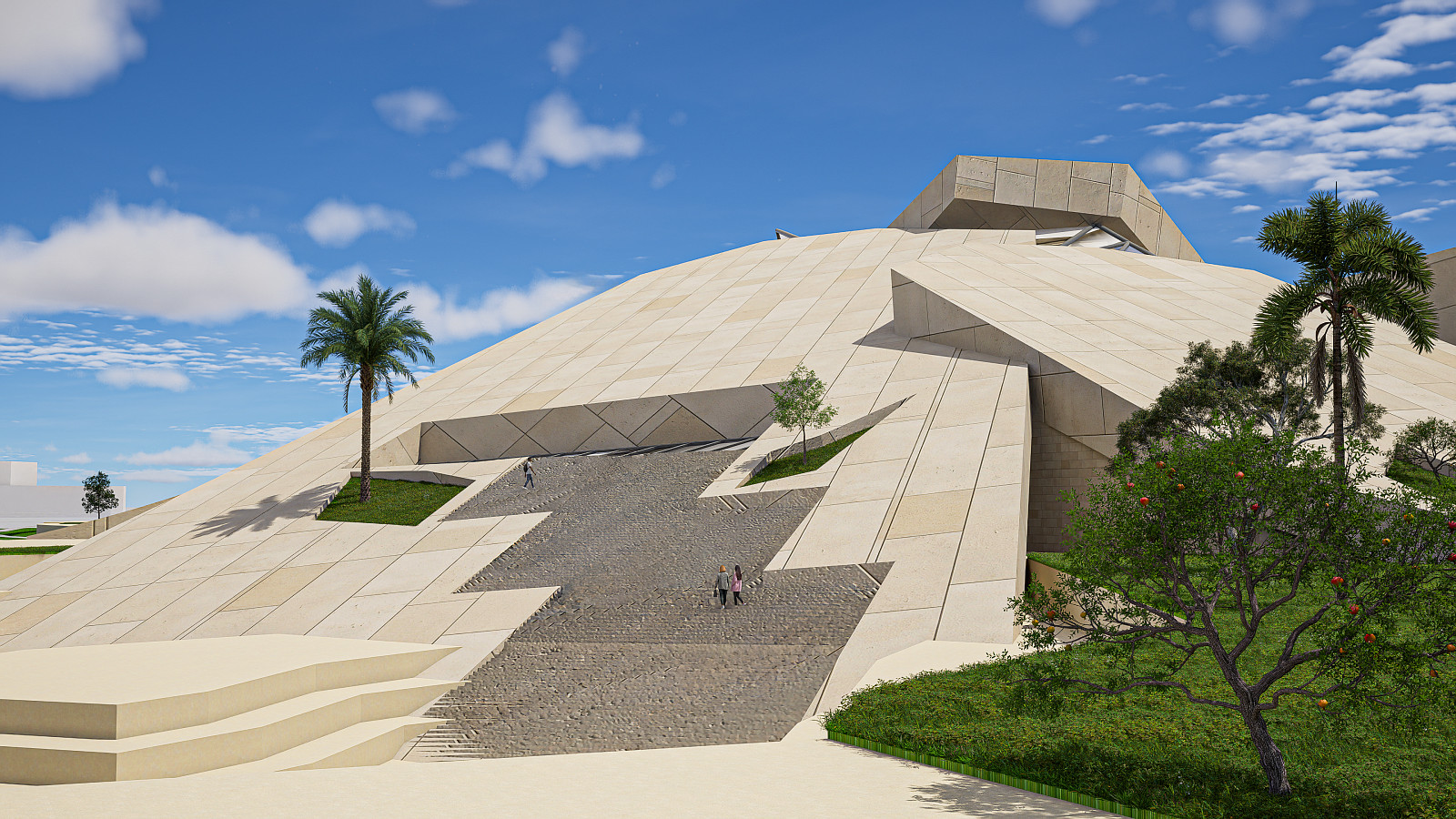
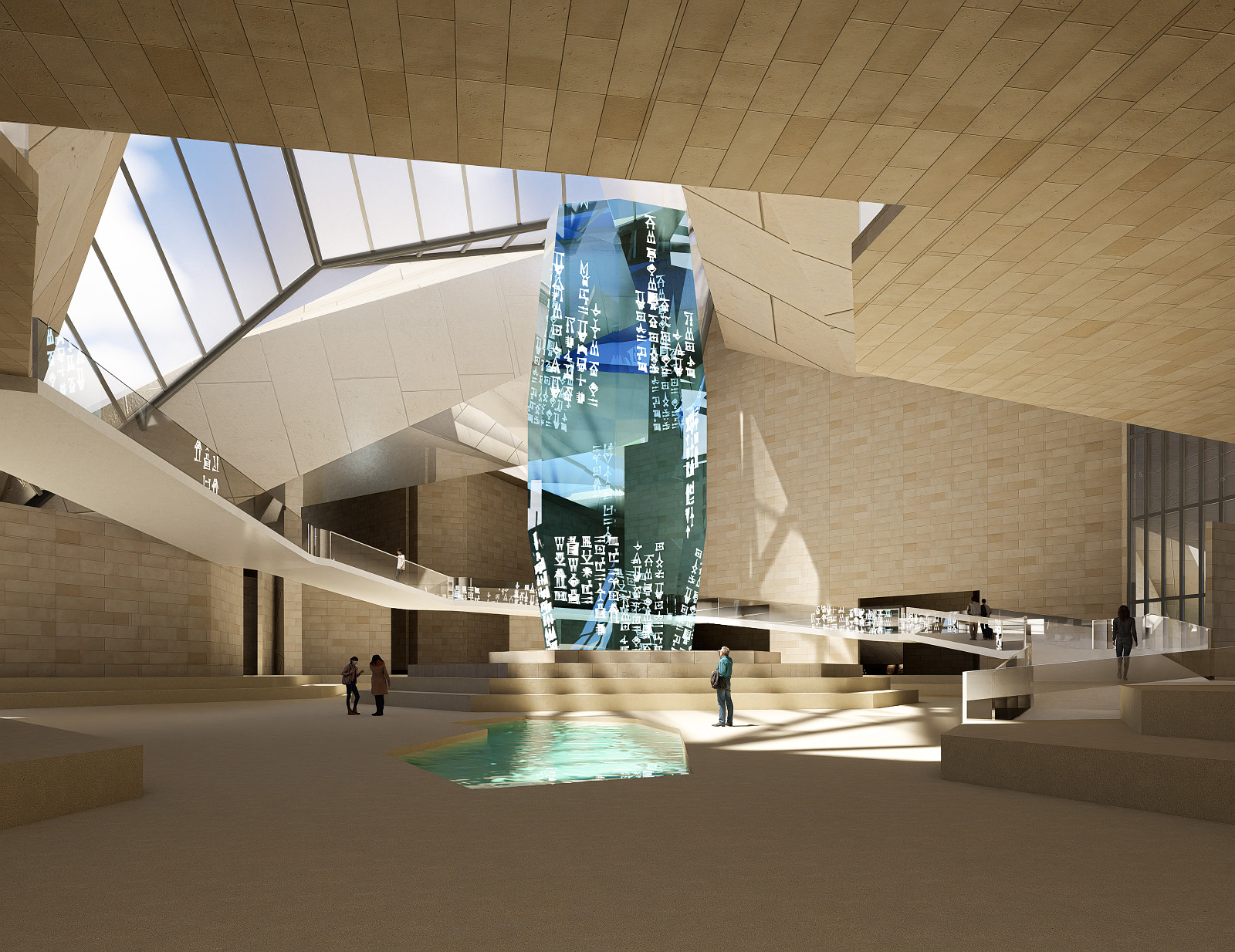
The main concept of the project originates from the idea of accumulated ancient civilizations buried beneath layers of earth, where historical memory is preserved silently in its depths over time. From this depth, an architectural eruption emerges upward, giving birth to a central, pulsating heart represented by the main atrium, where the stacked clay tablets are embodied as a symbol of early knowledge, writing, and beginnings.
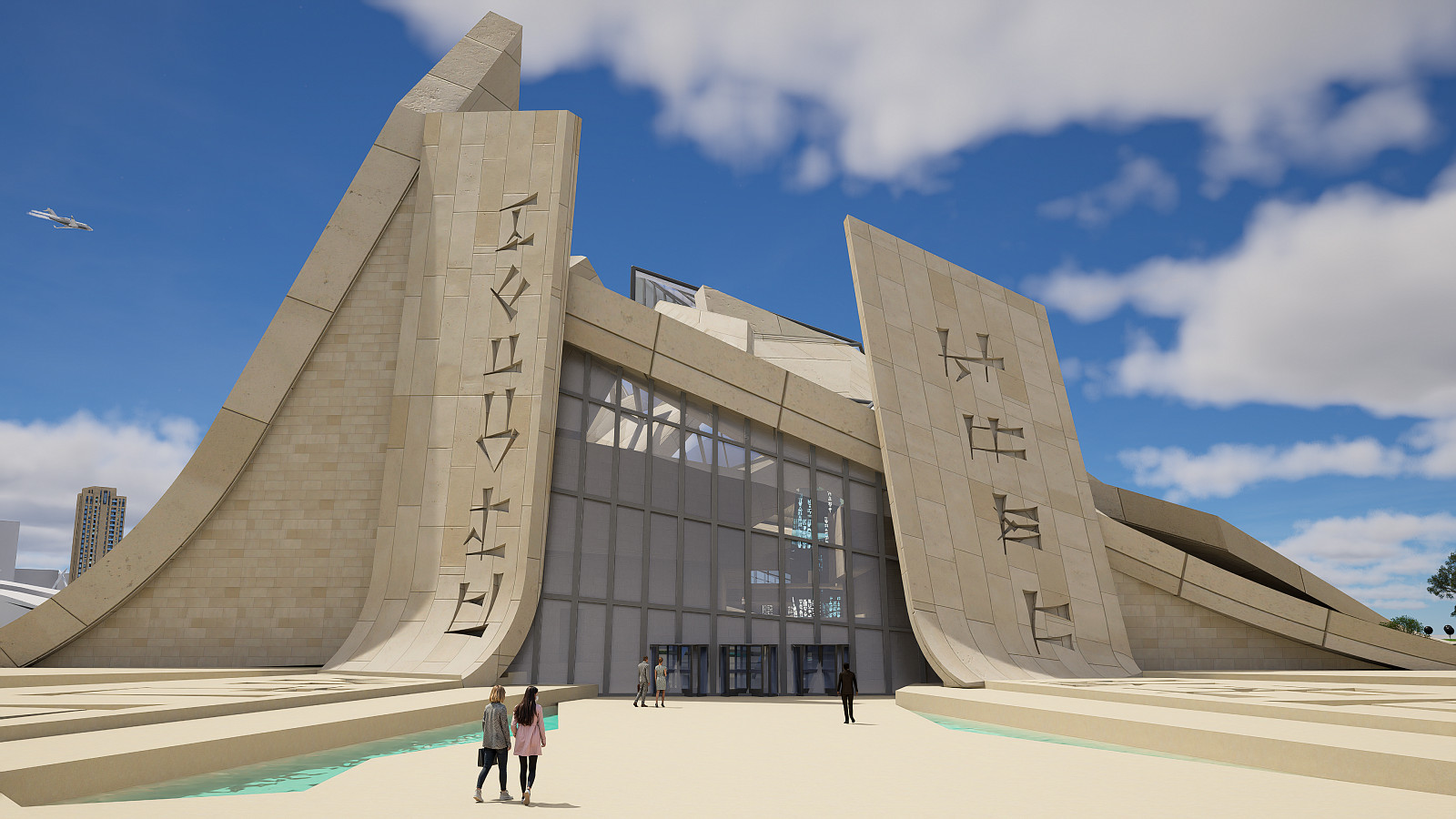
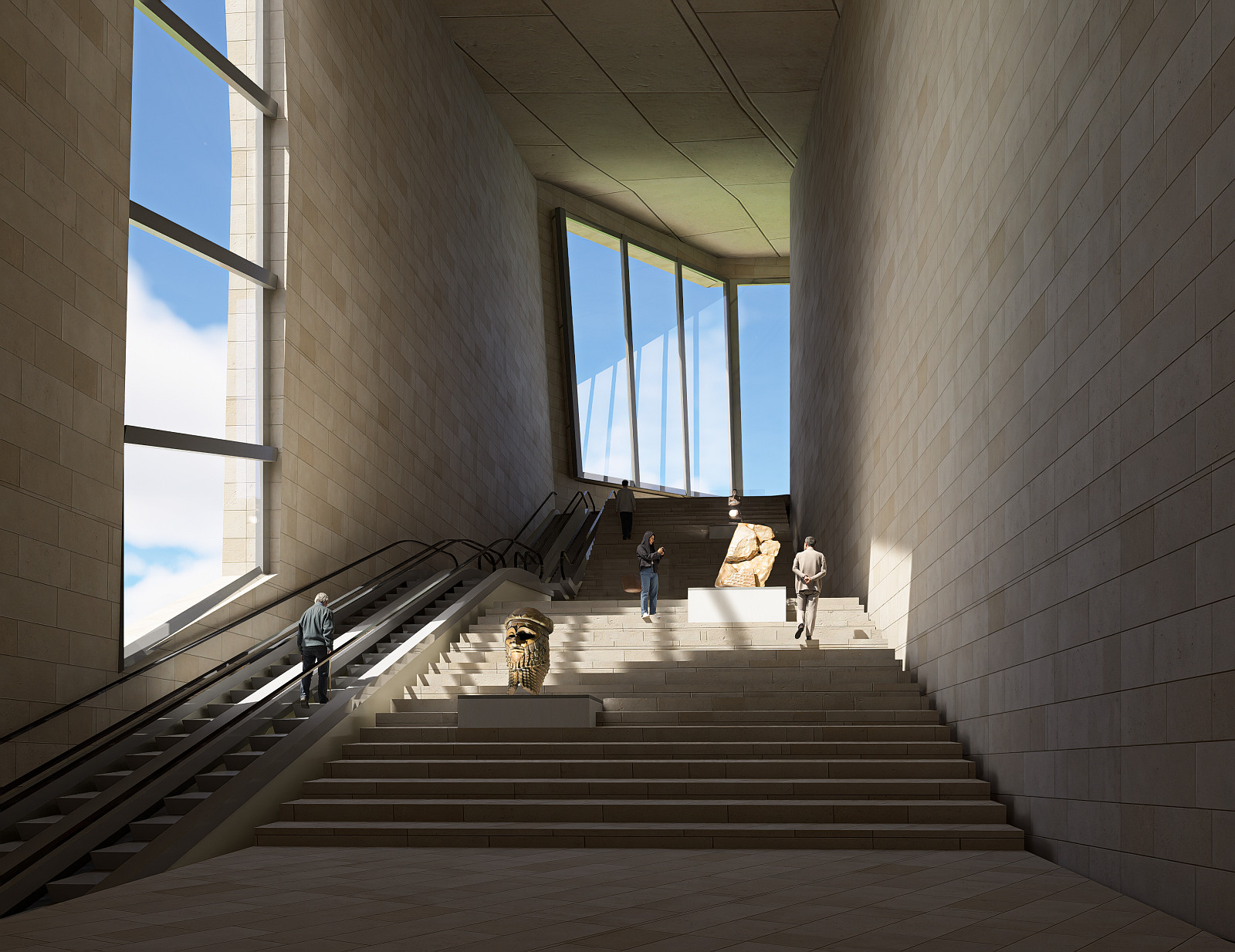
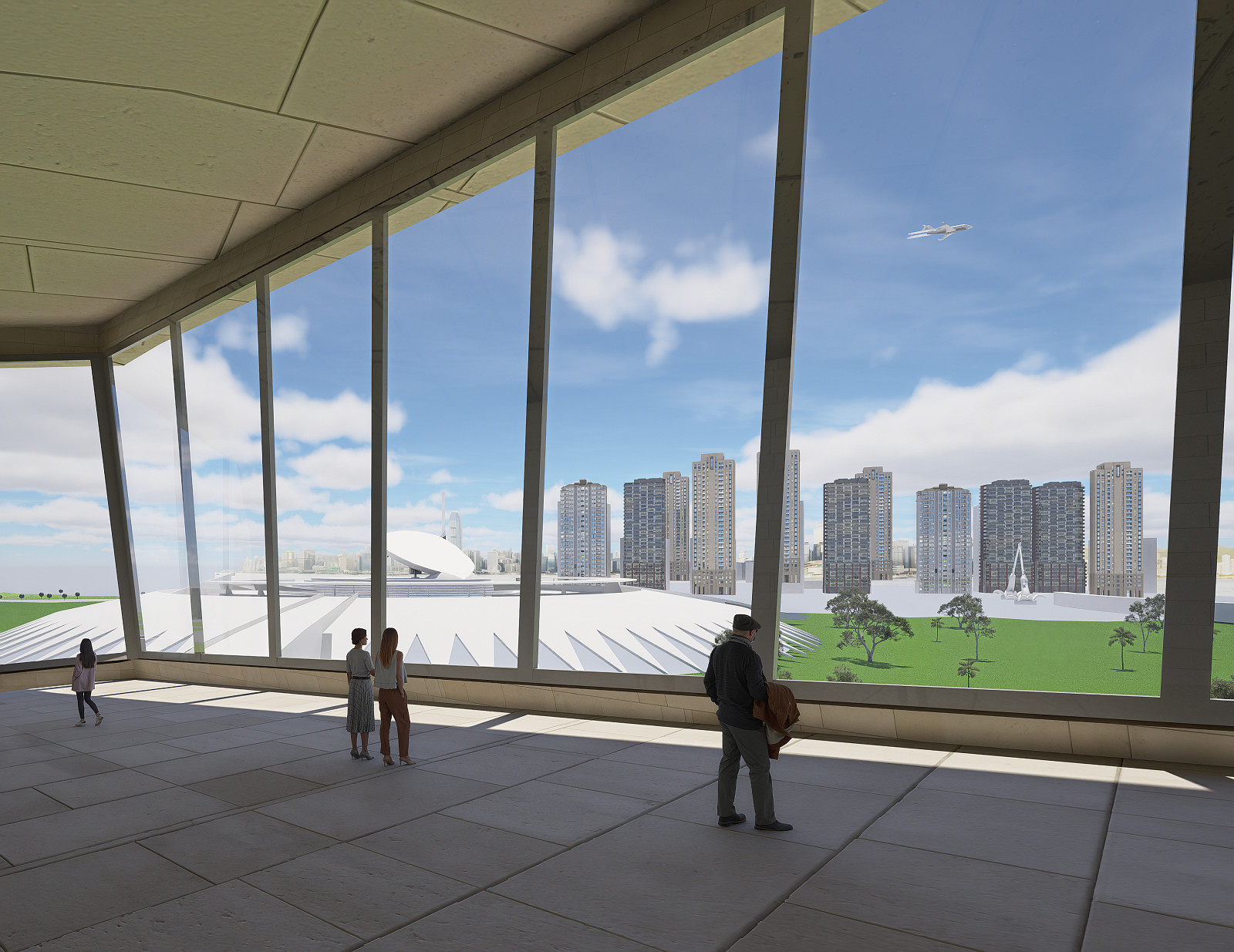
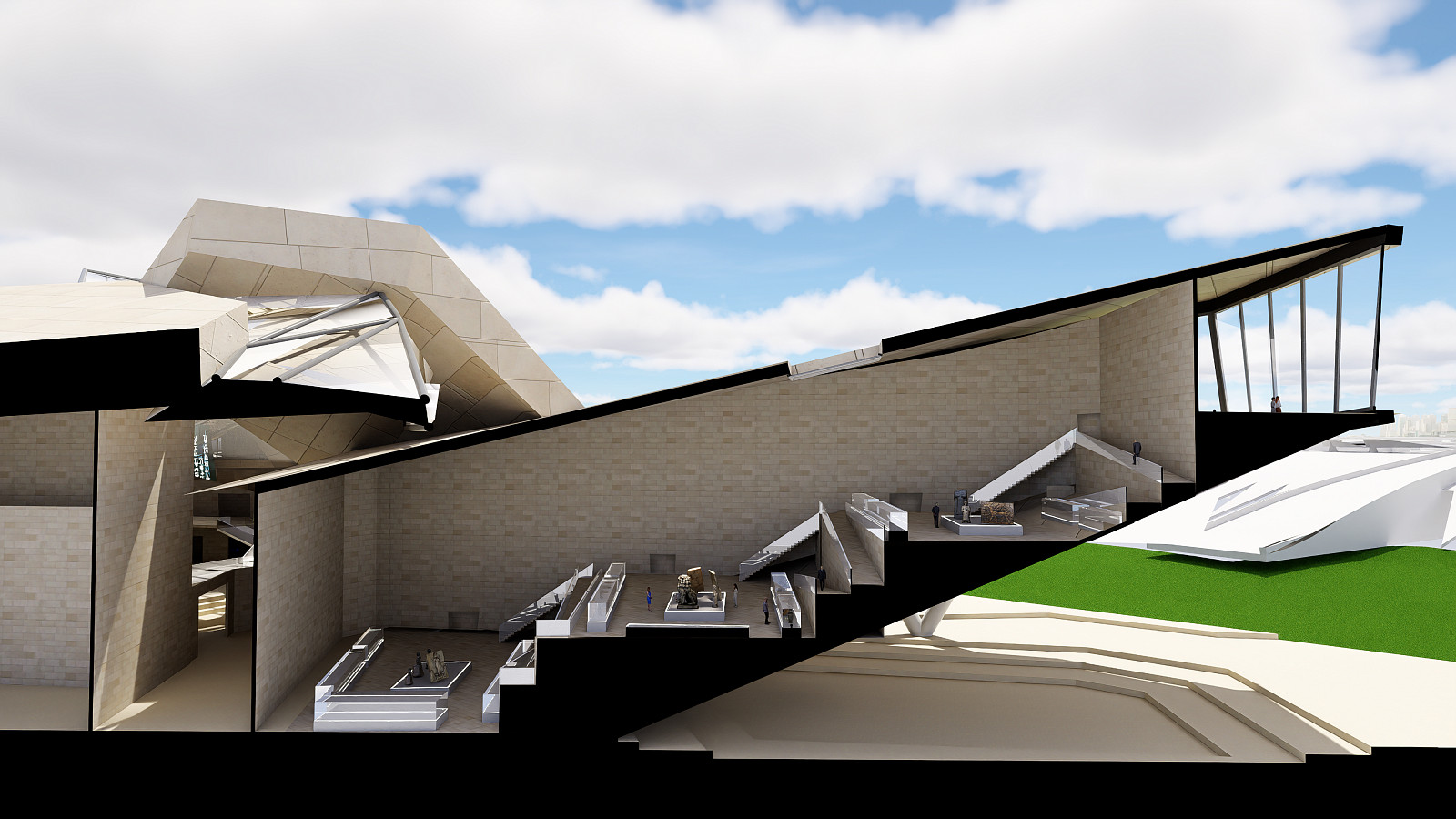
The architectural masses are formed with a clear structural challenge, engaging in a visual dialogue with the Unknown Soldier Monument to create a distinctive panoramic view that strengthens the relationship between past and present. The “Great Sumerian Stair” stands out as a central element, not only connecting levels but also distributing movement toward the main exhibition halls, inspired by the spirit of ziggurats and their symbolic ascent toward the sky.
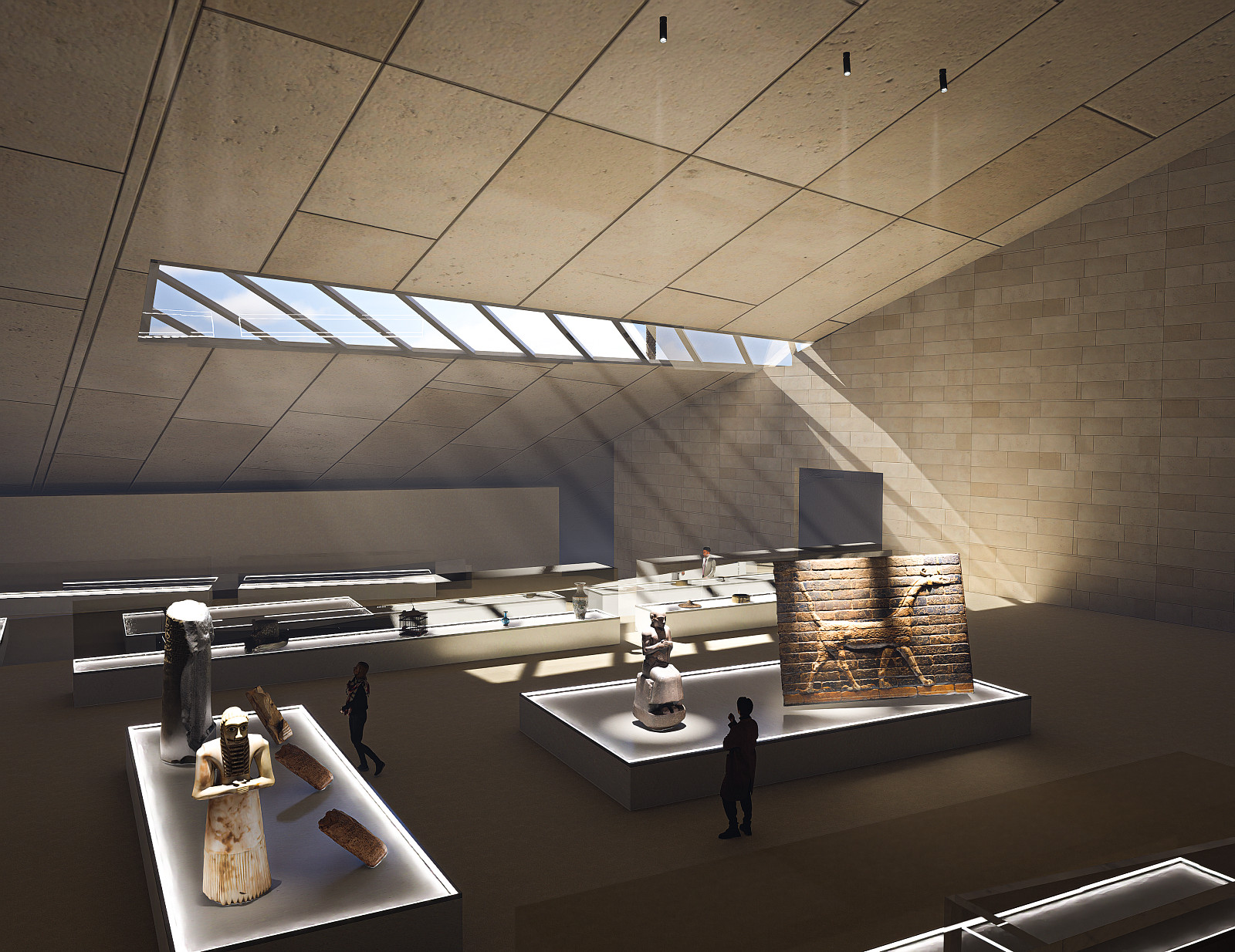
The idea of architectural excavation is further expressed through descending below ground level, creating an exploratory journey that reconnects visitors with the roots, eventually leading to the outdoor exhibitions. Here, the transition between rising and descending becomes a sensory experience that reflects the succession and accumulation of civilizations.
Ultimately, the project is not merely a building, but a moment of rebirth—where history rises from beneath the ruins and reclaims its presence, like a heart that never stops beating in the memory of the land.
Project description
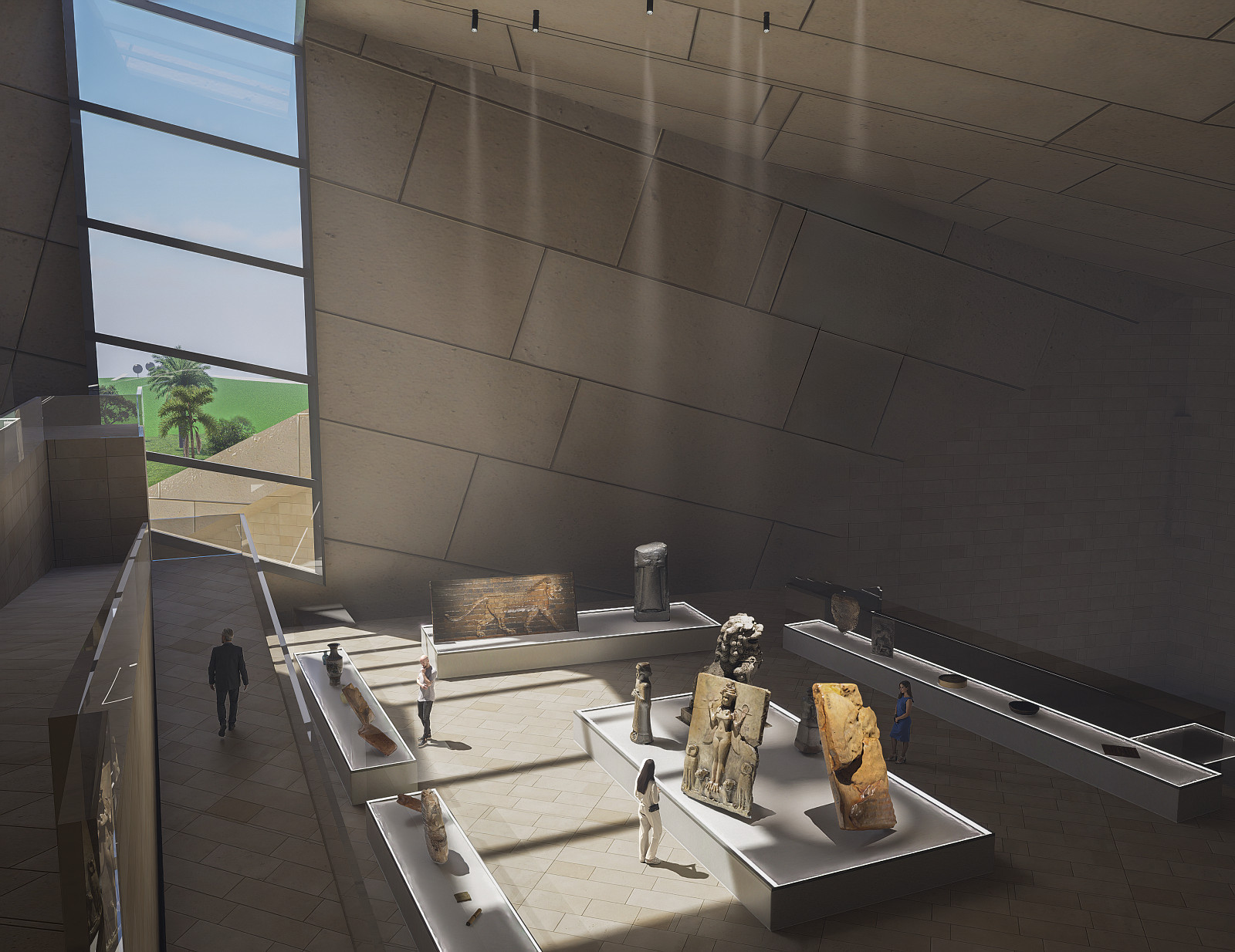
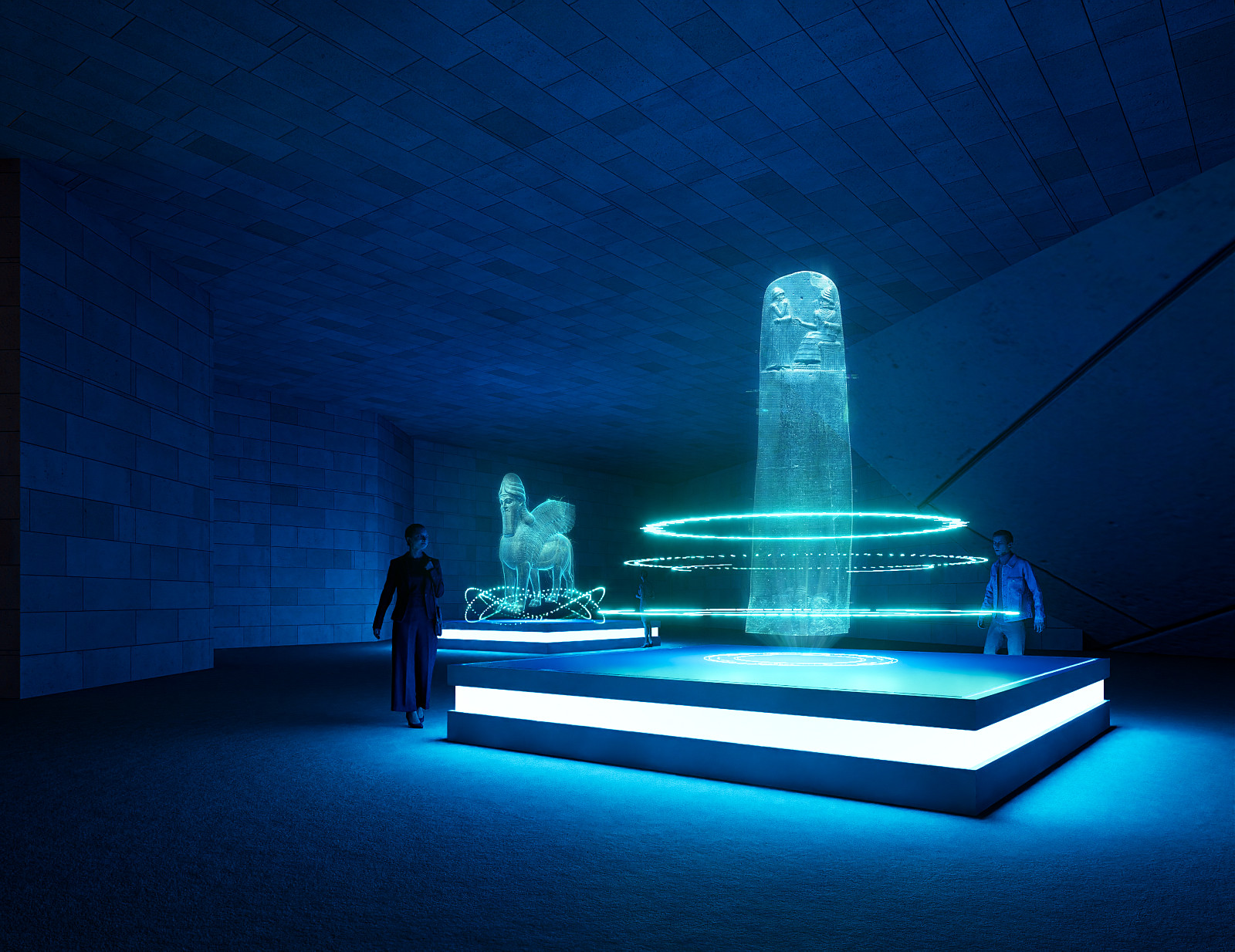
The project scope encompasses the architectural, functional, and experiential development of the Land of Al-Sawad Museum as a cultural institution dedicated to preserving, exhibiting, and celebrating the civilizations of ancient Mesopotamia. The solution includes the design of a central atrium as the symbolic heart of the project, permanent and temporary exhibition halls, circulation systems inspired by the Sumerian ascent concept, and integrated indoor and outdoor exhibition spaces.
The scope also addresses the relationship between built form and context, creating visual and spatial connections with the surrounding urban and historical landmarks. It includes vertical and subterranean spatial experiences reflecting the concept of excavation and emergence, as well as structural systems that enable expressive architectural masses.
Additionally, the project integrates visitor services such as reception areas, educational spaces, administrative zones, and public amenities, ensuring functional efficiency alongside a strong conceptual narrative. The overall solution aims to create an immersive architectural experience that embodies the continuity, depth, and rebirth of Iraq’s civilizational heritage.
If you want, I can also shorten it further for a presentation board or expand it for a full architectural report.
Technical information
The project is designed as a multi-level museum with underground, ground, and elevated spaces organized around a central atrium that serves as the main circulation and visual core. The structural system uses reinforced concrete to support large spans and cantilevered masses, ensuring stability and open exhibition areas.
The building materials include architectural concrete, stone, and glass, combining durability with controlled natural lighting. Environmental systems such as HVAC, insulation, and shading maintain suitable conditions for artifact preservation and visitor comfort.
The project includes essential building services such as electrical, mechanical, fire safety, and vertical transportation systems. Functional spaces include exhibition halls, reception areas, administrative zones, and visitor facilities, with full accessibility and safety measures integrated into the design.

Copyright © 2026 INSPIRELI | All rights reserved. Use of this website signifies your agreement to the Terms of Use, Privacy Policy, and use of cookies.