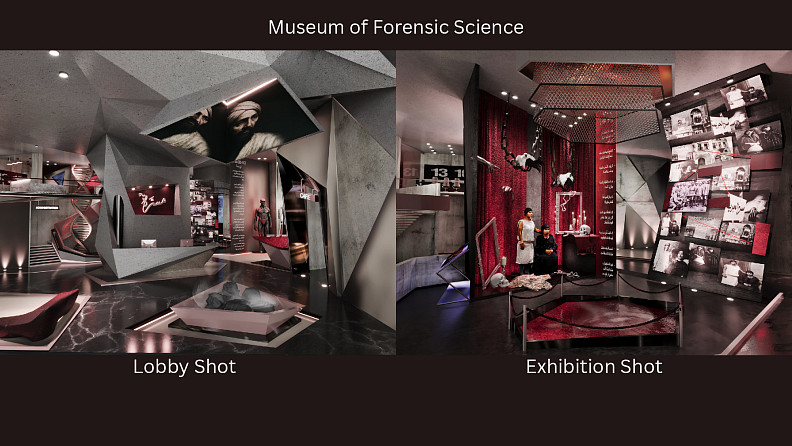
Museum of Forensic Science


Project idea
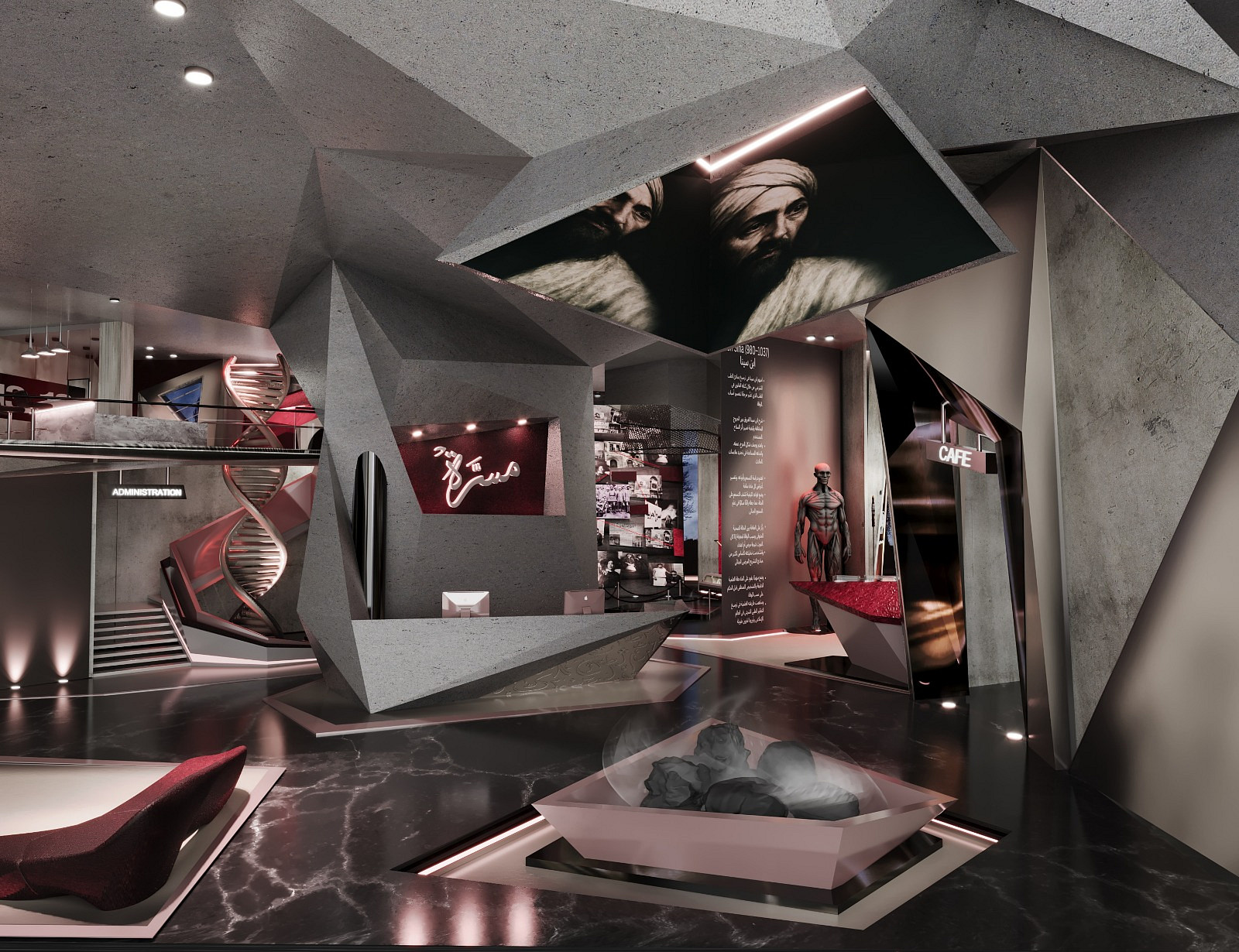
The interior design follows a chronological immersive path, transitioning from warm, stone-textured galleries reflecting Ibn Sina’s era to sleek, glass-and-steel corridors representing the scientific shift to Europe. Minimalist white surfaces and integrated digital displays define the modern zones, using blue ambient lighting to symbolize DNA and digital forensics. By evolving materials from organic wood to industrial metals, the architecture physically mirrors the transition from ancient medicine to modern justice. The final gallery uses a reflective, open layout to facilitate a modern academic atmosphere focused on contemporary behavioral analysis.
Project description
Main area is an area of Historical Egyptian Criminals and their crimes.
Technical information
The museum’s construction features a High-Strength Reinforced Concrete and Exposed Steel skeleton, utilizing jagged, deconstructed geometries to symbolize the fragmented nature of criminal evidence. Slanted load-bearing partitions and cantilevered slabs create a non-linear path, forcing visitors to navigate the space like an investigator piecing together a complex case. The material palette transitions from Rough-Cast Concrete to Diamond-Polished surfaces, reflecting the evolution from ancient medicine to the clinical precision of modern justice.
Documentation

Copyright © 2026 INSPIRELI | All rights reserved. Use of this website signifies your agreement to the Terms of Use, Privacy Policy, and use of cookies.