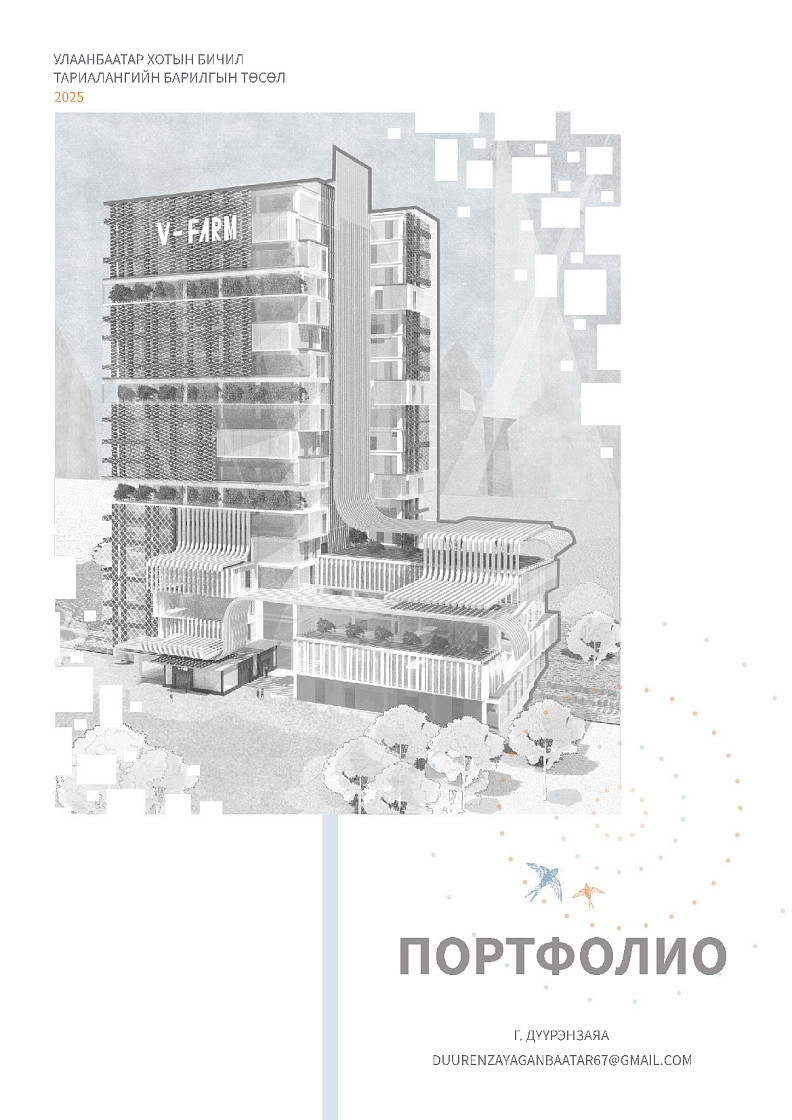
V FARM


Project idea
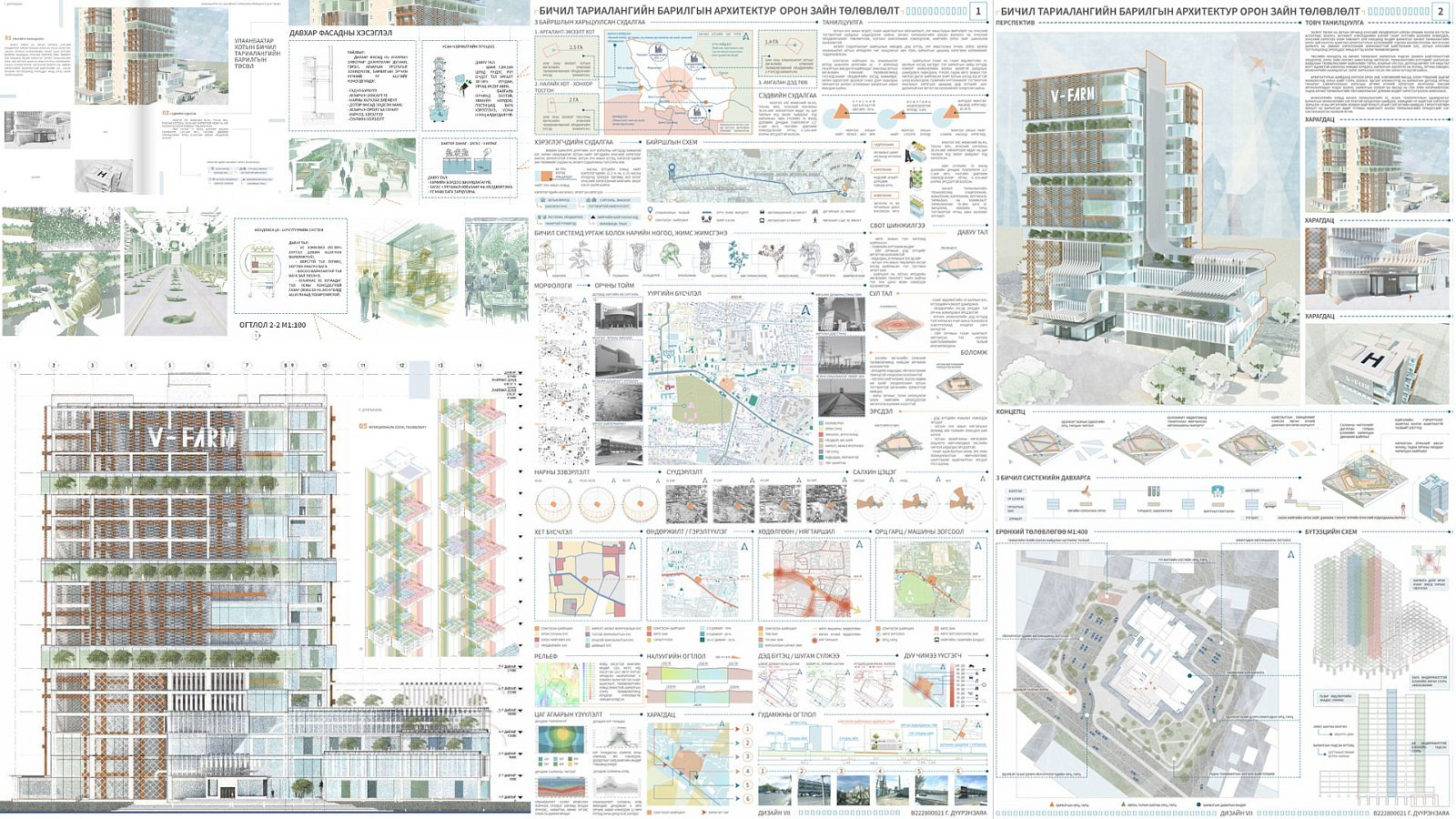
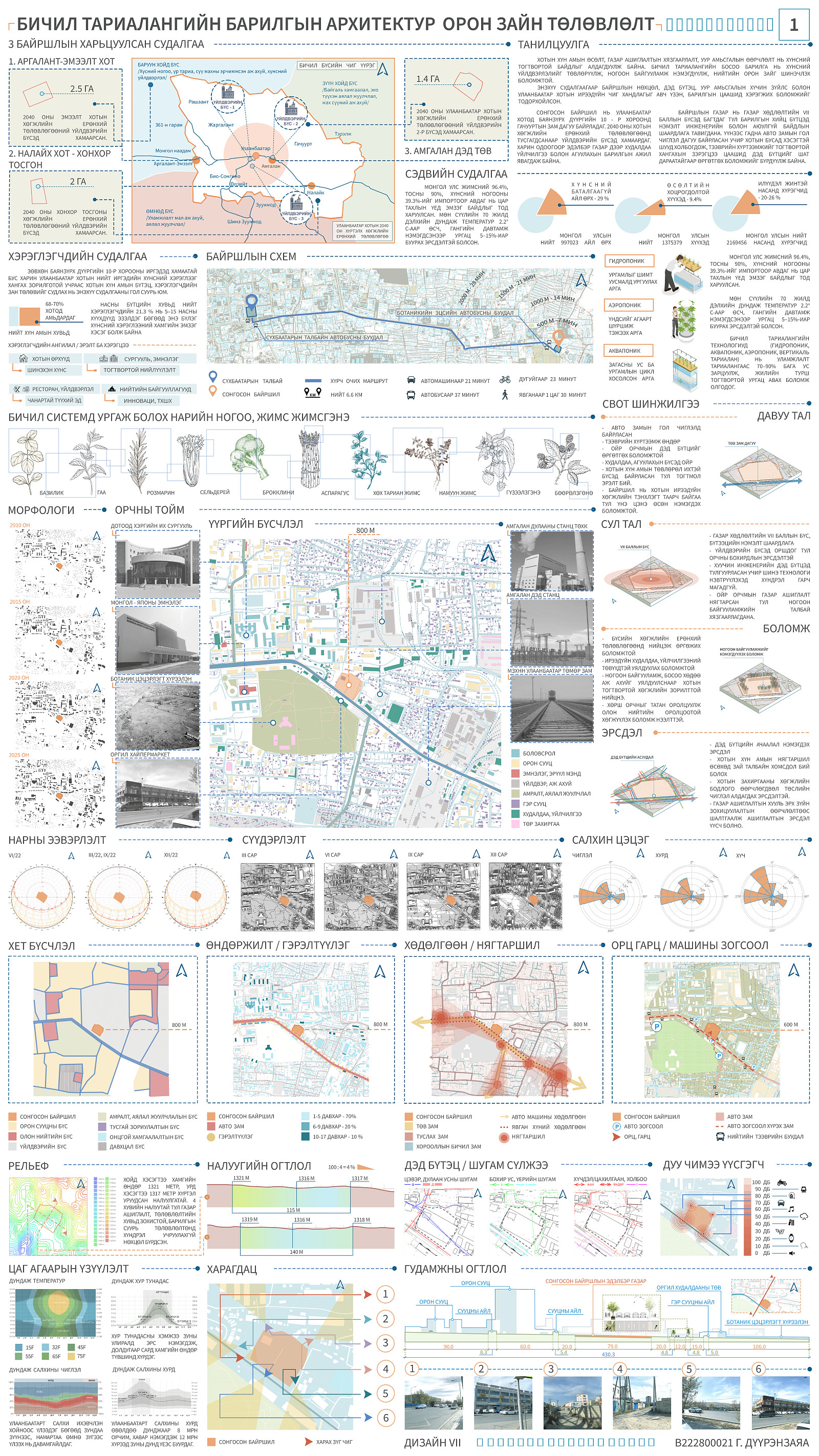
The project proposes a climate-responsive vertical micro-agriculture tower designed for Mongolia’s extreme continental climate. The primary objective is to ensure year-round food production within an urban high-density environment.
Given Mongolia’s long, severe winters (below −40°C), strong seasonal winds, and short summers with high solar radiation, the building operates as a controlled agricultural infrastructure. The concept integrates food production, research, and public education into a single vertical system that increases urban resilience and reduces dependence on imported produce.
The architecture functions as both a building and an environmental system adapted to four distinct seasons.
Project description
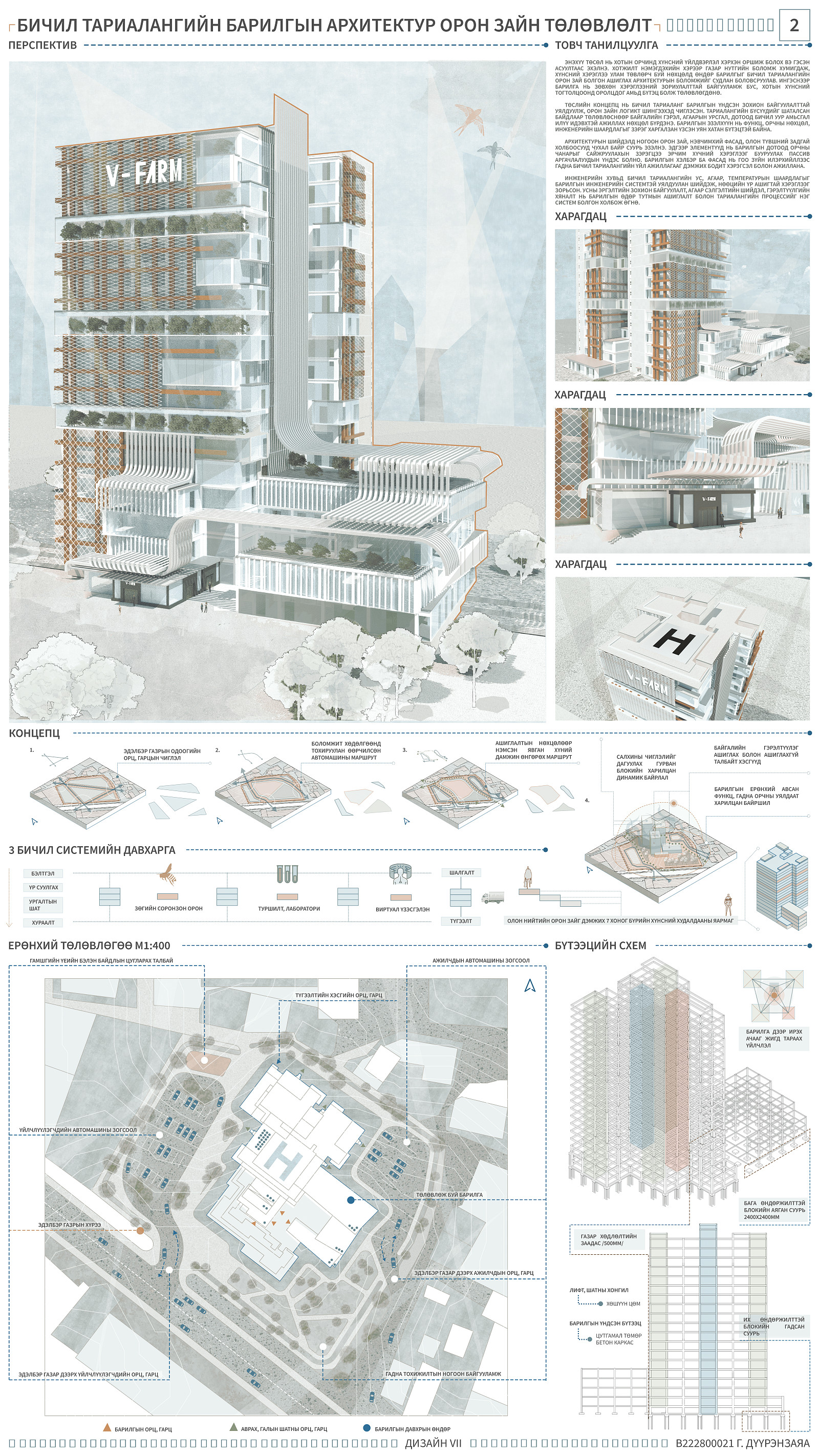
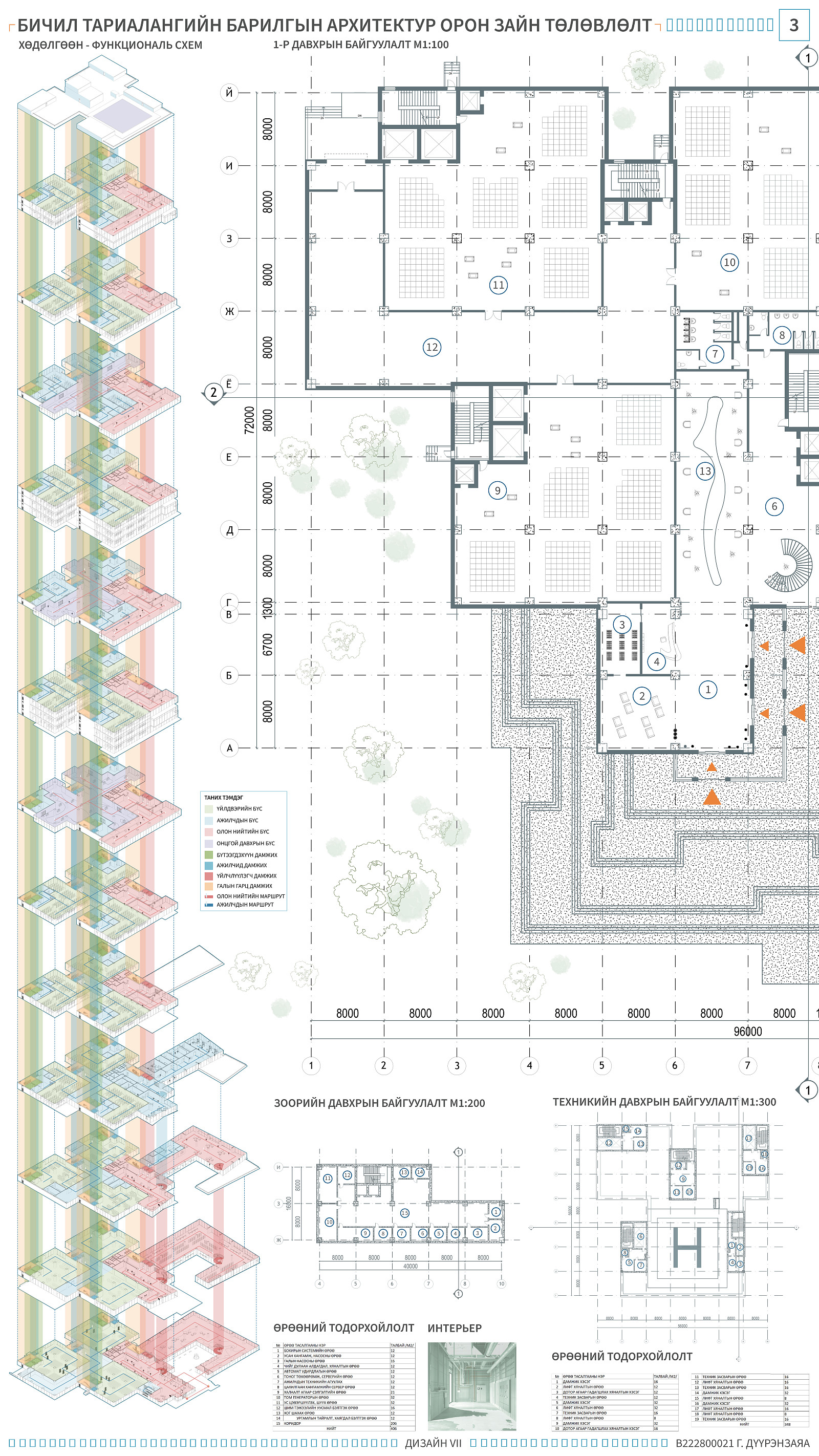
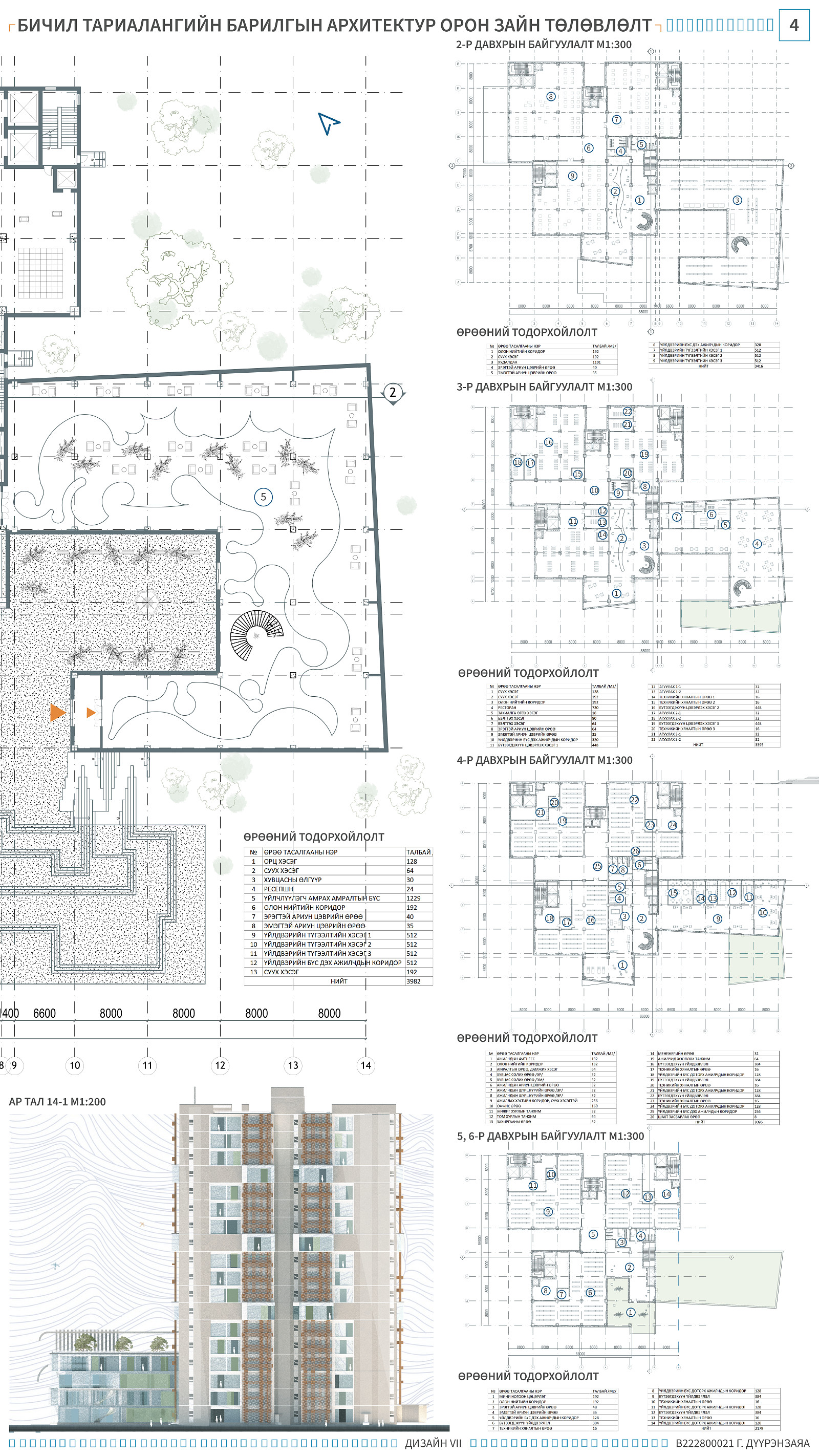
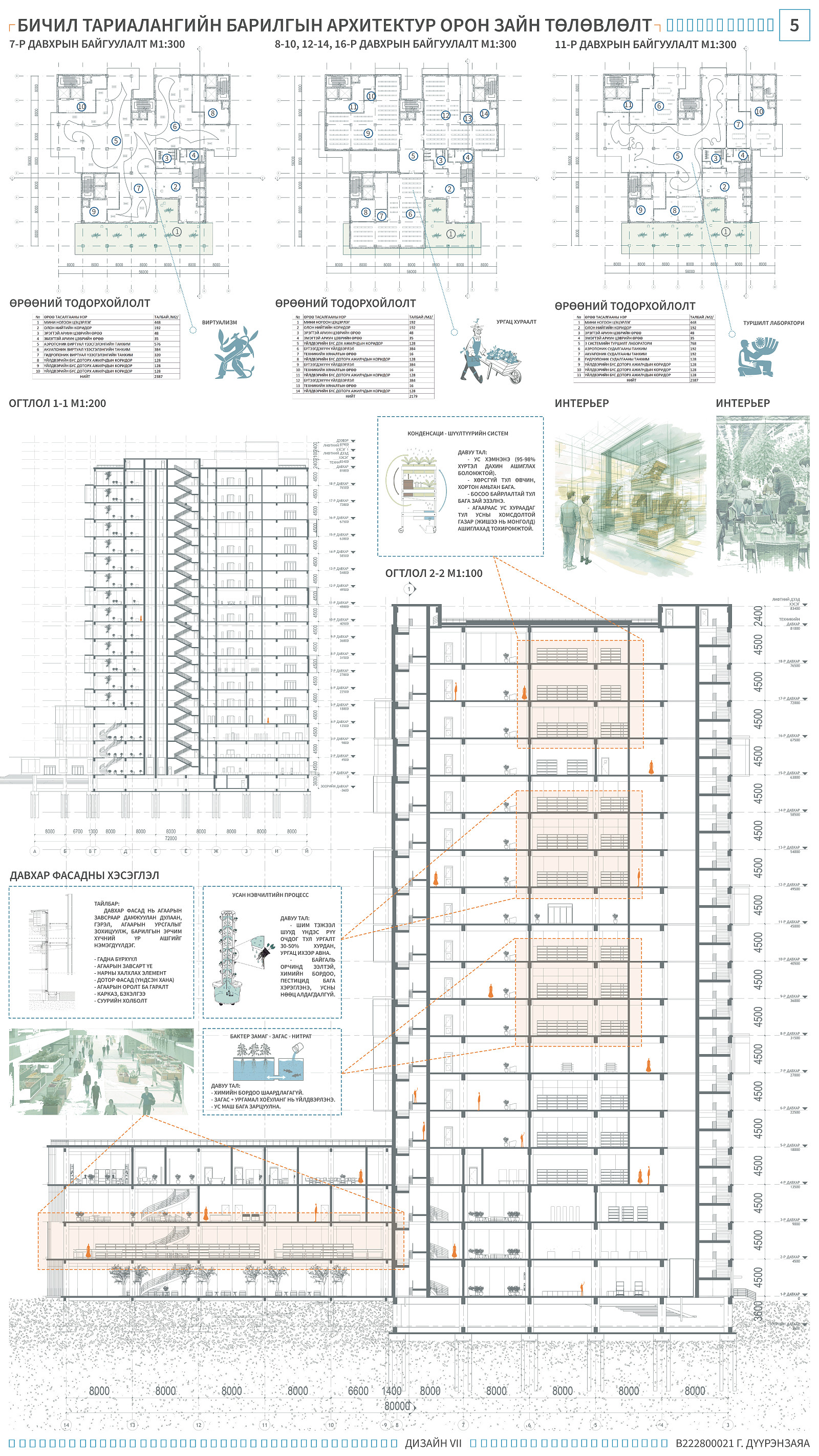
The tower is organized vertically with clear functional zoning. The lower floors accommodate public programs, including exhibition areas and educational spaces related to urban agriculture. Middle floors are dedicated to modular vertical farming systems. Upper levels contain research facilities and environmental control infrastructure.
The architectural solution responds directly to Mongolia’s climate. A high-performance insulated envelope minimizes heat loss during winter. Solar orientation is optimized to maximize passive heat gain. In summer, external shading devices and controlled ventilation strategies prevent overheating.
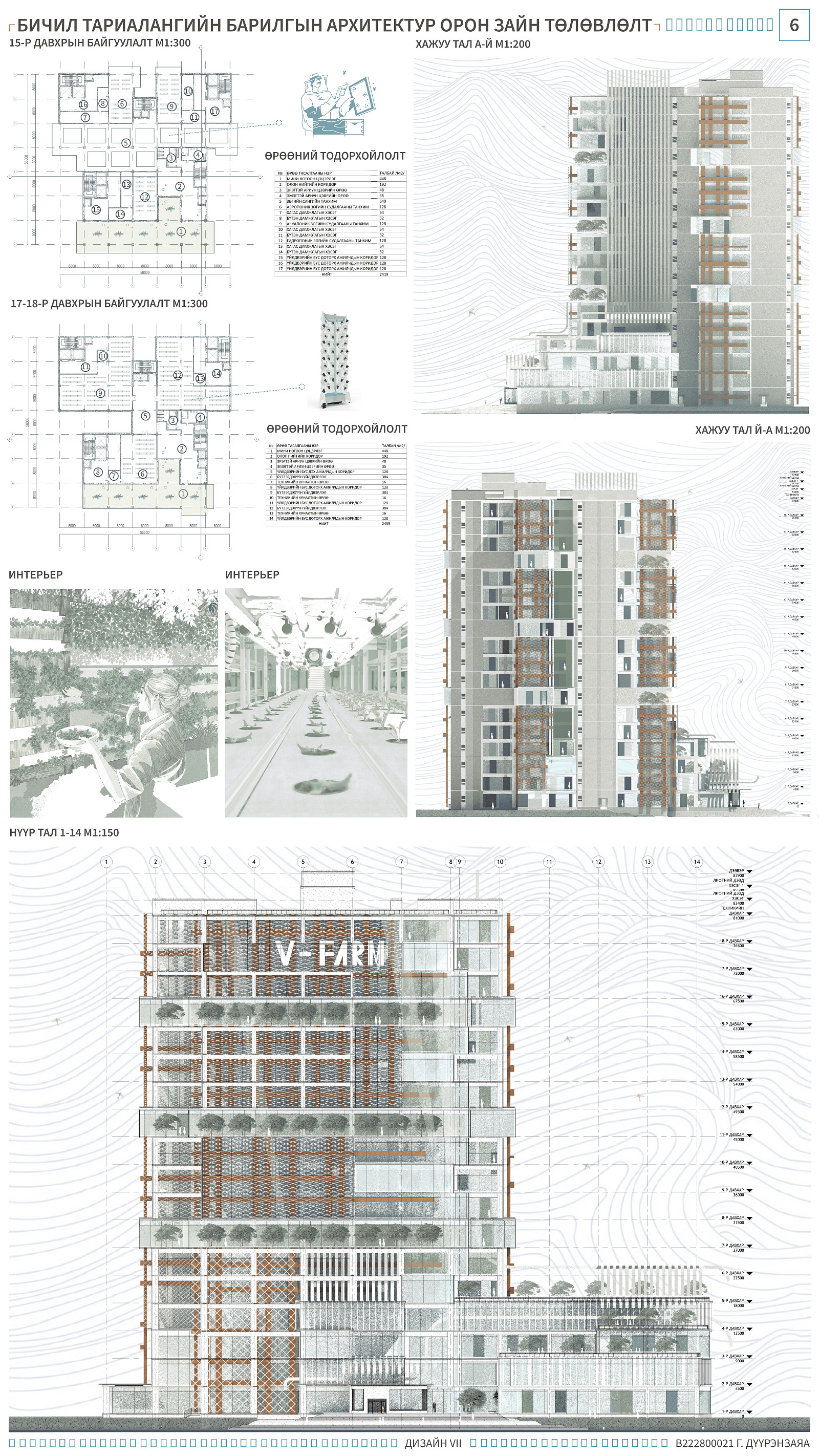
A double-skin facade system improves thermal performance and protects the structure from strong winds. The building ensures stable indoor growing conditions throughout all four seasons, enabling continuous agricultural production regardless of external temperature fluctuations.
The form expresses structural clarity and environmental efficiency, reflecting resilience within a harsh climatic context.
Technical information
The tower is built around a reinforced concrete core with a steel structural frame, featuring modular floor plates designed for flexible agricultural and public uses. Its double-glass facade is integrated with shading and environmental control systems, optimizing natural light, regulating the indoor climate, enhancing resource efficiency, and embedding ecological systems within the urban environment.
Design tools: Autodesk Revit, Sketchup + Vray, architectural visualization software
Project status: Conceptual academic project
Documentation


Copyright © 2026 INSPIRELI | All rights reserved. Use of this website signifies your agreement to the Terms of Use, Privacy Policy, and use of cookies.