The Psycho-Sensory Home


Project idea
How might residential architecture, informed by environmental psychology and sensory design, support multi-generational families in their collective wellbeing while adapting to evolving individual needs?
The project begins from the premise that sensory needs are not universal or static. They shift across age, health, occupation, and life stage. Yet contemporary suburban housing remains spatially rigid and sensorially neutral.
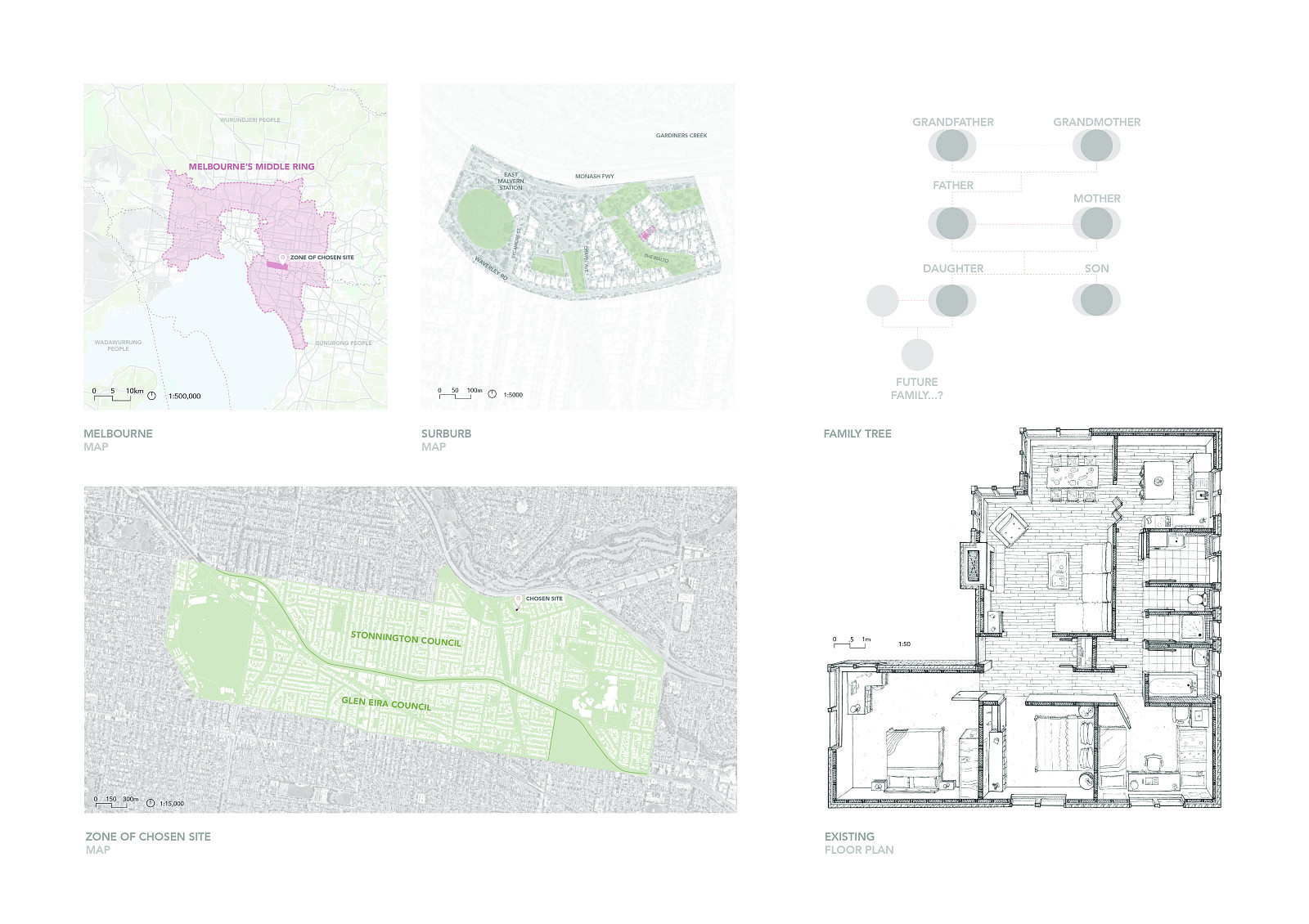
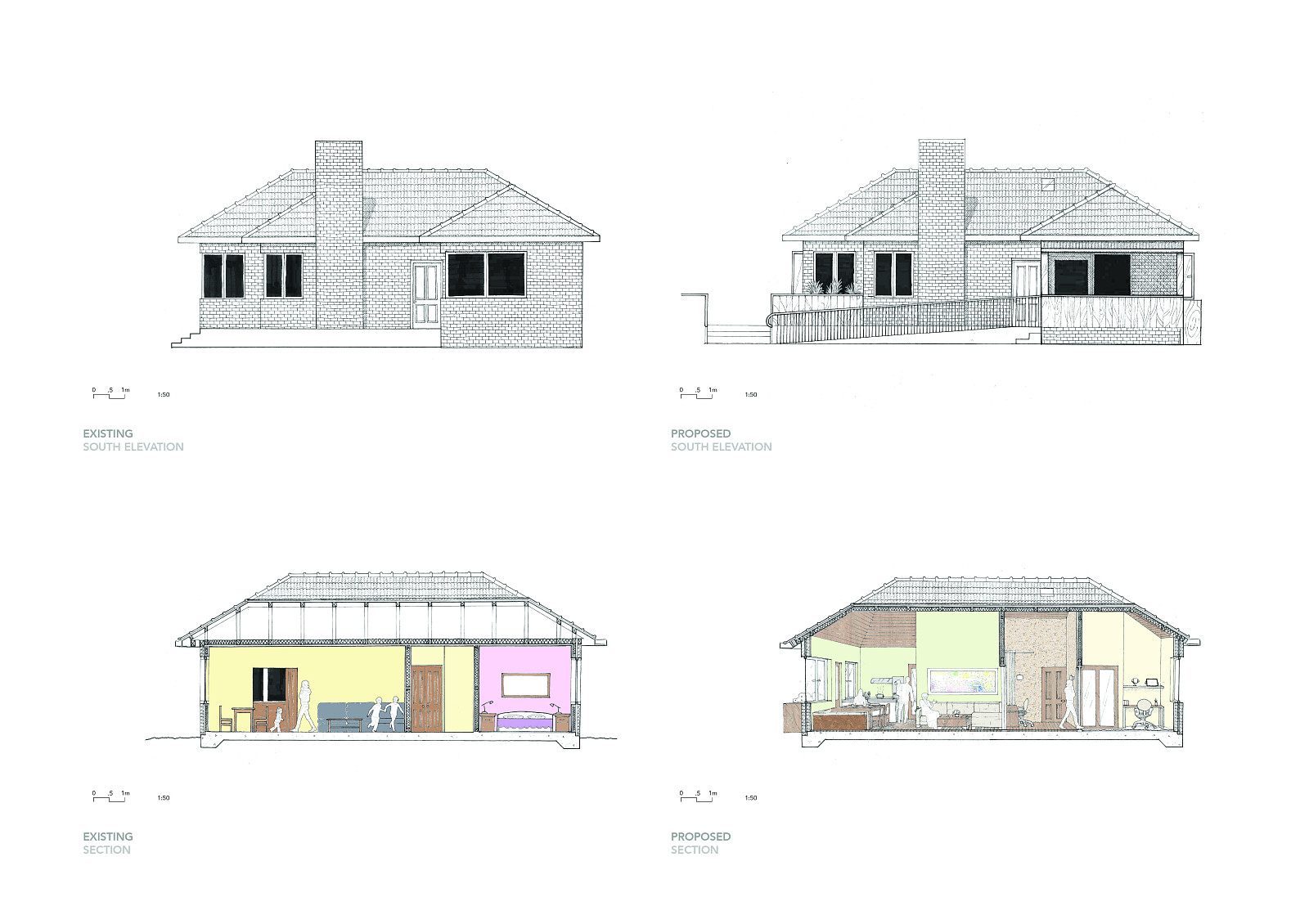
Using a typical post-war brick veneer dwelling in Melbourne’s middle ring as a test site, the thesis reimagines the suburban house as a living architectural organism, one capable of adapting, layering, and regenerating over time. Rather than replacing the existing fabric, the project works within it, positioning retrofit as a resource-conscious and socially durable strategy for sustaining intergenerational living.
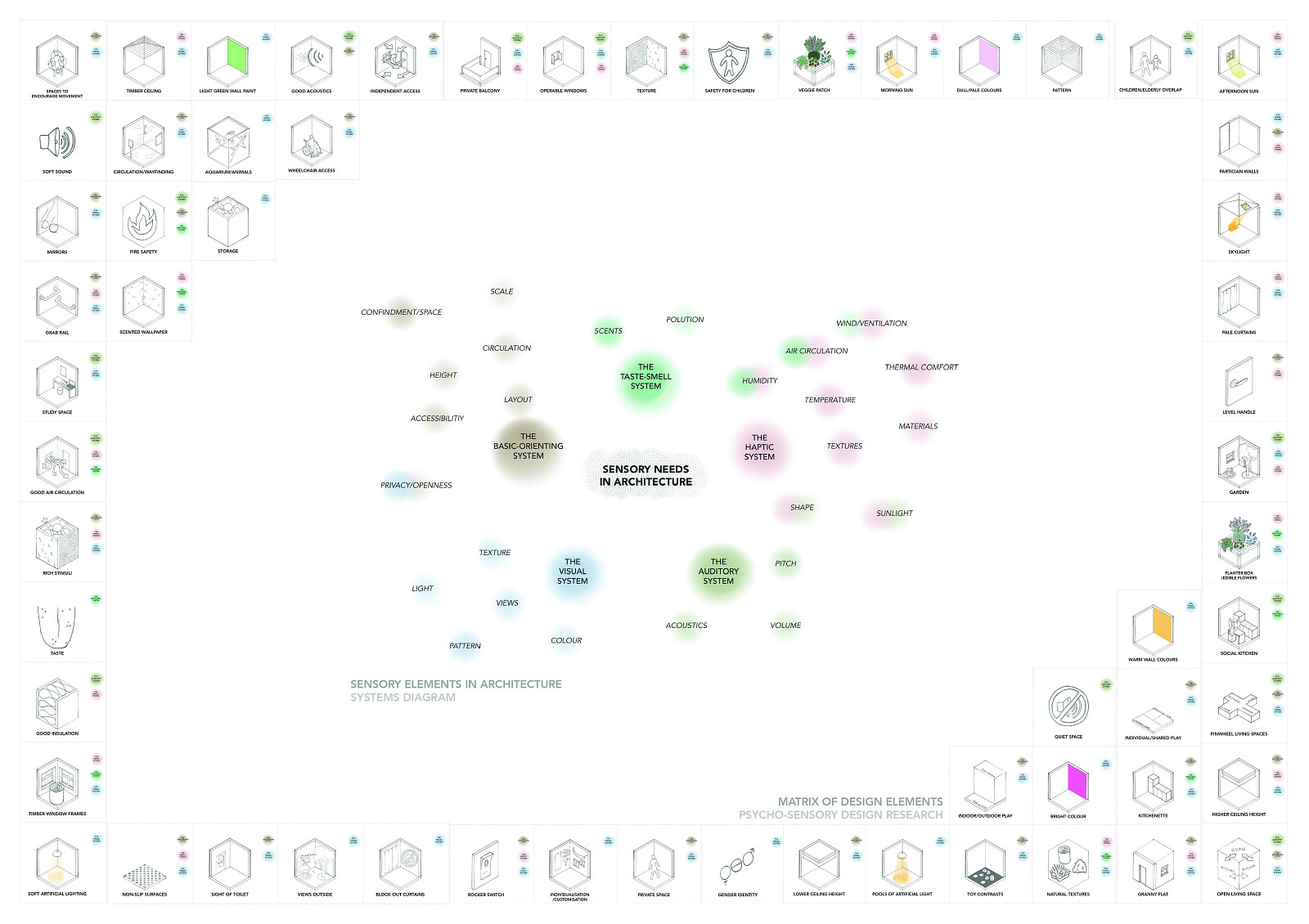
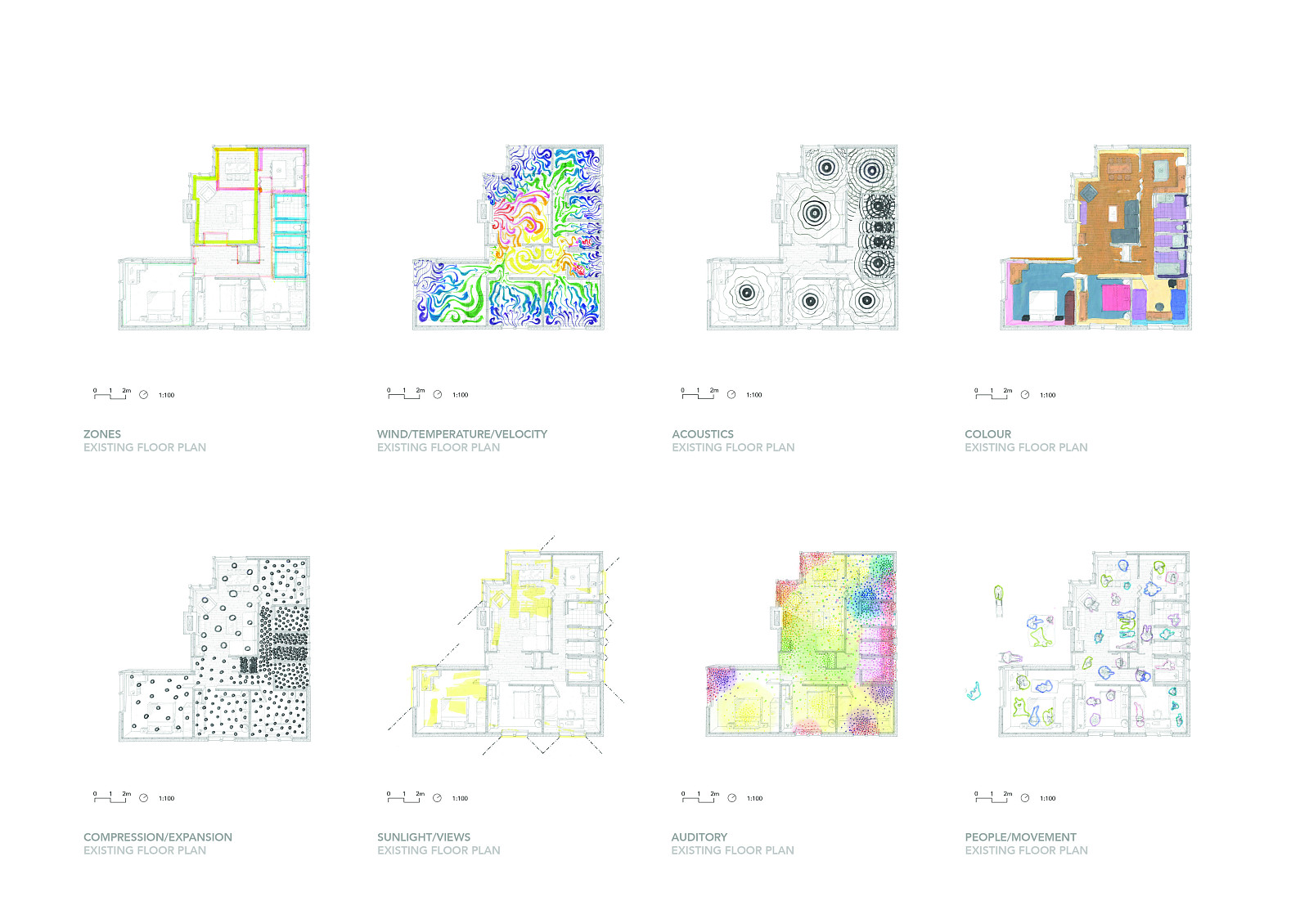
Grounded in research, the project identifies over sixty architectural elements aligned with the five sensory systems: sight, sound, touch, smell, and proprioception. These elements form a matrix that translates environmental psychology into spatial tactics. The house becomes not a fixed object, but a responsive system calibrated to support comfort, autonomy, retreat, gathering, and care.
The project ultimately expands the scope of universal design beyond compliance, redefining the architect’s role as both spatial strategist and caretaker of the everyday home.
Project description
The project operates through a layered intervention strategy across multiple scales.
At the urban scale, it retains and upgrades an existing suburban dwelling rather than demolishing it, acknowledging both environmental responsibility and the social memory embedded in the suburban fabric.
At the architectural scale, it introduces three key modes of intervention:
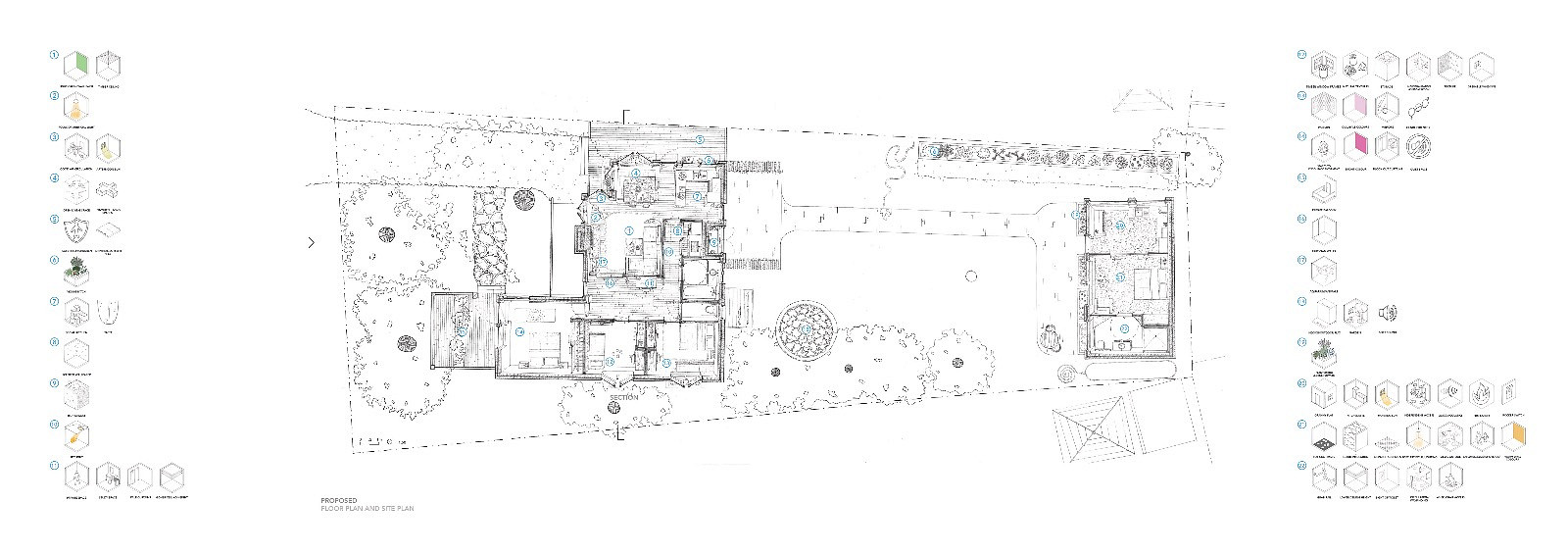
Precise sensory insertions: calibrated adjustments to light quality, material tactility, acoustic absorption, spatial compression and release.
Spatial reconfiguration: reorganising internal relationships to better support privacy gradients, shared zones, and retreat spaces across generations.
Addition of a secondary dwelling: enabling ageing in place while preserving autonomy and connection.
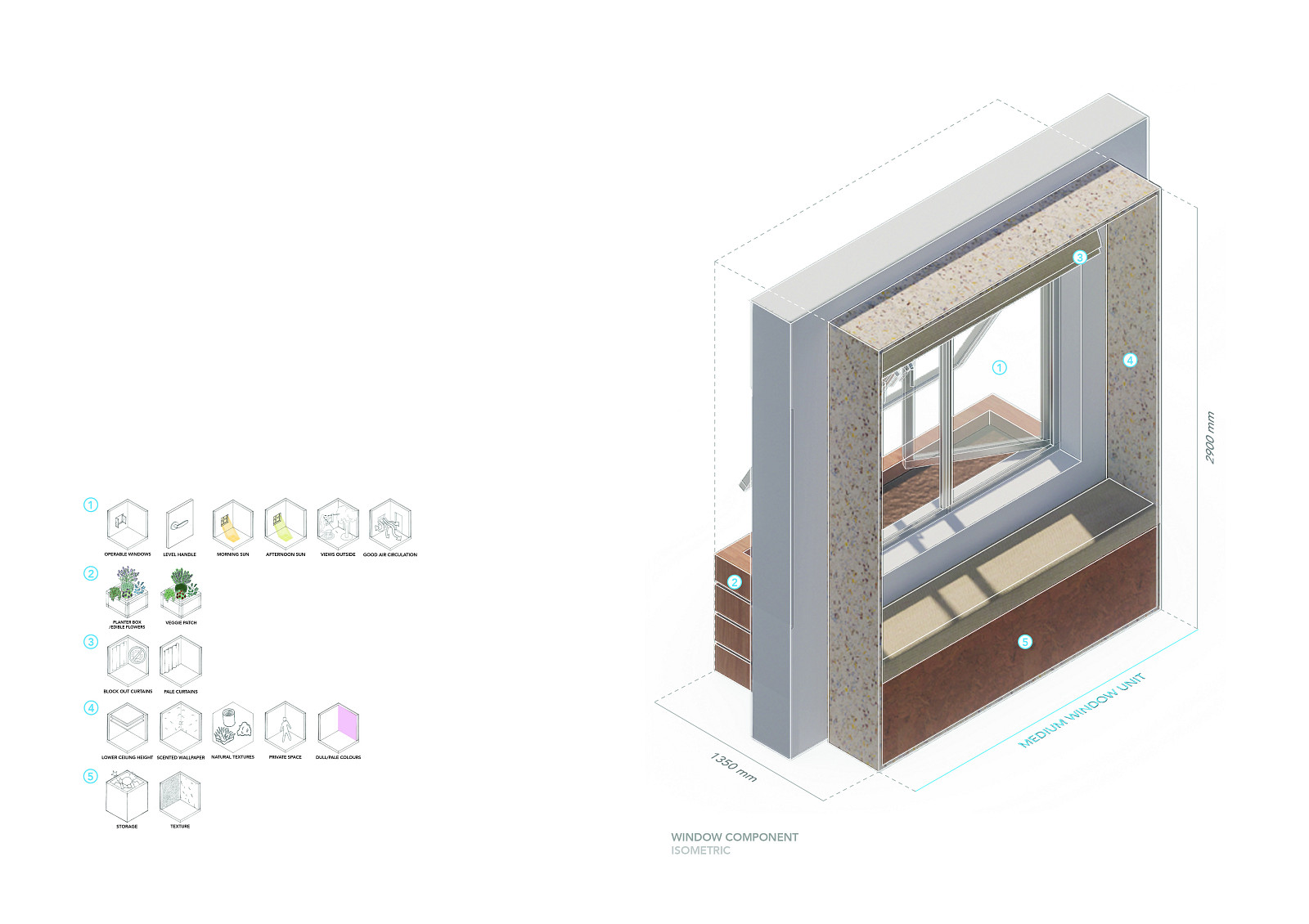
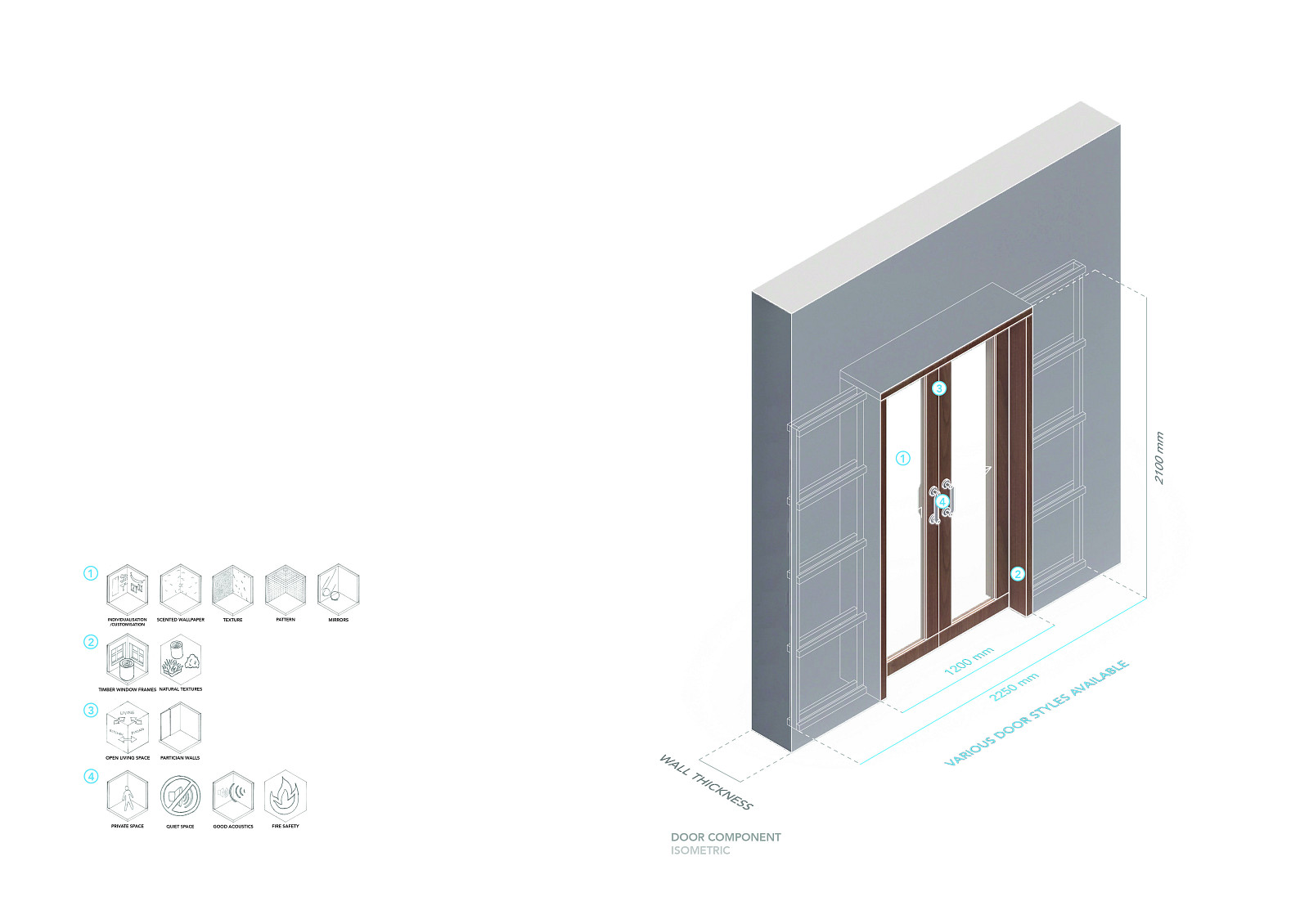
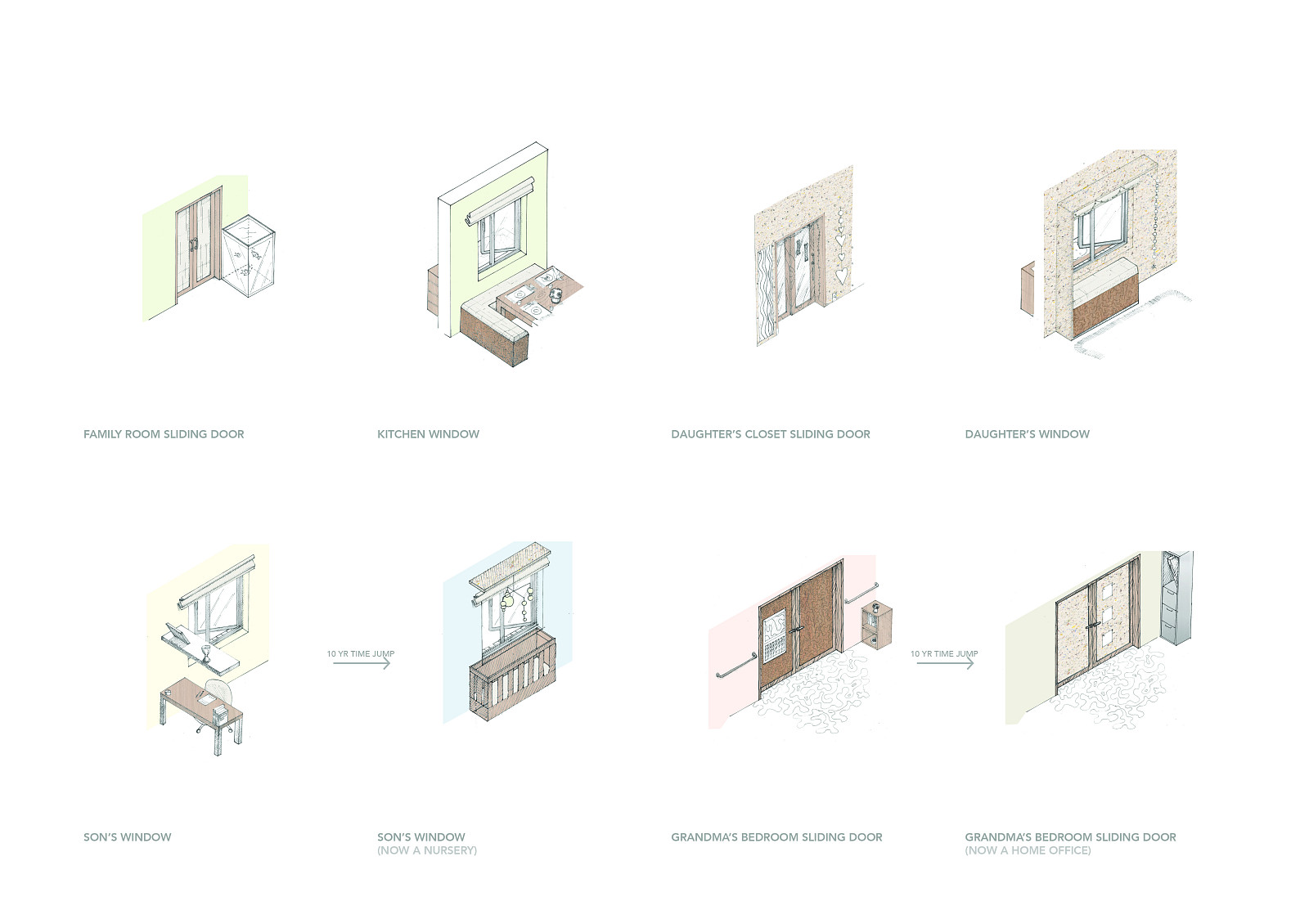
Central to the proposal is a customisable window and door system that translates the sensory research matrix into buildable retrofit components. These adaptable elements allow modulation of light, airflow, threshold thickness, acoustic permeability, and visual privacy. Designed to evolve across a ten-year family lifecycle, the system enables incremental transformation rather than singular renovation.
The project demonstrates how small, intentional interventions — rather than large-scale reconstruction — can nurture psychological comfort, collective resilience, and adaptability within the everyday home.
The outcome is both a spatial proposal and a transferable framework for future suburban retrofits.
Technical information
Project Type: Master of Architecture Thesis
Typology: Multi-generational Residential Retrofit
Location: Melbourne, Australia (Post-war middle-ring suburb)
Existing Condition: Brick veneer dwelling
Programme:
Primary family residence
Integrated secondary dwelling
Flexible communal and retreat spaces
Adaptable sensory-modulated zones
Design Framework:
Research-led methodology integrating environmental psychology and sensory design
Matrix of 60+ architectural elements mapped to the five sensory systems
Lifecycle-based adaptability model (10-year family evolution scenario)
Retrofit-first strategy prioritising retention of existing structure
Key Technical Strategies:
Custom modular window and door system enabling adjustable light, ventilation, privacy, and acoustic control
Incremental retrofit sequencing
Passive environmental upgrades integrated within existing envelope
Layered threshold construction to mediate psychological transitions
Material selection based on tactile, acoustic, and luminous performance
Sustainability Approach:
Retention of embodied carbon in existing structure
Reduced demolition waste
Passive solar optimisation
Cross-ventilation strategies
Durable, locally sourced materials where possible
Deliverables:
Site and contextual analysis
Architectural plans, sections, and elevations
Sensory research matrix
Retrofit component detailing
Atmospheric visualisations
Written theoretical framework
Created in:



Copyright © 2026 INSPIRELI | All rights reserved. Use of this website signifies your agreement to the Terms of Use, Privacy Policy, and use of cookies.