Mangrove Eco-Tourism and Wildlife Conservation Center, Sharankhola, Sundarbans, Bangladesh.


Project idea
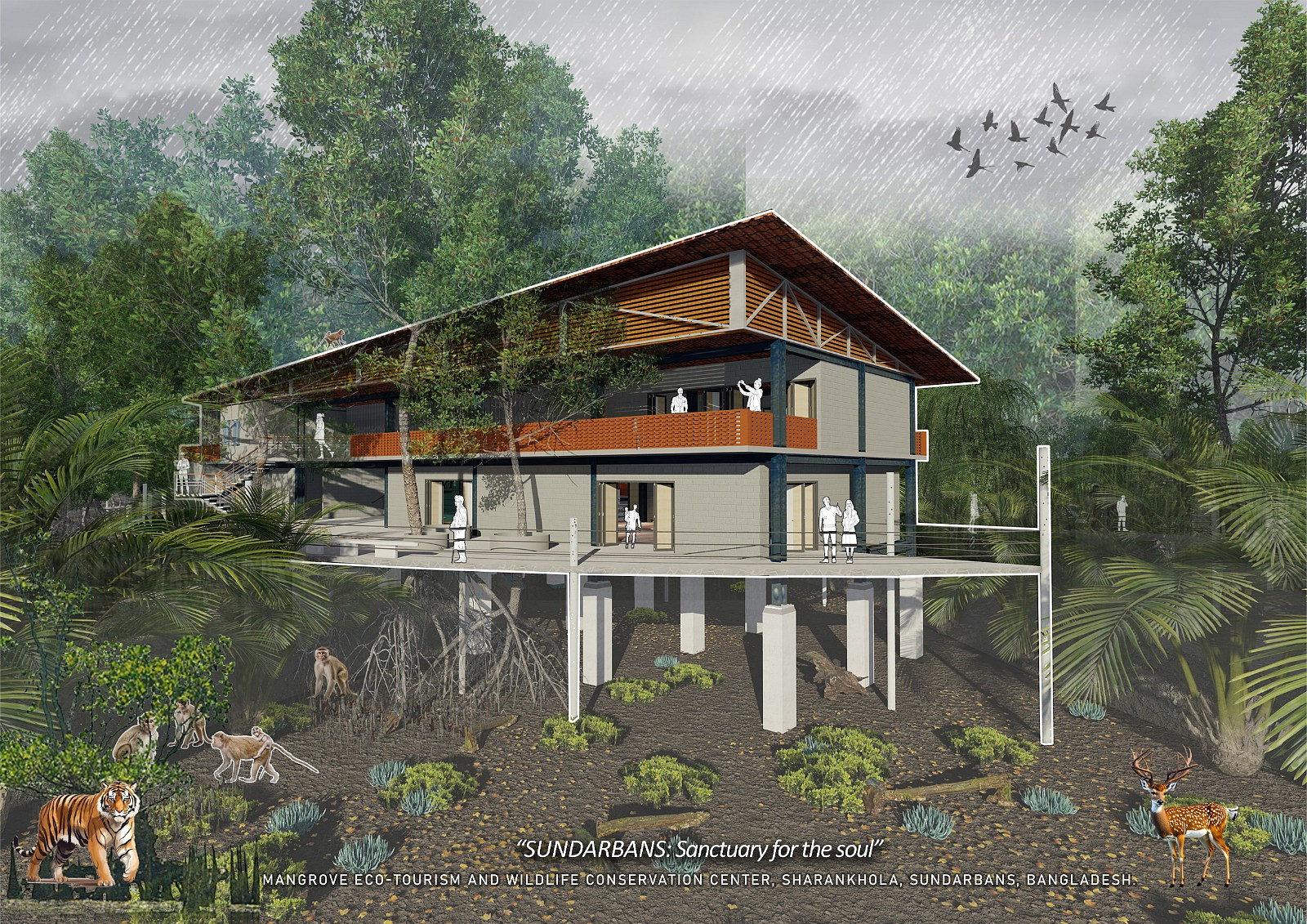
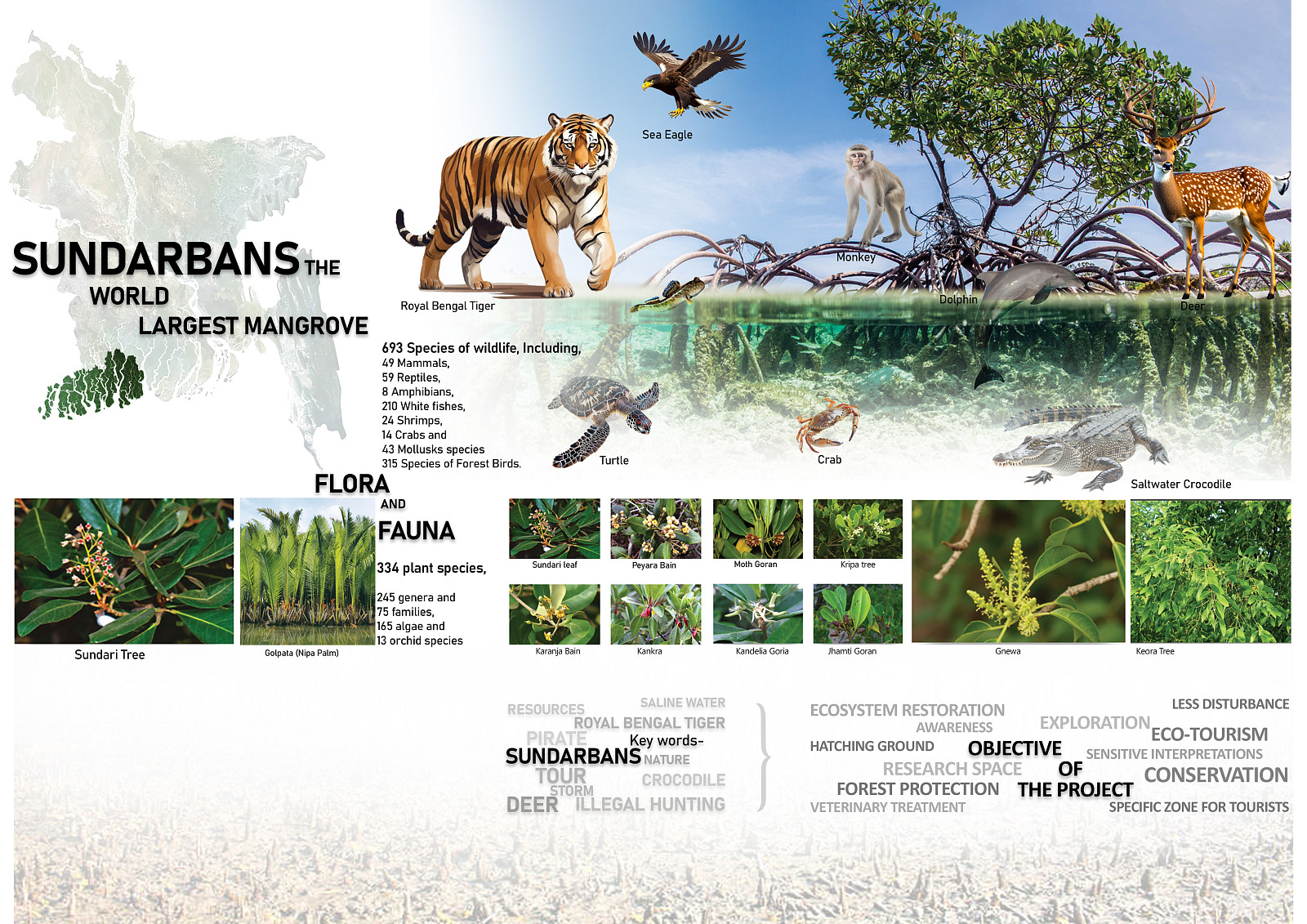
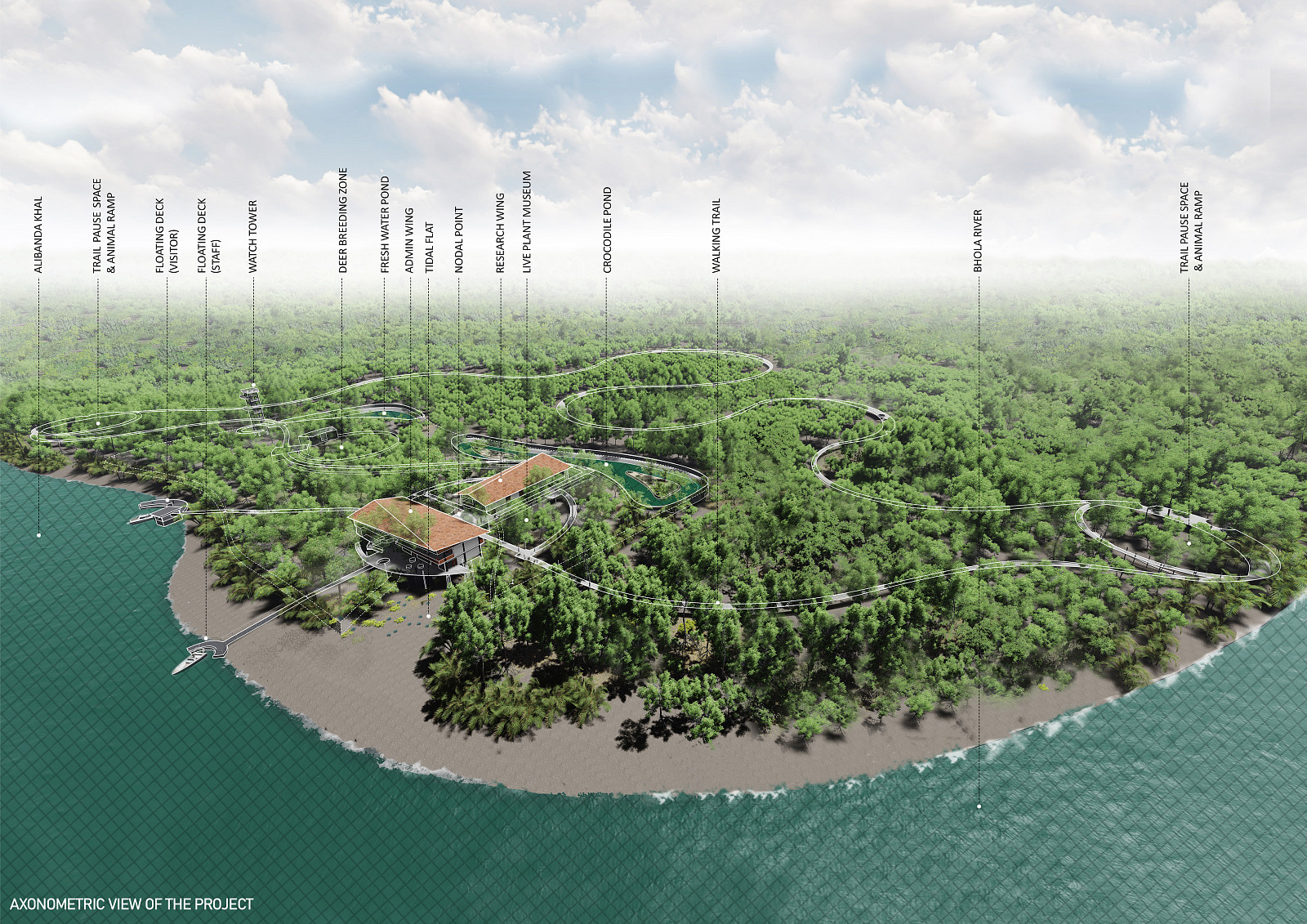
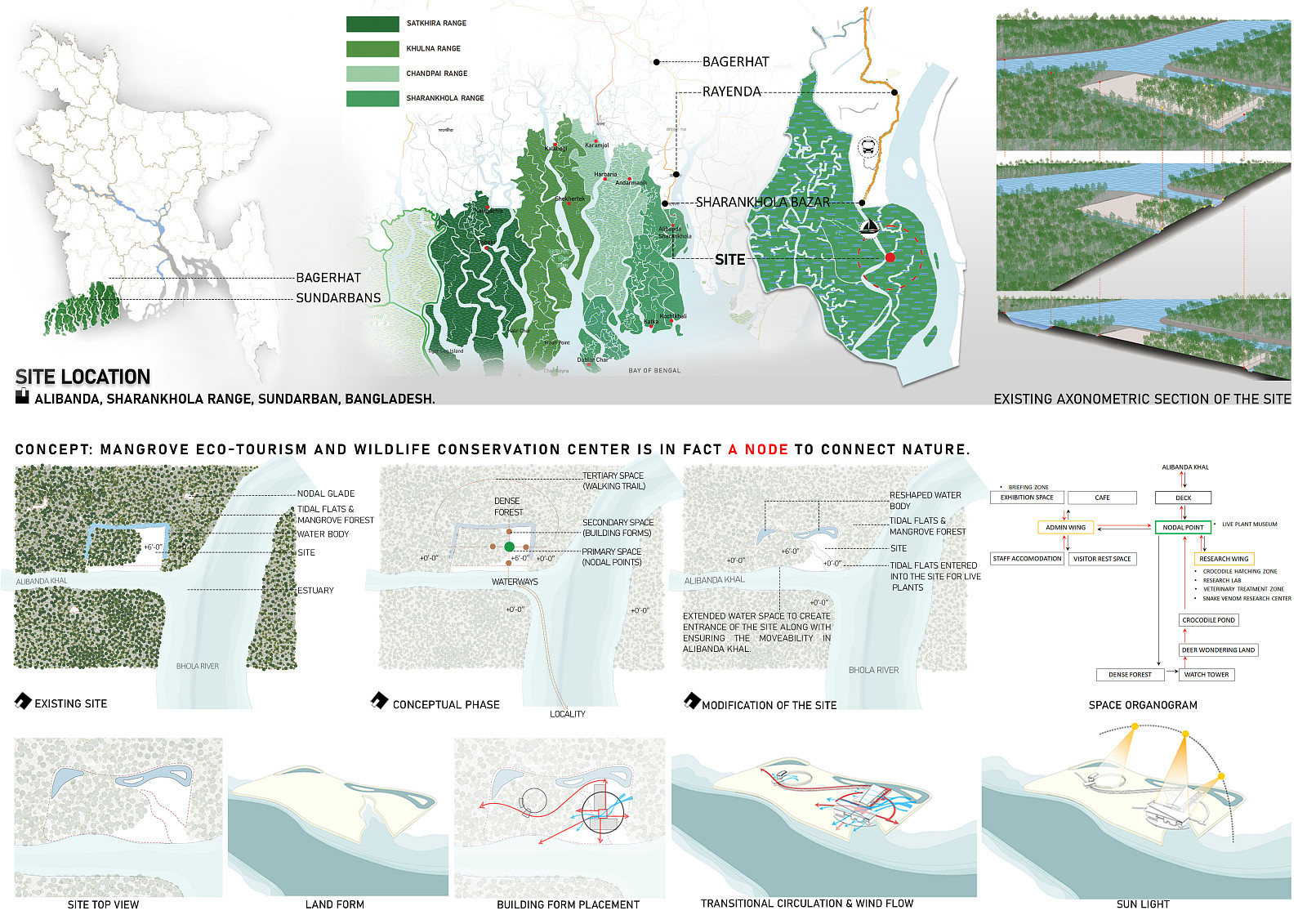
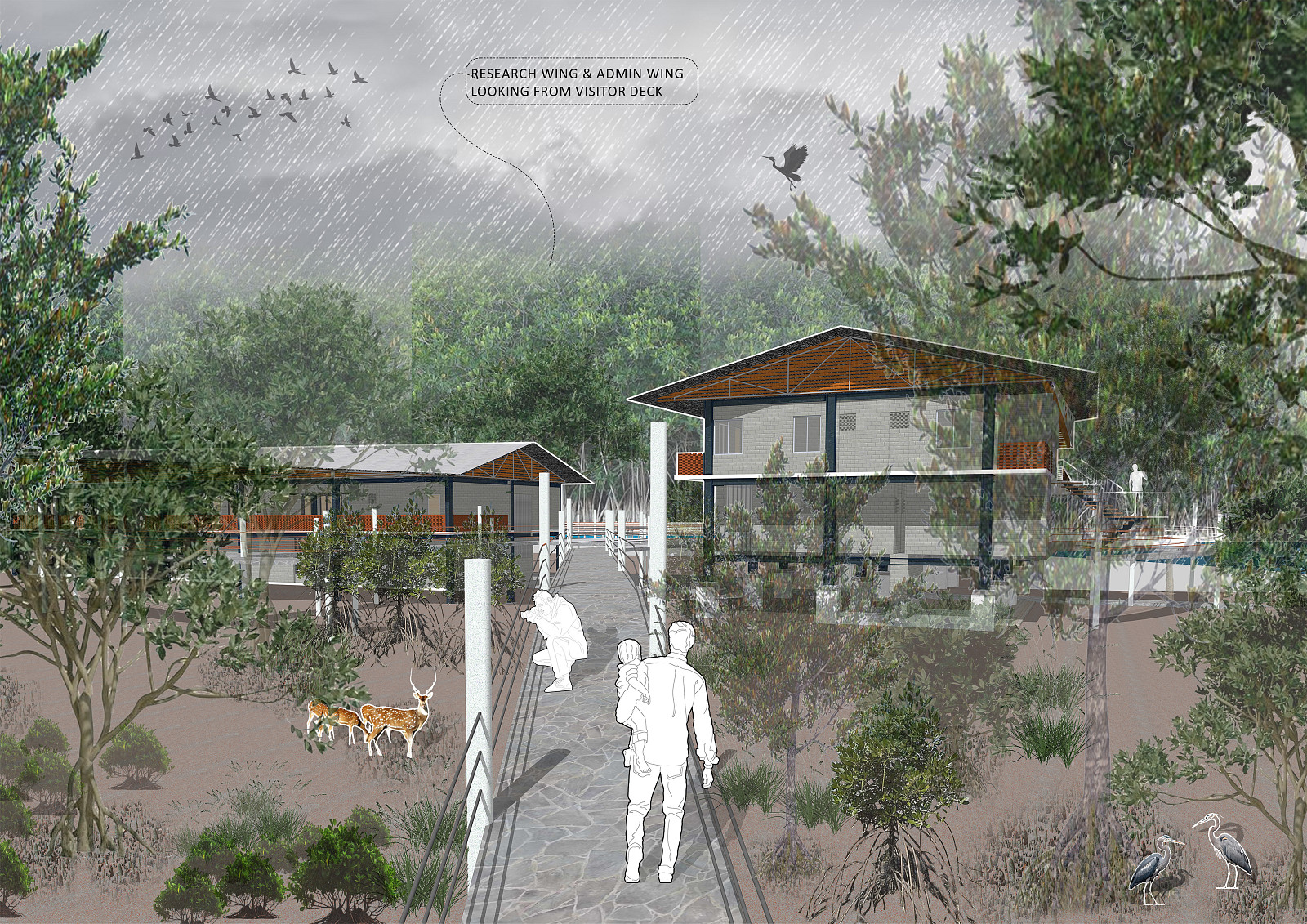
The Mangrove Eco-Tourism and Wildlife Conservation Center, Sharankhola, Sundarbans, is conceived as a holistic platform integrating wildlife conservation, research, environmental education, and sustainable tourism within one of the world’s most delicate ecosystems. Situated at the junction of the Alibanda Canal and the Bhola River, the project addresses critical environmental threats including habitat loss, climate change, and illegal poaching. The central idea is to provide visitors with immersive access to the mangrove environment through elevated walkways, floating decks, and observation towers, ensuring minimal disruption to sensitive habitats. The design establishes a balance between human engagement and ecological preservation, creating opportunities for environmental awareness, biodiversity protection, and community involvement. By linking research, public engagement, and conservation management within a single hub, the project demonstrates how thoughtful architectural intervention can support both environmental stewardship and socio-economic development.
Project description
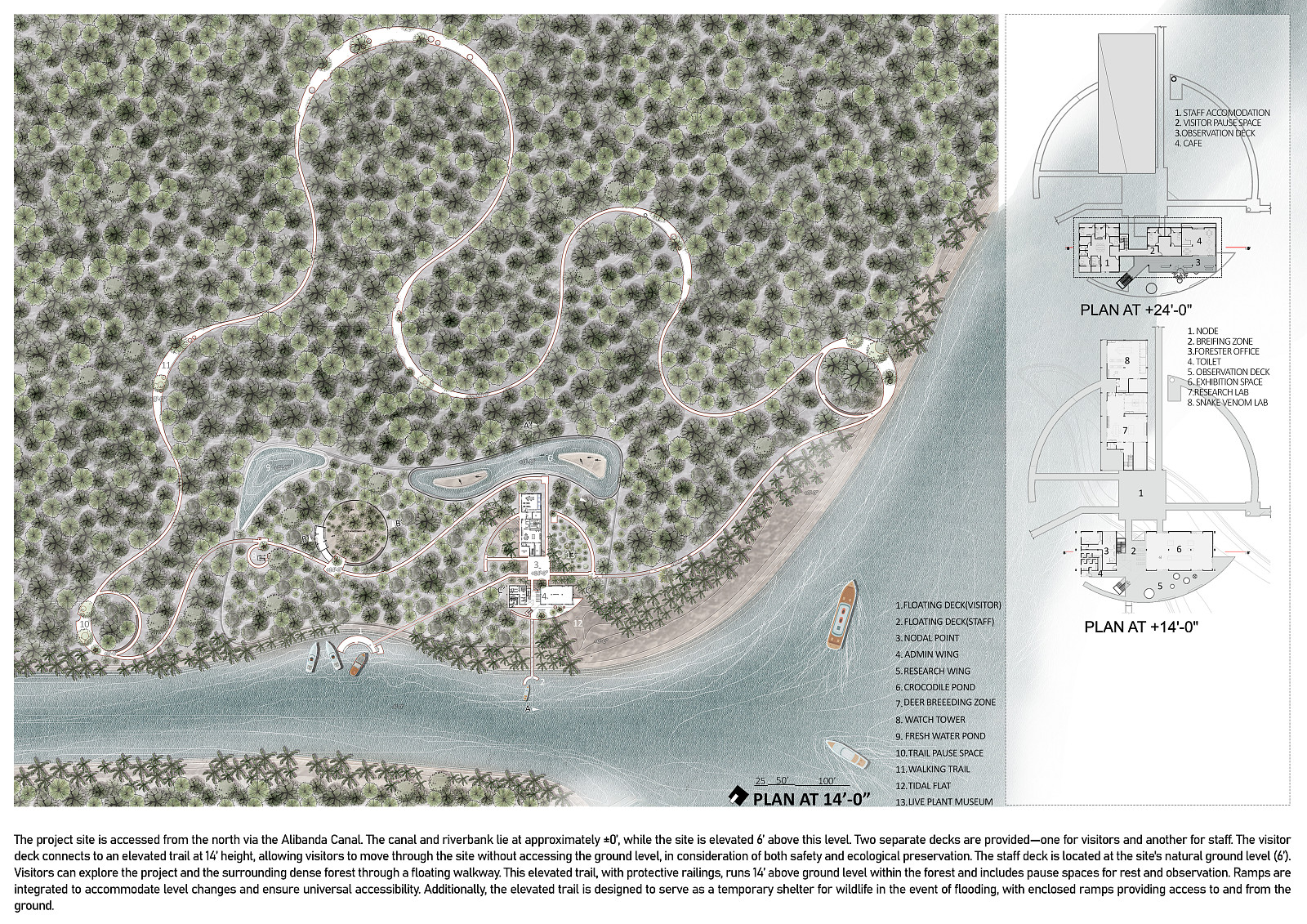
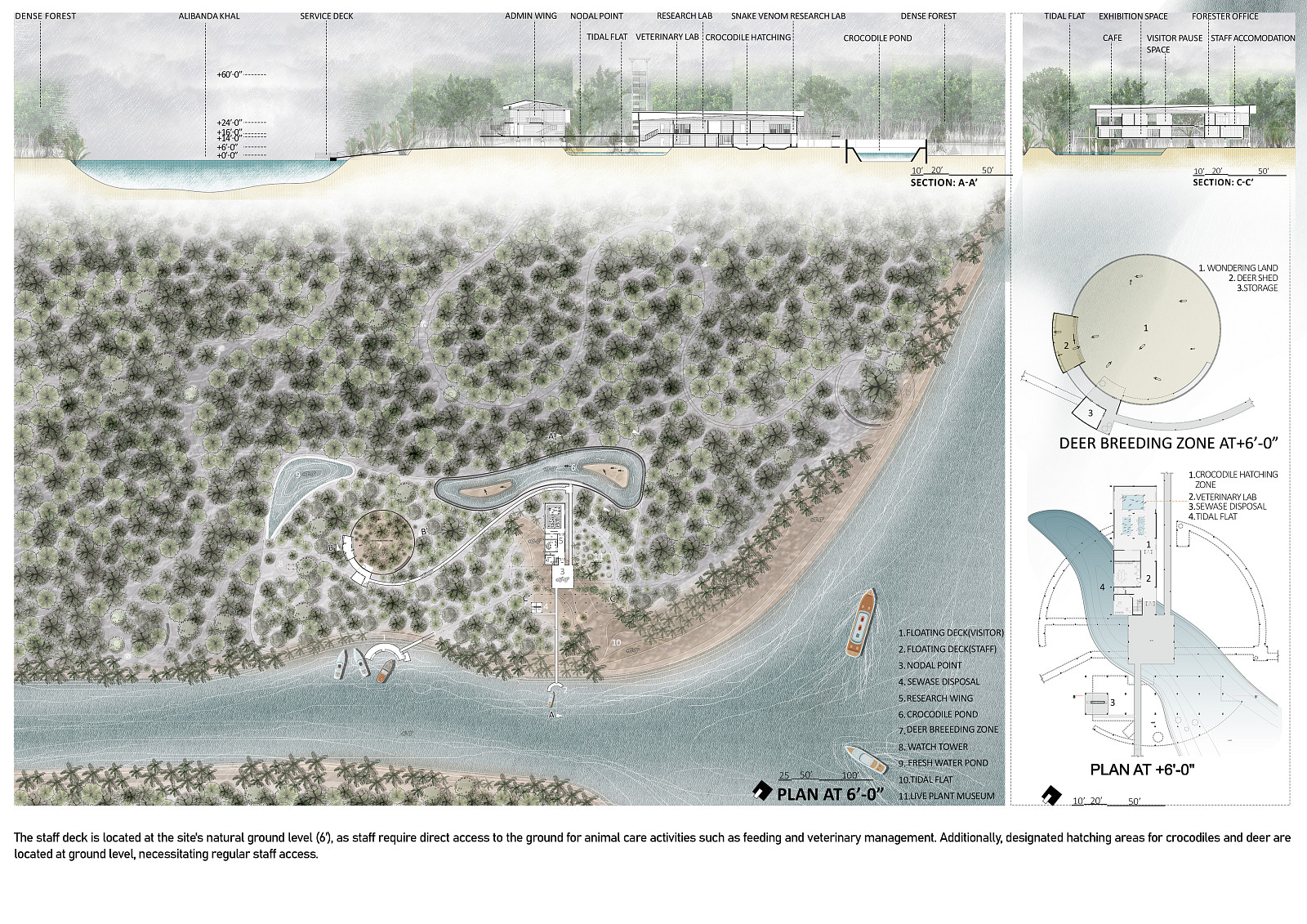
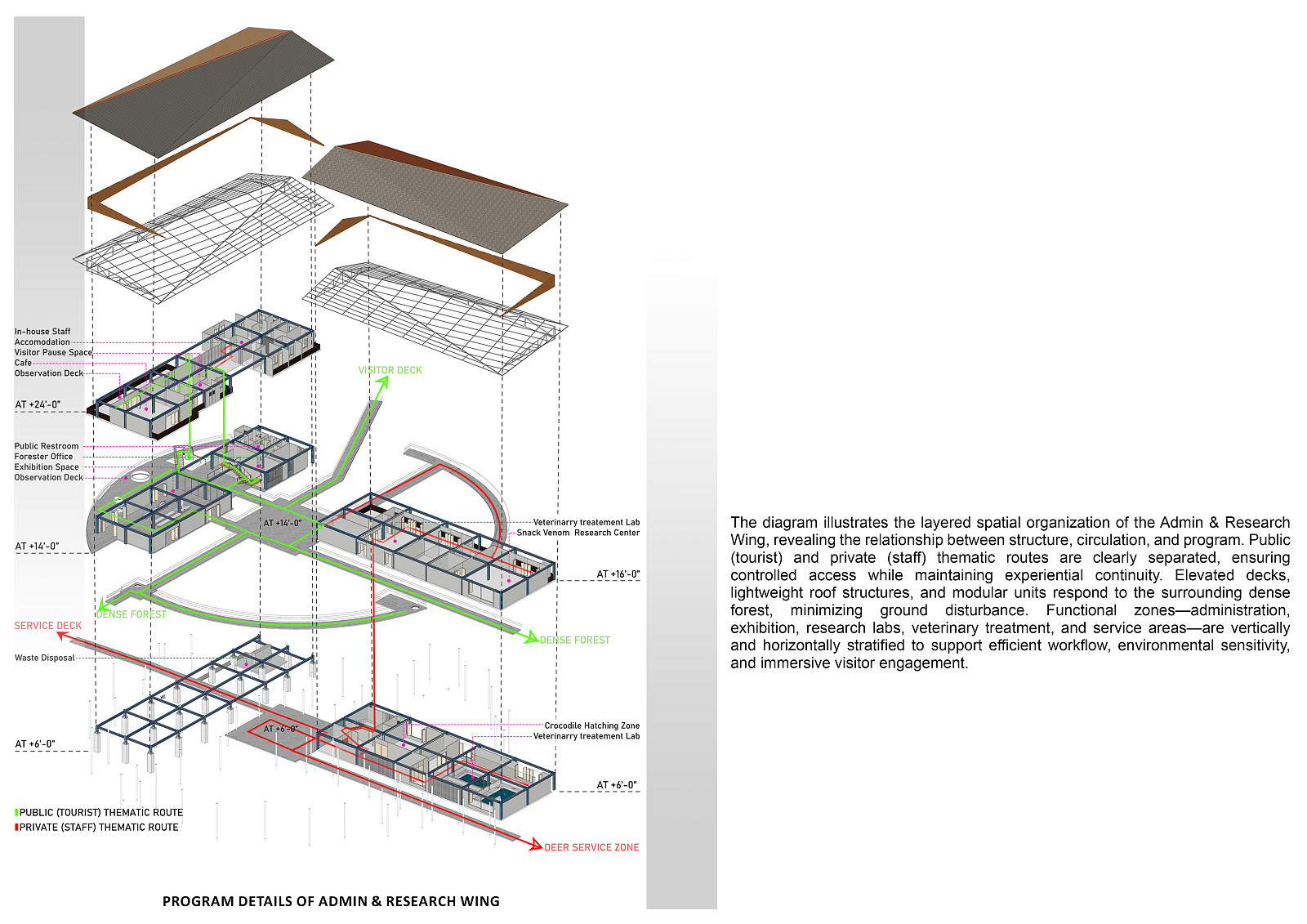
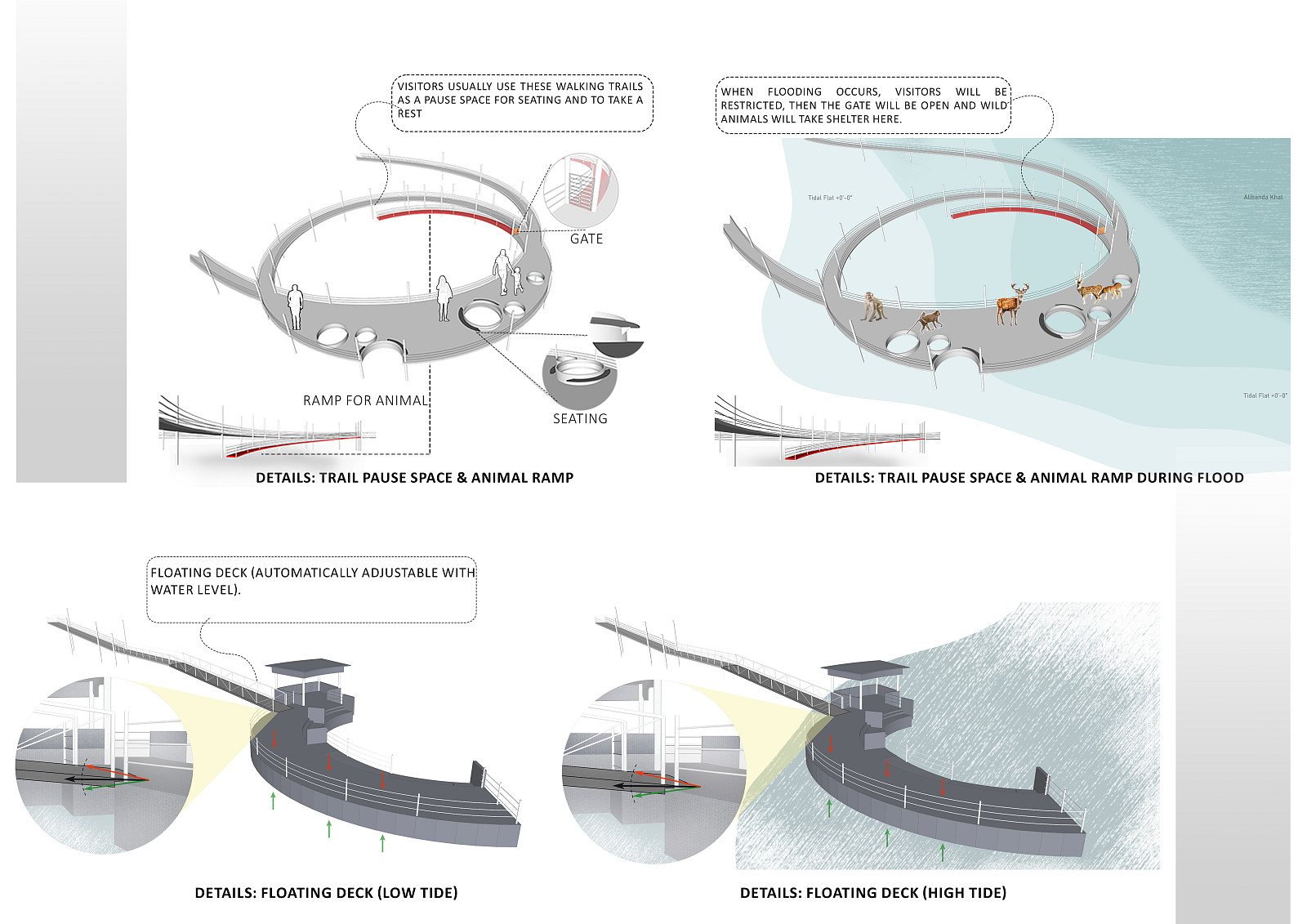
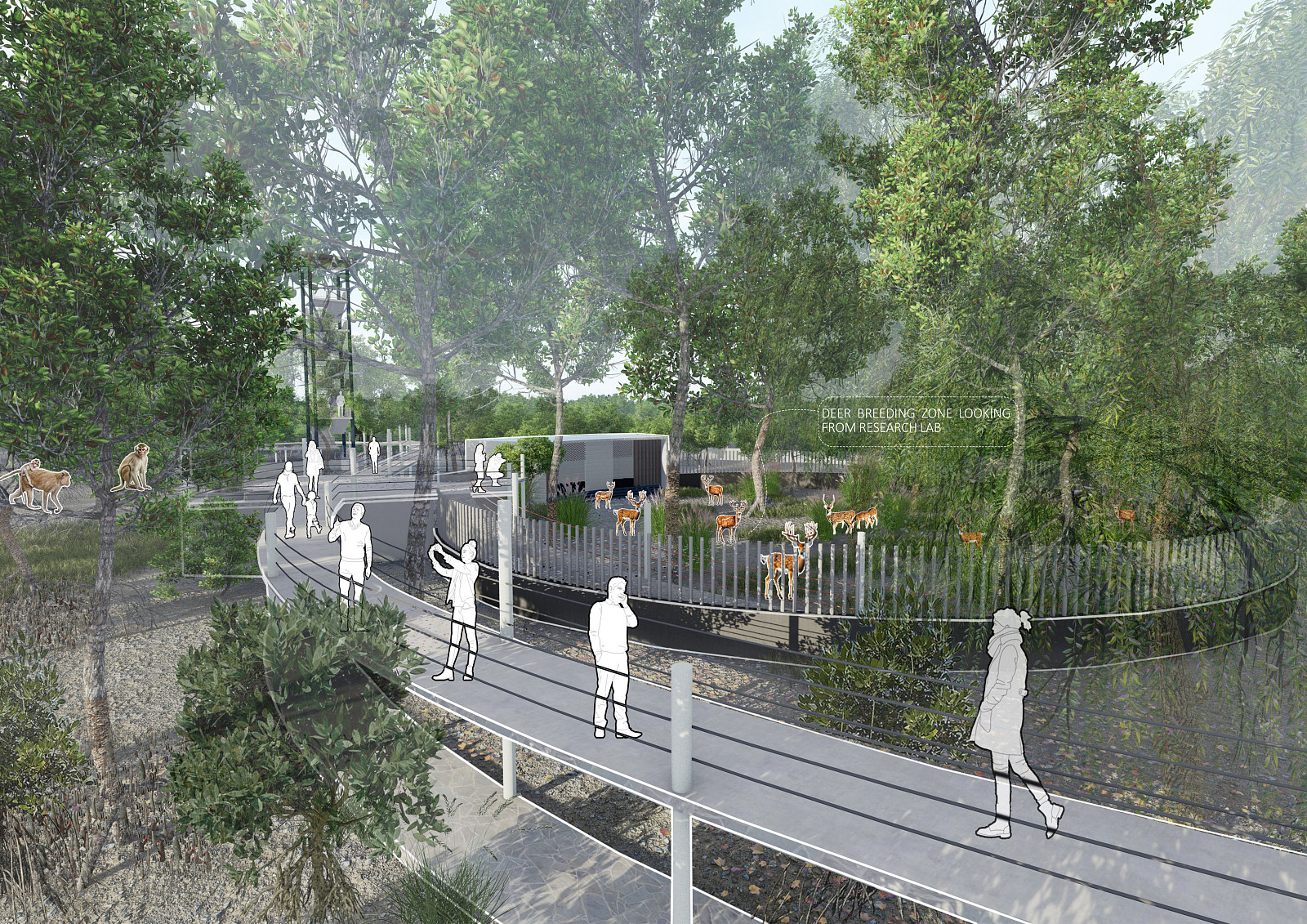
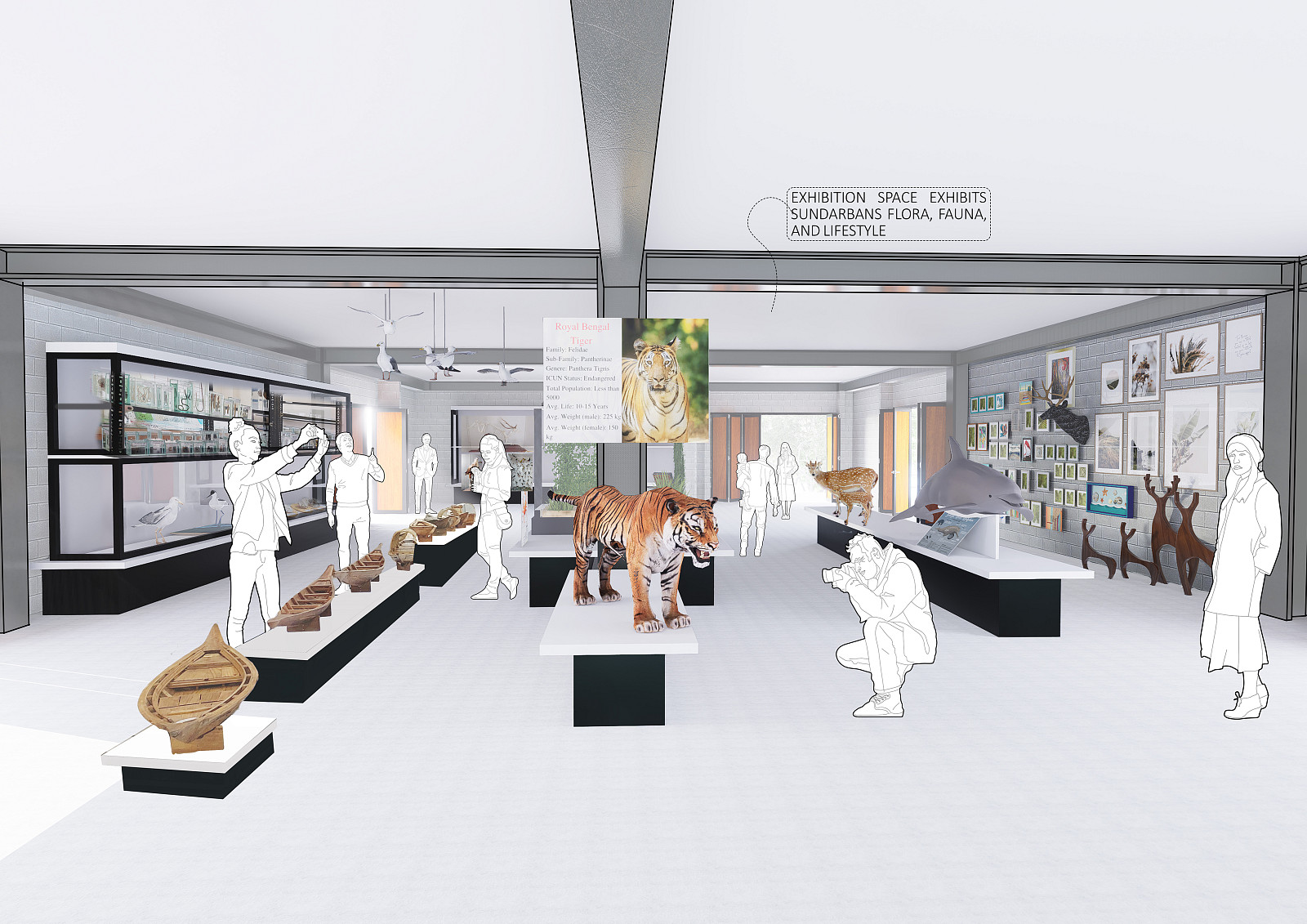
The project is organized around a central nodal plaza, from which elevated trails and building clusters extend radially, guiding visitors through a curated natural experience. Functional zones include administrative offices, exhibition and interpretation areas, research and veterinary laboratories, wildlife hatching and rehabilitation facilities, watchtowers, and visitor amenities. Circulation is carefully zoned, with public, semi-public, and restricted areas to maintain operational efficiency and safeguard sensitive species. Elevated walkways and floating platforms respond to seasonal tidal fluctuations, while designated buffer zones reduce human-wildlife conflict and protect soil and vegetation. Community engagement is central to the project, with local residents trained as guides and staff, promoting environmental education and long-term stewardship. Visitor experience is designed to be immersive yet low-impact, combining scenic observation points, educational exhibits, and hands-on conservation programs, fostering awareness of the Sundarbans’ ecological significance while minimizing environmental footprint.
Technical information
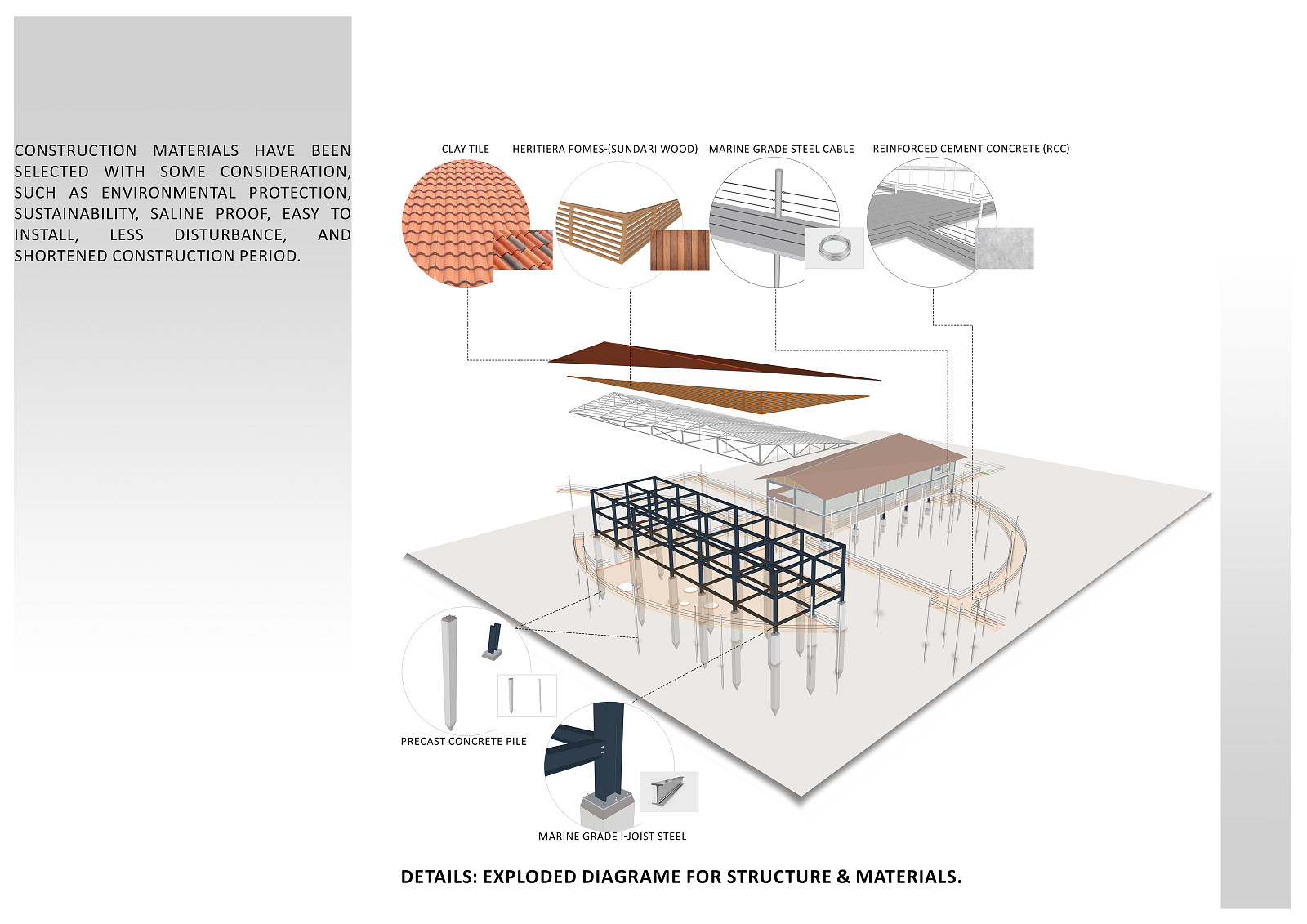
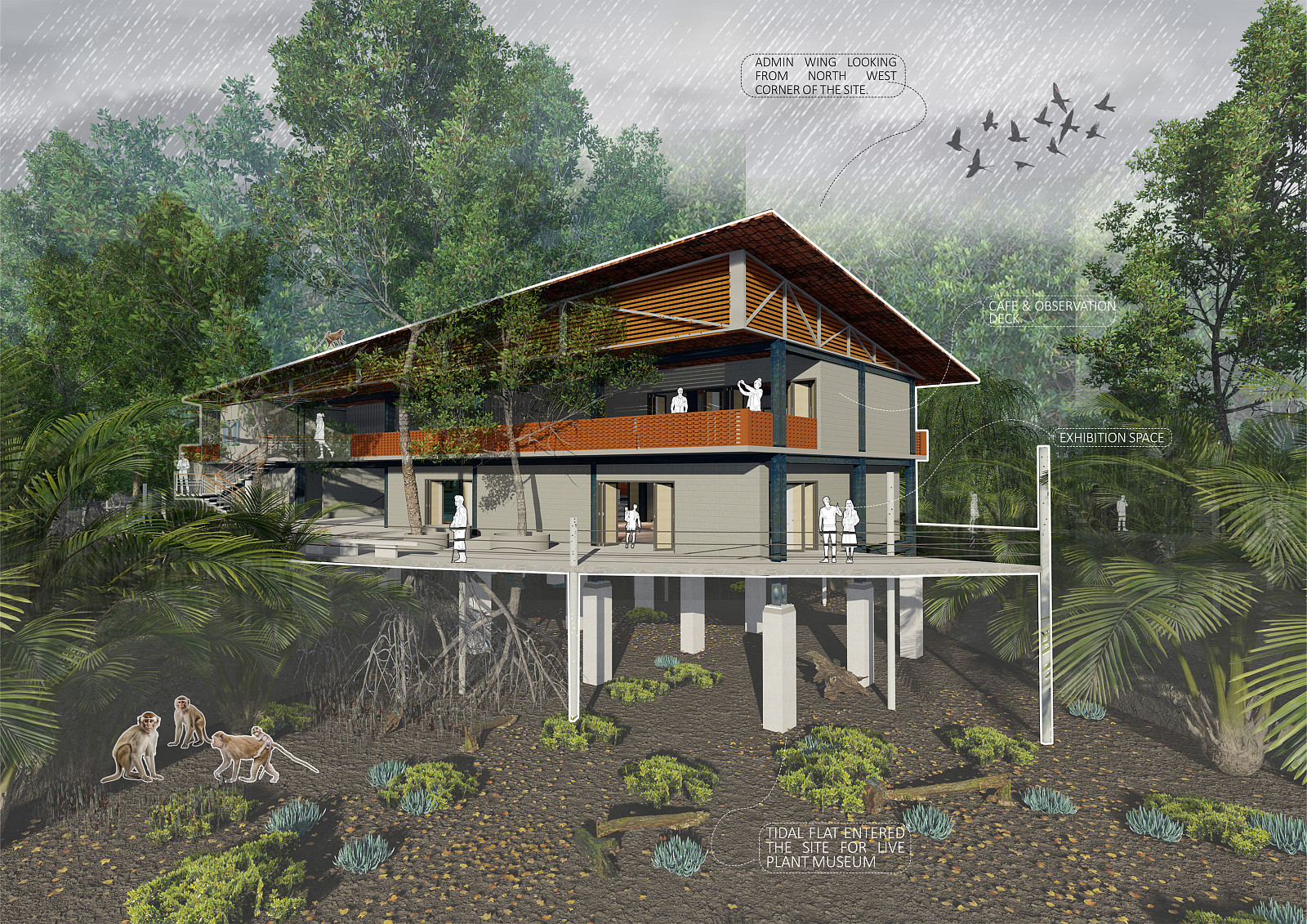
The architectural strategy emphasizes resilience, adaptability, and sustainability. Buildings are raised on pile-supported platforms to accommodate tidal variations, while lightweight modular construction minimizes excavation and on-site disruption. Marine-grade steel forms primary structural frameworks for corrosion resistance, while treated timber, bamboo, and recycled composite panels are used for secondary elements and elevated walkways. Prefabrication reduces construction time, waste, and the need for heavy machinery. Passive design strategies, natural ventilation, daylight optimization, and thermal shading reduce energy demand, supplemented by solar panels, rainwater harvesting, and constructed wetland greywater treatment. Smart monitoring systems track wildlife, water levels, and security, assisting conservation management. Overall, the project demonstrates a fusion of ecological knowledge and modern interpretation, ensuring long-term durability, minimal environmental disturbance, and adaptability to the Sundarbans’ dynamic conditions.

Copyright © 2026 INSPIRELI | All rights reserved. Use of this website signifies your agreement to the Terms of Use, Privacy Policy, and use of cookies.