RE-TUNING THE MARKETPLACE | Revitalizing Pasar Awam Kluang Through Socio-Acoustic Spatial Strategies


Project idea
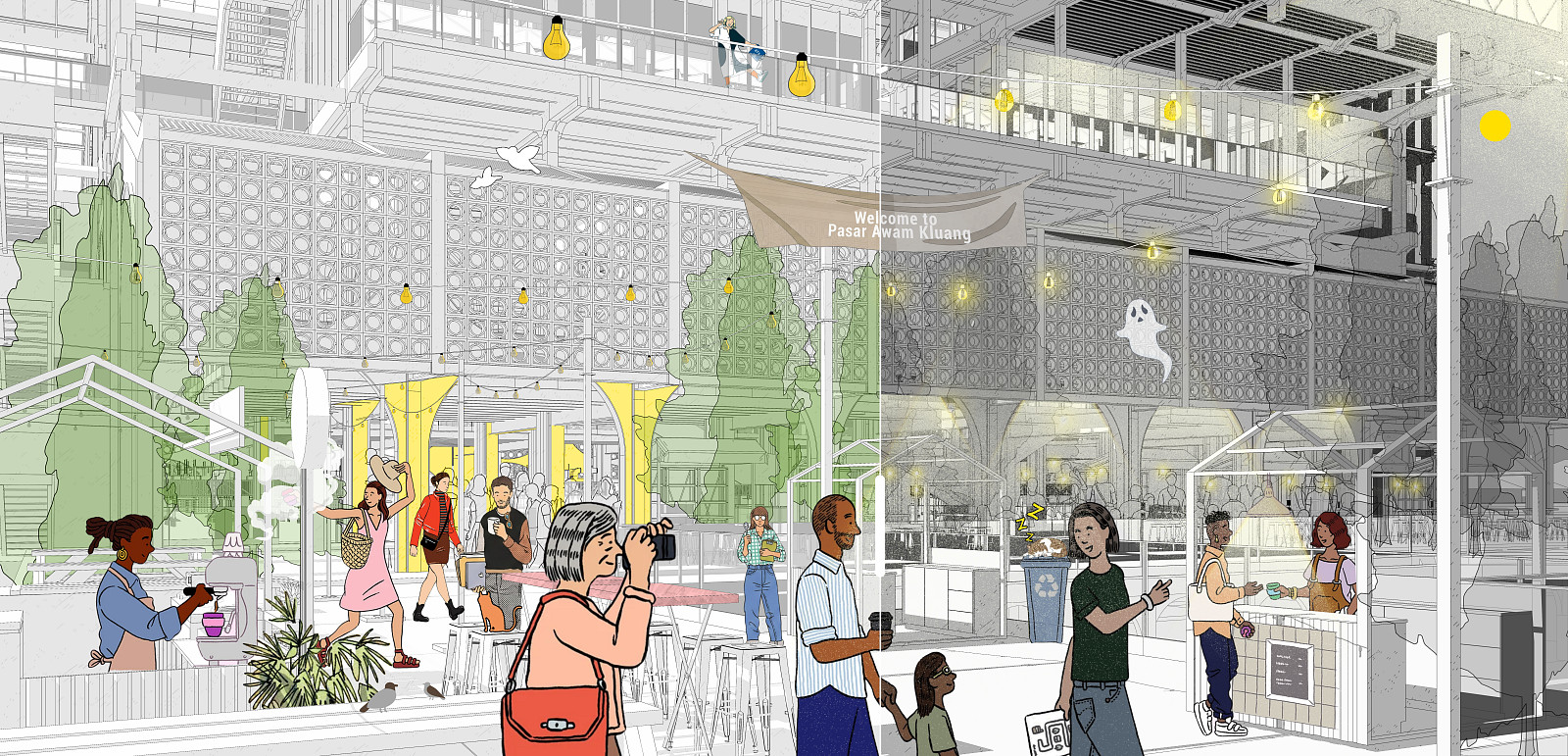
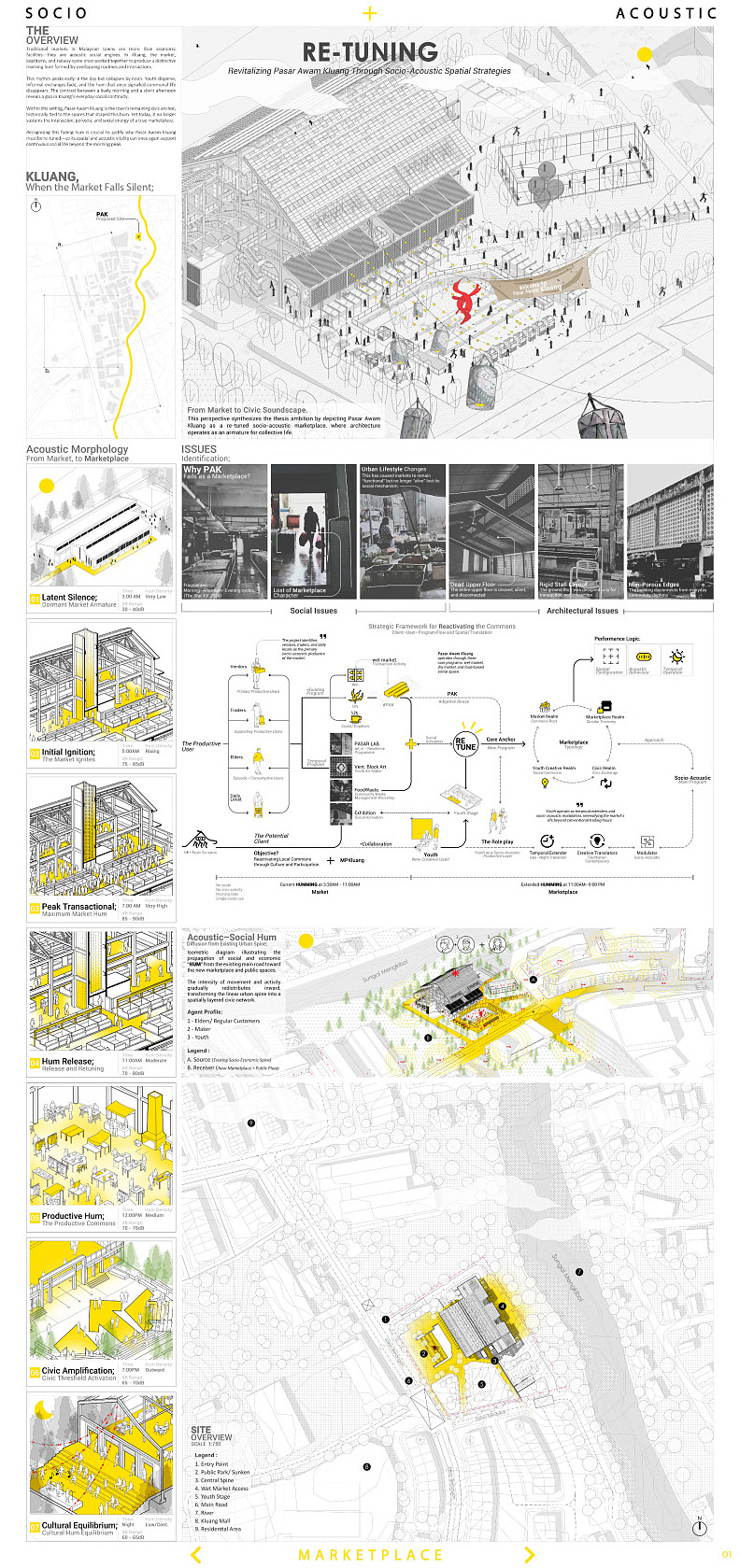
Re-Tuning the Marketplace is a research-through-design project that repositions Pasar Awam Kluang as a living socio-cultural infrastructure rather than a static commercial building. Traditional markets in Malaysian towns have historically operated as civic condensers where trade, ritual, gossip, memory, and identity overlap within a shared spatial and acoustic environment. In Kluang, the marketplace once generated a distinctive morning hum — a layered soundscape produced by vendors setting up at dawn, kopitiam conversations, railway rhythms, and intergenerational encounters. Yet this vitality is temporally fragile. By midday, the energy collapses, leaving behind a building that no longer sustains social continuity or youth engagement.
This thesis identifies the fading of this communal “hum” as both a spatial and cultural problem. The issue is not merely economic decline, but the loss of rhythmic continuity between morning intensity and afternoon silence. The existing market lacks adaptability, porosity, and acoustic responsiveness to support evolving social practices in a post-digital, post-pandemic town condition. Therefore, the project proposes to “re-tune” the marketplace — to recalibrate its spatial configuration, programmatic layering, and environmental performance so that it can sustain interaction beyond transactional exchange. The goal is to transform Pasar Awam Kluang into an adaptive civic platform that remains socially resonant throughout the day, embodying both memory and future potential within one continuous architectural framework.
Project description
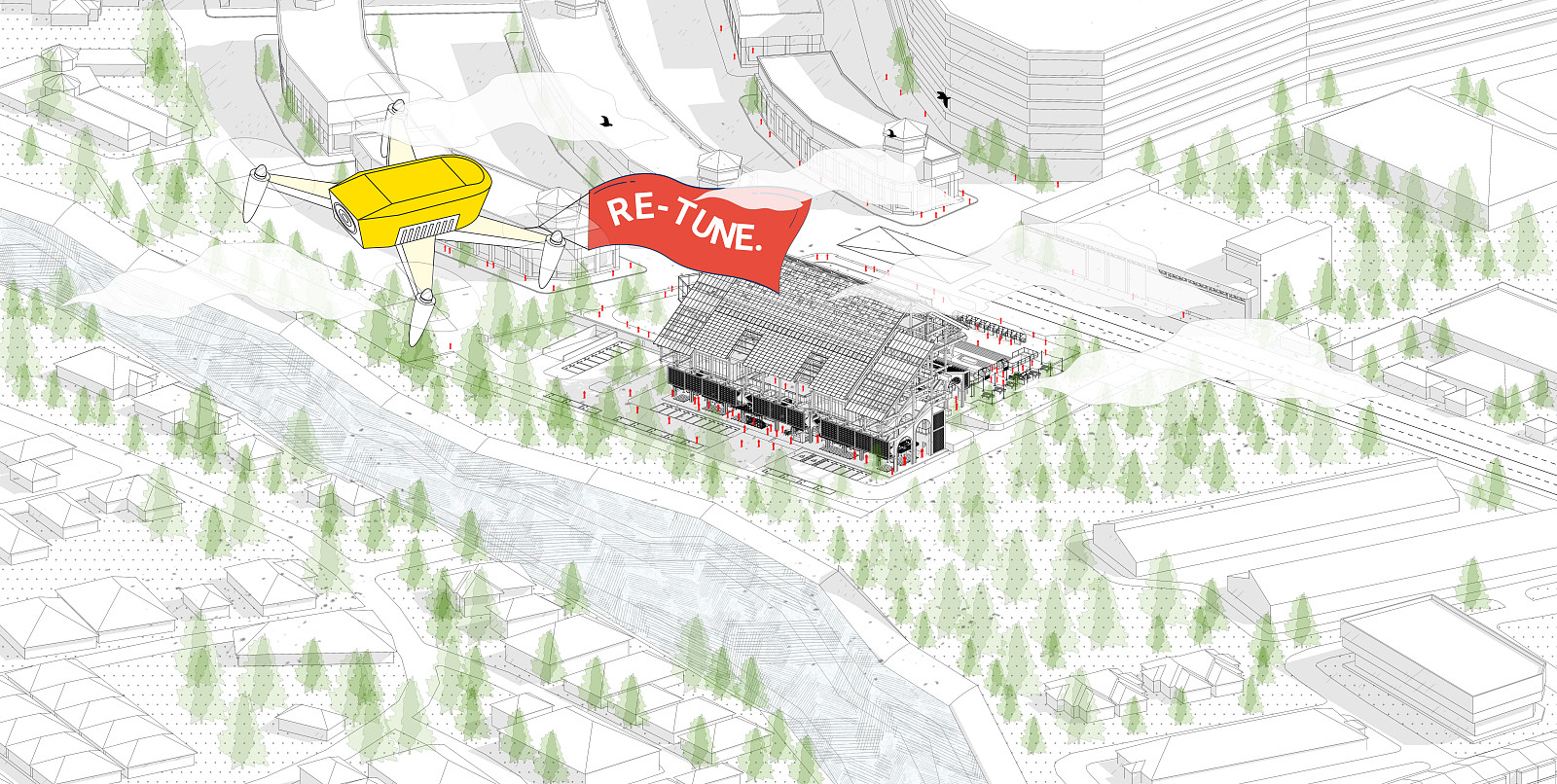
The project intervenes through a strategy of temporal transformation, spatial recalibration, and programmatic expansion. Instead of replacing the existing market, the design works through retrofitting and adaptive layering. It acknowledges the intense early-morning wet market cycle from 3:00 a.m. to 11:00 a.m., where dense trading activity defines the building’s identity. Rather than competing with this condition, the architecture is conceived as a responsive framework that transforms once the morning cycle subsides.
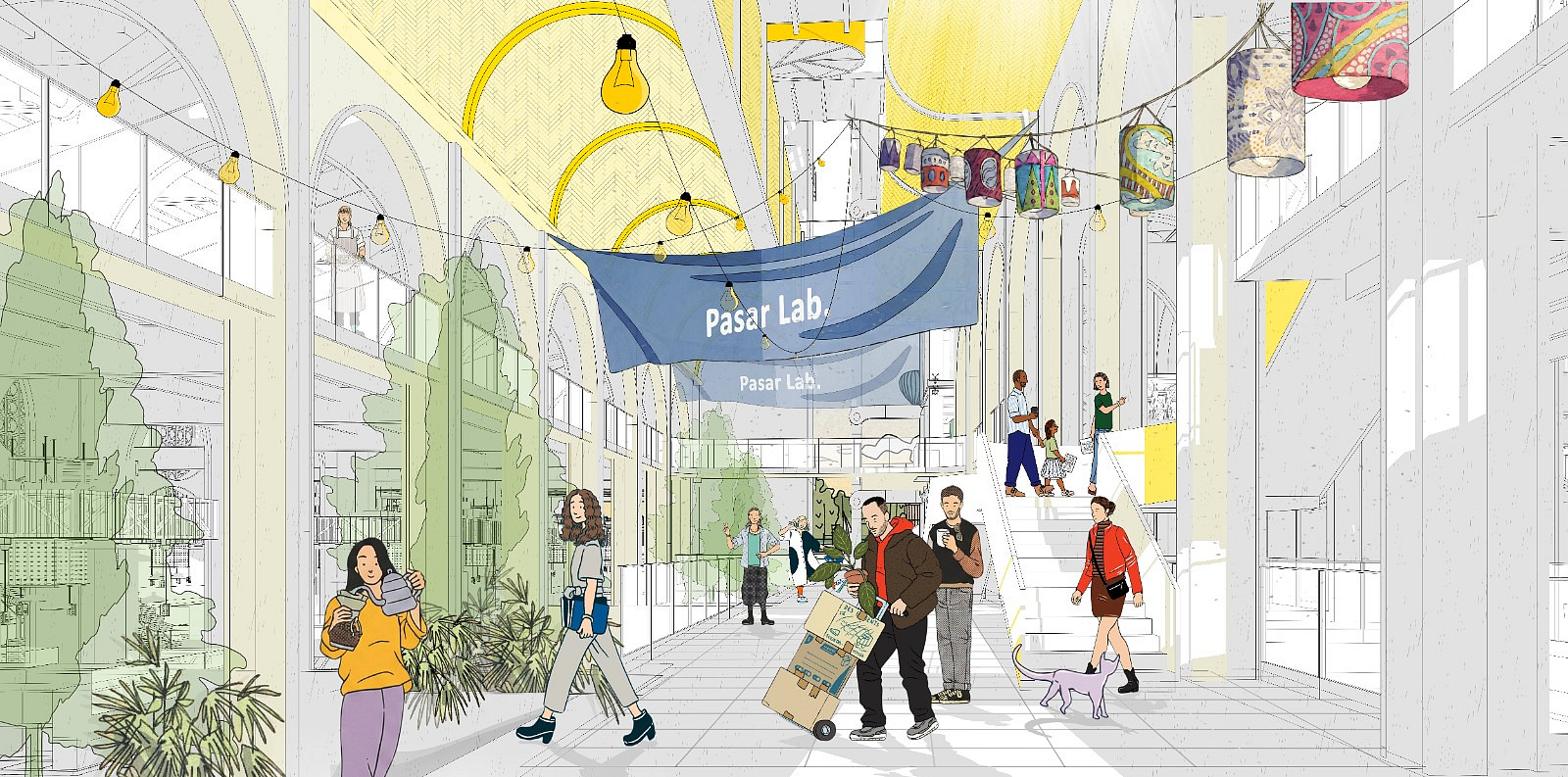
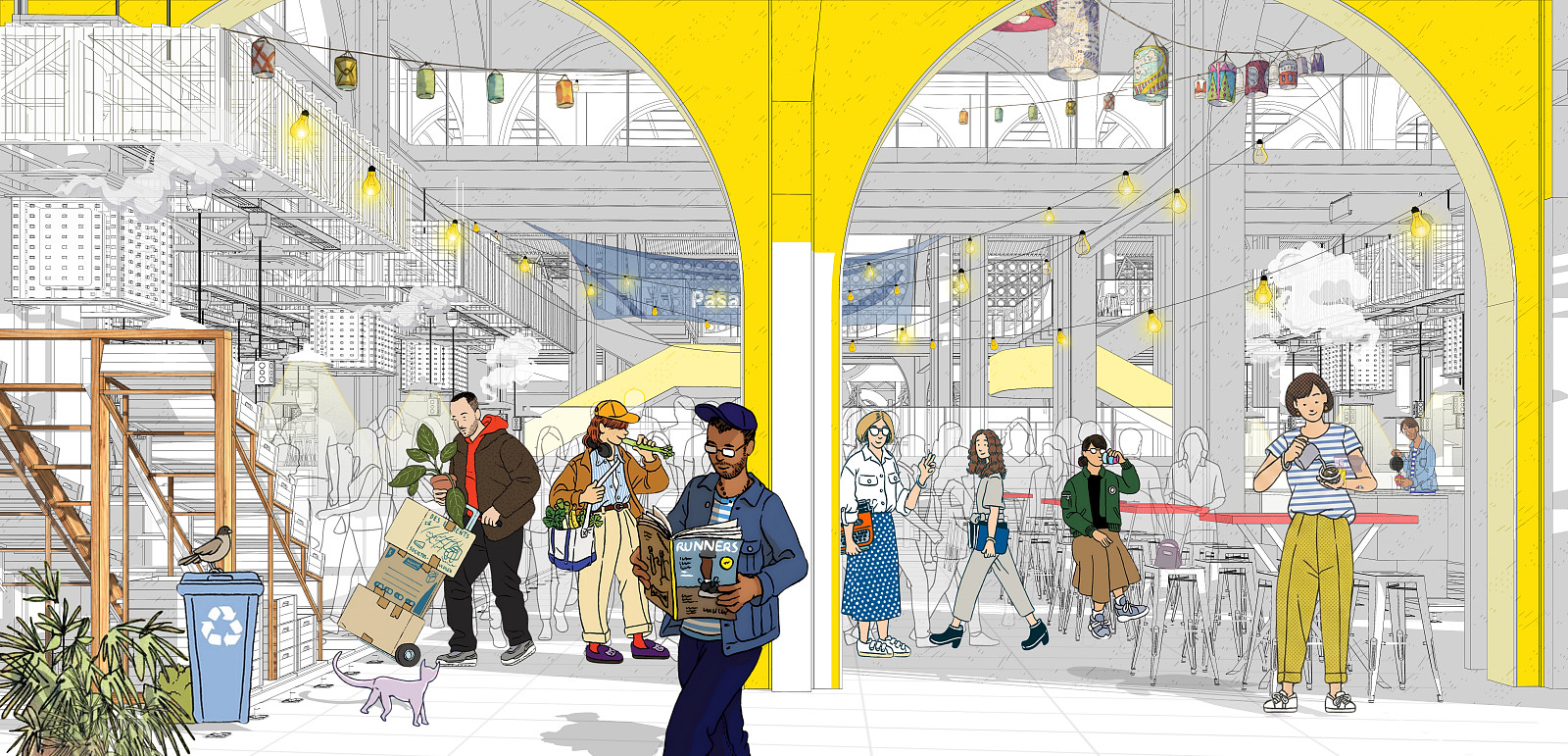
Through modular stall systems, retractable partitions, and flexible floor platforms, the building shifts after 11:00 a.m. from a compact trading hall into an open civic commons. Spaces previously dedicated to transaction are reconfigured to host youth co-working areas, community kitchens, digital learning pods, craft workshops, storytelling platforms, and informal gathering terraces. The marketplace becomes a layered environment where food culture, digital culture, and local craft intersect. This transformation is not cosmetic but systemic; circulation is restructured to enhance visual permeability, cross-ventilation is strengthened to improve comfort, and indoor–outdoor thresholds are dissolved to reconnect the market to its surrounding urban fabric.
The design positions adaptability as the core architectural language. Instead of fixed zoning, the building operates as a temporal infrastructure capable of accommodating multiple rhythms of use. By sustaining activity beyond morning hours, the re-tuned marketplace bridges generational gaps, reactivates youth participation, and restores the market as a continuous civic anchor within Kluang’s urban ecosystem.
Technical information
The technical strategy supports the conceptual ambition of re-tuning through environmental, structural, and acoustic recalibration. The project retains the primary reinforced concrete structural system of the existing Pasar Awam Kluang while introducing a lightweight secondary steel framework that supports modular additions and adaptive components. Operable façade panels and perforated metal screens are integrated to enhance porosity, allowing natural cross-ventilation and visual continuity between interior and exterior spaces. Elevated platforms and improved drainage systems address hygiene standards and flood resilience, ensuring long-term durability.
Material selection balances robustness and flexibility. Reinforced concrete anchors the building in permanence, while galvanised steel, timber decking, and polycarbonate roofing elements introduce lightness and transformability. Daylighting is optimized through translucent roofing panels and controlled apertures that reduce artificial lighting demand while maintaining thermal comfort.
Acoustically, the project reconsiders the marketplace as a sound-regulated environment rather than an uncontrolled echo chamber. Sound-absorbing ceiling baffles and perforated panels are introduced to manage reverberation time and improve speech intelligibility, particularly in zones where learning and discussion occur. Louder trading areas and quieter communal spaces are strategically zoned to coexist without conflict. Acoustic simulation tools, including Odeon Room Acoustics software, are employed to test reverberation time (RT60), speech transmission index (STI), and overall noise distribution, ensuring that the building’s sonic atmosphere aligns with its civic ambition.
Ultimately, the technical system reinforces the architectural narrative: a marketplace that is no longer a static container of commerce but a calibrated instrument of social continuity. Through spatial, environmental, and acoustic re-tuning, the project aspires to restore the market as a resilient cultural engine capable of sustaining Kluang’s collective rhythm across time.
Documentation

Copyright © 2026 INSPIRELI | All rights reserved. Use of this website signifies your agreement to the Terms of Use, Privacy Policy, and use of cookies.