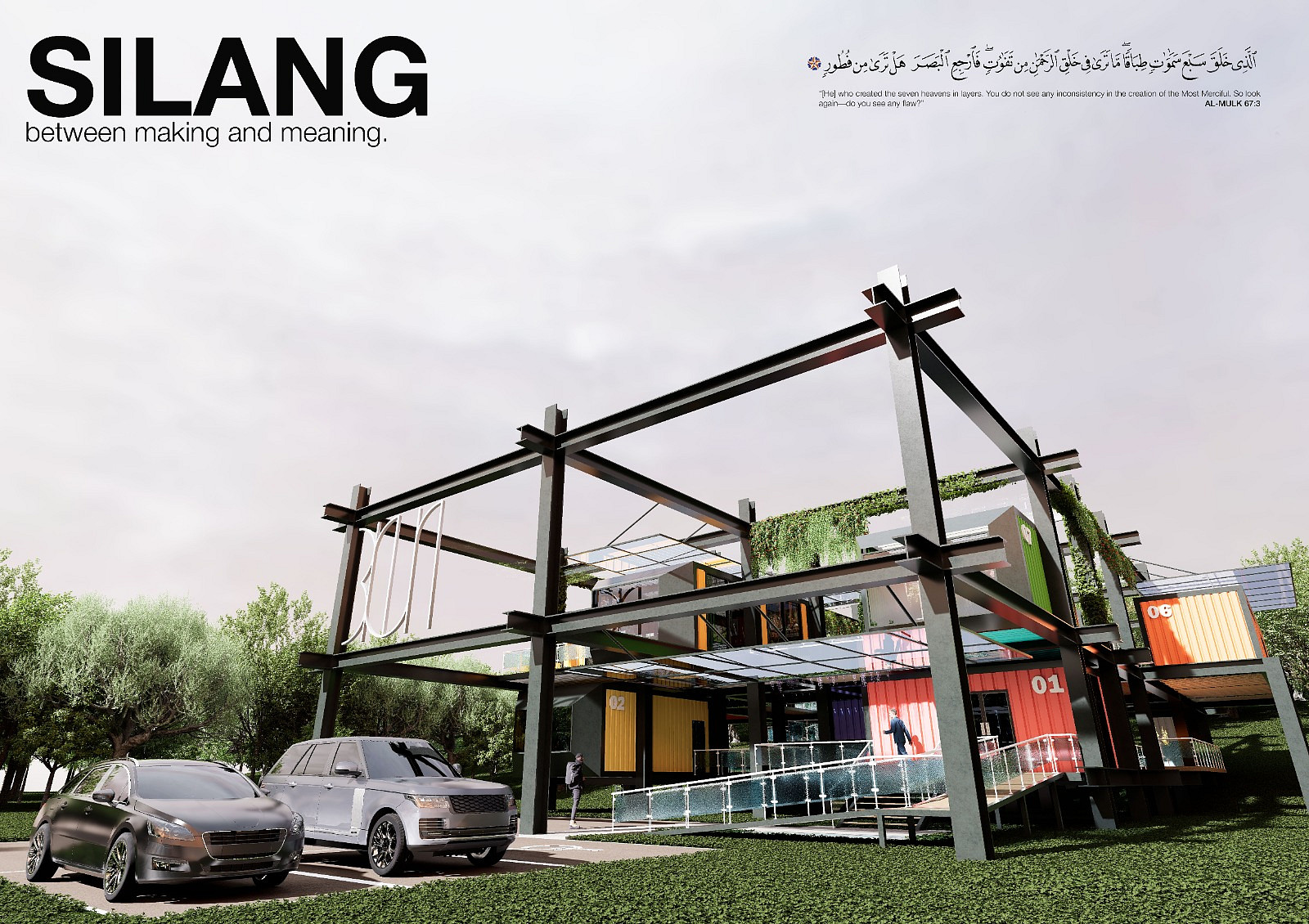

SILANG: Between making and meaning


Project idea
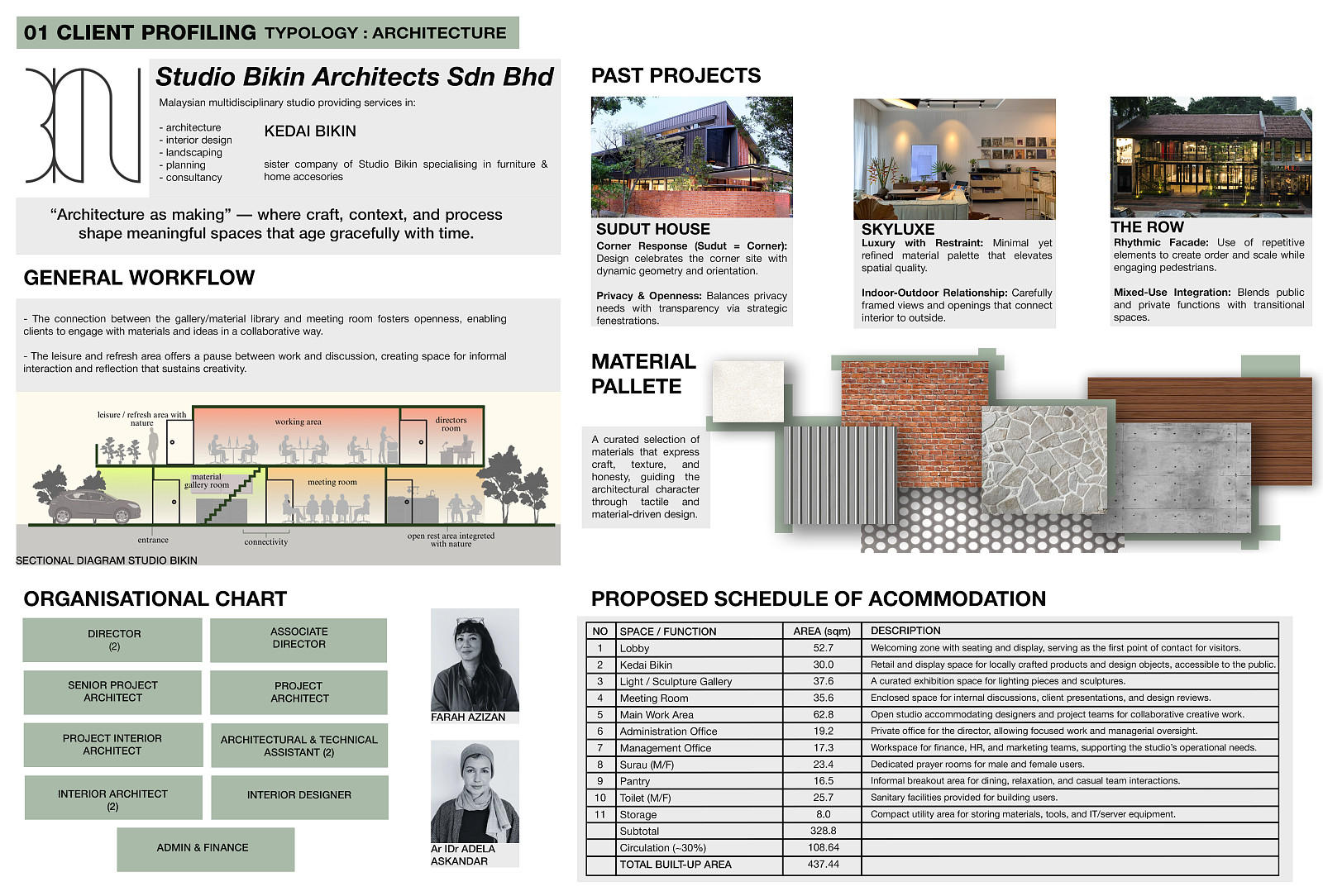
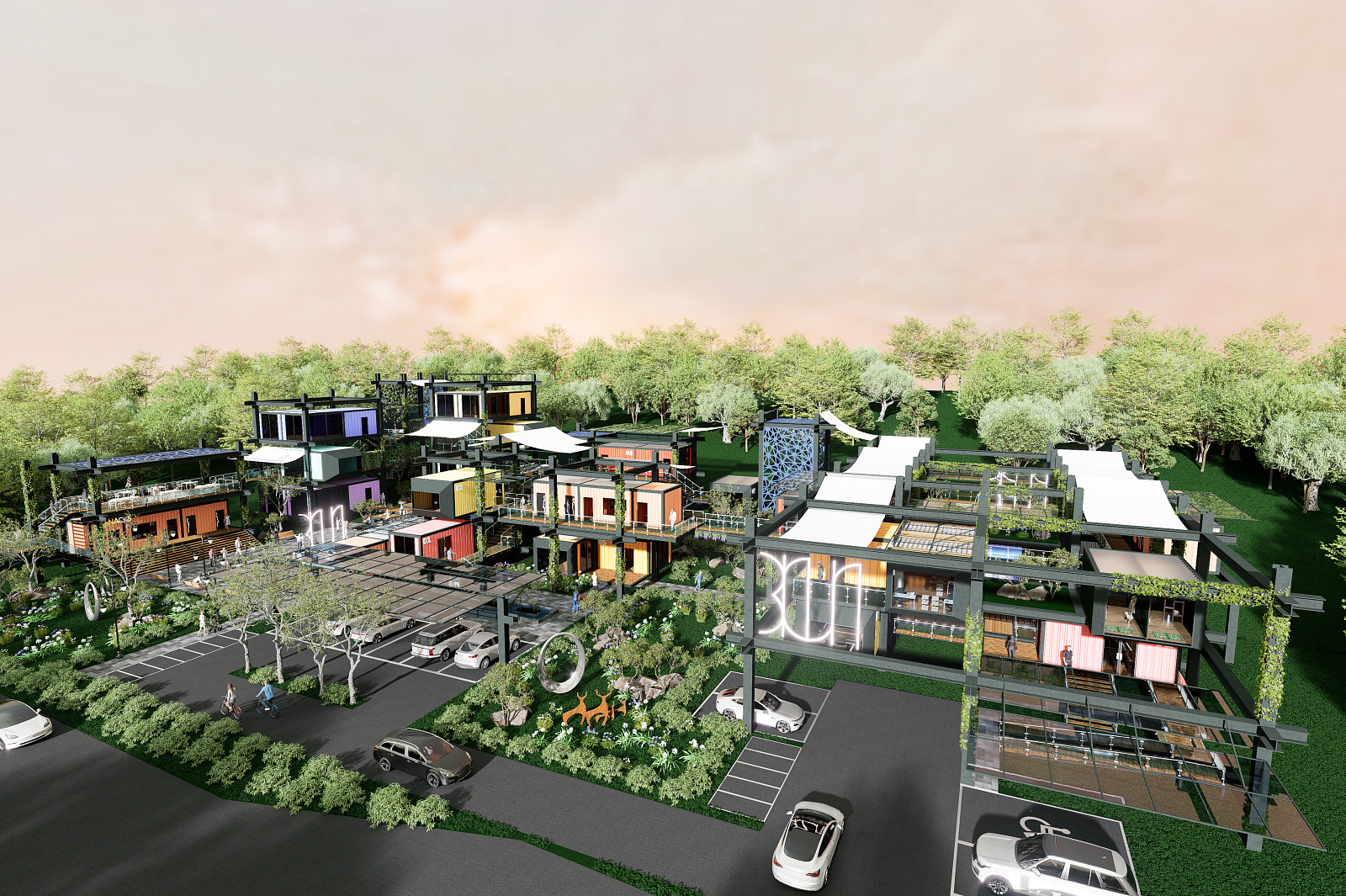
Based on the project brief, this project is commissioned for Studio Bikin, the chosen client, a creative atelier focused on architectural design and innovation. The aim is to design a modular, adaptable, and collaborative studio complex that supports internal operations, fosters creativity and teamwork, and encourages engagement with the wider community.
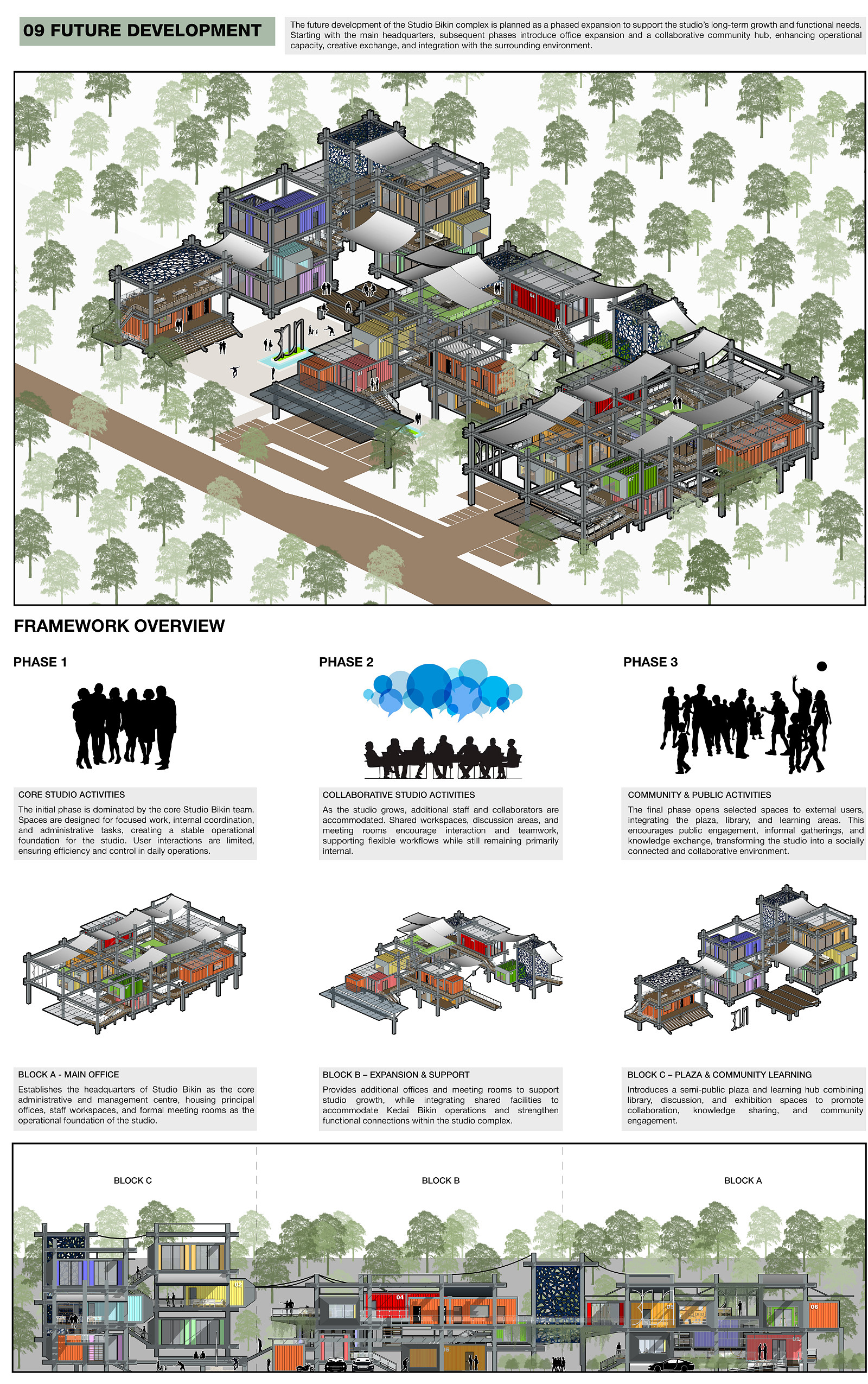
The development is conceived in phases: establishing the main office as the operational core (Phase 1), expanding workspaces and support facilities to accommodate a growing team (Phase 2), and introducing semi-public spaces such as a plaza and library to promote knowledge exchange and community interaction (Phase 3). Emphasizing modular design, flexibility, and integration with greenery, the project ensures the studio can evolve over time while maintaining a coherent spatial and functional framework.
Goals and Objectives:
1. Establish a functional and flexible headquarters for the creative atelier.
2. Support collaborative studio operations and adaptable workspaces for an expanding team.
3. Create semi-public spaces for community engagement, learning, and exhibitions.
4. Integrate modular design principles and greenery to enhance adaptability and well-being.
5. Demonstrate a phased development strategy that balances internal efficiency, creative collaboration, and public interaction.
Project description
This project addresses the requirements outlined in the project brief for Studio Bikin, the chosen creative architectural atelier. The studio requires a functional headquarters, collaborative workspaces for a growing team, and areas that support creativity, discussion, and engagement with the wider community.
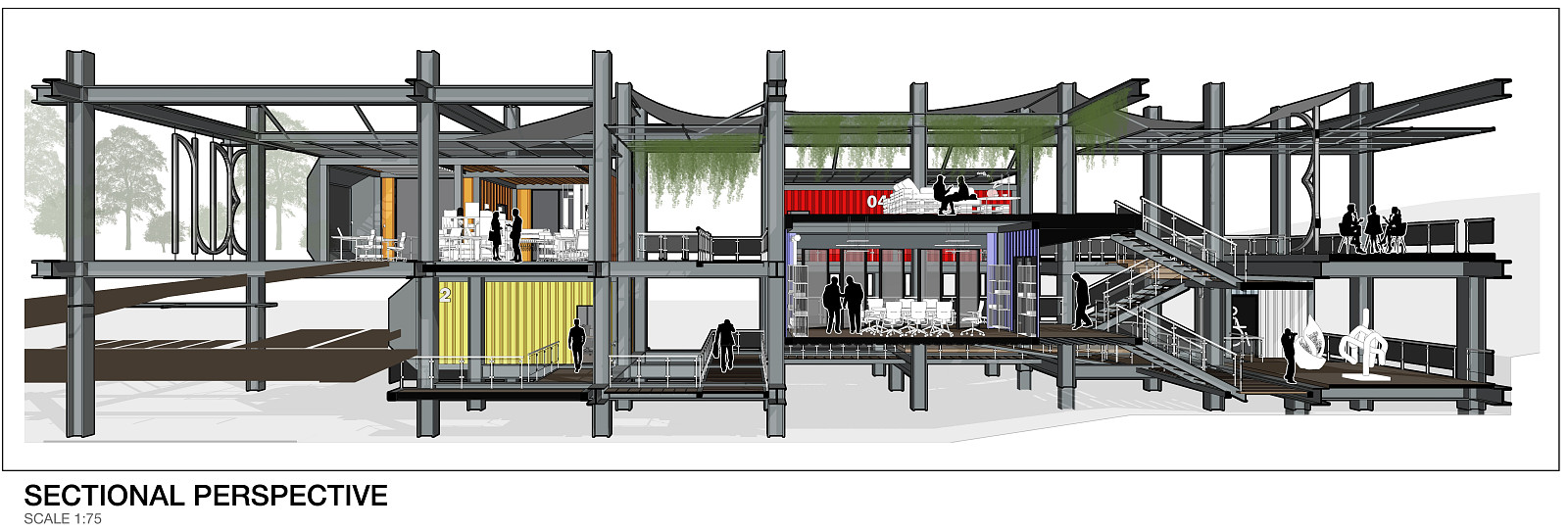
The design solution is structured in phases and organized around the main spaces identified in the Scope of Accommodation (SOA):
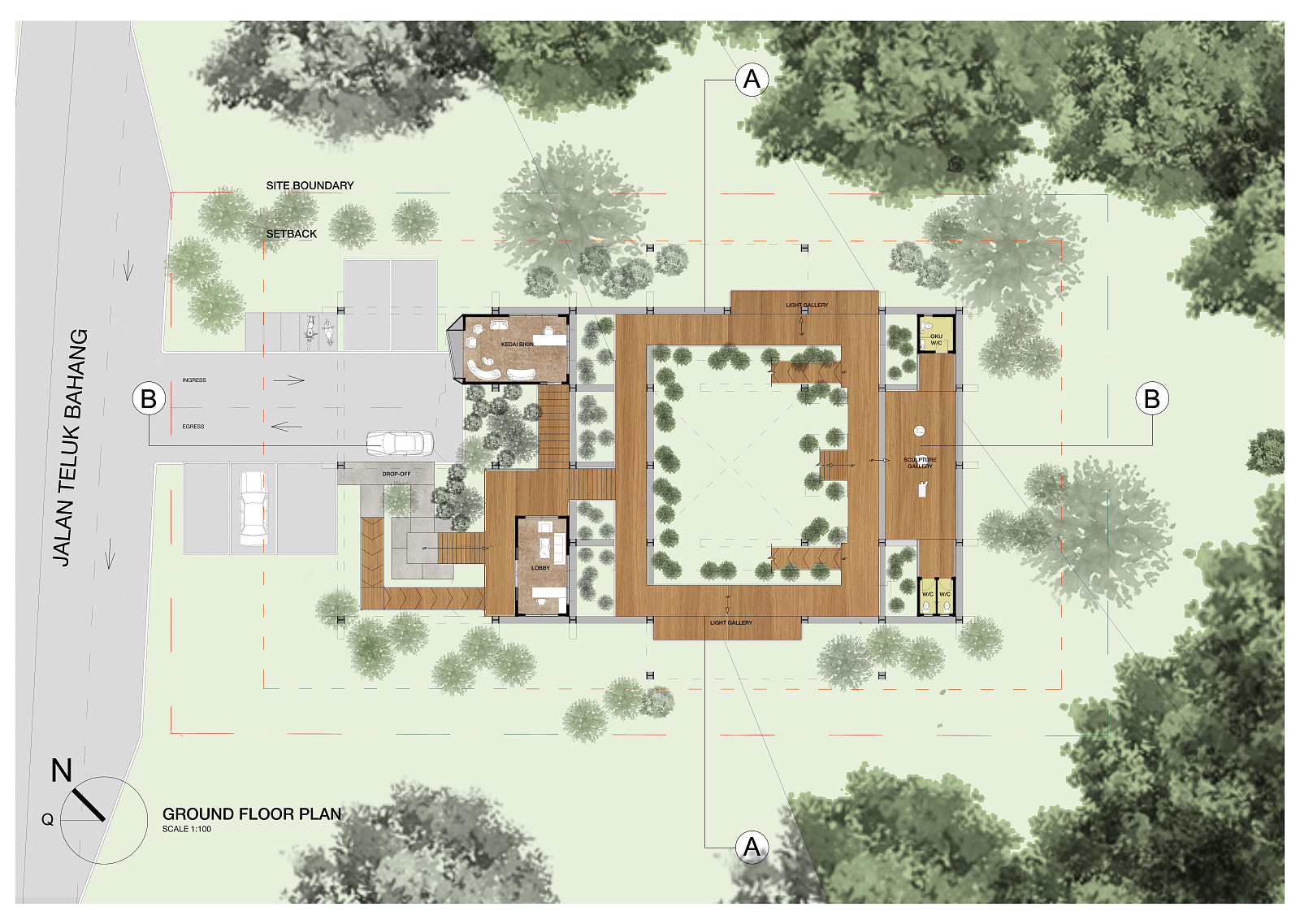
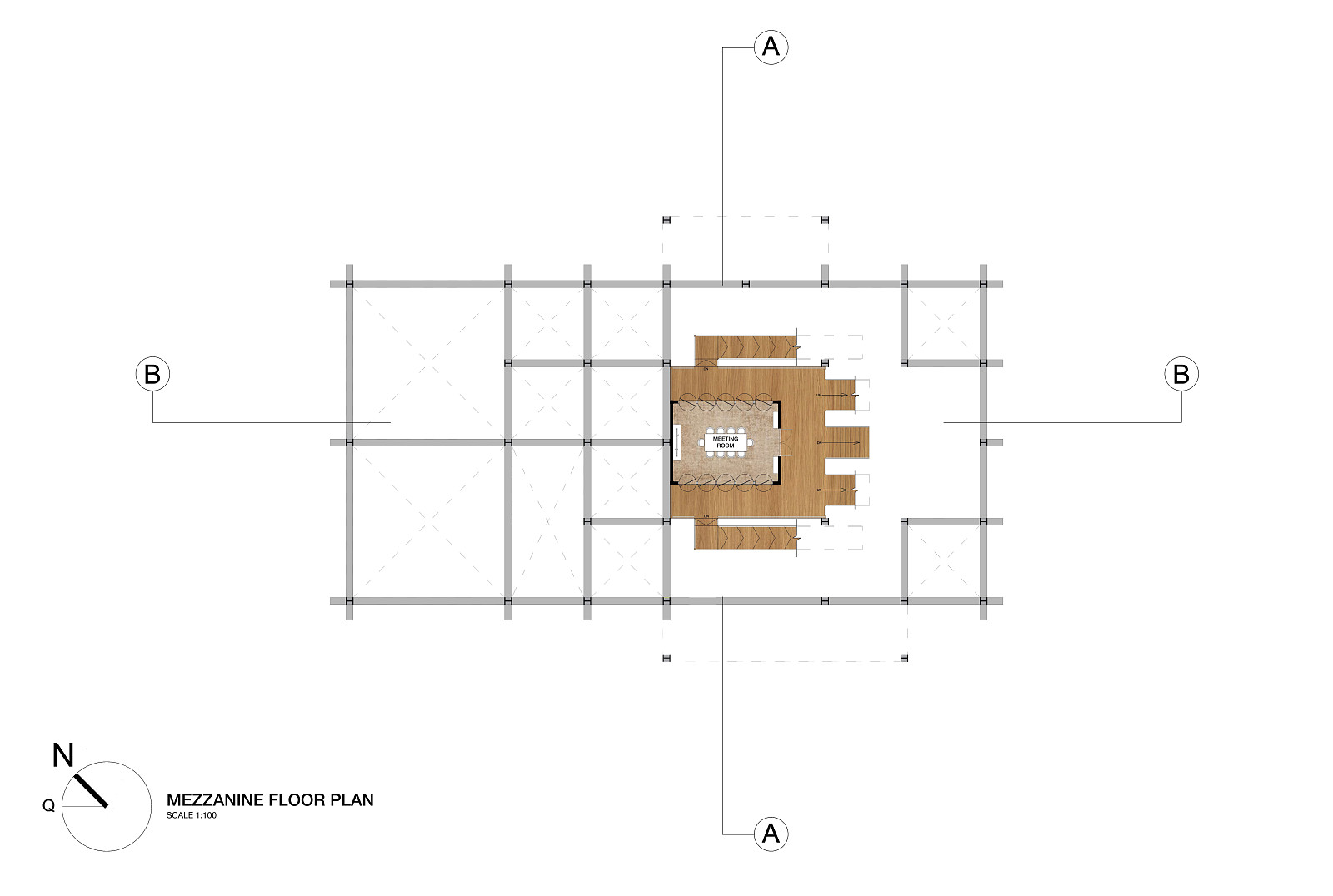
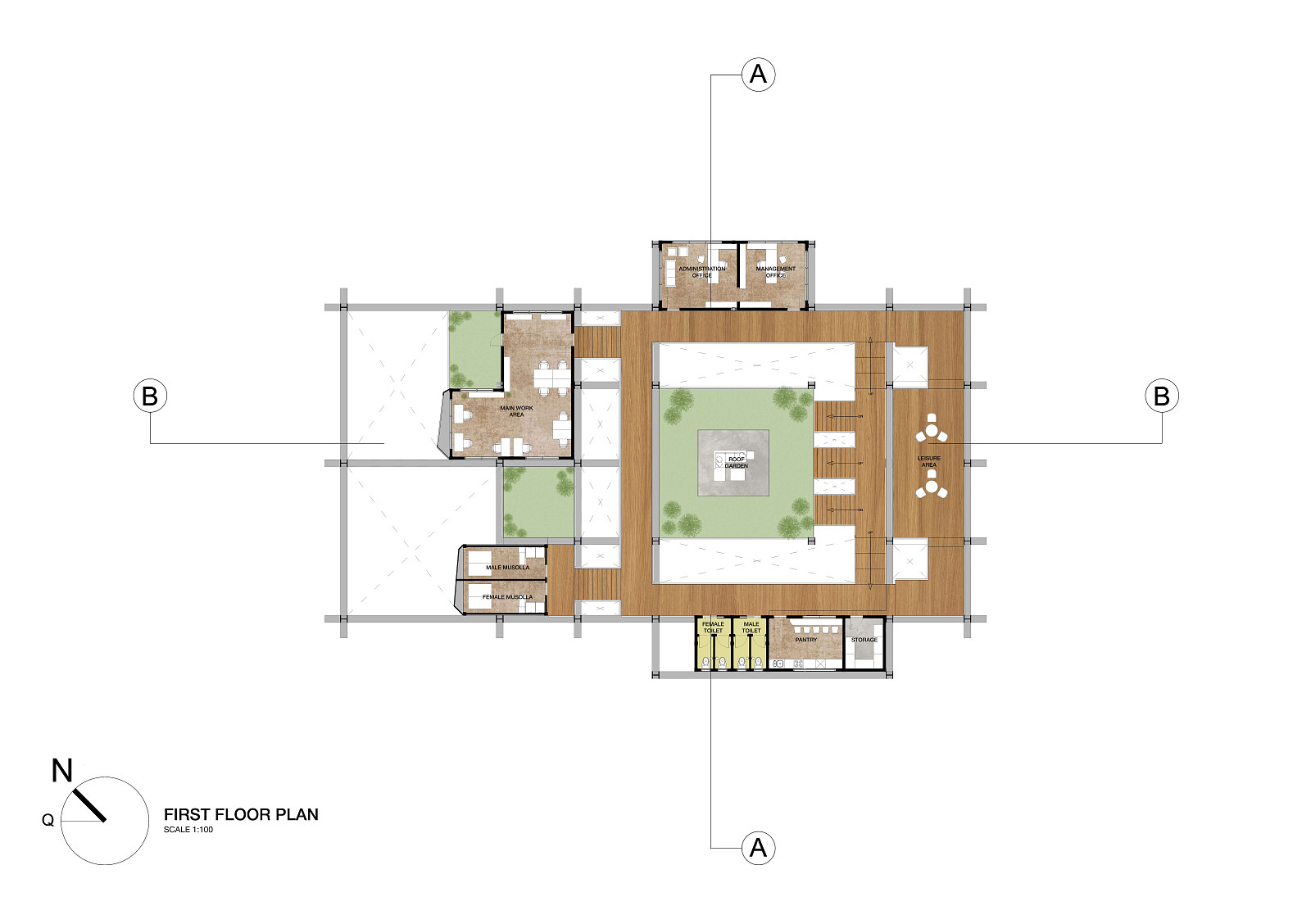
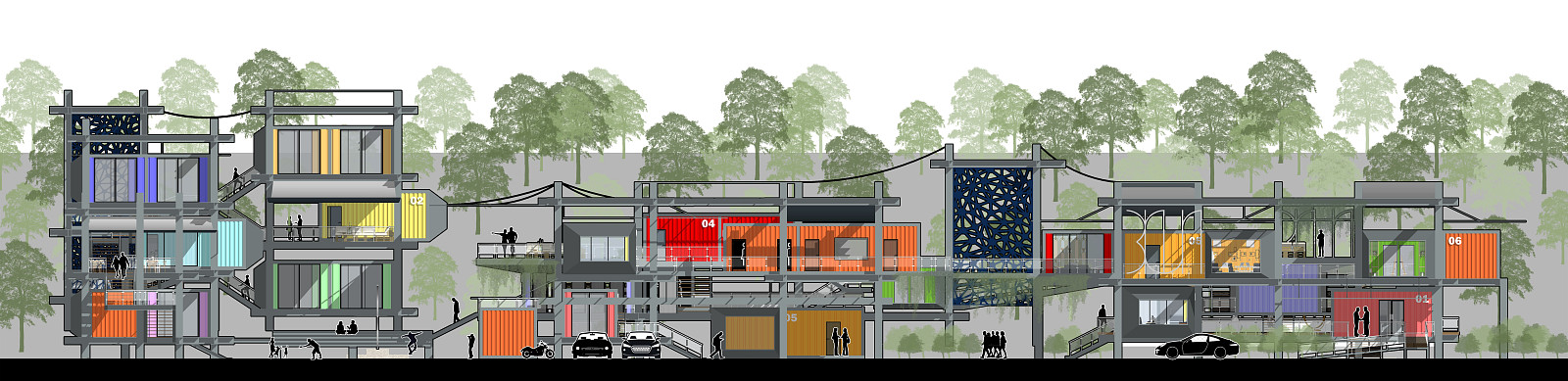
Phase 1 – Main Office: Reception/lobby area, management office, administrative area, main work area, and material library. This phase establishes the operational core of the studio, supporting focused work, internal communication, and administrative control.
Phase 2 – Office Expansion: Additional offices, meeting/discussion rooms, pantry/social space, storage/server areas, and facilities supporting Kedai Bikin operations. This phase fosters collaboration, team interaction, and flexible use of space for a growing studio.
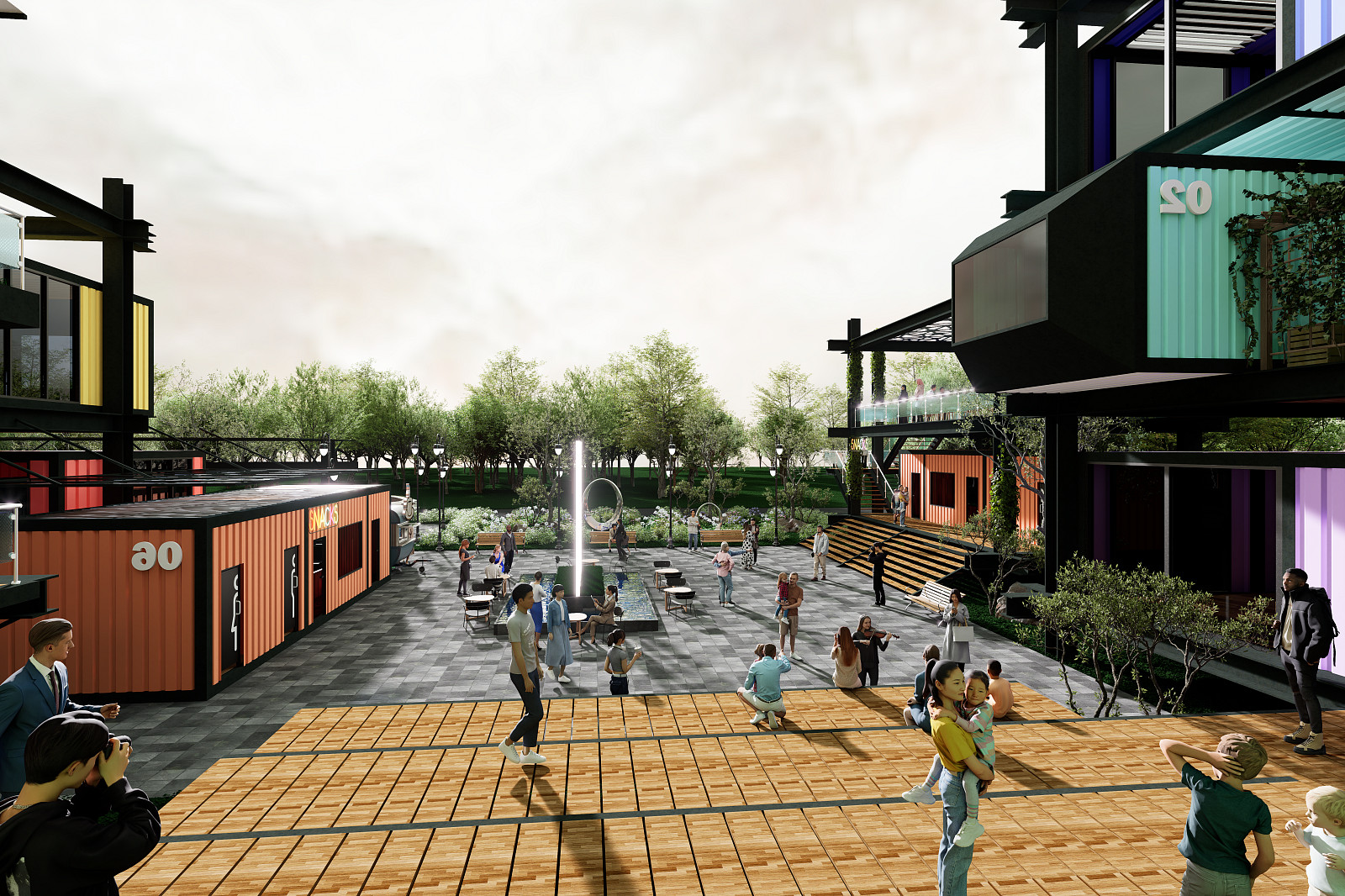
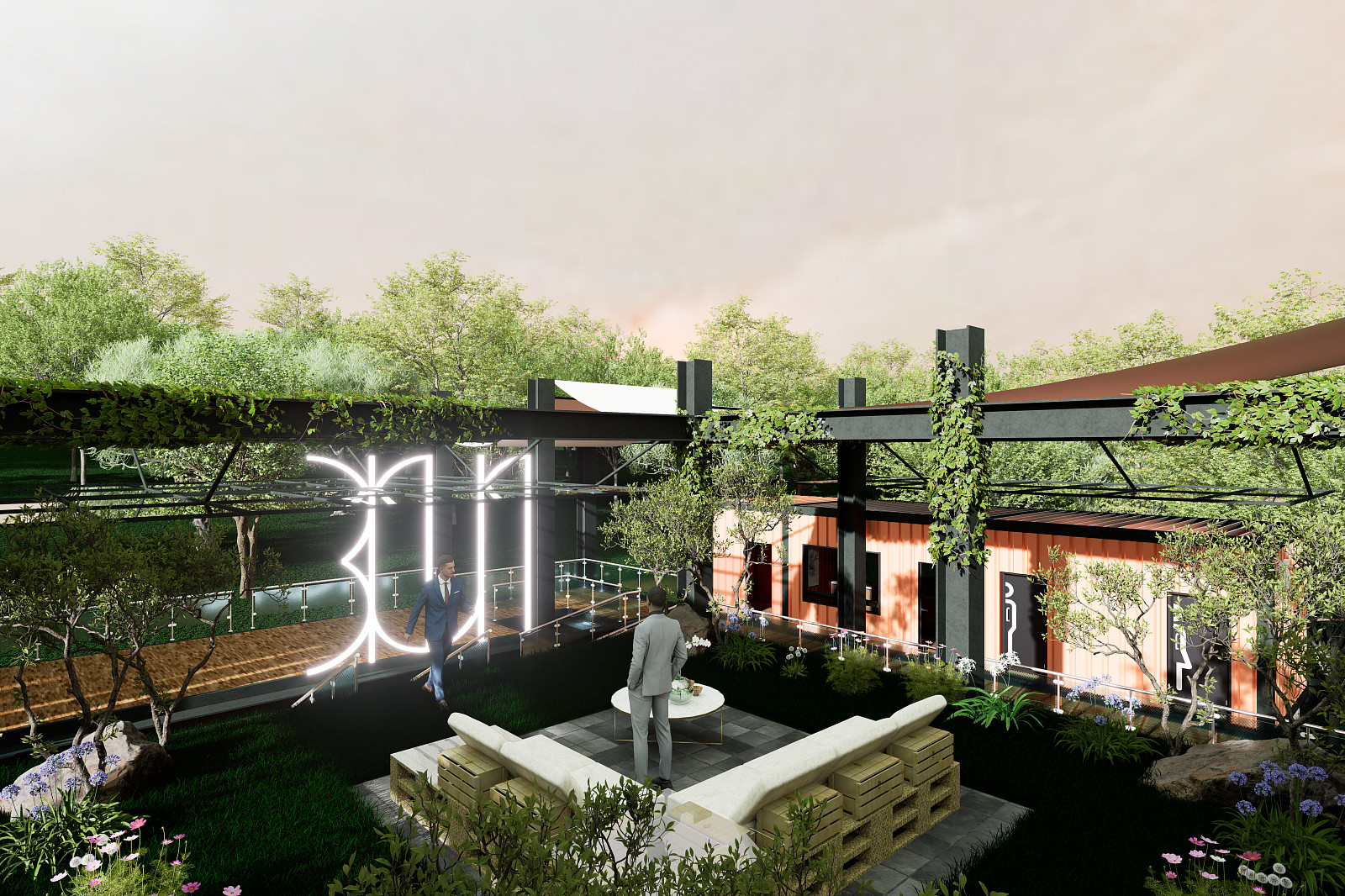
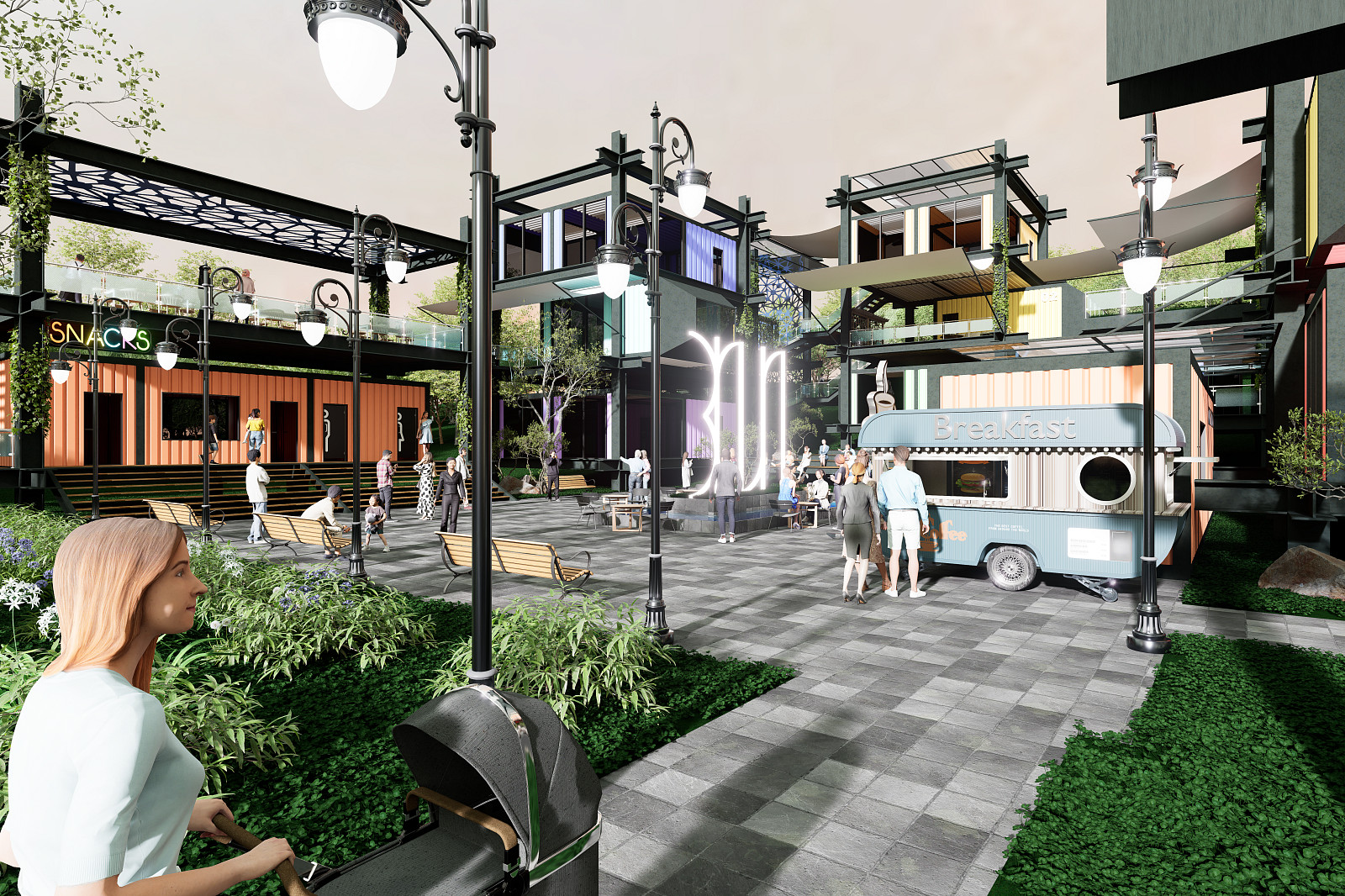
Phase 3 – Community & Collaboration: Display/gallery areas, semi-public plaza, library, and flexible learning spaces, designed to facilitate informal interaction, knowledge exchange, exhibitions, and engagement with the public.
Support Facilities: Toilets (M/F) and surau (M/F) are strategically integrated throughout all phases to ensure comfort, accessibility, and inclusivity.
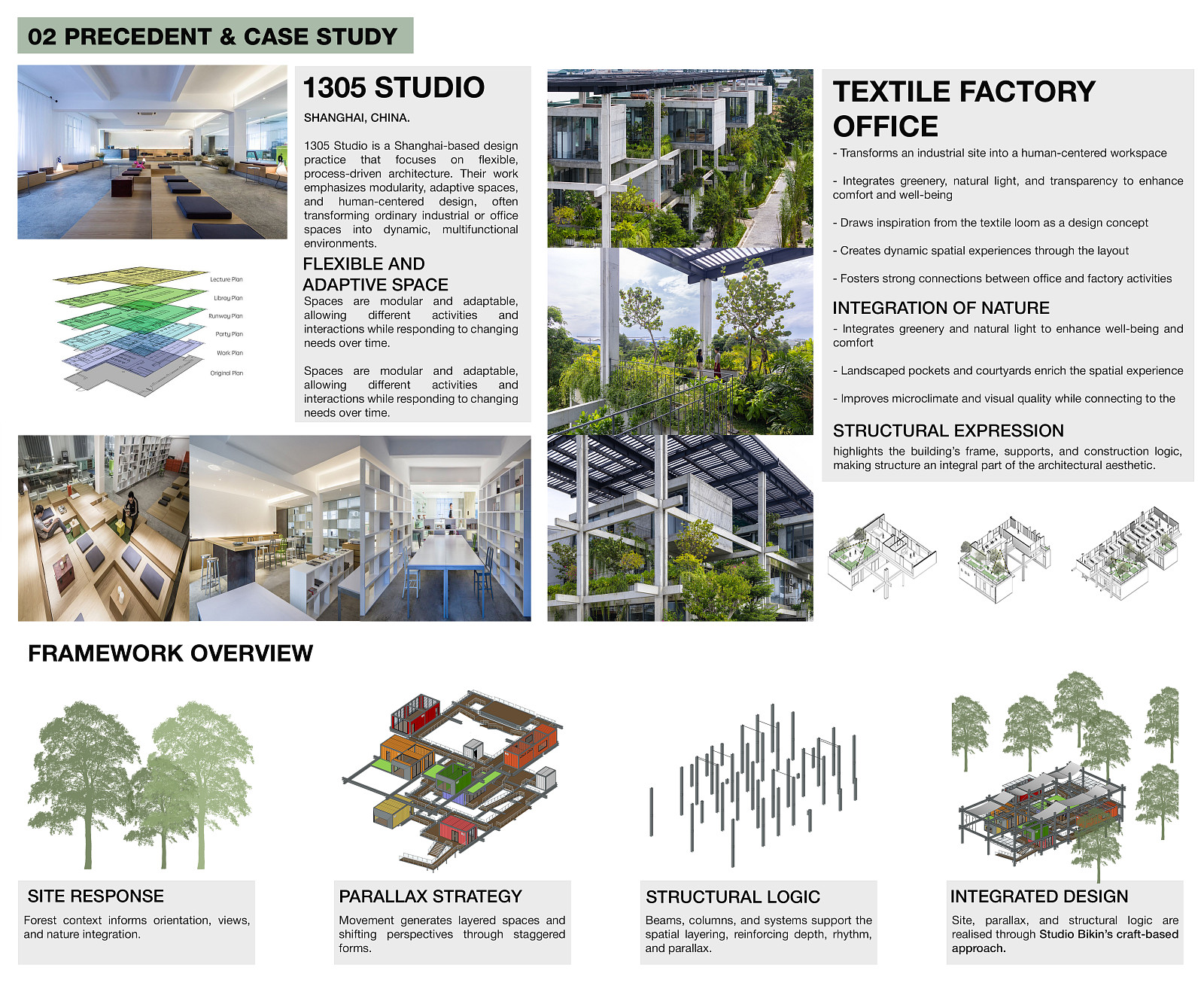
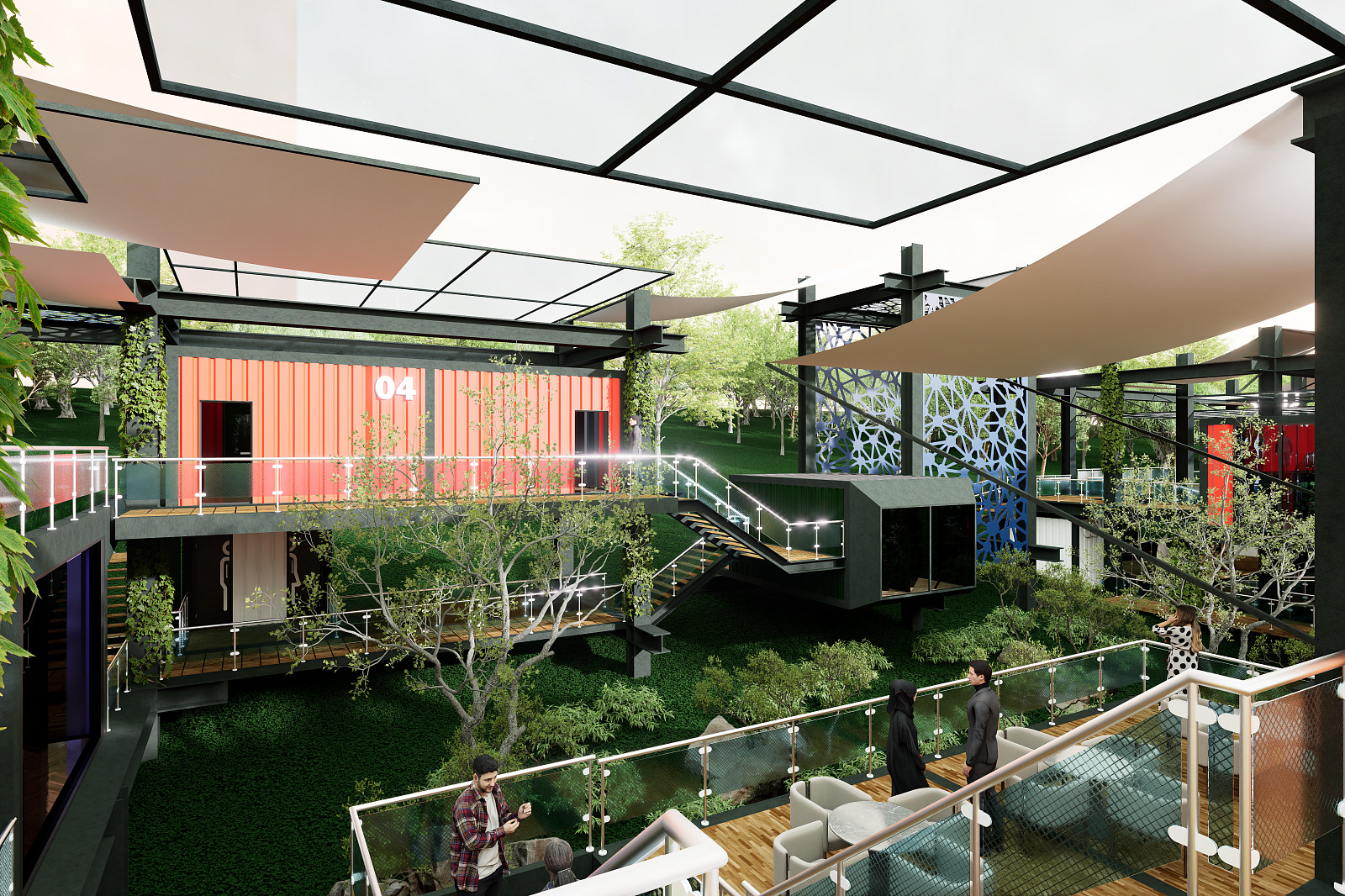
The project employs a modular and adaptable approach, ensuring that spaces can evolve with the studio’s needs over time. Circulation is designed to balance internal workflow, collaborative interaction, and public access, while integrated green elements enhance the quality of the work environment. Overall, the solution creates a coherent and adaptable complex that harmonizes internal operations, collaborative studio practices, and community engagement.
Technical information
Technical Information
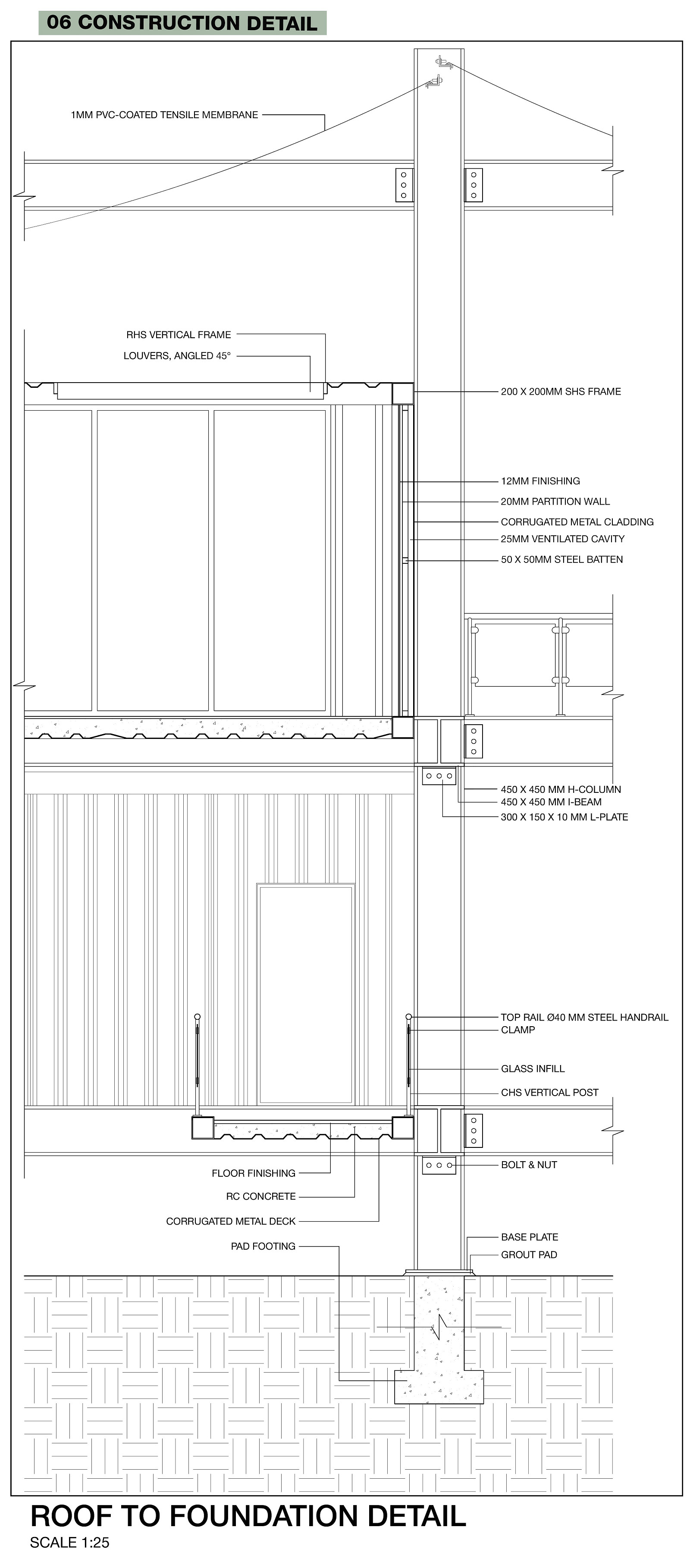
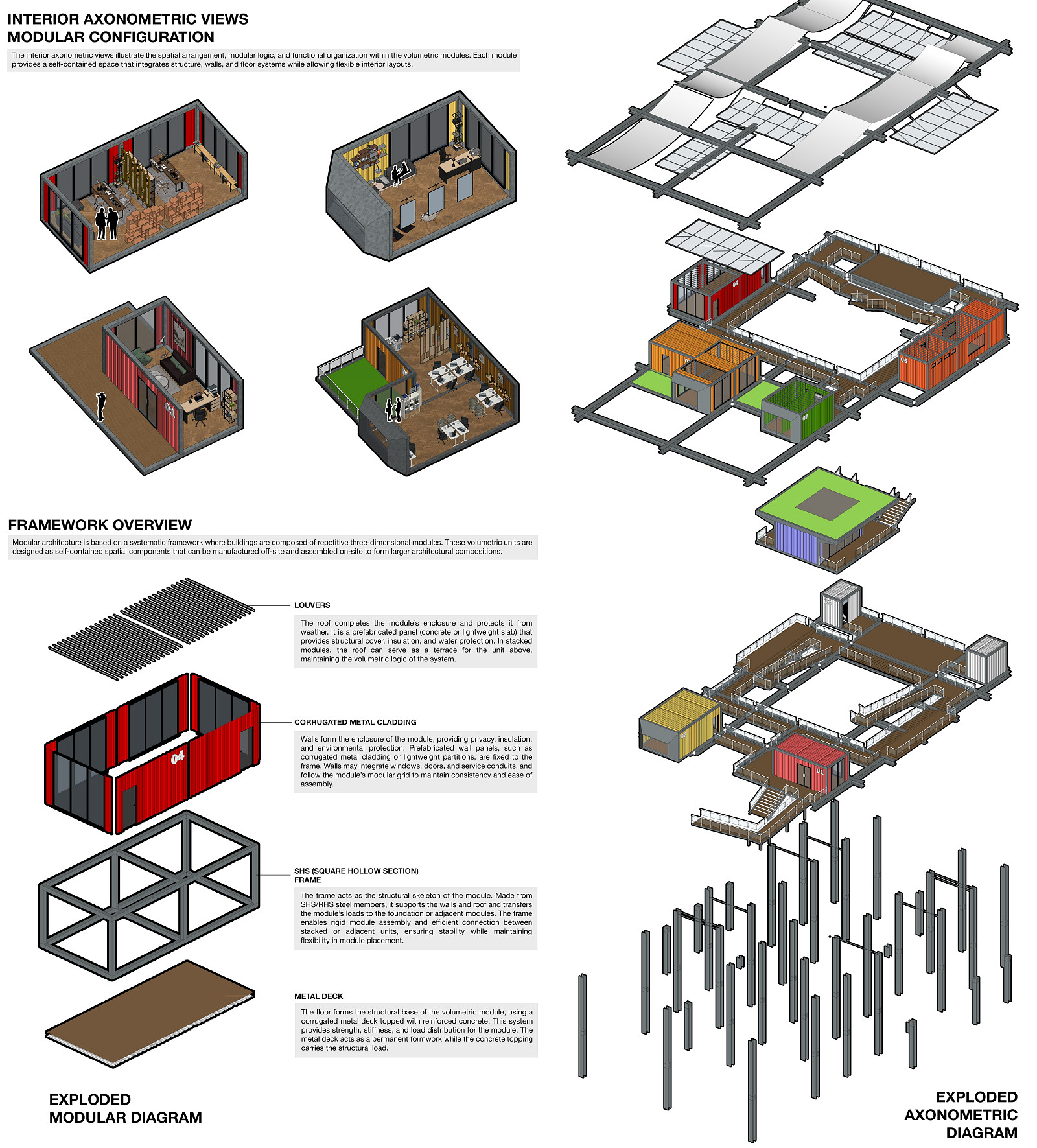
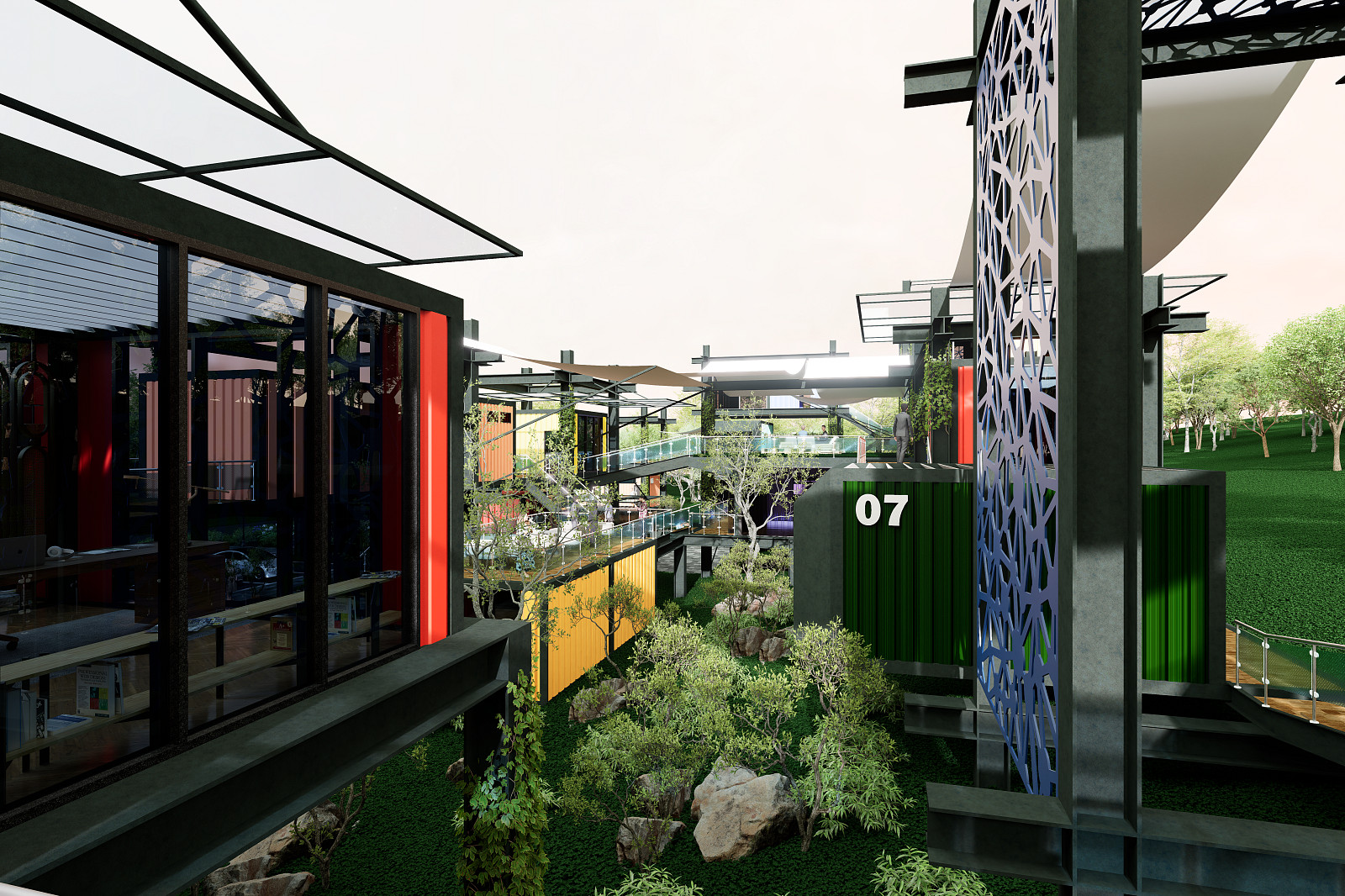
The Studio Bikin complex employs a modular and adaptable construction system, supporting phased development, flexibility, and future growth.
1. Structural & Modular System:
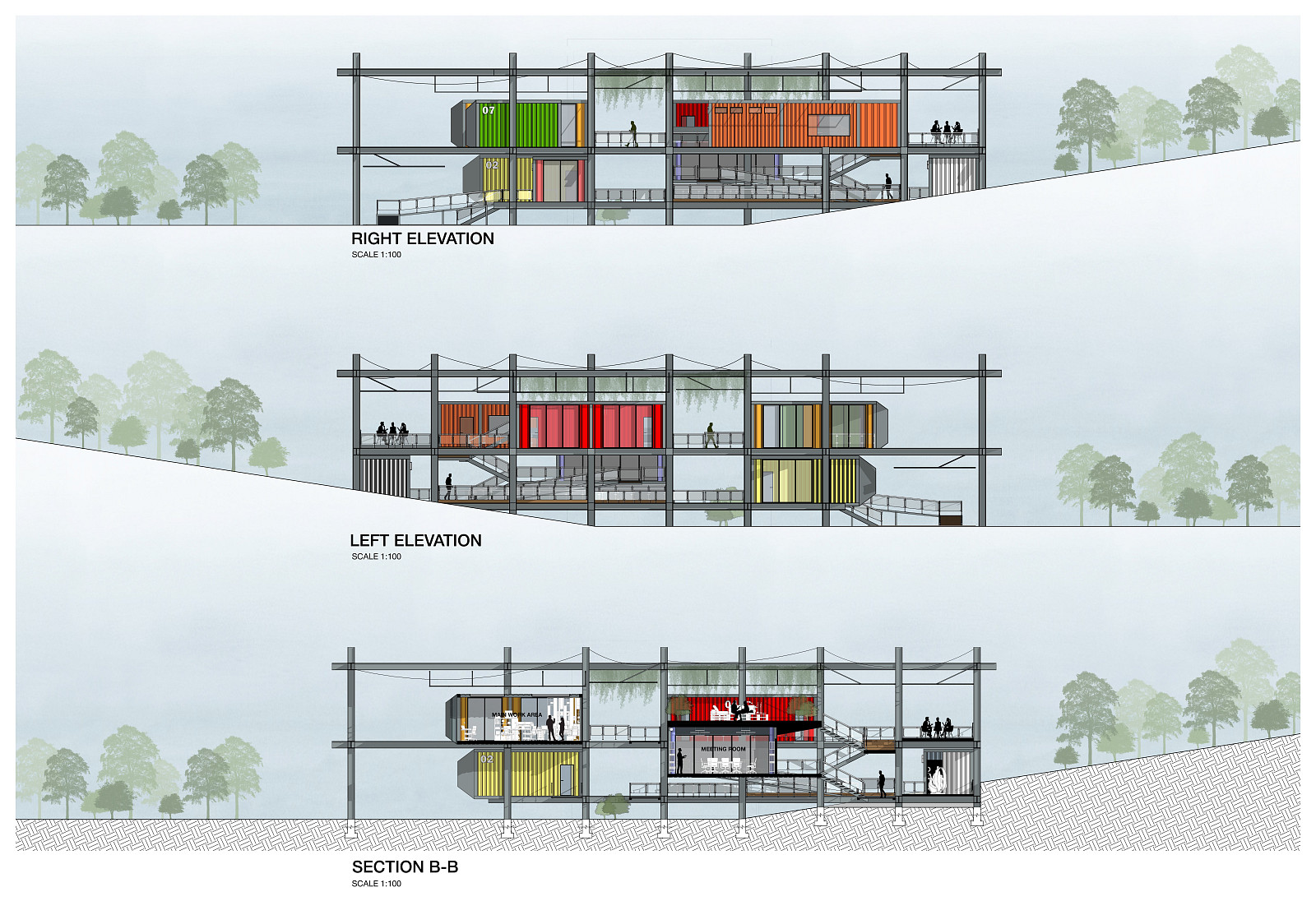
- Primary framework: H-columns and I-beams for strength and stability.
- Flooring: Metal deck for efficient load distribution.
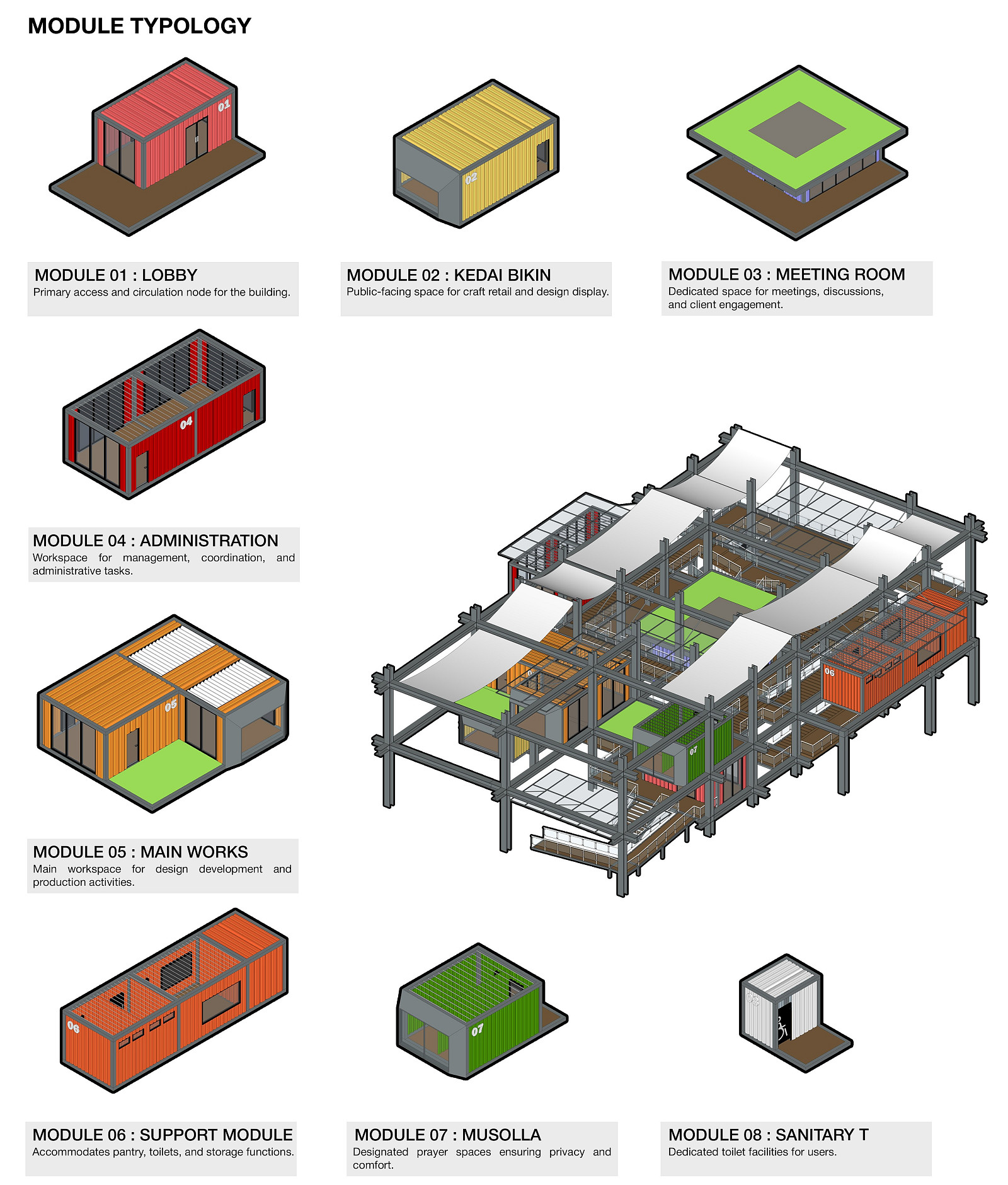
- Prefabricated modules allow flexible layouts and phased expansion of offices, collaborative areas, and public spaces.
2. Building Envelope & Facade:
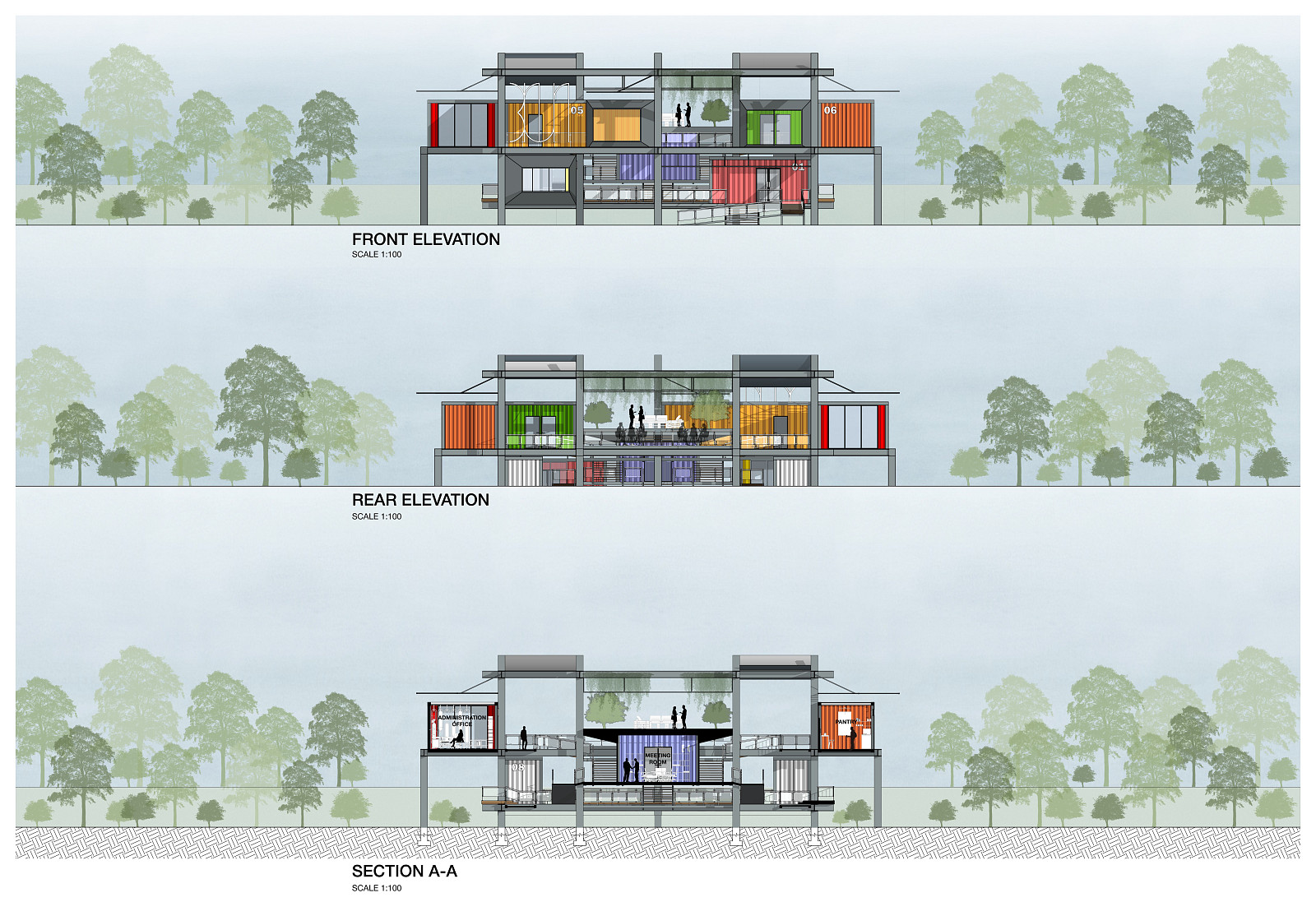
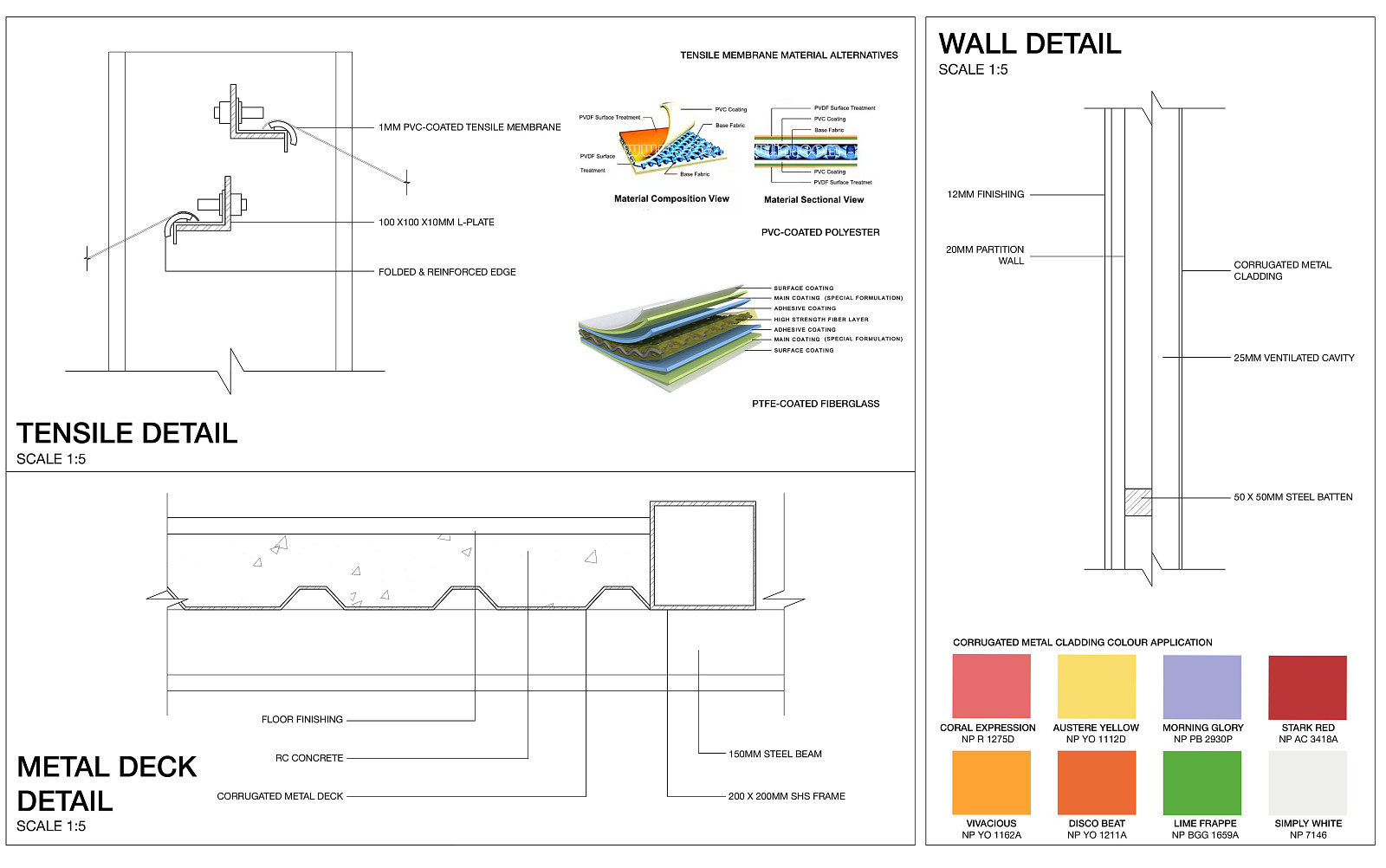
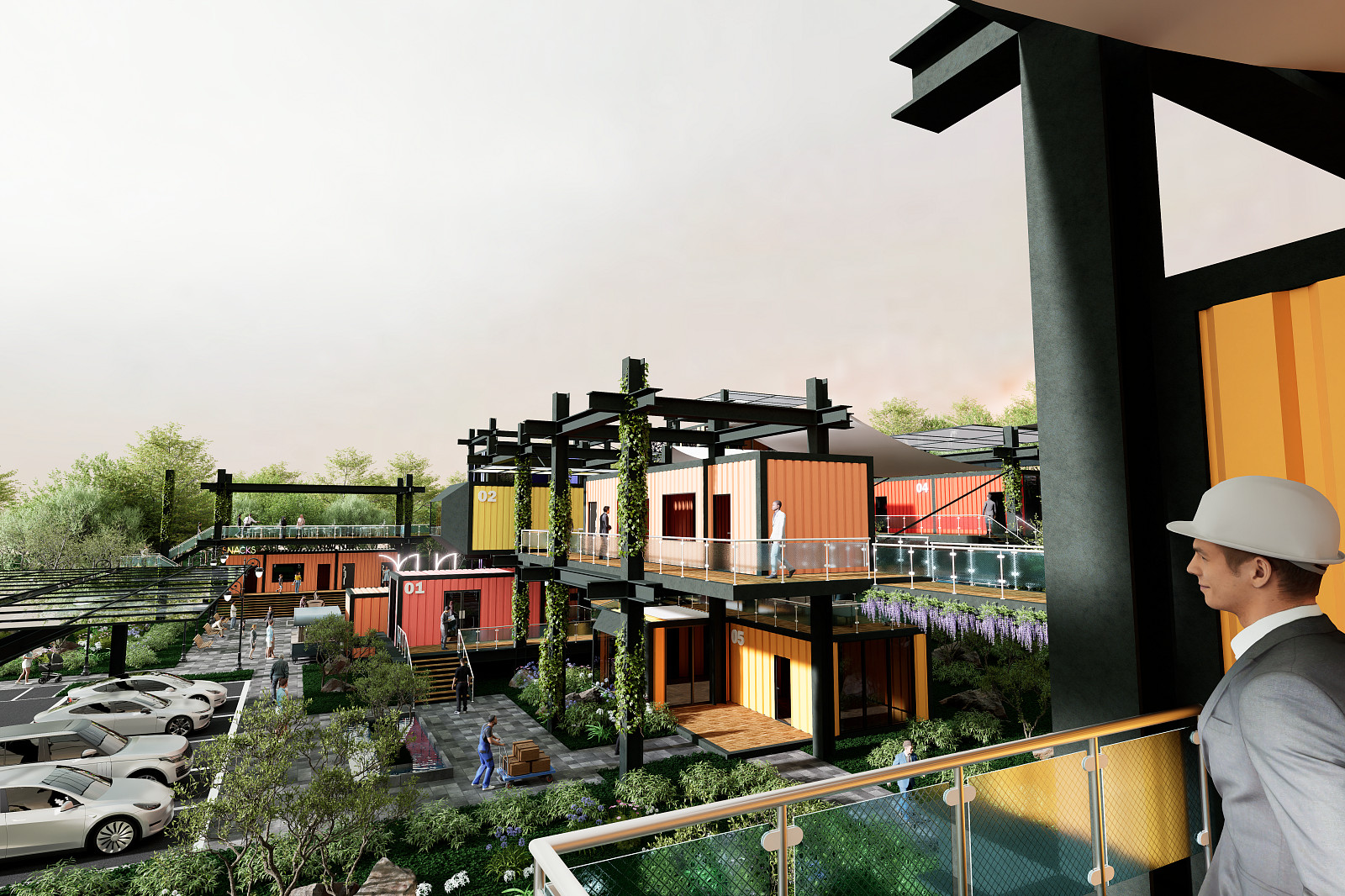
- Container panels for durable, modular walls.
- Glass for windows and skylights to maximize natural light and visual connectivity.
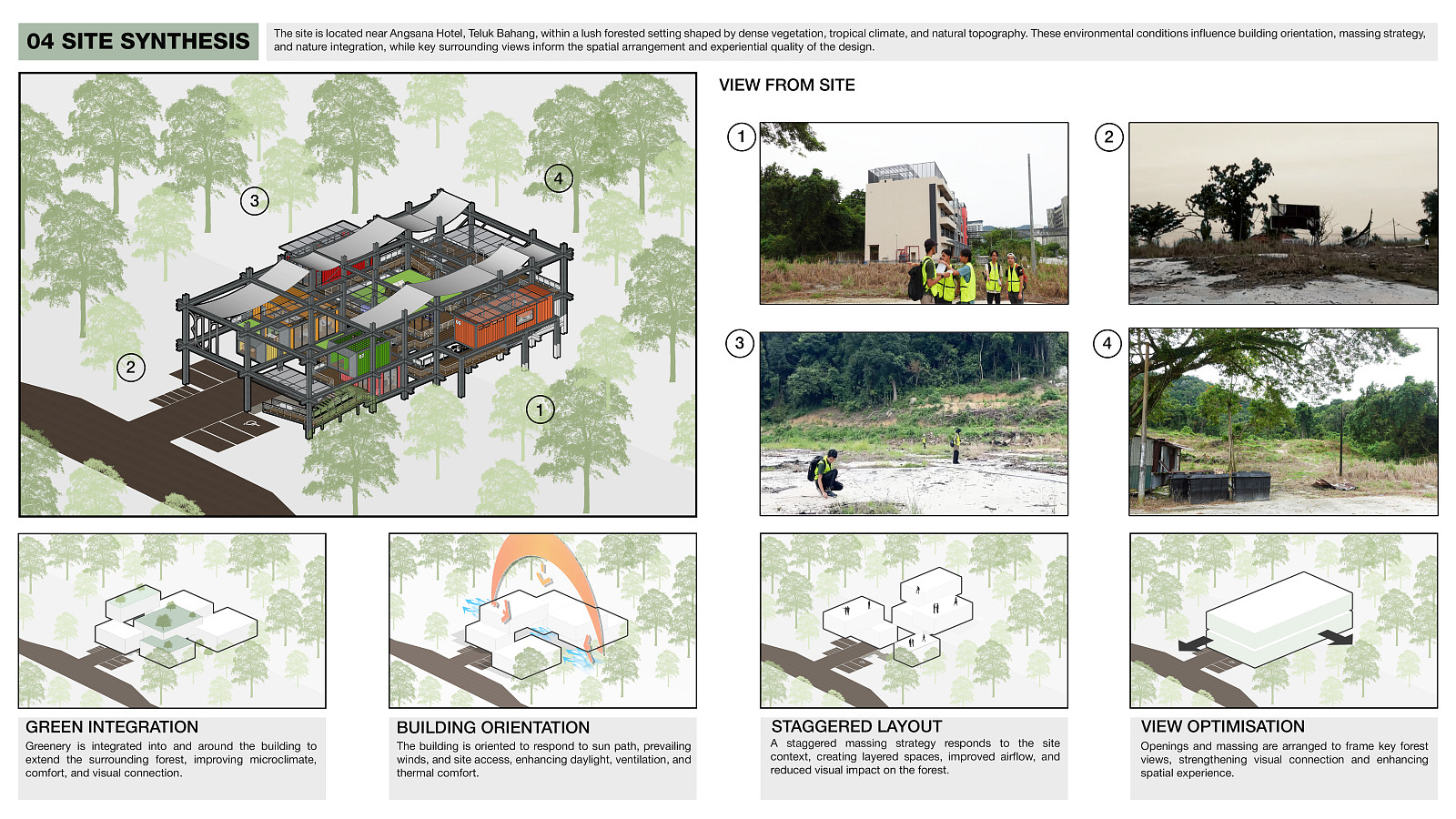
- Perforated panels and tensile elements for shading, ventilation, and aesthetic variation.
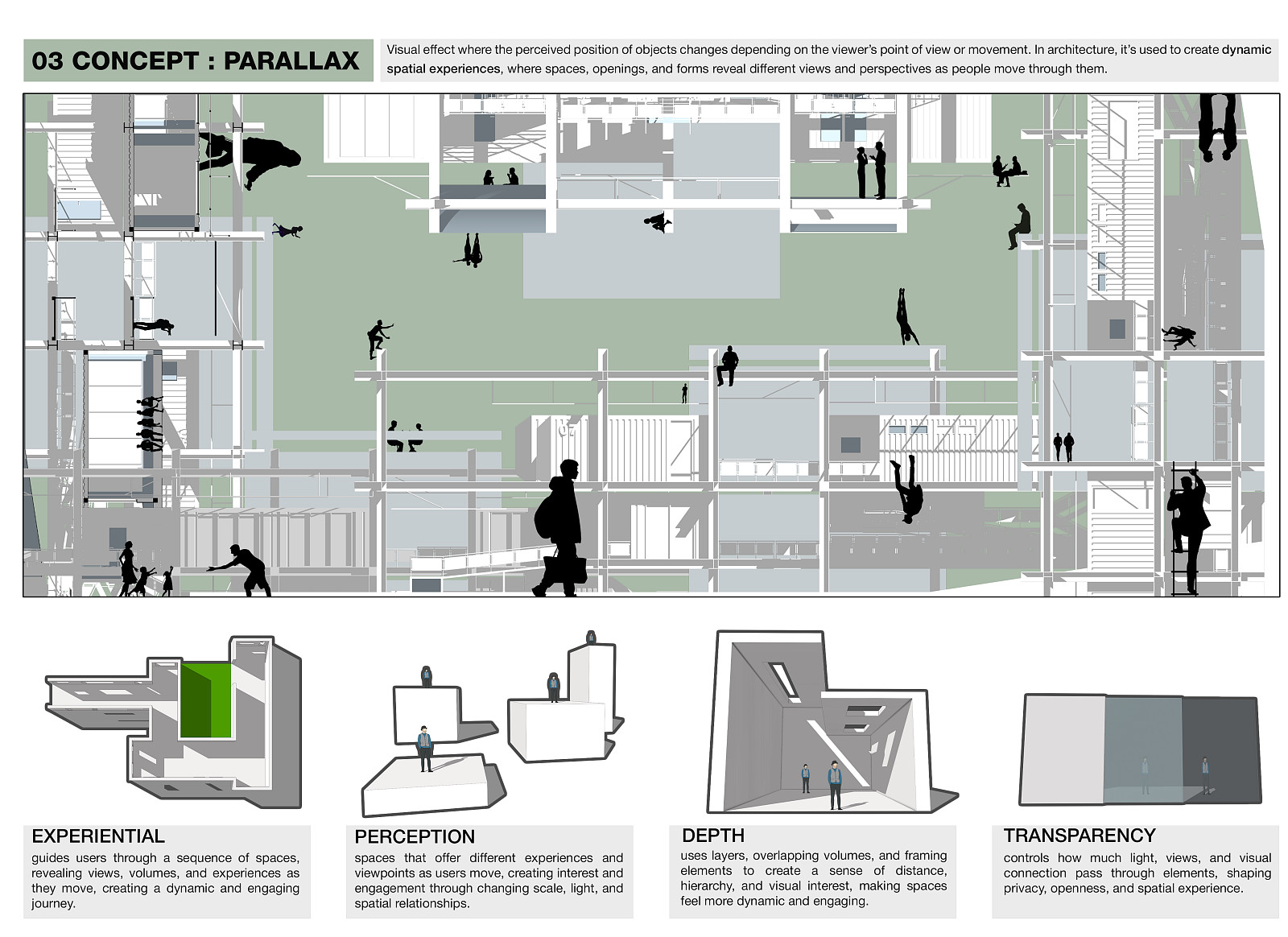
- Color-coded modules differentiate phases and functions, improving wayfinding and spatial identity.
3. Interior & Facilities (SOA):
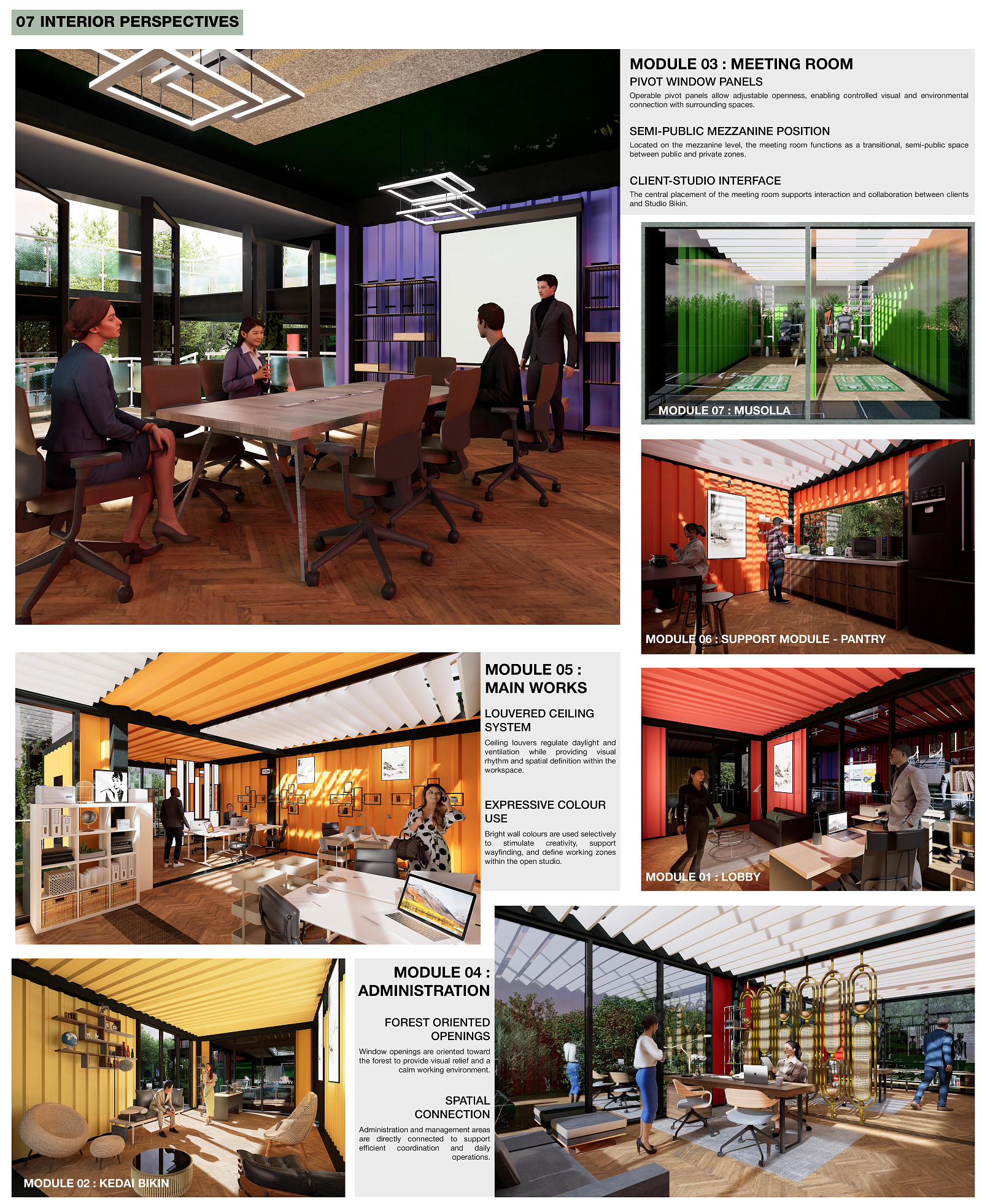
- Reception/Lobby, Management Office, Administrative Area, Main Work Area, Material Library, Meeting/Discussion Rooms, Display/Gallery, Pantry/Social Space, Storage/Server, Toilets (M/F), Surau (M/F).
- Facilities are integrated into the modular grid to optimize circulation, workflow, and collaboration.
4. Sustainability & Environmental Considerations:
- Skylights and perforated facades optimize daylight while reducing solar heat gain.
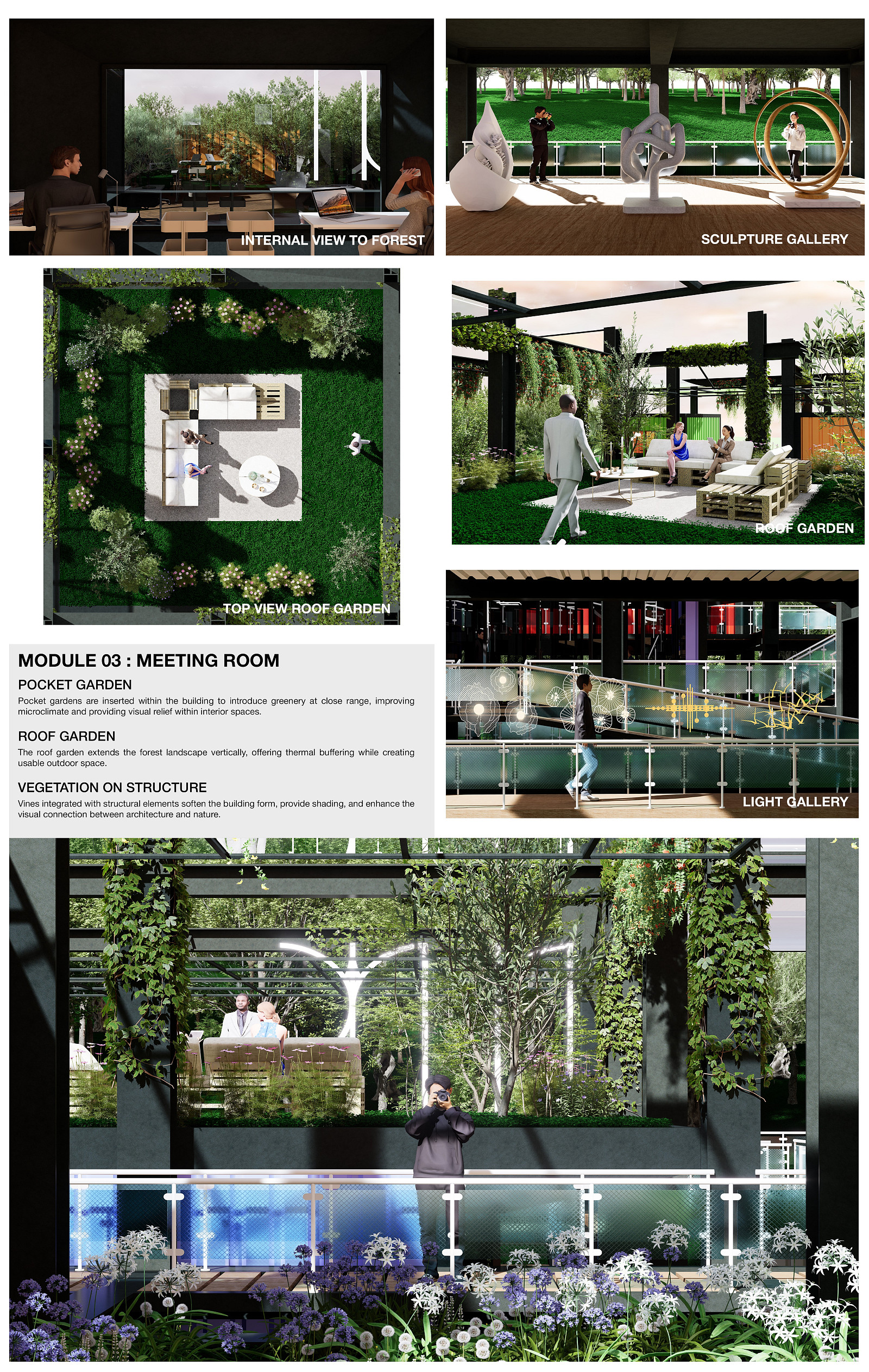
- Green elements enhance indoor-outdoor experience and occupant well-being.
- Modular construction minimizes material waste and allows efficient phased assembly.
5. Phasing & Adaptability:
- Three phases: main office, office expansion, and community/public spaces.
- Structural and service cores are coordinated for easy reconfiguration, ensuring long-term adaptability.

Copyright © 2026 INSPIRELI | All rights reserved. Use of this website signifies your agreement to the Terms of Use, Privacy Policy, and use of cookies.