Castle Quarter, Mladá Boleslav


Project idea
The project addresses a long-term urban discontinuity in the city of Mladá Boleslav. Historically, the city developed northward from its medieval castle located on a rocky promontory above the confluence of the Jizera and Klenice rivers. However, the rapid industrial expansion of Škoda Auto during the 20th century shifted the functional center of the city away from its historical core. As a result, the original urban center around the castle and Staroměstské náměstí became physically and functionally isolated.
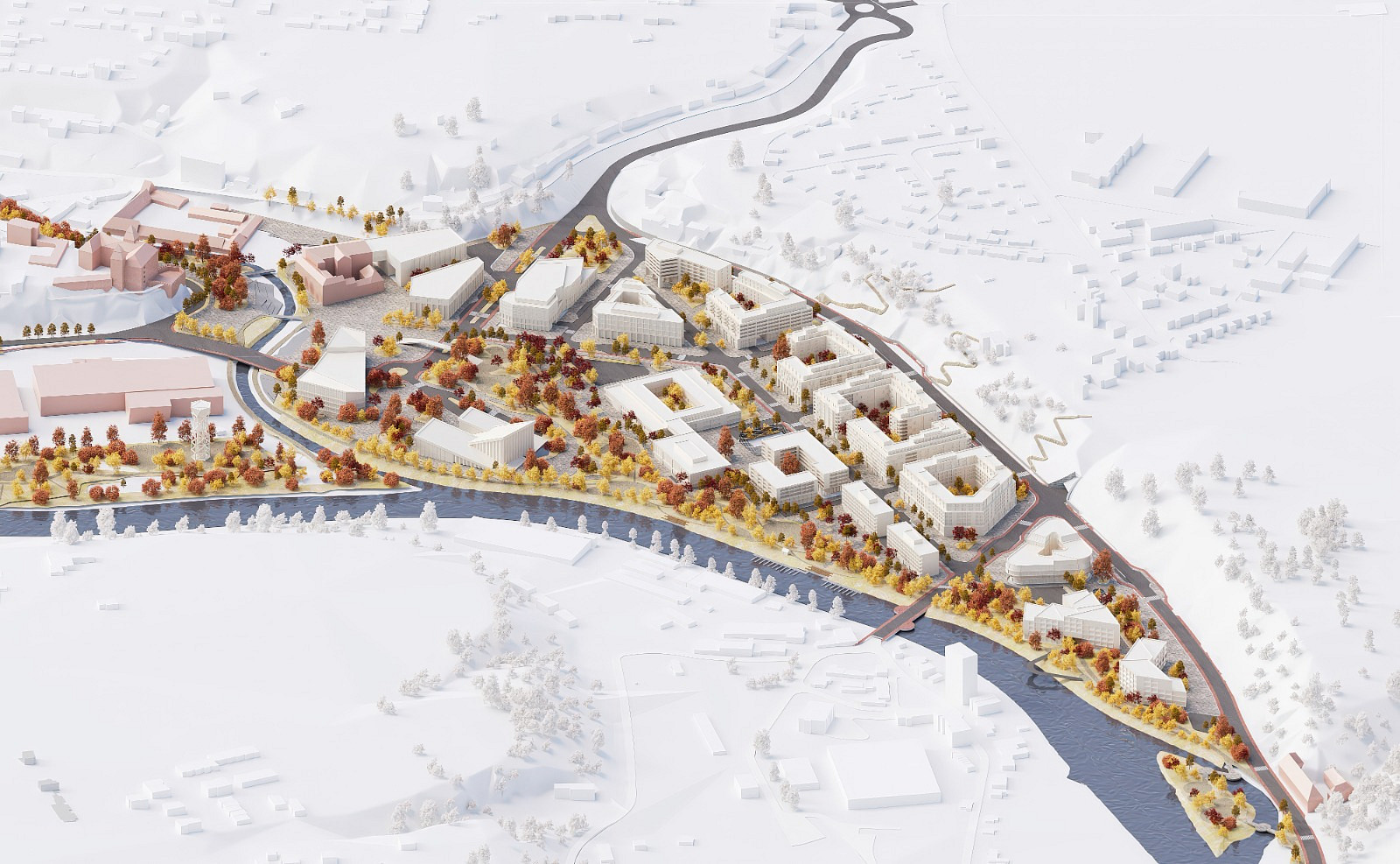
The proposal reinterprets the Podhradí brownfield area as a strategic “bridge to the future” — an urban structure that reconnects the historic core with newly developing southern districts such as Podchlumí and Jižní město.
The main idea is to transform a fragmented industrial remainder into a vibrant cultural, educational and residential multifunctional center. The project aims to restore spatial continuity, reinforce the symbolic role of the castle as a city icon, and create a new urban node that functions as both a transition and a connector within the contemporary city structure.
Project description
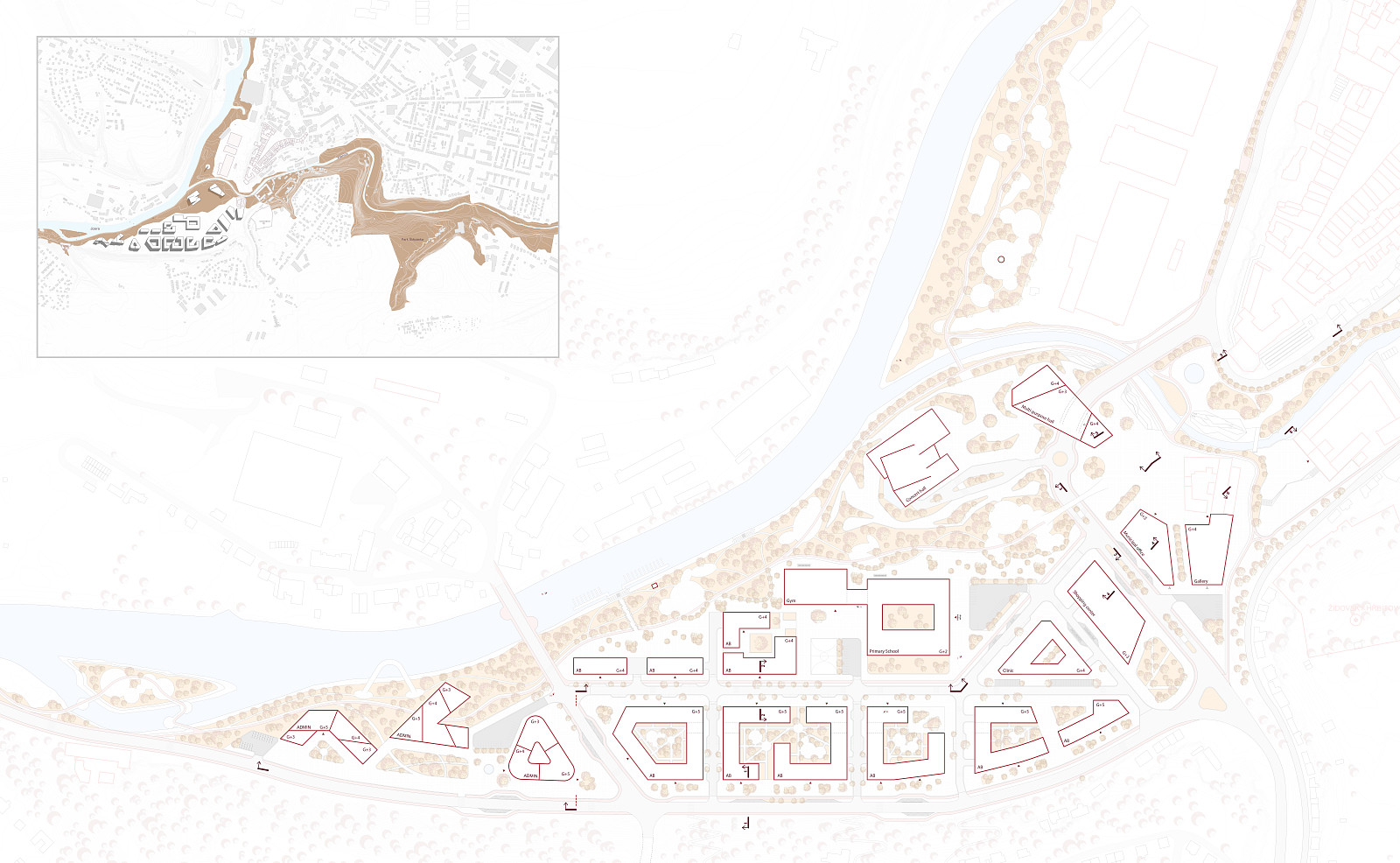
The project is located in the Podhradí area, within the intersections of Nádražní, Ptácká, Štyrsova and Svatovítská streets. The existing territory currently consists of industrial remnants and auxiliary structures (former agricultural facilities, bakery, row garages), forming an underutilized brownfield barrier between key parts of the city.
The proposal introduces a mixed-use urban structure combining residential buildings, cultural and educational facilities, public services, and active ground floors. The development forms a new local center while simultaneously acting as a transitional urban fabric between the historical core and the expanding southern districts.
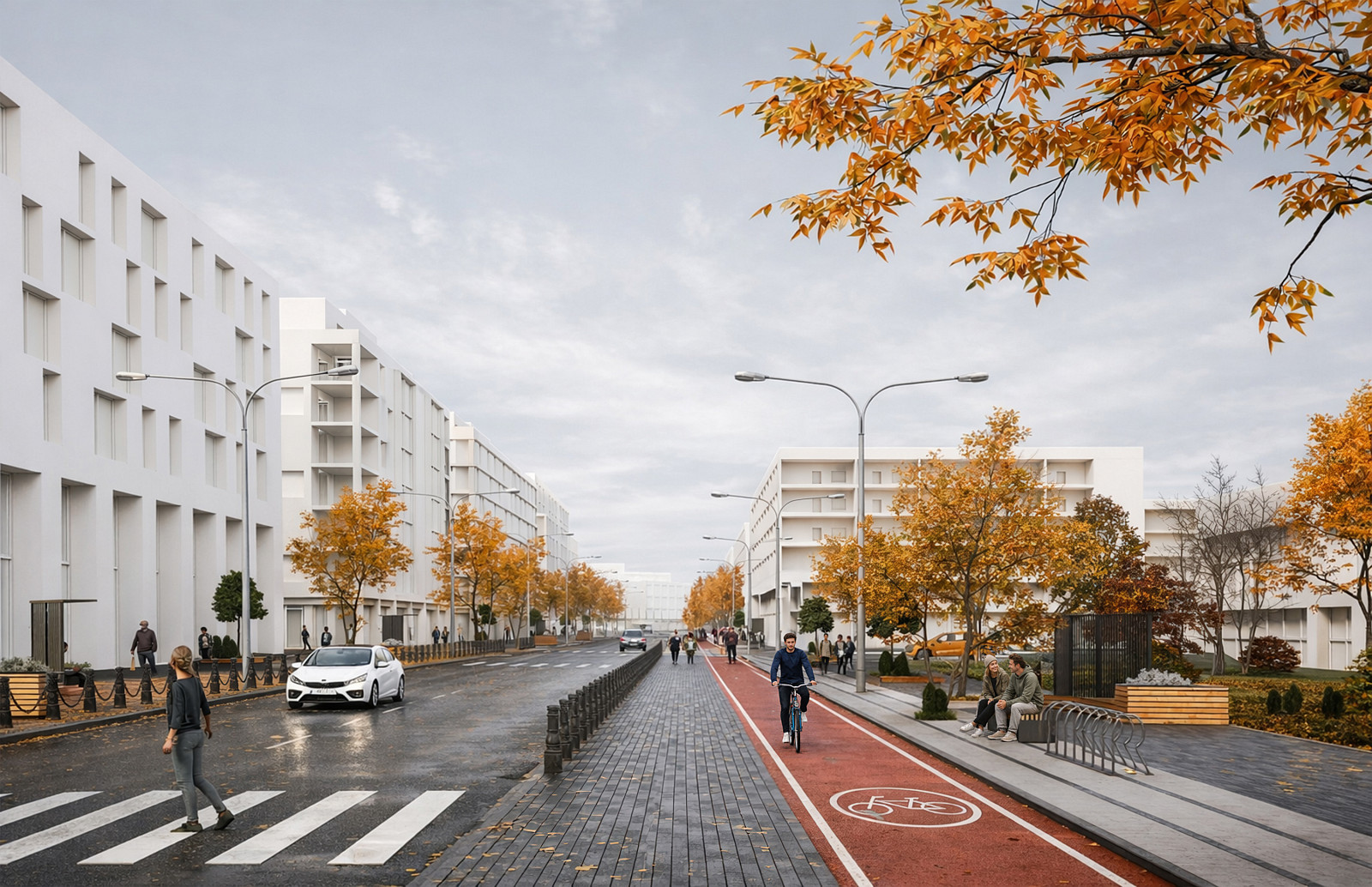
A key component of the design is the creation of a continuous green belt. This landscape system connects the riverside green corridor along the Klenice with the park Štěpánka in the eastern part of the city. The green axis allows uninterrupted pedestrian and cycling movement, strengthens ecological continuity, and integrates recreation into everyday urban life.
Public spaces are structured to encourage all-day use. Squares, semi-public courtyards, pedestrian routes and community-oriented functions create an environment that supports social interaction, education and cultural activities.
Technical information
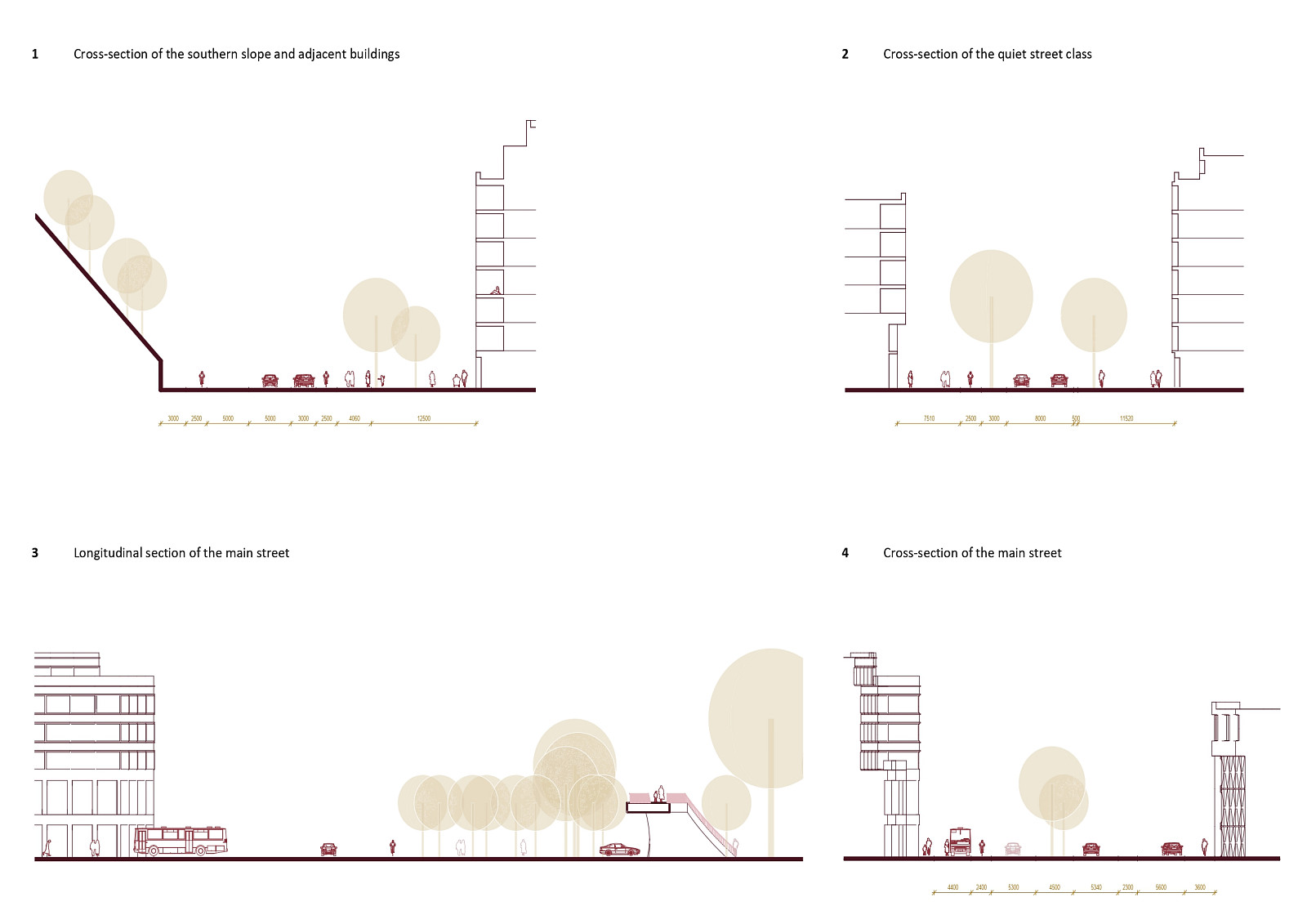
The urban concept is based on a permeable block structure with clearly defined public, semi-public and private zones. The building massing respects existing height regulations and reacts to the topography defined by the castle promontory and the Klenice valley.
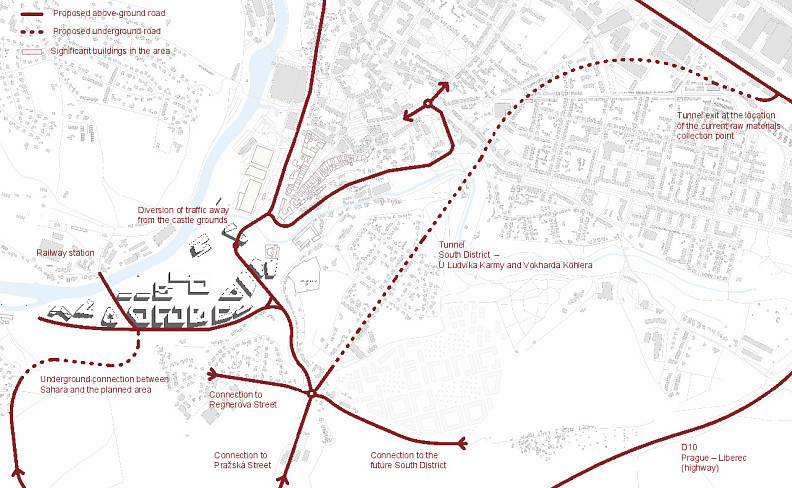
A major element of the project is the transportation solution. The design introduces a new high-capacity southern access route that complements the original Prague entry axis (Pražská street). A proposed underground connector links Jižní město directly to Jičínská street, improving city-wide traffic flow and eliminating inefficient detours.
Štyrsova street is redirected and capacity-enhanced in order to reduce its barrier effect within Podhradí and free surface space for urban development and public areas.
The structural system of the proposed buildings is conceived as reinforced concrete with modular spans, allowing flexible interior layouts. Mixed-use buildings combine residential units on upper floors with active commercial and community functions at ground level.
The project integrates sustainable principles including green corridors, pedestrian priority, cycling infrastructure and compact urban density that minimizes further land consumption.
Documentation

Copyright © 2026 INSPIRELI | All rights reserved. Use of this website signifies your agreement to the Terms of Use, Privacy Policy, and use of cookies.