Twin passive cooling study pods


Project idea
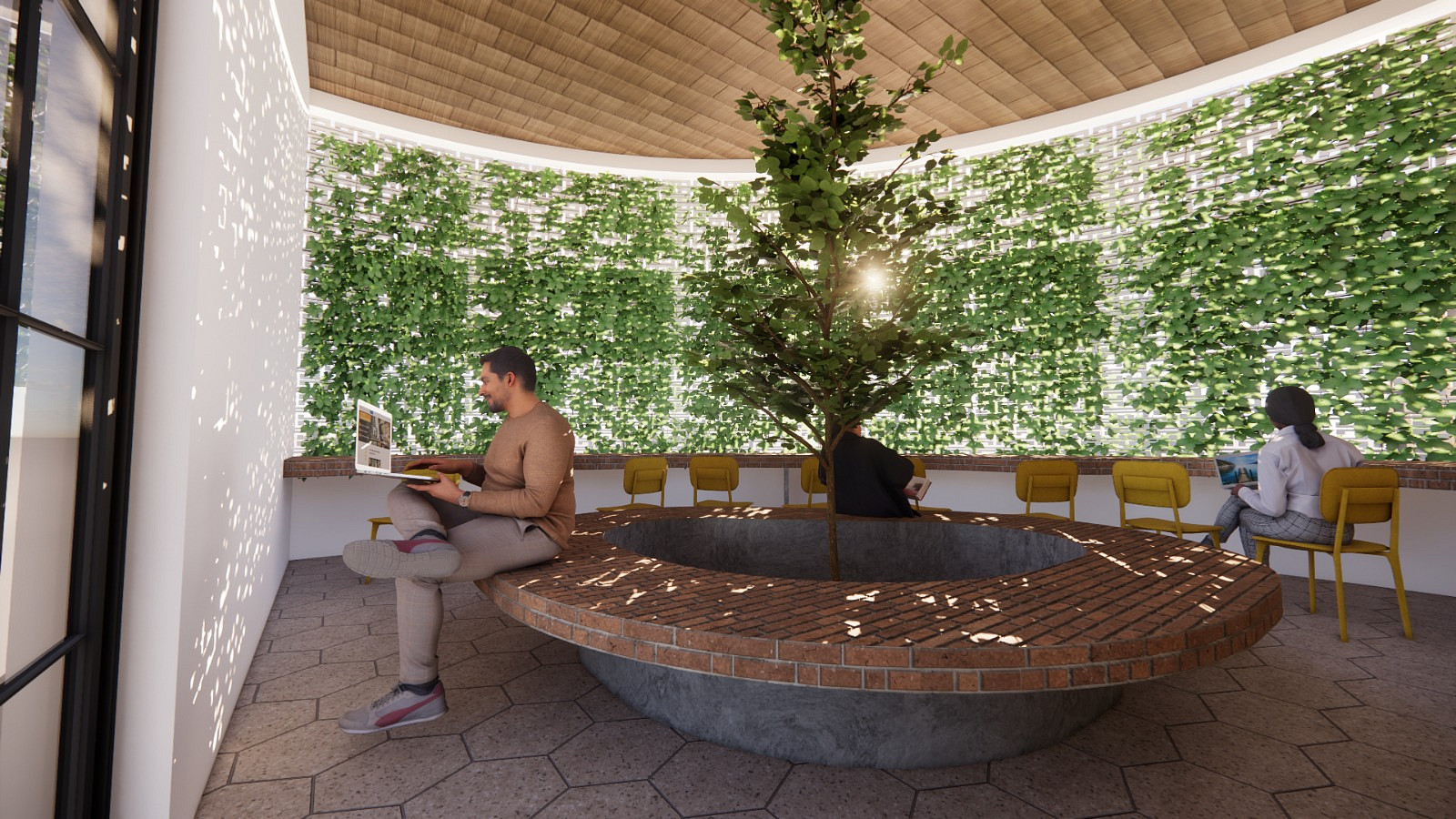
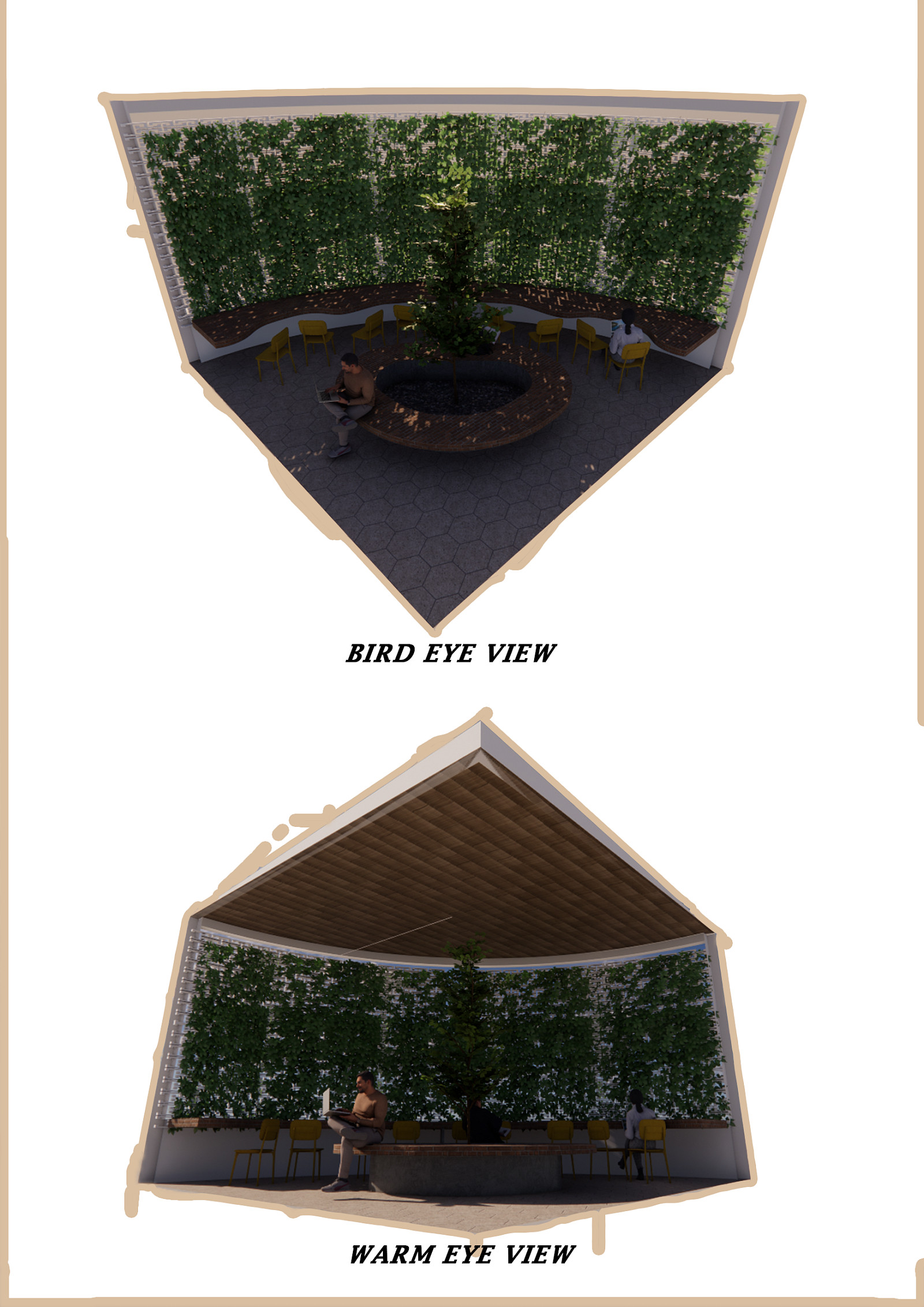
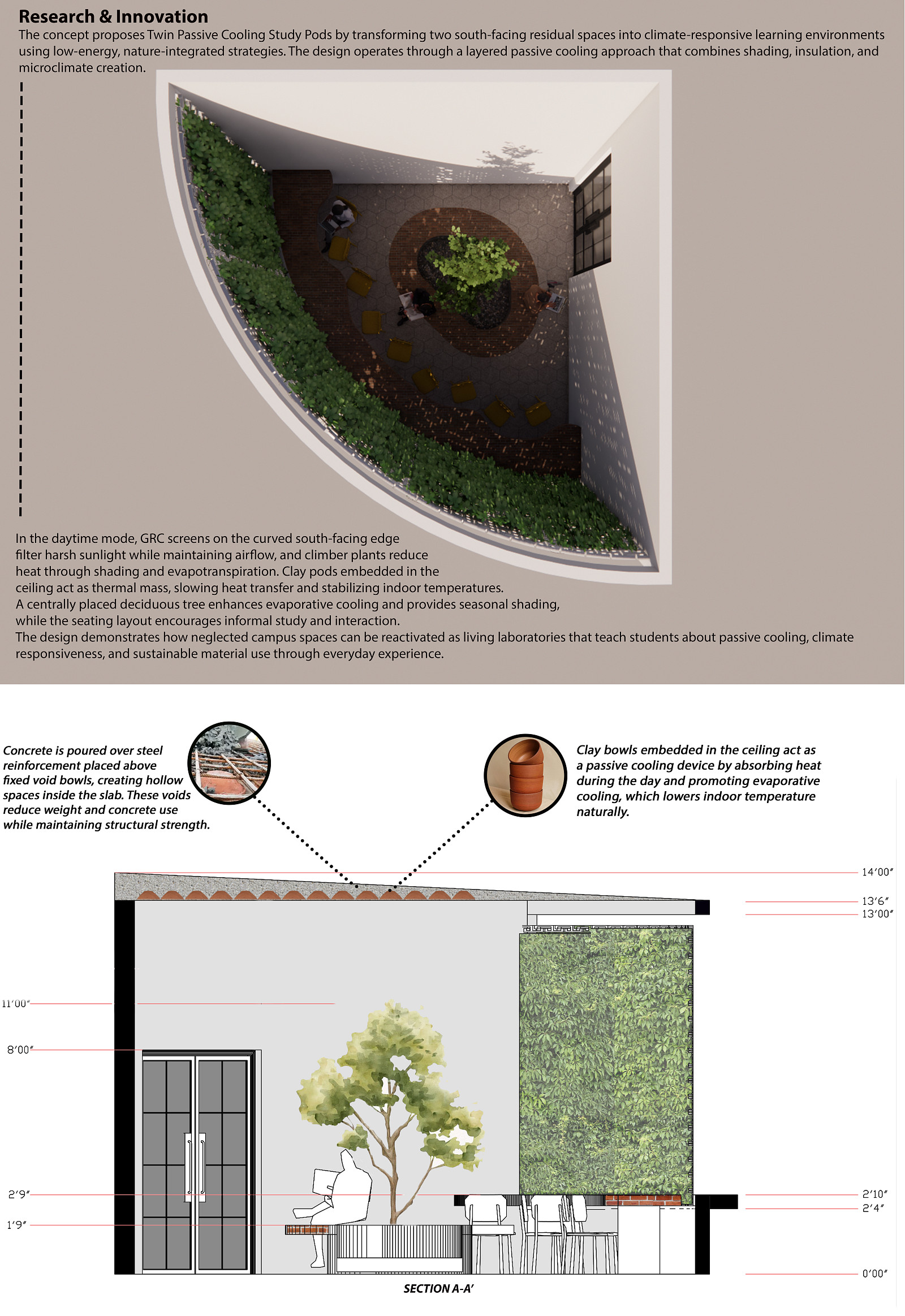
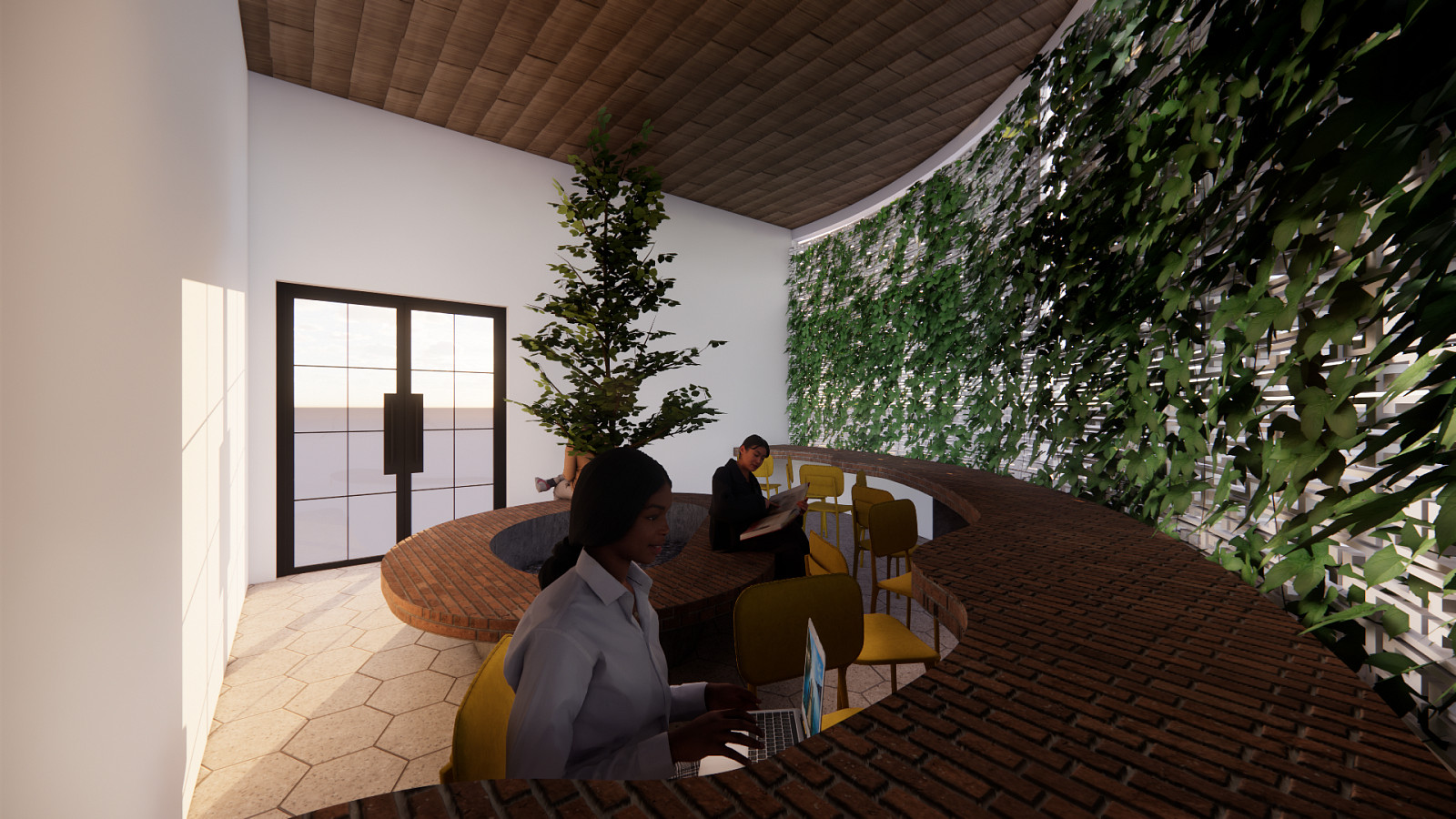
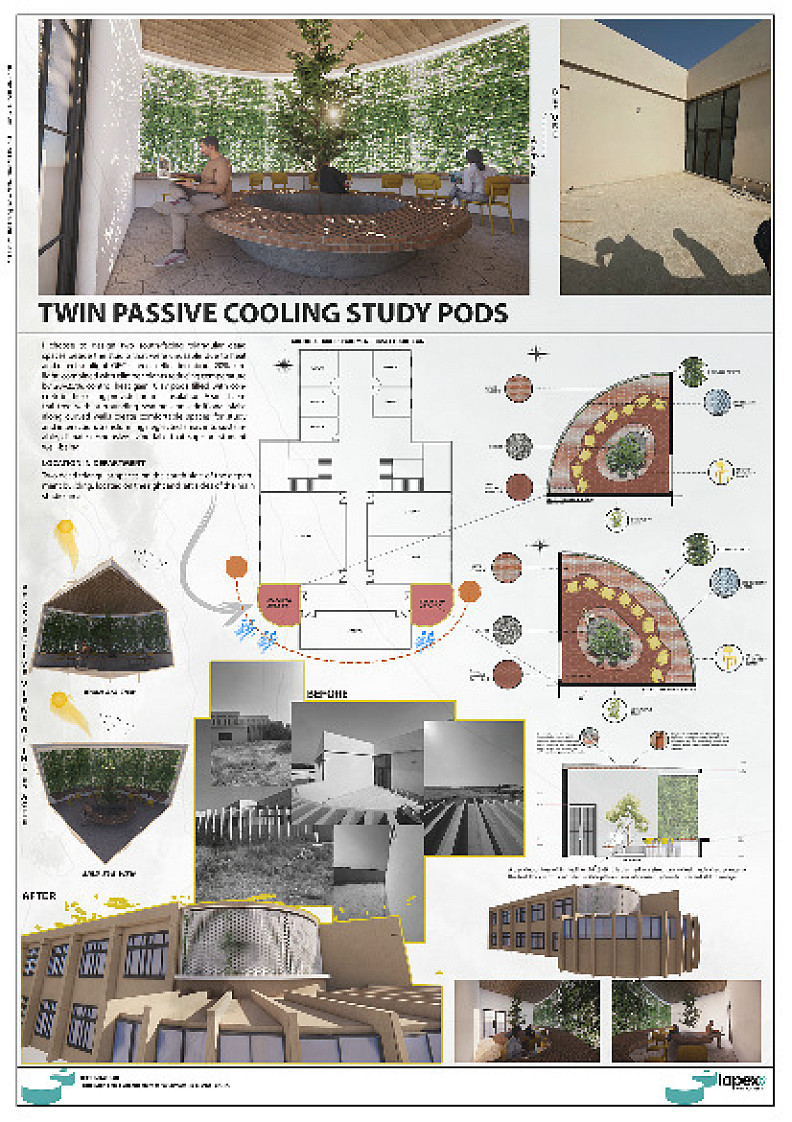
Twin Passive Cooling Study Pods is a climate-responsive micro-intervention designed to transform two unused south-facing triangular dead spaces within the Architecture Department into thermally comfortable study environments.
The idea emerged from the need to reclaim overheated, glare-prone residual spaces and convert them into sustainable, student-centered living labs. Instead of relying on mechanical cooling, the project demonstrates how passive strategies—such as double jali screens, evaporative cooling through greenery, thermal mass, shading, and natural ventilation—can significantly reduce heat gain and improve comfort.
The project acts as a prototype for climate-resilient architectural retrofitting, showing how neglected spaces can be reactivated through low-cost, locally adaptable design solutions.
Project description
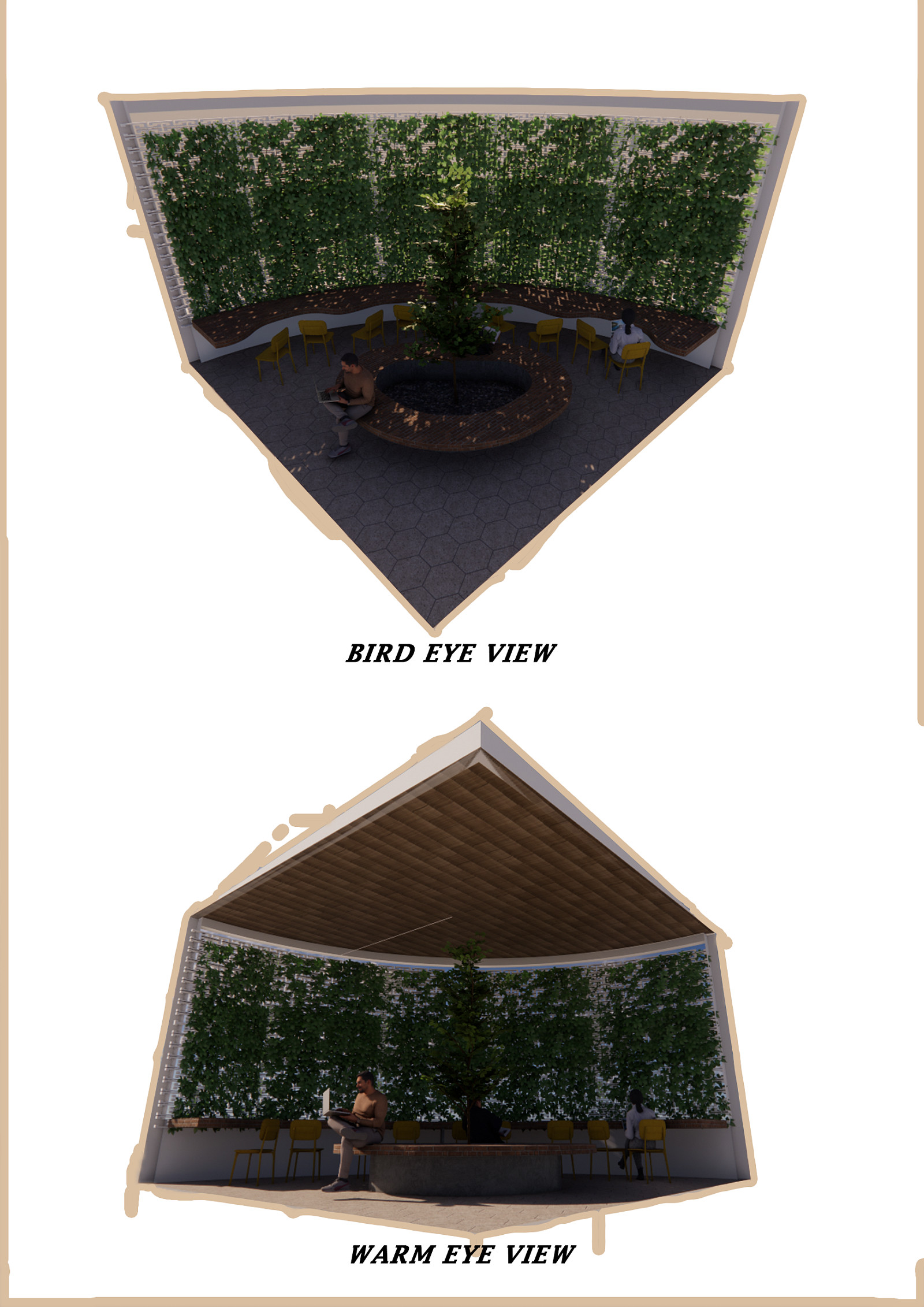
The project consists of two identical passive cooling pods located on the south side of the department building, flanking the main studio area. These triangular dead spaces were previously unusable due to excessive solar exposure and direct heat gain.
The intervention includes:
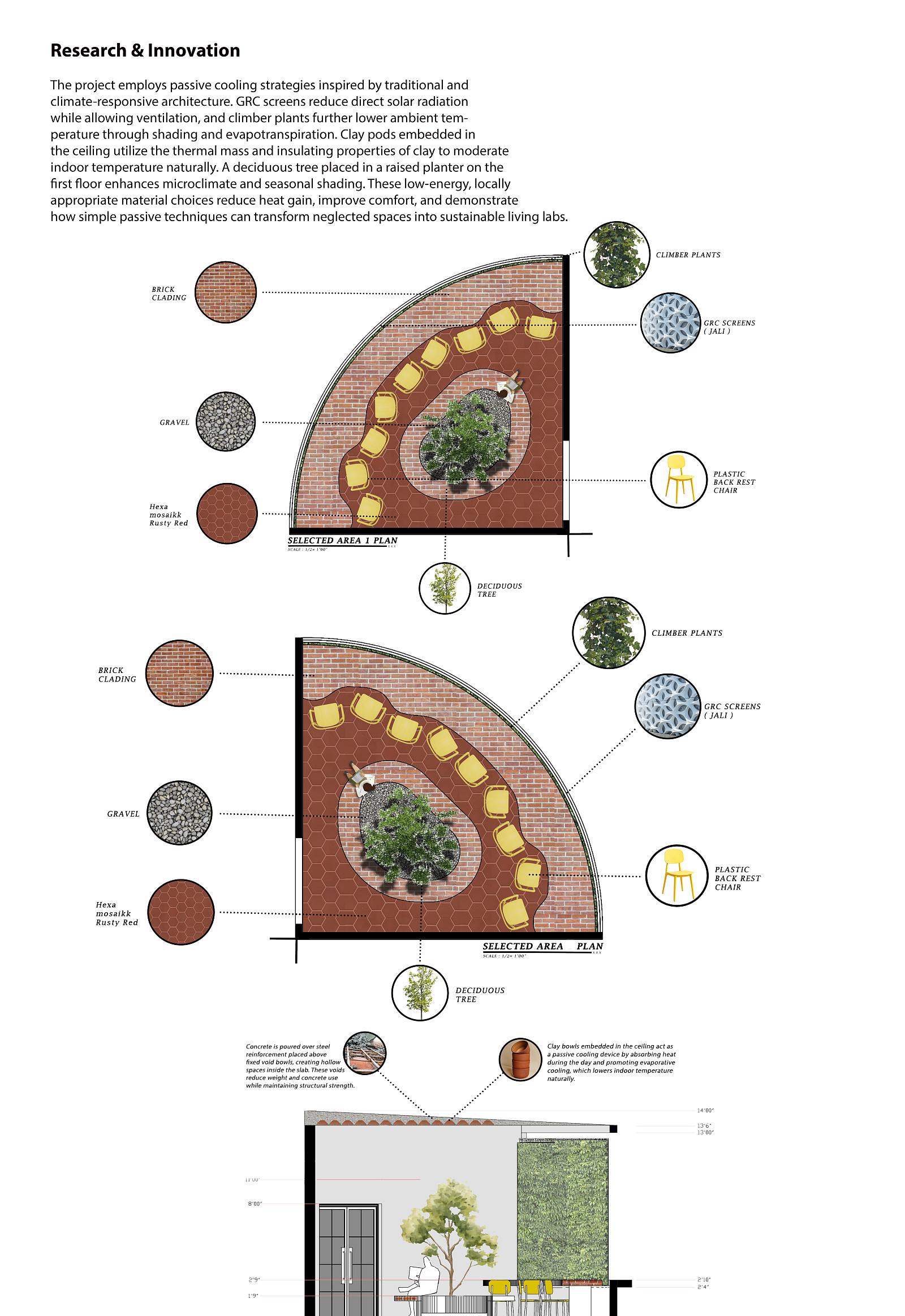
A double-layer GRC jali façade to filter harsh sunlight and reduce heat gain (20–25%).
A green vertical screen system that promotes evaporative cooling and improves microclimate.
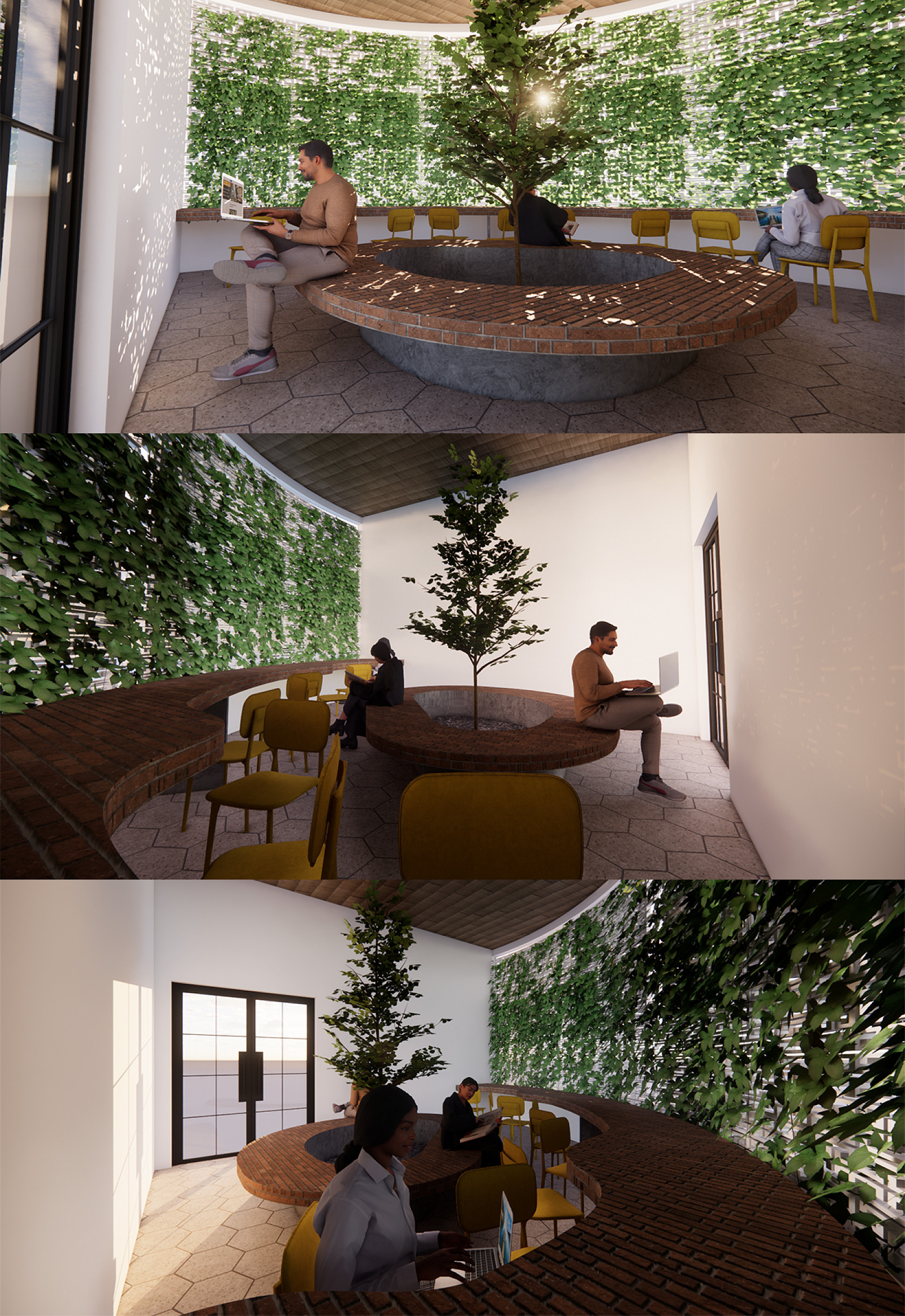
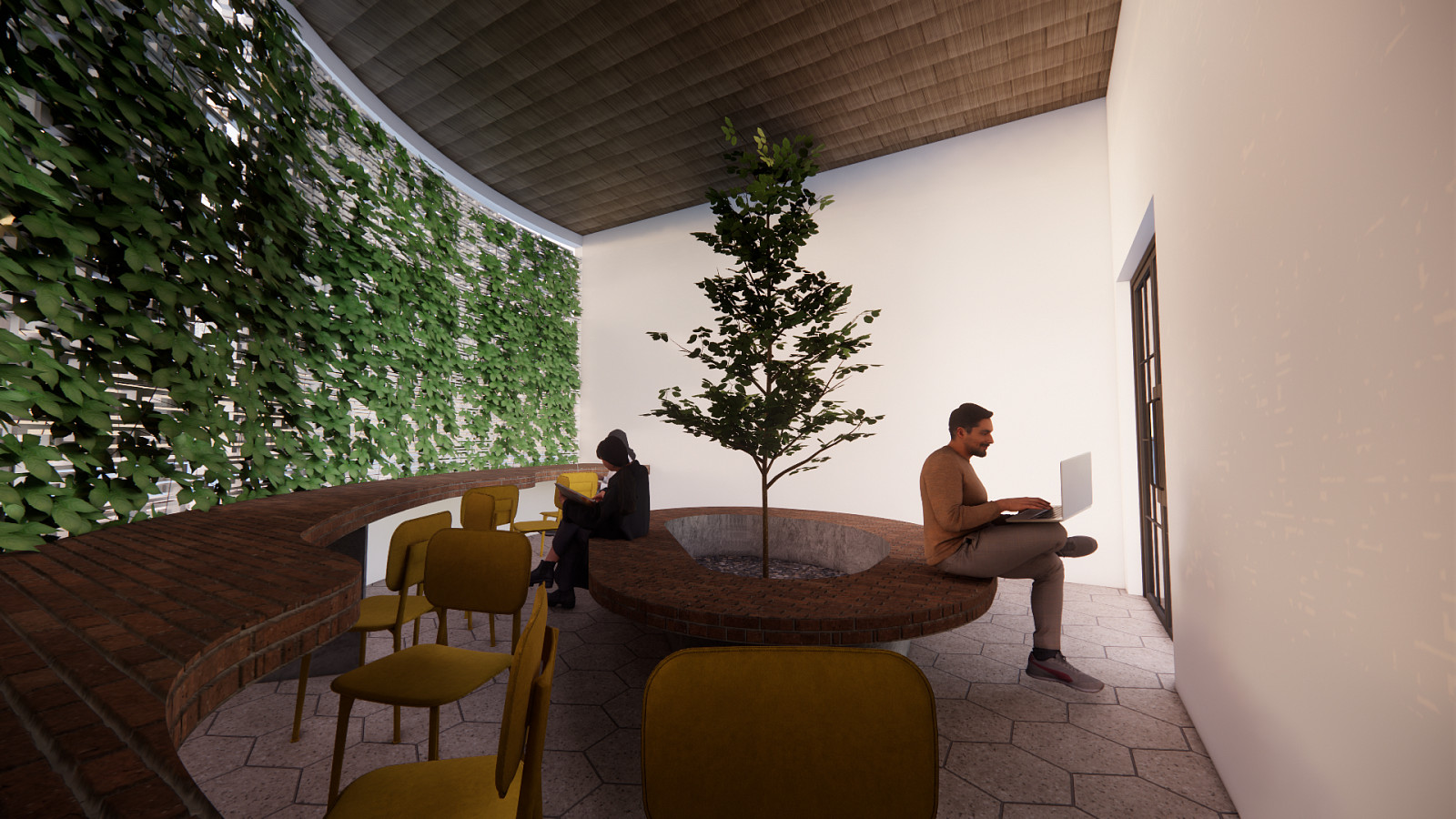
A central tree planter with circular seating, creating a shaded social interaction zone.
Additional thermal mass through brick and concrete elements to stabilize internal temperatures.
Curved interior walls that enhance airflow movement and spatial comfort.
The design transforms these leftover spaces into flexible study pods where students can read, collaborate, and relax in a naturally cooled environment.
The project also serves as a demonstrative “Living Lab” to test passive cooling strategies applicable to hot climates.
Technical information
Location: South-facing triangular residual spaces within the Architecture Department building.
Climate Response: Designed for hot, high solar exposure conditions.
Primary Cooling Strategies:
Double GRC perforated screens for solar shading
Green vertical wall system for evaporative cooling
Central shaded planter improving microclimate
Thermal mass (brick and concrete) for heat delay
Cross-ventilation through strategic openings
Estimated Heat Reduction: Approximately 20–25% reduction in direct solar heat gain through layered façade system.
Materials Used:
GRC jali panels
Brick masonry
Reinforced concrete planter and seating
Native drought-resistant plant species
Hexagonal outdoor pavers
Construction Type: Retrofit intervention on existing structure.
Sustainability Approach: Low-energy, low-maintenance, passive environmental design with minimal operational carbon footprint.
Documentation


Copyright © 2026 INSPIRELI | All rights reserved. Use of this website signifies your agreement to the Terms of Use, Privacy Policy, and use of cookies.