Climate Resilient 3-Star Hotel


Project idea
The proposed 3-Star Hotel in Hyderabad is conceived as a climate-responsive and context-sensitive hospitality development designed to serve business travelers, medical visitors, and urban tourists within a rapidly developing commercial corridor. The project draws inspiration from contemporary climate-adaptive architecture, particularly the concept of screened facades as seen in projects like the “18 Screens House,” where layered envelopes create both environmental control and architectural identity. The design aims to combine modern hospitality standards with passive environmental principles suited to Hyderabad’s hot climatic conditions.
A key architectural feature of the project is the integration of jali screens made of GRC (Glass Reinforced Concrete) panels on heat-exposed facades. These perforated elements reduce direct solar heat gain, filter harsh sunlight, enhance privacy, and promote controlled airflow, significantly improving indoor thermal comfort. Through strategic massing, orientation, and the use of GRC jali as a secondary skin, the building minimizes energy dependency while creating a distinctive, climate-responsive identity for a contemporary 3-star hotel.
Project description
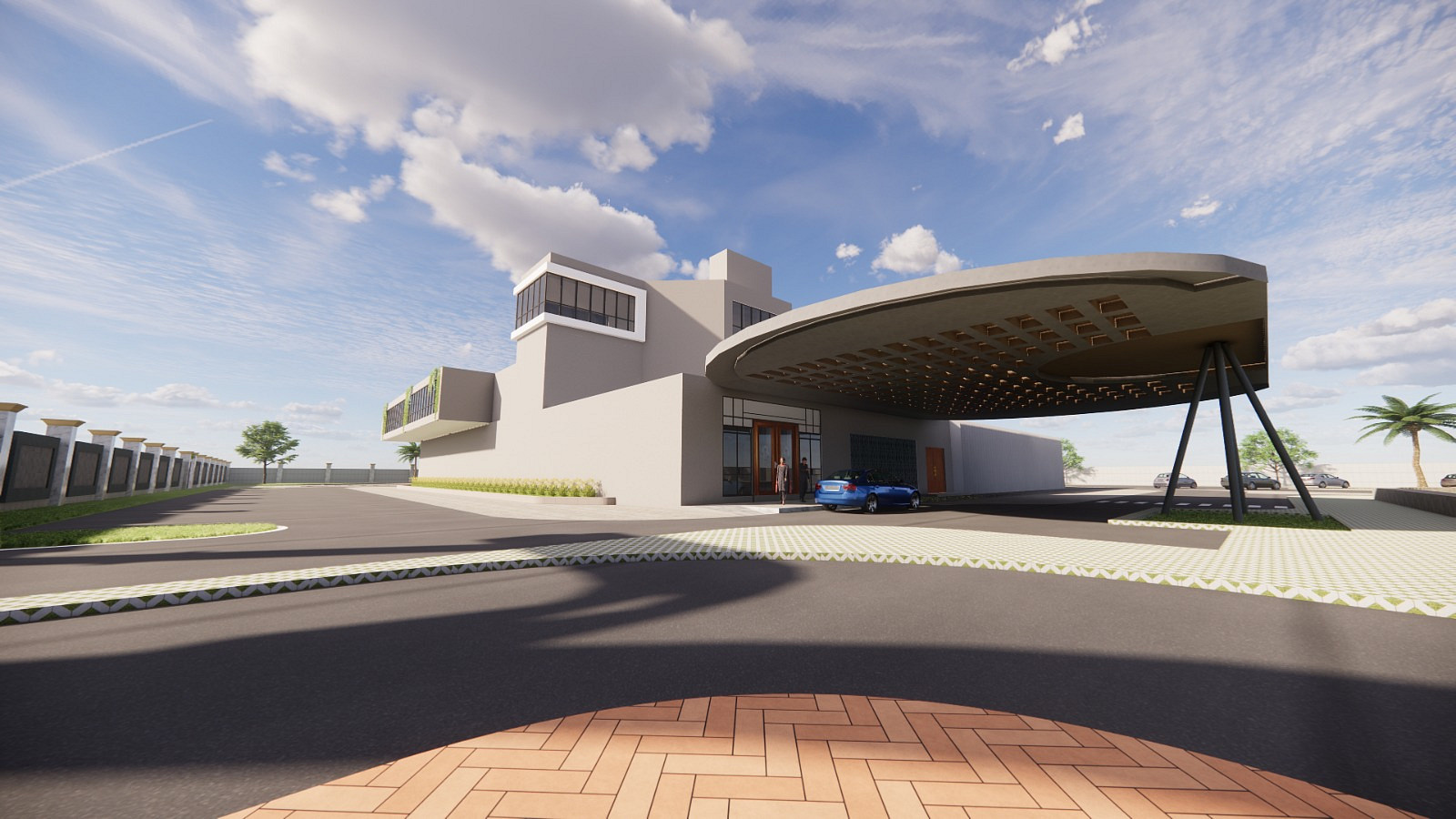
The proposed 3-Star Hotel is a medium-scale hospitality development designed to address the growing demand for quality yet affordable accommodation in Hyderabad’s commercial and healthcare zone. The project accommodates business travelers, medical visitors, and urban tourists by providing a comfortable, efficient, and climate-responsive built environment.
The planning strategy is based on clear functional zoning. The ground floor incorporates public and semi-public spaces including reception, lobby, waiting areas, administration, dining facilities, and service zones. Upper floors are dedicated to guest rooms, organized along efficient circulation corridors to ensure privacy and operational clarity. Vertical circulation cores with staircases and elevators are strategically positioned to ensure accessibility, safety, and smooth movement.
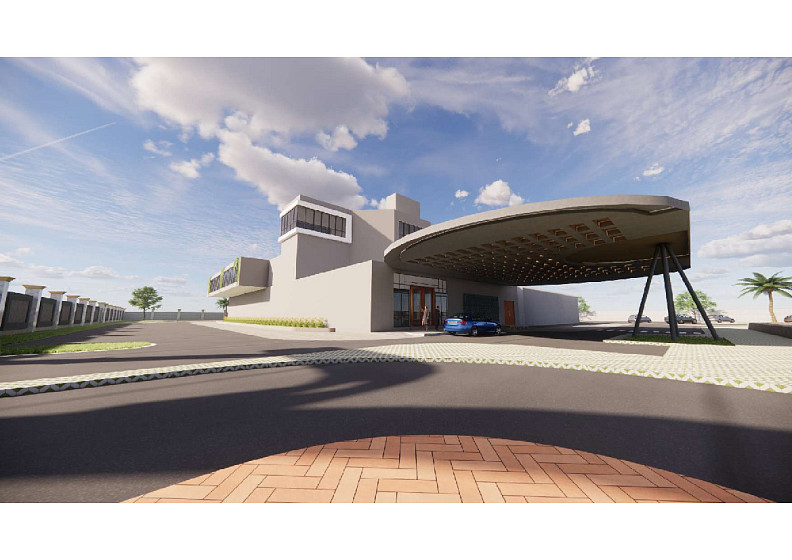
The building massing responds directly to site orientation and climatic conditions. Heat-exposed façades are treated with GRC jali screens functioning as a secondary skin to reduce solar heat gain and improve indoor comfort. The project also integrates parking provision, controlled entry-drop-off areas, and landscape buffers to enhance user convenience and environmental performance.
Overall, the scope of the project includes architectural planning, façade development, environmental response, circulation management, and service integration to deliver a sustainable and context-sensitive hospitality solution.
Technical information
Project Type: 3-Star Hotel
Location: Hyderabad, Sindh, Pakistan
Building Typology: Multi-storey hospitality building
Structural System: Reinforced Concrete (RCC) frame structure
Foundation System: RCC isolated/combined footing (as per soil conditions)
Wall System: Brick masonry infill walls with plaster finish
Facade System:
Secondary skin composed of GRC (Glass Reinforced Concrete) jali panels
Heat-reduction screen system on sun-exposed elevations
Controlled glazing to minimize thermal gain
Environmental Strategies:
Solar-oriented massing
Passive shading through GRC jali
Reduced direct heat penetration
Natural light optimization
Cross-ventilation planning
Circulation System:
Dedicated guest circulation
Separate service access
Staircases and elevators for vertical movement
Fire escape routes as per safety standards
Building Services:
HVAC system for thermal regulation
Integrated plumbing and drainage network
Fire safety system with emergency exits
Electrical and lighting systems designed for energy efficiency
Sustainability Measures:
Passive cooling through screened facade
Reduced dependency on mechanical cooling
Energy-efficient spatial planning
Climate-responsive building envelope
Documentation


Copyright © 2026 INSPIRELI | All rights reserved. Use of this website signifies your agreement to the Terms of Use, Privacy Policy, and use of cookies.