
Museum of Optics Vision — An Immersive Spatial Experience of Light & Perception


Project idea
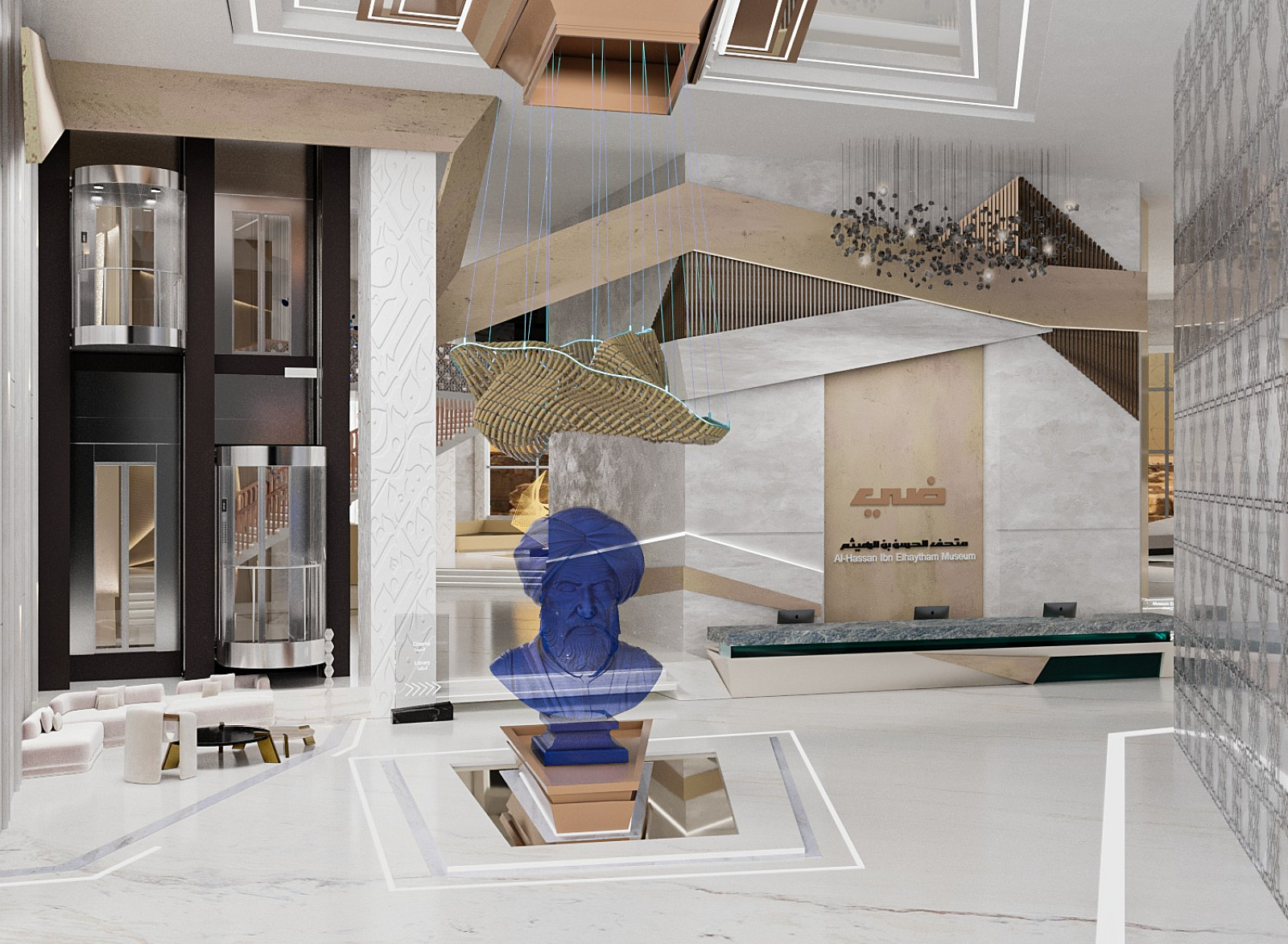
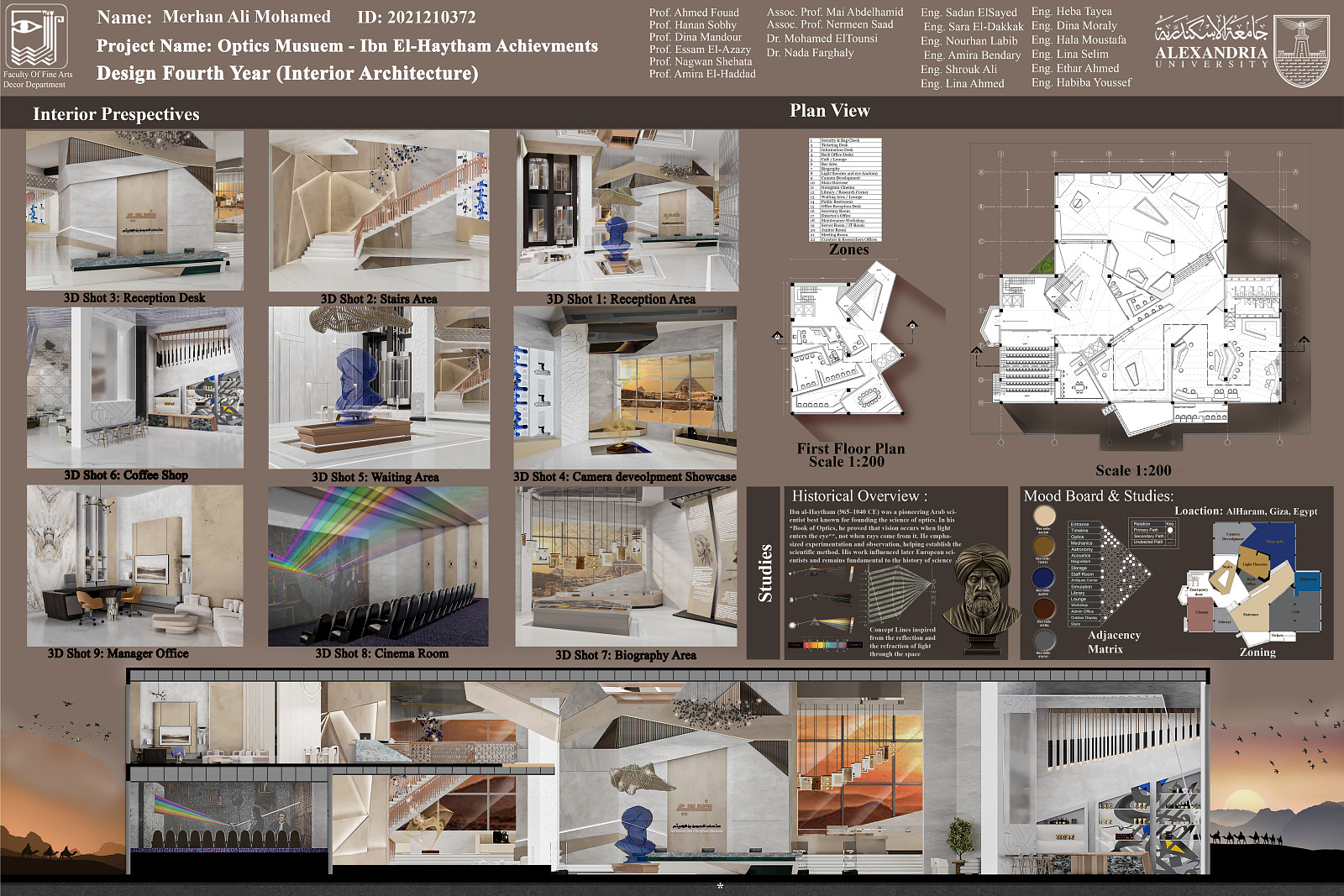
Museum of Optics Vision is conceived as an immersive spatial narrative exploring the science of light, visual perception, and human cognition. The project transforms the museum typology from a static display environment into an experiential journey where architecture itself becomes an optical instrument.
The design is structured around the principle that light is both a physical phenomenon and an emotional medium. Spatial sequencing, material reflectivity, shadow modulation, and controlled transparency are choreographed to manipulate perception and heighten sensory awareness.
The conceptual framework is built on three pillars:
1- Perception – How humans interpret visual stimuli
2- Interaction – Engaging visitors through responsive environments
3- Transformation – Gradual spatial transitions that alter emotional states
Each zone functions as a stage in a perceptual journey, where visitors move from clarity to abstraction, from brightness to controlled darkness, and from passive observation to active engagement.
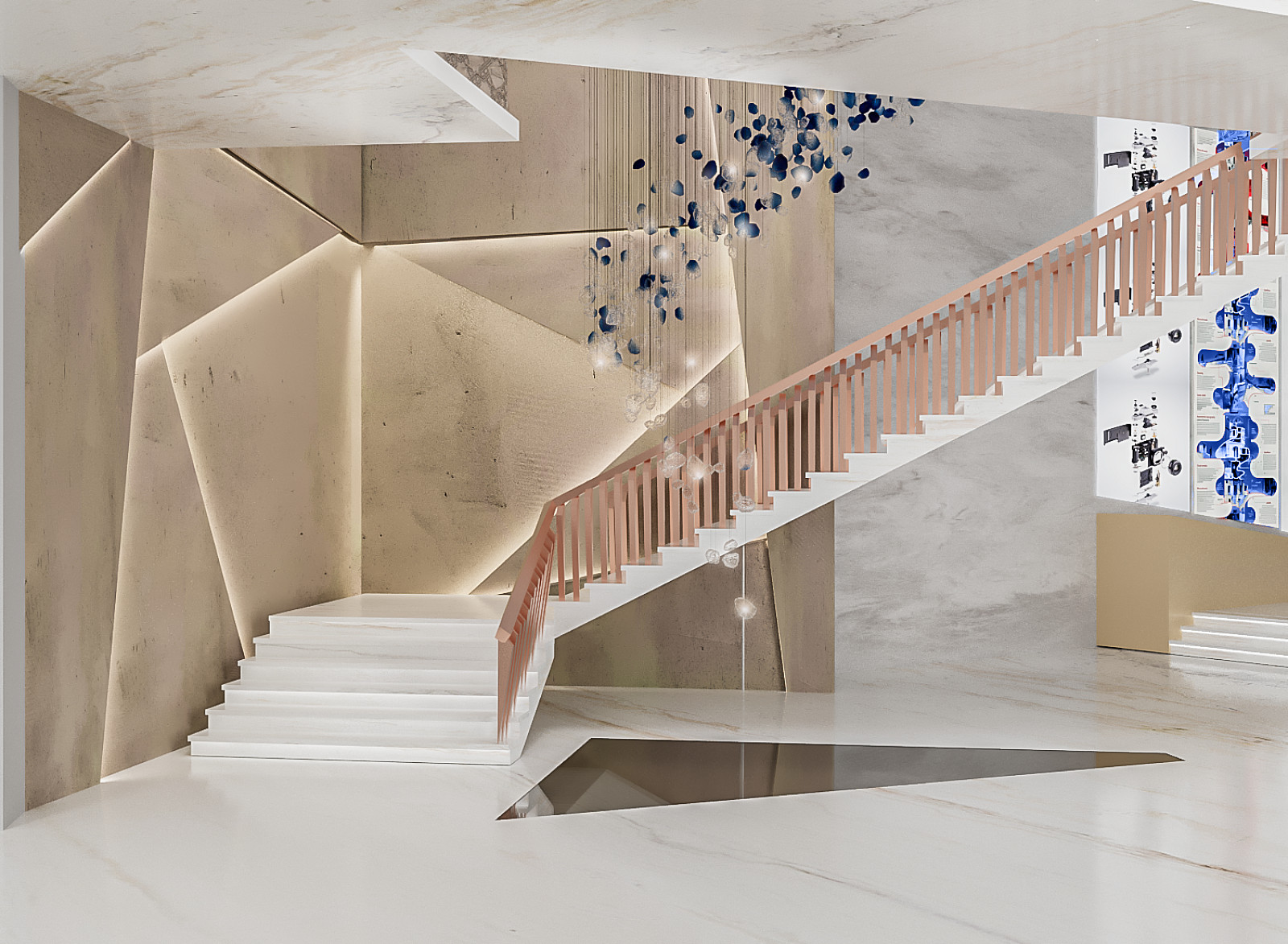
The architectural language is minimalist and futuristic to eliminate distraction and emphasize light as the primary design element. Geometry, rhythm, and voids are used to direct movement and frame optical experiences.
Project description
The Museum of Optics Vision is a contemporary cultural and educational facility dedicated to exploring the science of light, vision, and visual illusion through spatial design.
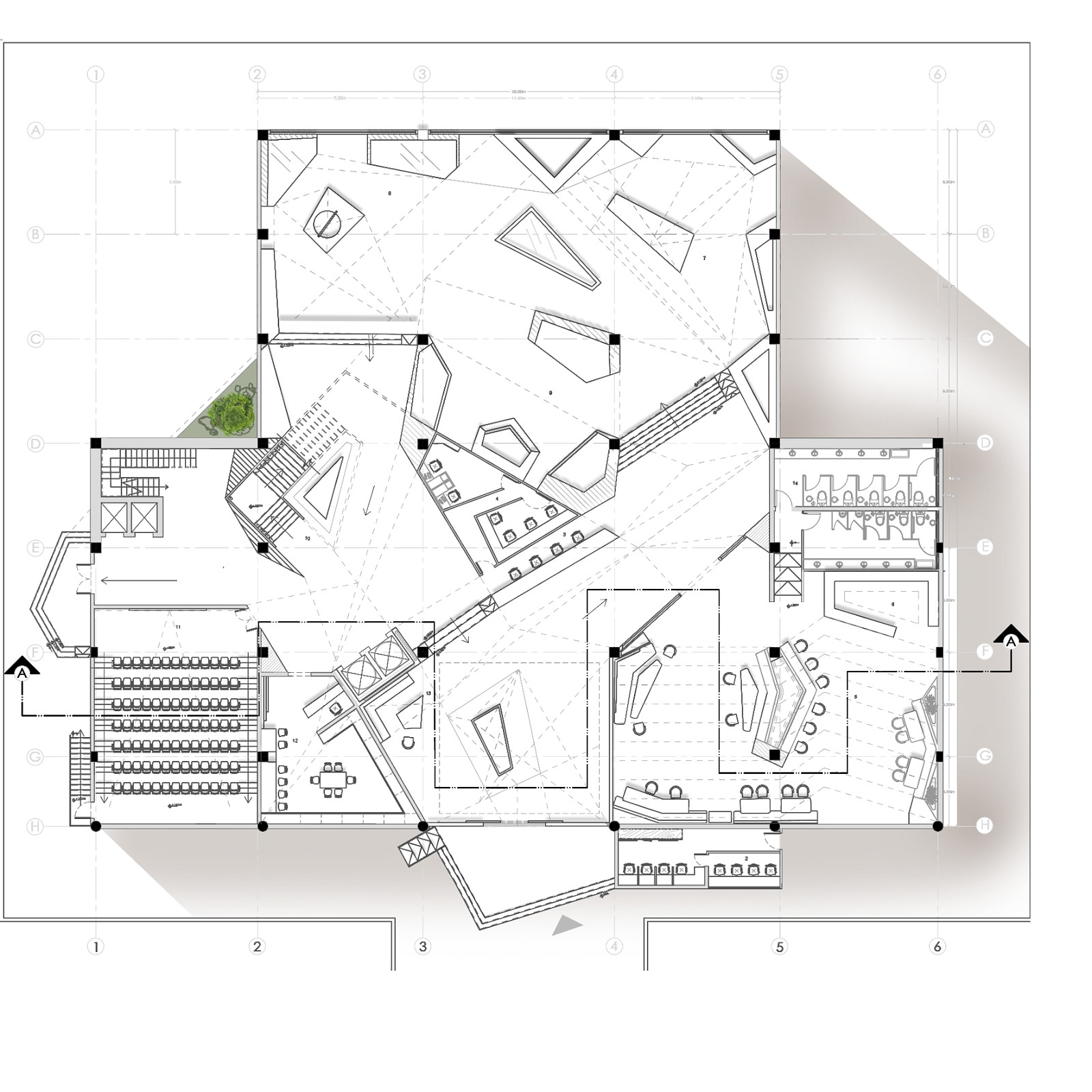
The project includes:
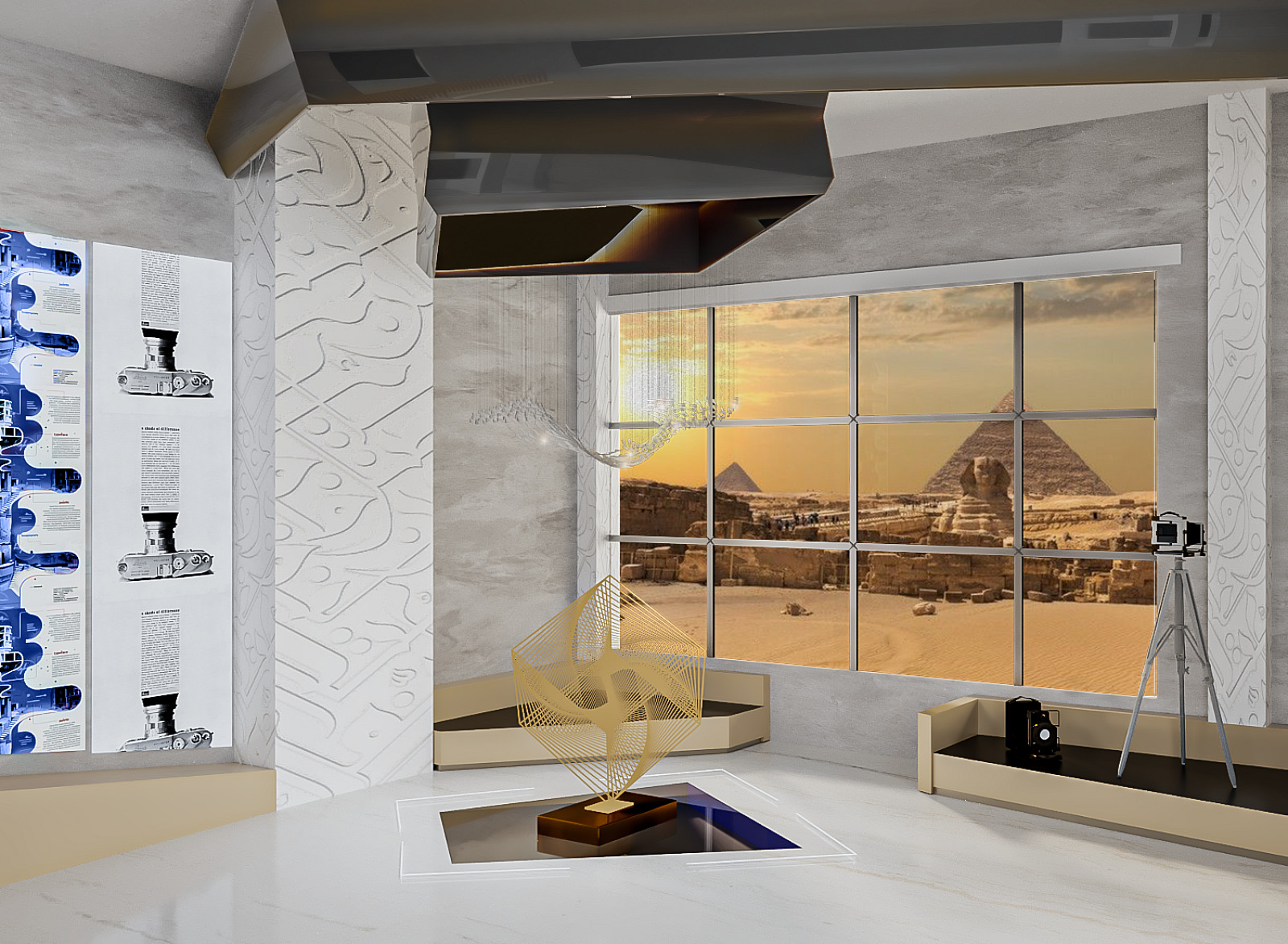
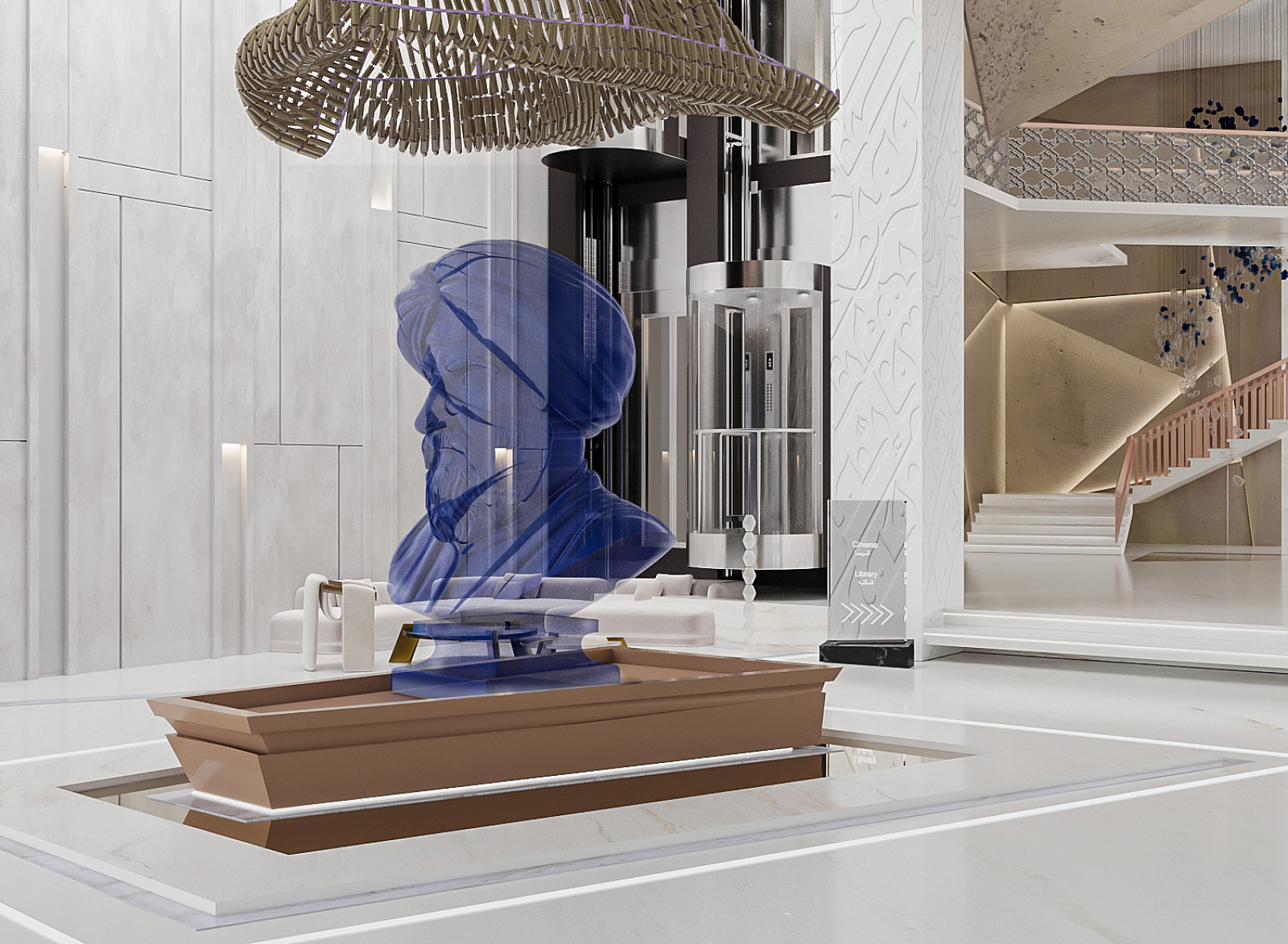
1- Entrance & Orientation Hall
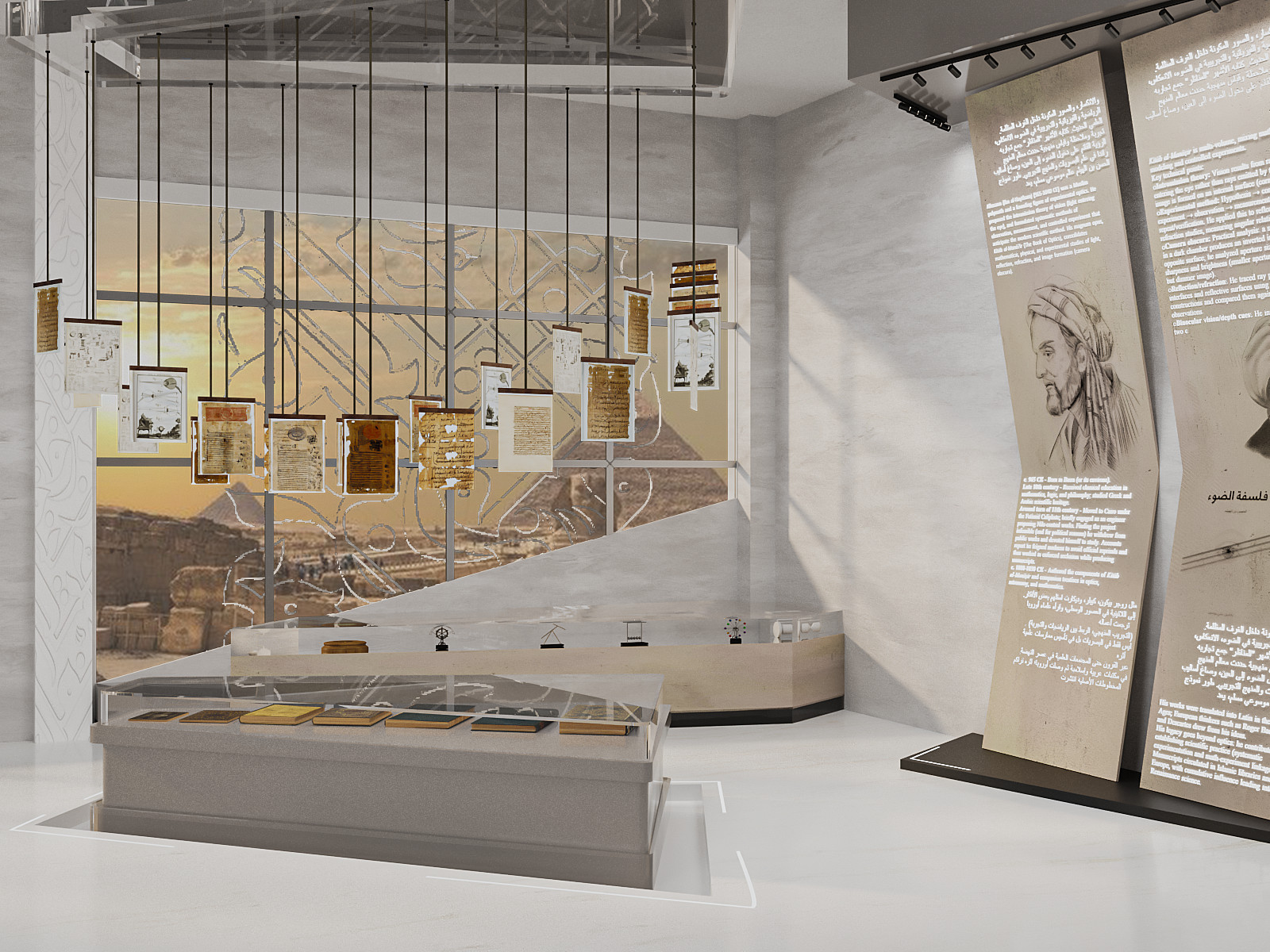
2- Permanent Exhibition Galleries
3- Interactive Optical Labs
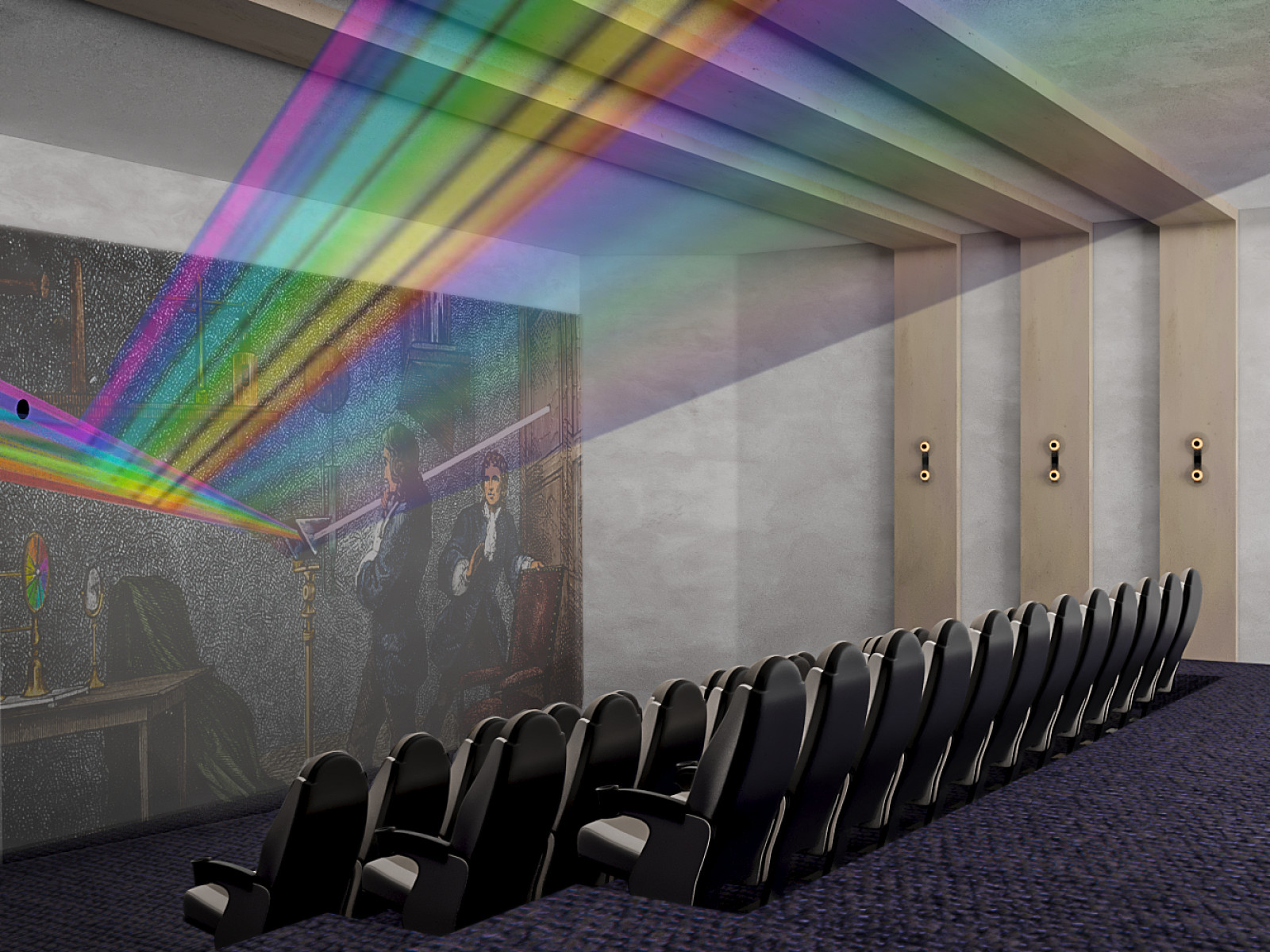
4- Immersive Digital & VR Experience Zone
5- Educational Workshop Spaces
6- Rest & Reflection Areas
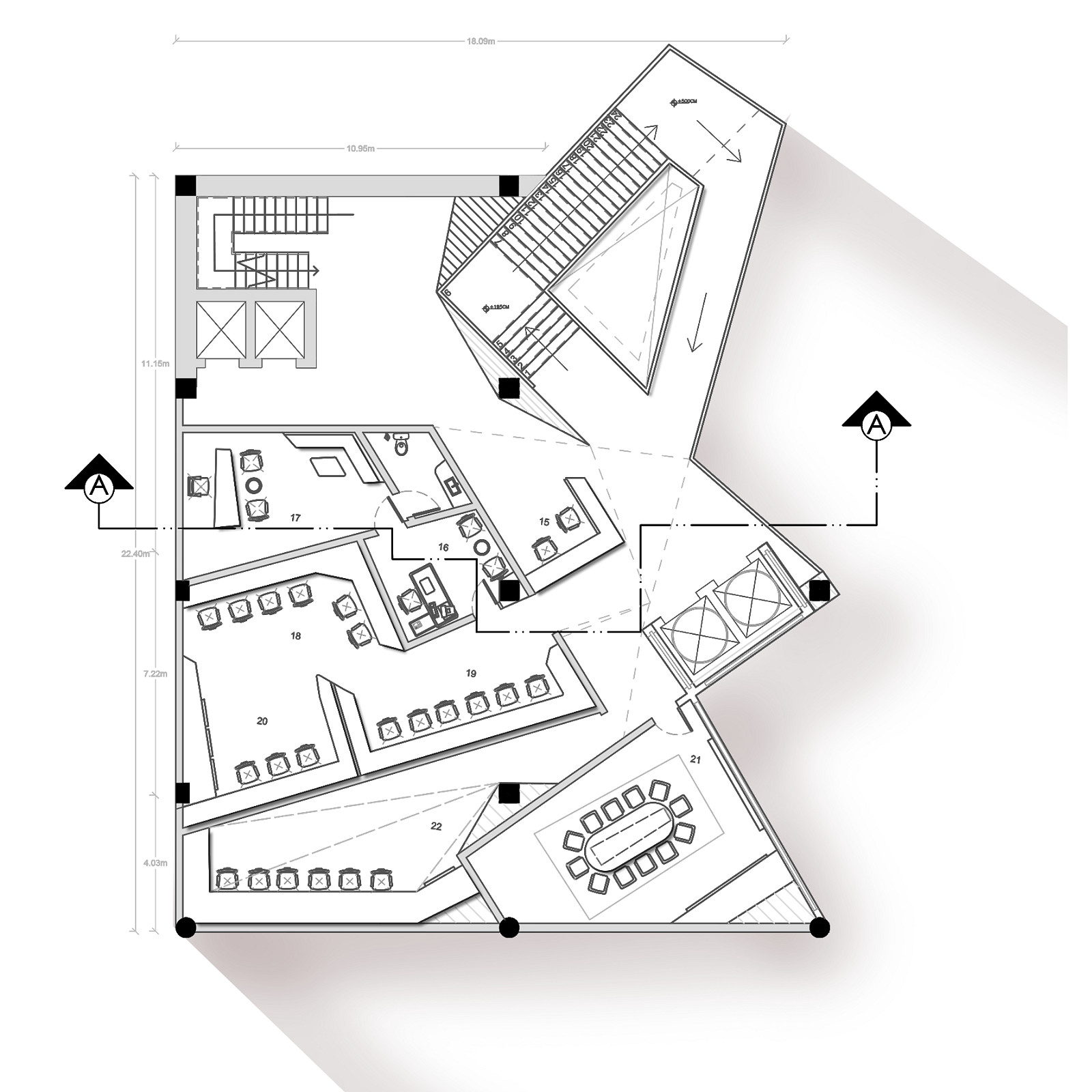
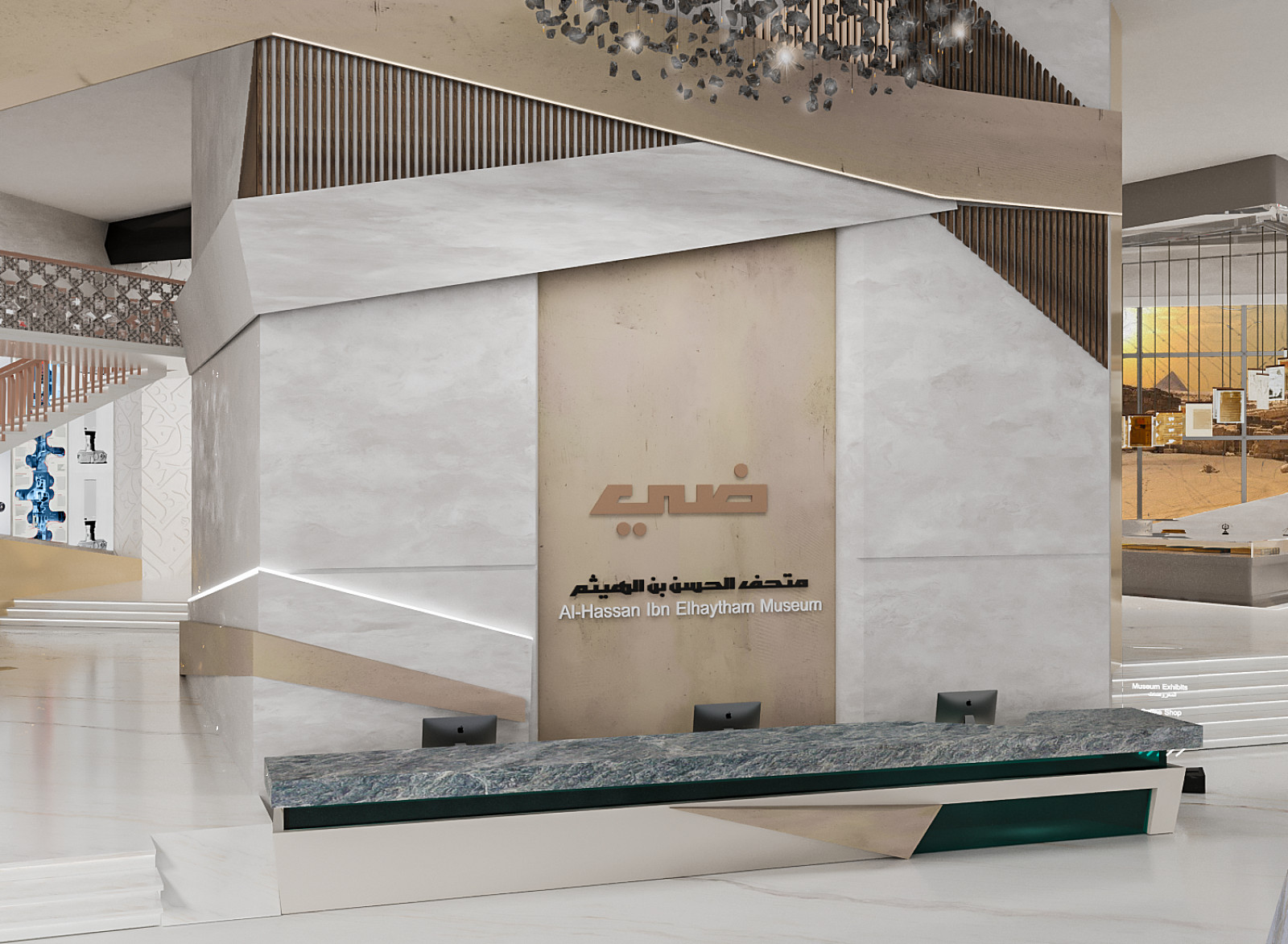
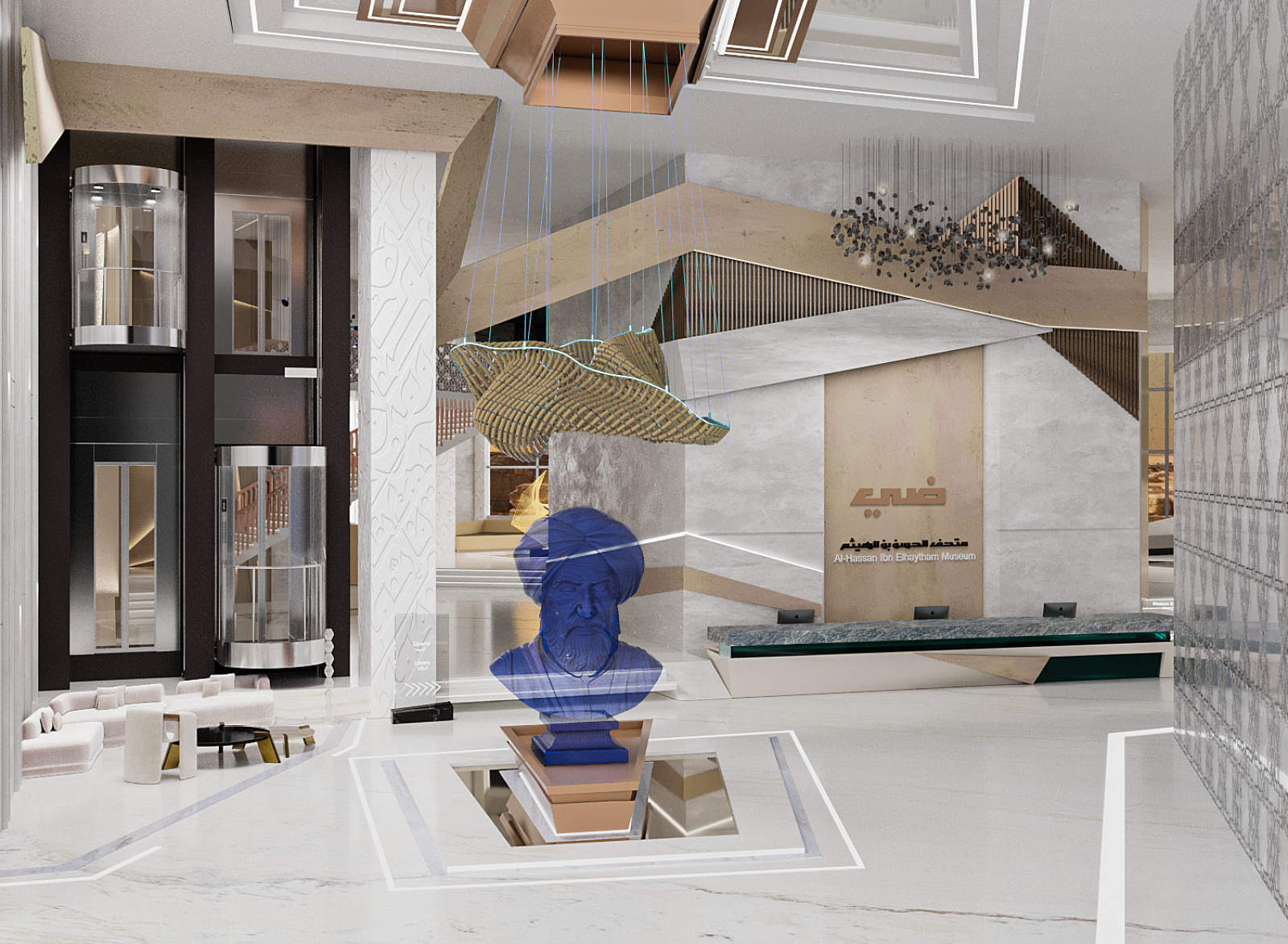
The circulation strategy follows a linear yet fluid progression, guiding visitors through increasing levels of sensory engagement. The entry space introduces controlled daylight modulation to prepare the eye for perceptual exploration. Exhibition zones employ layered lighting strategies to highlight content while maintaining visual comfort.
Interactive labs allow visitors to manipulate light, reflection, and refraction, reinforcing educational objectives through experiential learning. The immersive zone utilizes controlled darkness and projection mapping to create heightened spatial awareness.
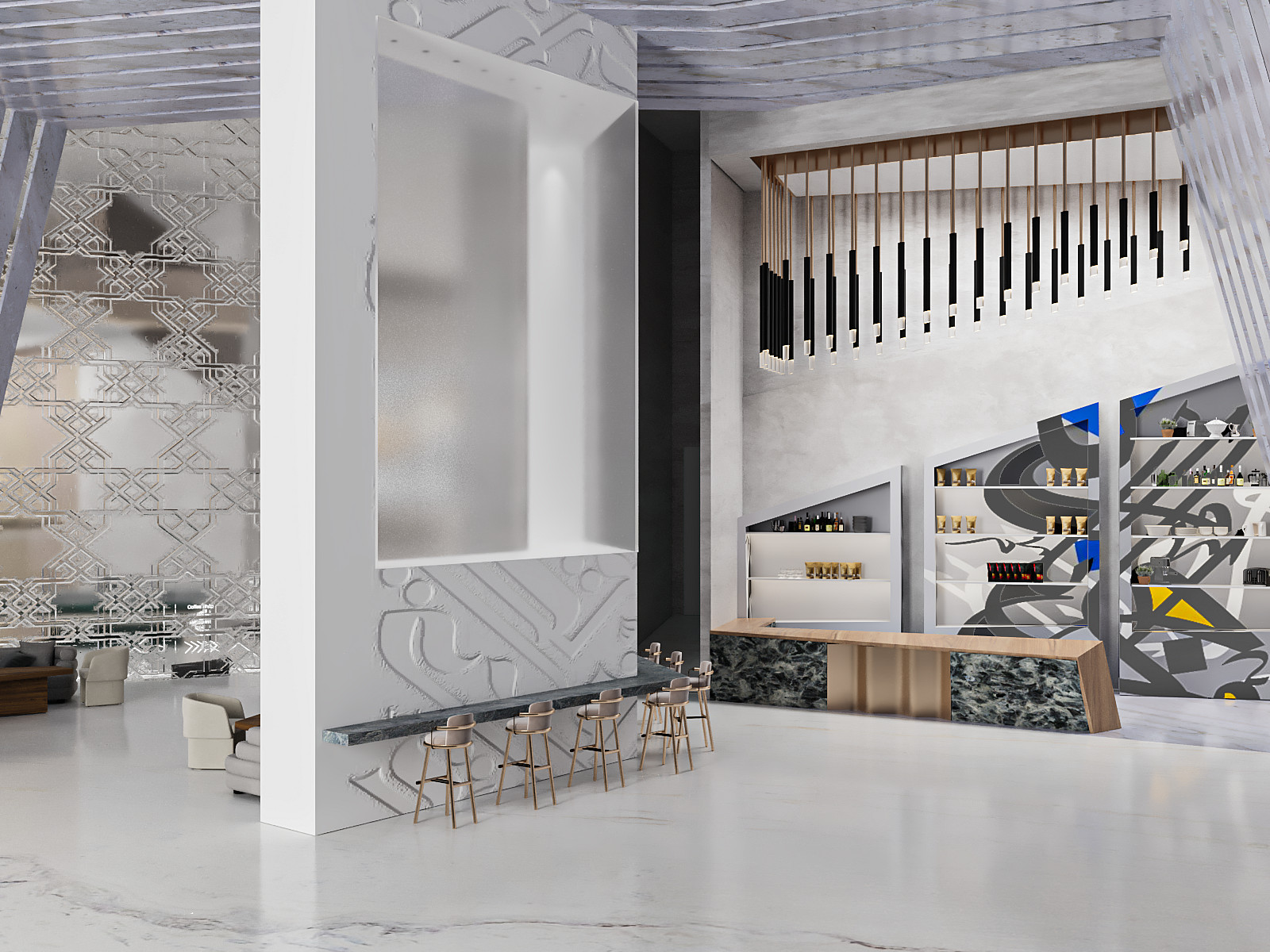
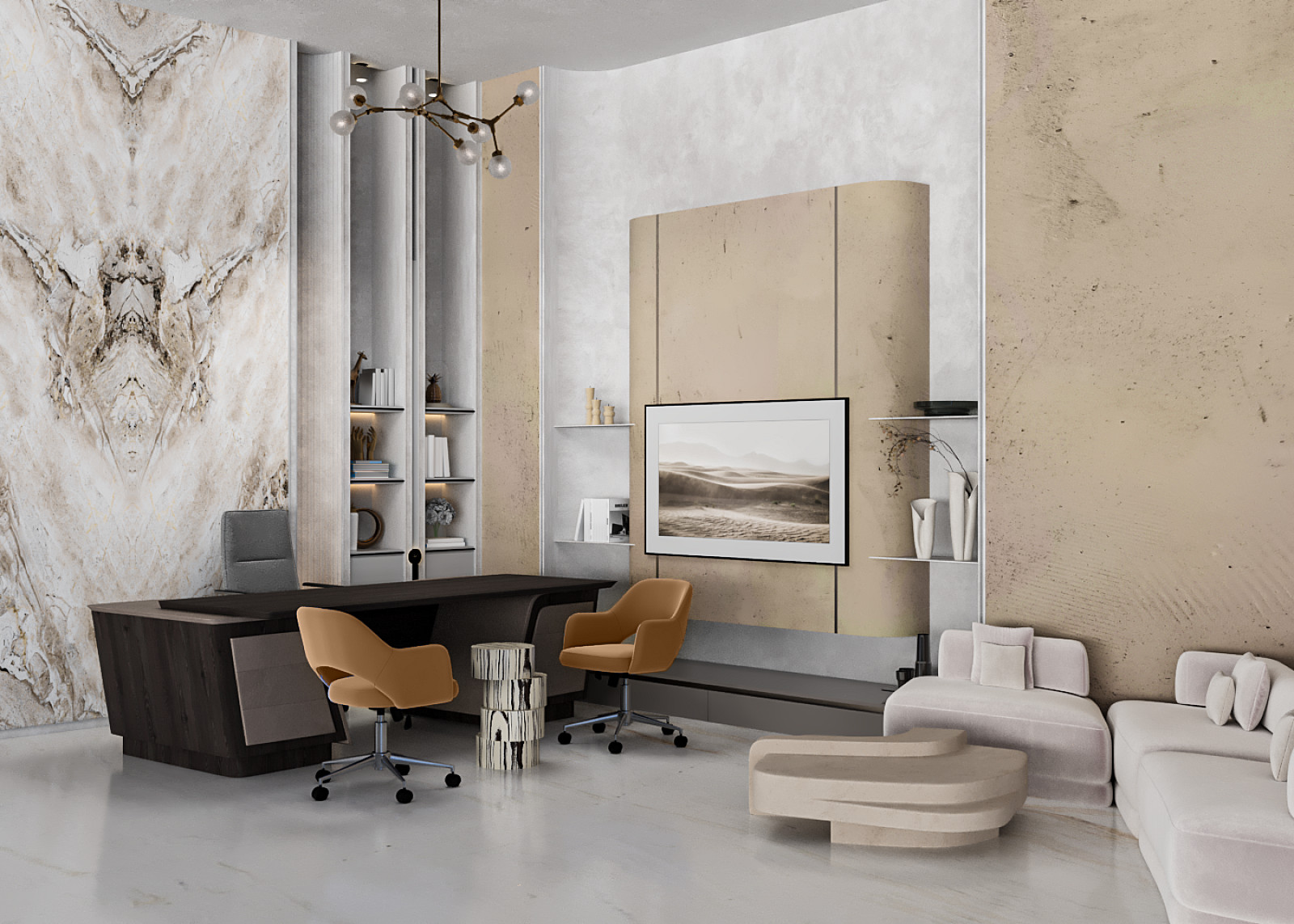
Material selection emphasizes contrast between matte and reflective finishes to enhance depth perception. Transparent and translucent elements are strategically integrated to create layered visual planes.
The museum fosters educational engagement, technological innovation, and emotional connection while maintaining environmental responsibility.
Technical information
Project Type: Cultural / Educational Interior Design – Museum
Design Approach: Concept-driven spatial sequencing based on optical science and human perception theory.
Lighting Strategy:
1- Layered lighting system (ambient, accent, task, feature lighting)
2- Sensor-based automated daylight control
3- Integrated LED linear systems
4- Controlled glare index for visual comfort
5- Reflective and diffused surfaces to amplify spatial depth
6- Lighting is designed as both functional infrastructure and experiential medium.
Material Strategy:
1- Low-VOC finishes to improve indoor air quality
2- High-durability sustainable flooring materials
3- Recyclable metal framing systems
4- Glass and acrylic panels for optical interaction
5- Acoustic panels for sound control within immersive zones
Environmental & Sustainability Strategy
The project aligns with multiple United Nations Sustainable Development Goals (SDGs):
? SDG 4 – Quality Education
The museum enhances science education through interactive, experiential learning environments that promote visual literacy and cognitive engagement.
? SDG 7 – Affordable & Clean Energy
Energy-efficient LED lighting systems and automated daylight harvesting reduce energy consumption.
? SDG 11 – Sustainable Cities & Communities
The project contributes to cultural infrastructure, strengthening urban identity and community engagement.
? SDG 12 – Responsible Consumption & Production
Use of sustainable materials, modular systems, and low-emission finishes minimizes environmental impact.
? SDG 13 – Climate Action
Energy optimization strategies and passive design principles reduce operational carbon footprint.
Energy & Environmental Measures:
1- Daylight harvesting system
2- Occupancy sensors to reduce energy waste
3- Thermal zoning for HVAC efficiency
4- Use of durable, long-life materials to reduce lifecycle impact
5- Indoor environmental quality optimization
Circulation & Human Comfort:
1- Barrier-free accessibility
2- Universal design principles
3- Ergonomic spatial proportions
4- Wayfinding guided through light rhythm rather than excessive signage

Copyright © 2026 INSPIRELI | All rights reserved. Use of this website signifies your agreement to the Terms of Use, Privacy Policy, and use of cookies.