Heritage at Risk: Reviving the Soul Of BIRULIA - A Case Study in Architectural Conservation & Adaptive Reuse


 Z H M Monjur Murshed
Project idea
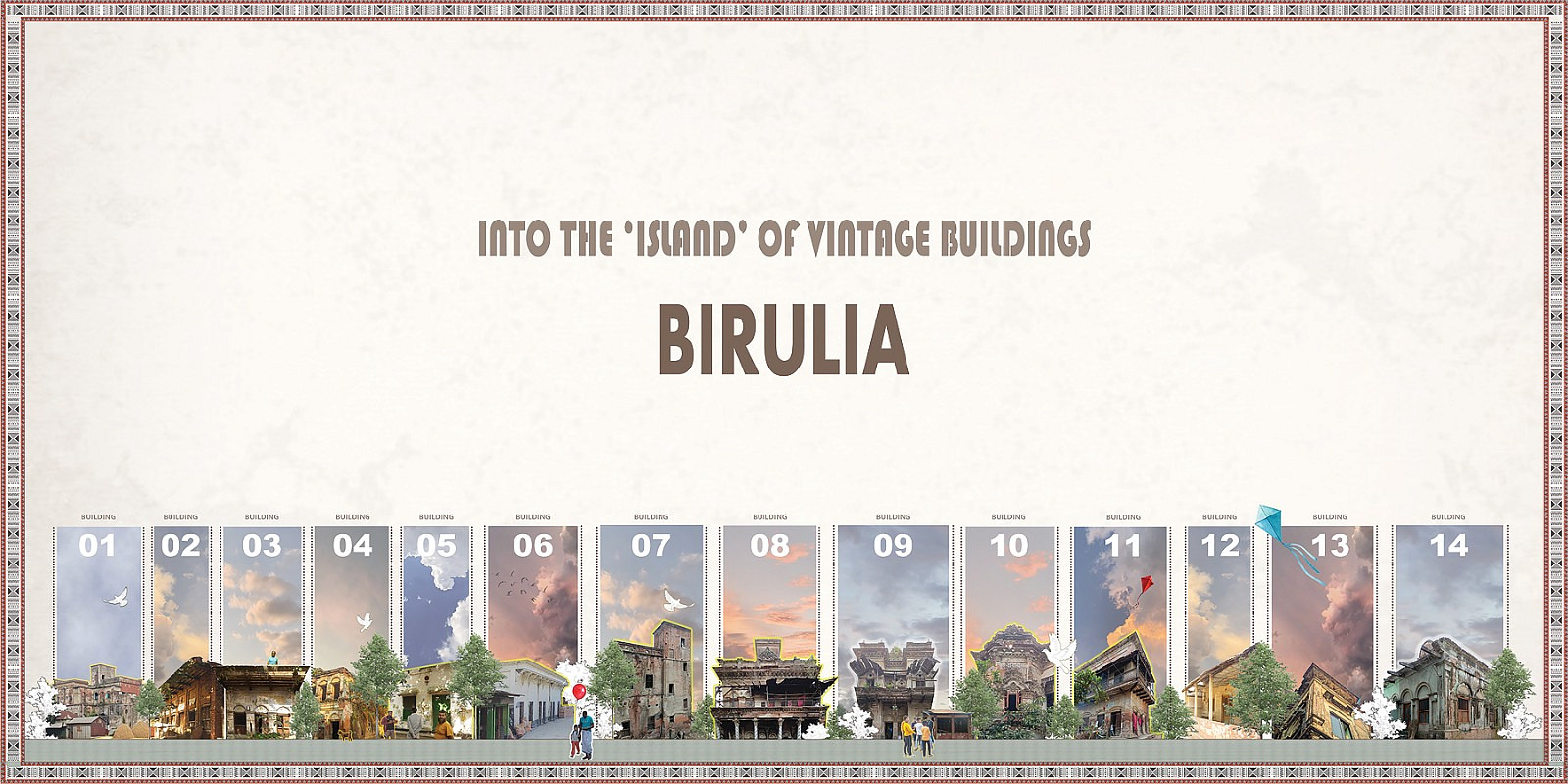
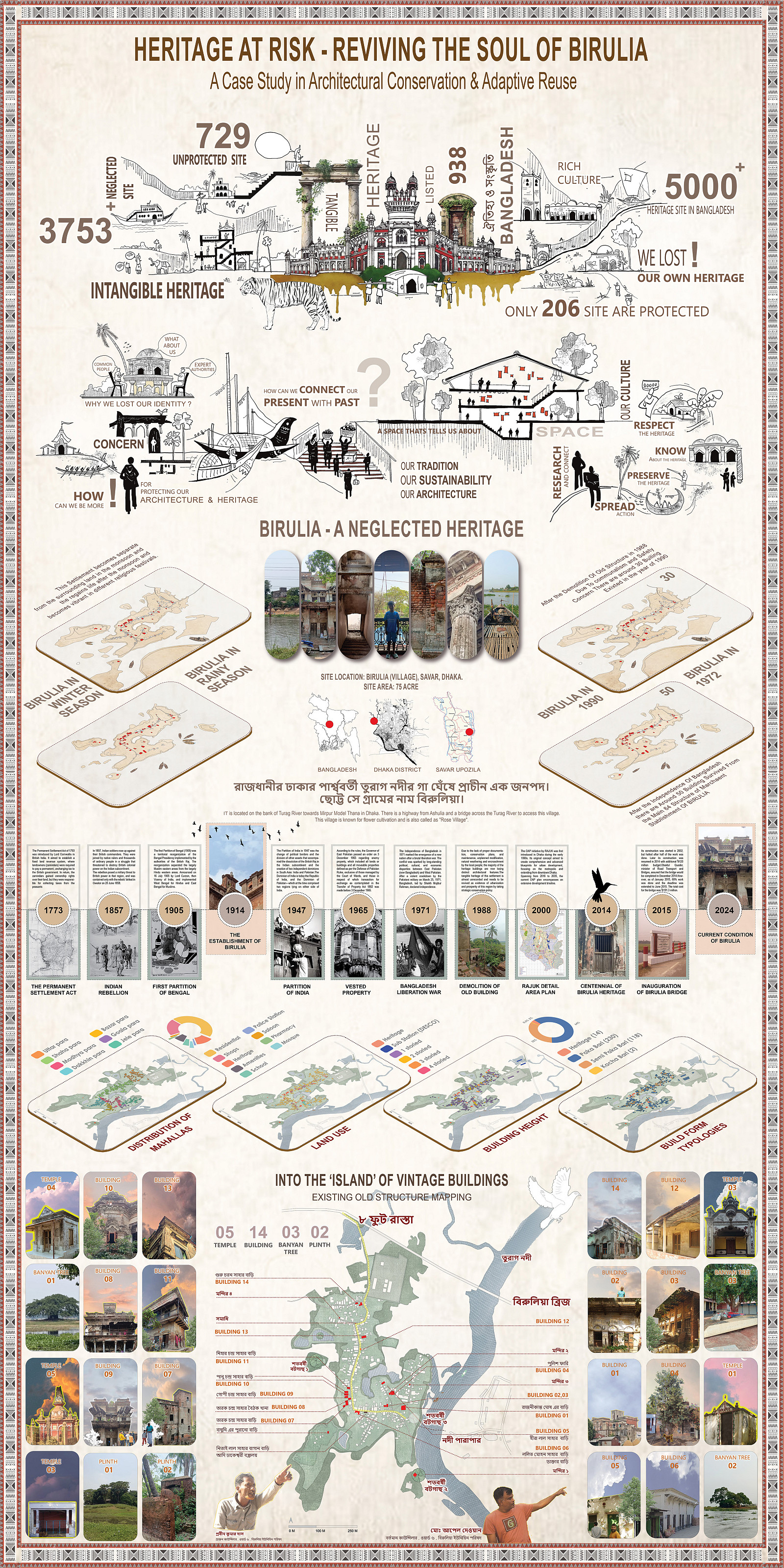
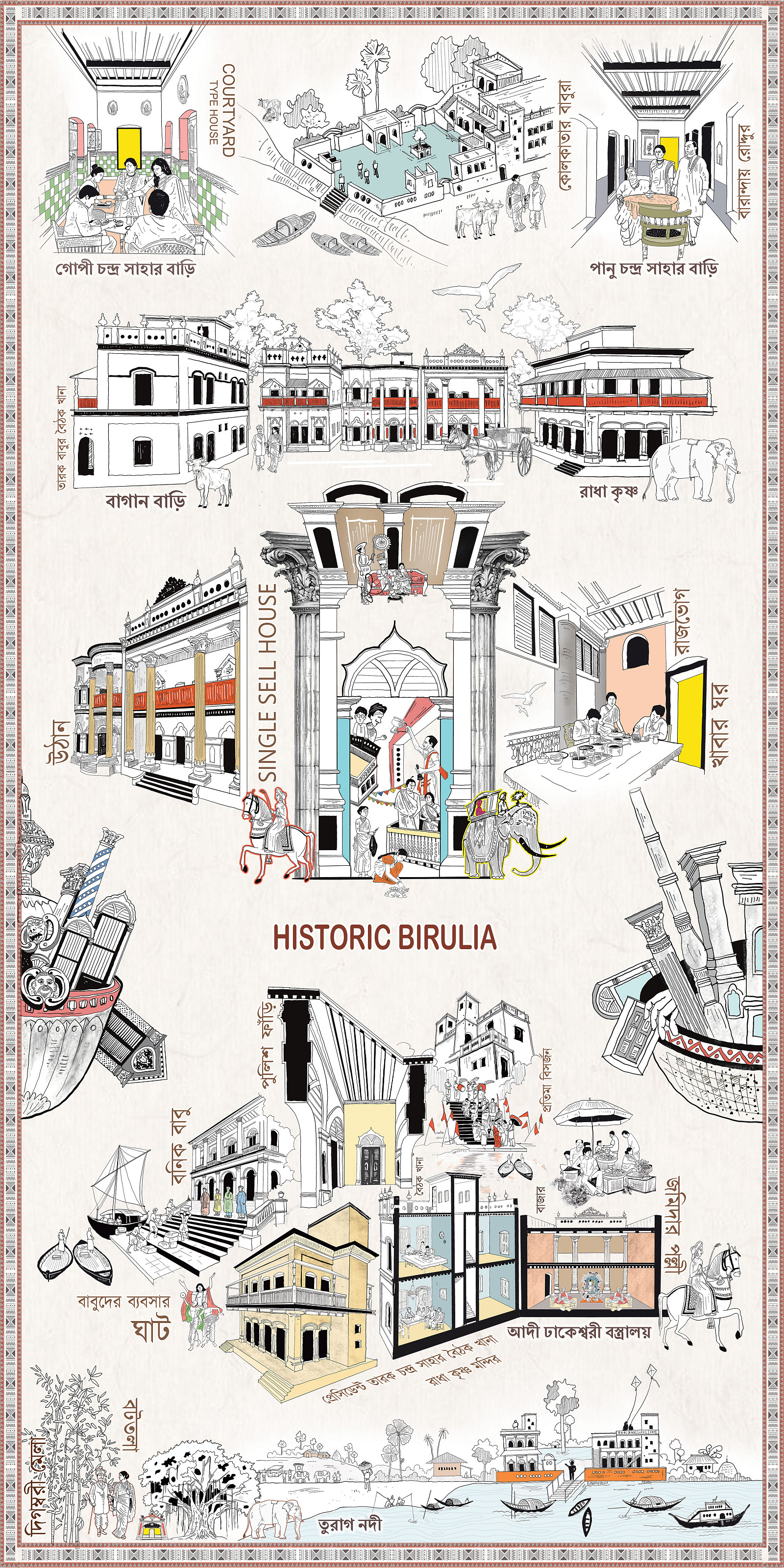
Bangladesh holds a vast architectural inheritance shaped by centuries of faith, exchange, and patronage. Yet among more than 5,000 potential heritage sites, only a small portion are formally recognised, leaving most undocumented and vulnerable. Birulia, on the western bank of the Turag River near Dhaka, reflects this fragile condition within a landscape dense with memory. Each monsoon, Birulia becomes an island. Water engulfs homes and roads, and the village floats in memory. When the river withdraws, fields and rose gardens reveal courtyards, temples, and fading facades remnants of trade, festivals, and the Bhawal Zamindars’ prosperity. Then history shifted. Partition, riots, and war emptied homes. Of sixty-four heritage buildings, only a few remain as witnesses.
Yet Birulia lives. Memory survives through ritual and return.
This thesis argues conservation cannot freeze life; it must support present residents while honouring origins and preventing erasure. Through listening, mapping, and walking with the community the project proposes small, practical interventions across the village rather than large restorations.
The core question is - how can a historic settlement retain authenticity while adapting to present and future needs with limited resources?
The vision is simple: past and present side by side, residents and visitors sharing space, change without erasure.
Here, heritage is not a burden.
It is the ground on which the future is built.
Project description
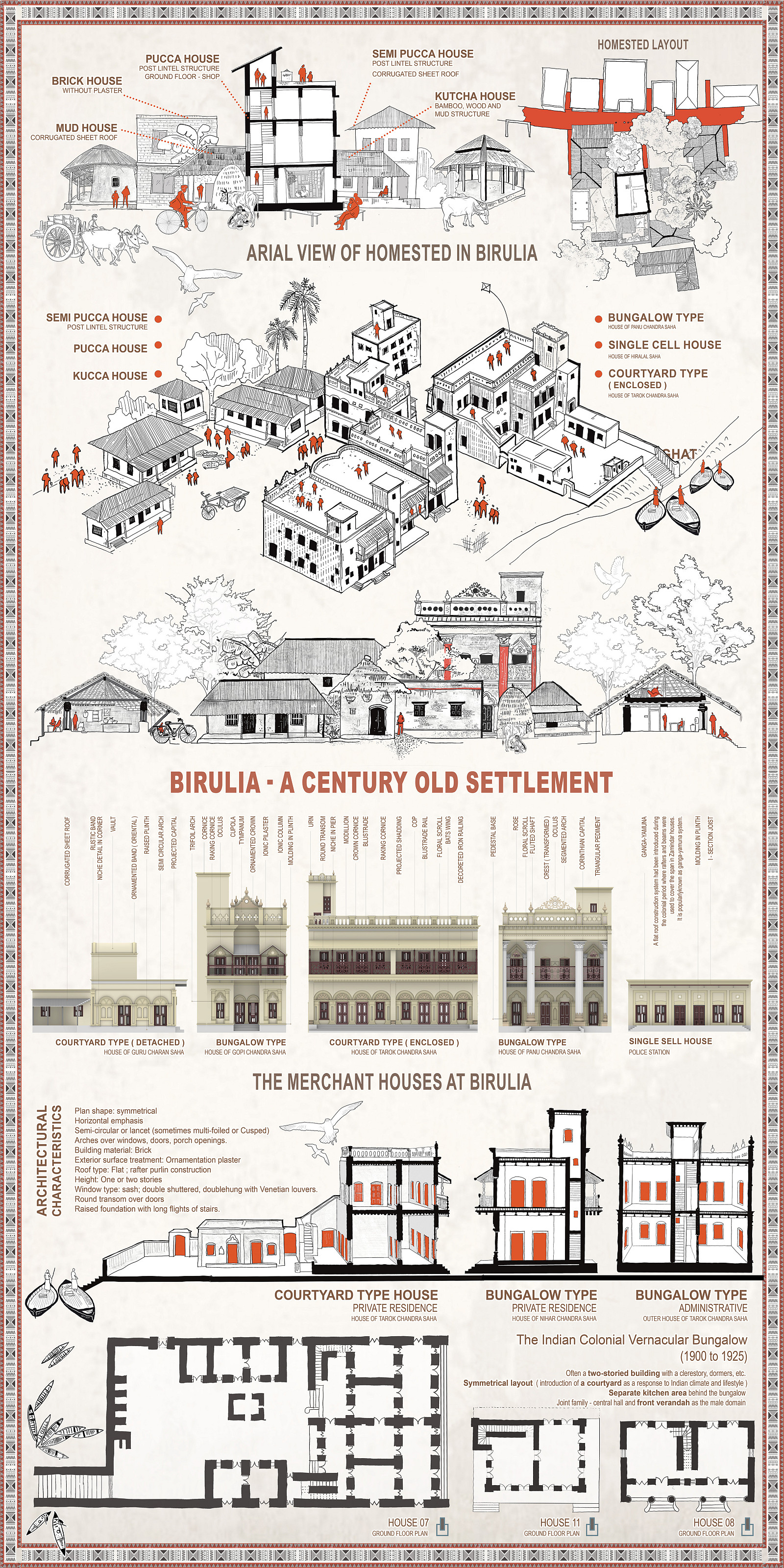
Birulia emerged as a significant merchant settlement during British colonial rule, particularly after the Permanent Settlement Act of 1793. River-based trade enabled the rise of influential families such as the Sahas, who shaped the neighbourhood through courtyard houses, temples, and marketplaces aligned along the one-kilometre Tarok Babur Rasta, formalised in 1914. At its peak, the settlement contained more than sixty colonial-era structures embedded within a cohesive socio-religious landscape under the Bhawal Zamindars.
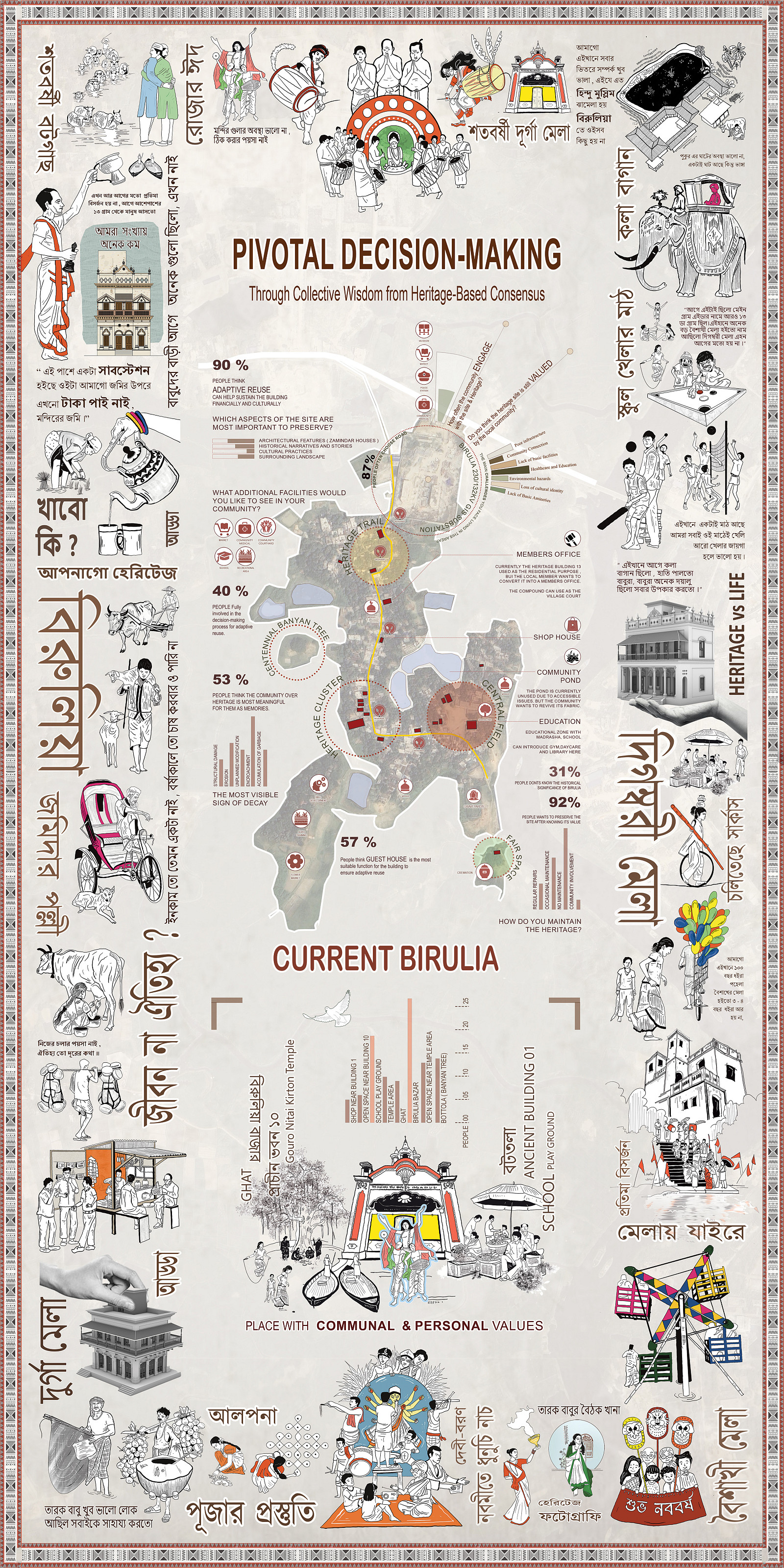
Political upheavals in 1947, communal riots in 1964, and the Liberation War of 1971 triggered large-scale displacement of Hindu residents. Abandonment, subdivision, and redevelopment led to severe attrition of the historic fabric; today only a small fraction of buildings survive. Yet the area continues to host periodic returns of cultural life. Festivals such as Durga Puja, Pahela Baishakh, and the Digambari Mela under century-old banyan trees reactivate collective memory, revealing a sharp contrast between enduring intangible heritage and vanishing material support.
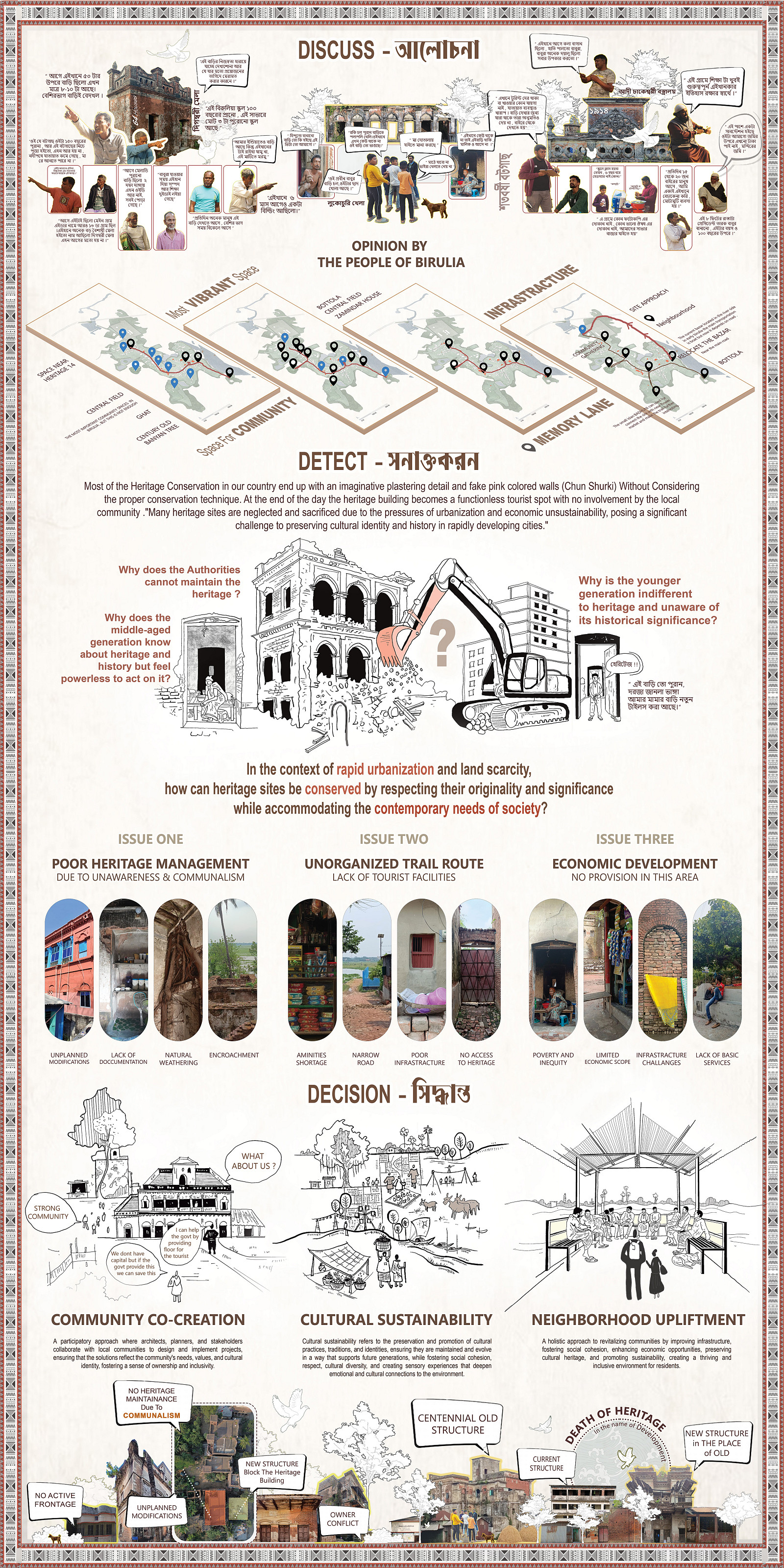
This research approaches Birulia as a living cultural landscape rather than a collection of isolated monuments. Fieldwork combined oral histories, stakeholder interviews, and architectural documentation to understand why decline persists. Three systemic issues were identified: weak heritage governance influenced by limited awareness and communal sensitivities; absence of economic incentives that could make preservation viable; and poor visitor infrastructure, including discontinuous trails and lack of interpretation.
From these conditions arises the central question:
How can authenticity be protected while adapting heritage environments to contemporary urban demands and land scarcity?
In response, the project advances a three-part strategy: community co-creation to rebuild stewardship, neighbourhood upliftment to link conservation with livelihood, and cultural sustainability to improve accessibility and tourism facilities. Implementation follows the “3D Rule”—Discuss, Detect, Decision—ensuring participatory evaluation before intervention.
The study argues that Birulia demonstrates a broader South Asian reality: heritage will survive not through protection alone but by becoming socially useful, economically relevant, and publicly experienced. Conservation must therefore shift from static memory to active urban practice.
Technical information
Before proposing any architectural reform, the project begins with a critical inquiry: can every part of Birulia be preserved in the same way?
Field surveys reveal a complex reality. Some structures carry high heritage value but are abandoned, some spaces are socially vibrant yet physically fragile, while other areas face intense development pressure. Applying a single conservation rule across the settlement would therefore freeze life rather than sustain it.
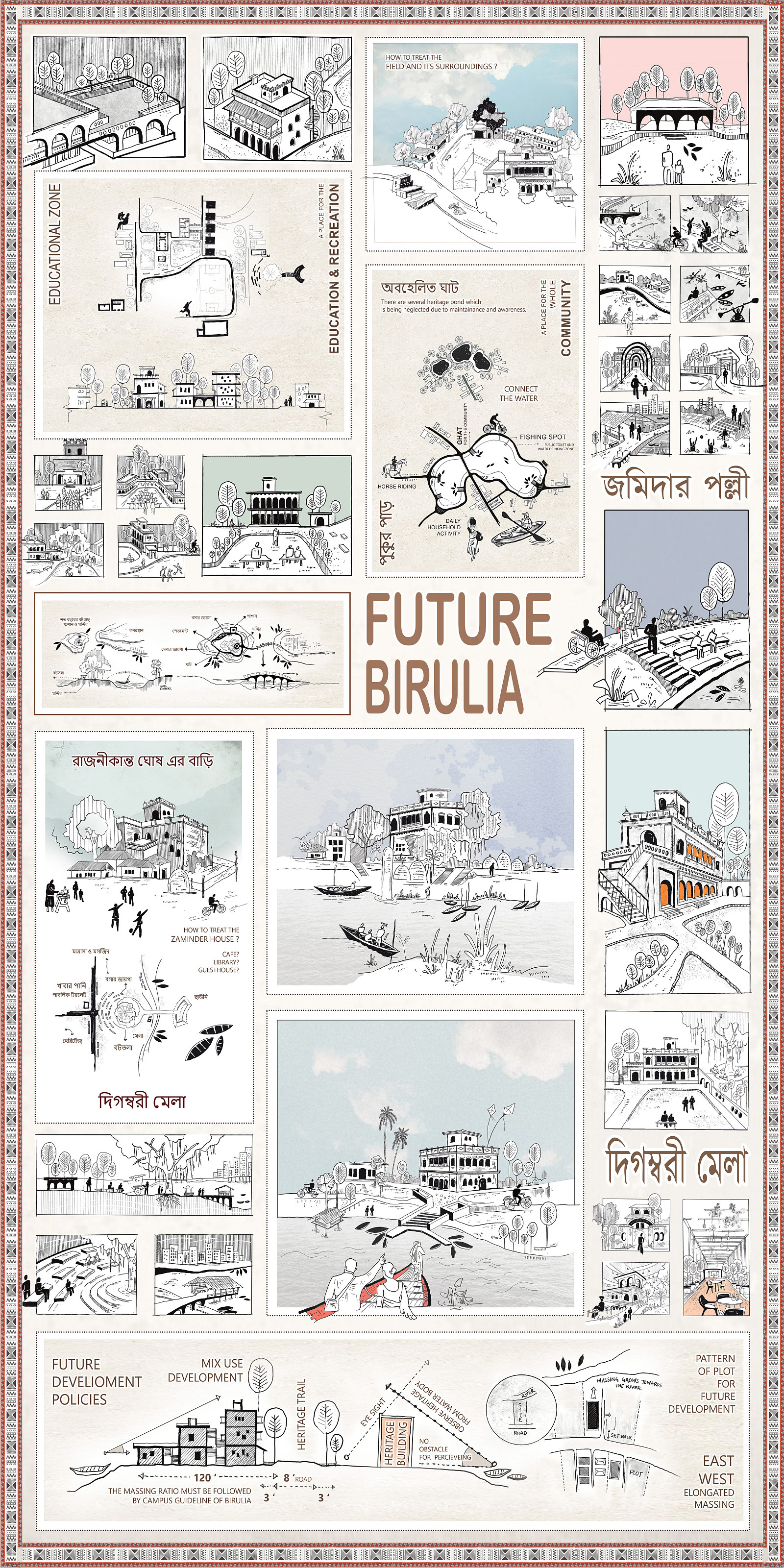
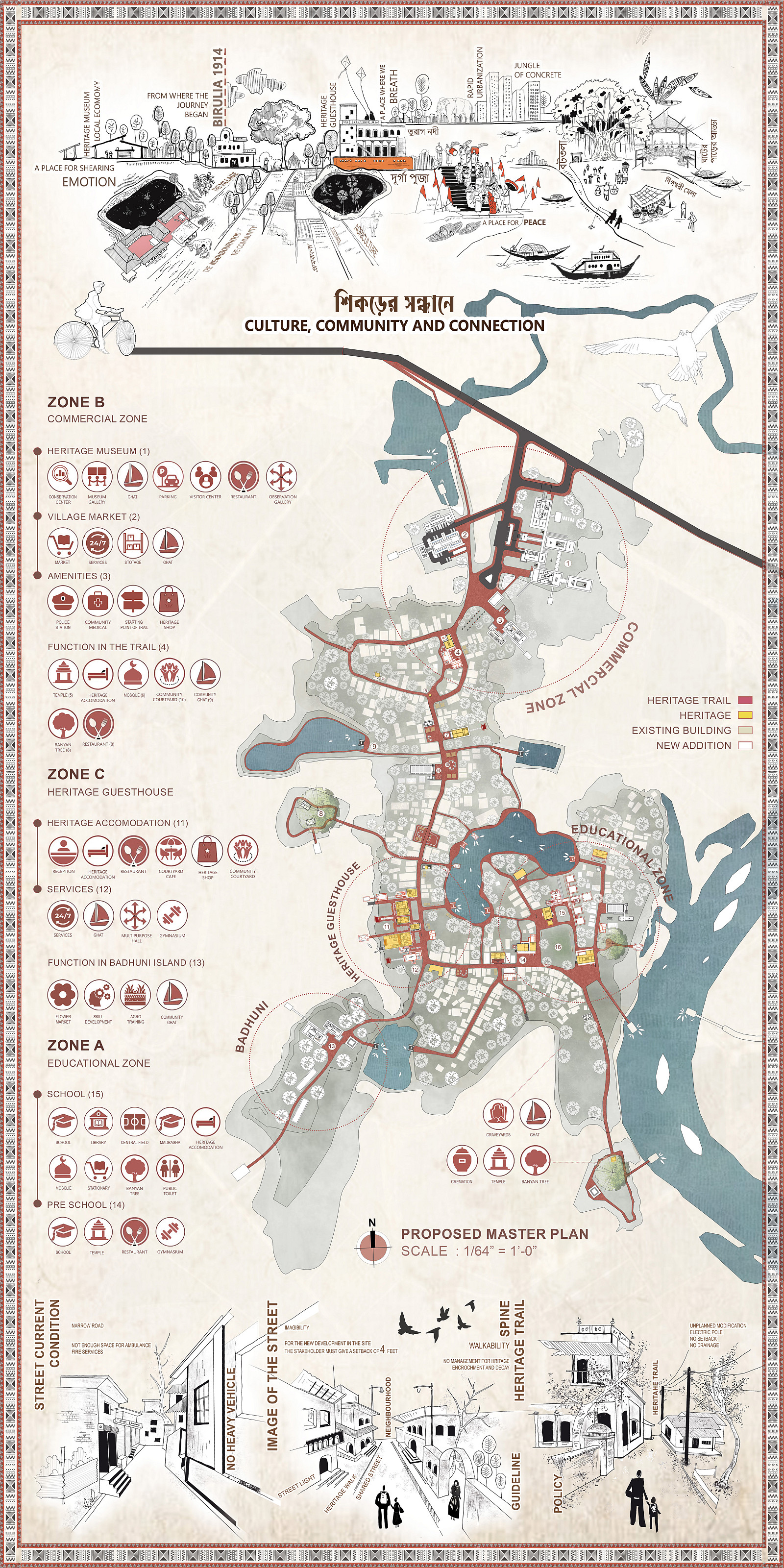
To negotiate between memory and change, Birulia is reorganised into three complementary zones: Educational, Heritage, and Commercial.
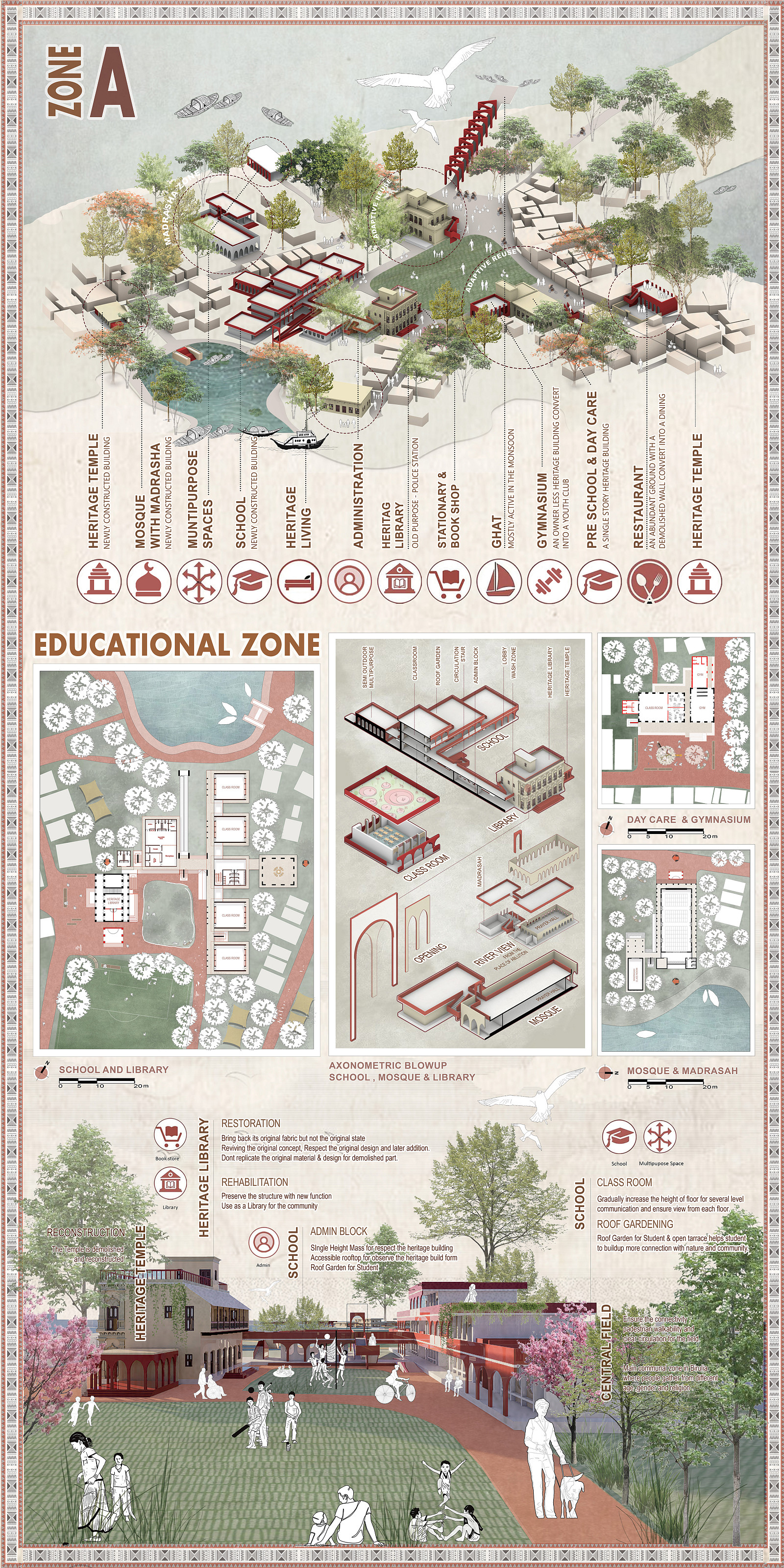
The Educational Zone grows from the existing vitality of the central field and the nearby school. Here, heritage is adapted to everyday use. Old structures are transformed into a library and community club, and the open ground becomes a shared platform for learning, gathering, and cultural exchange. Conservation becomes active, lived, and future-oriented.
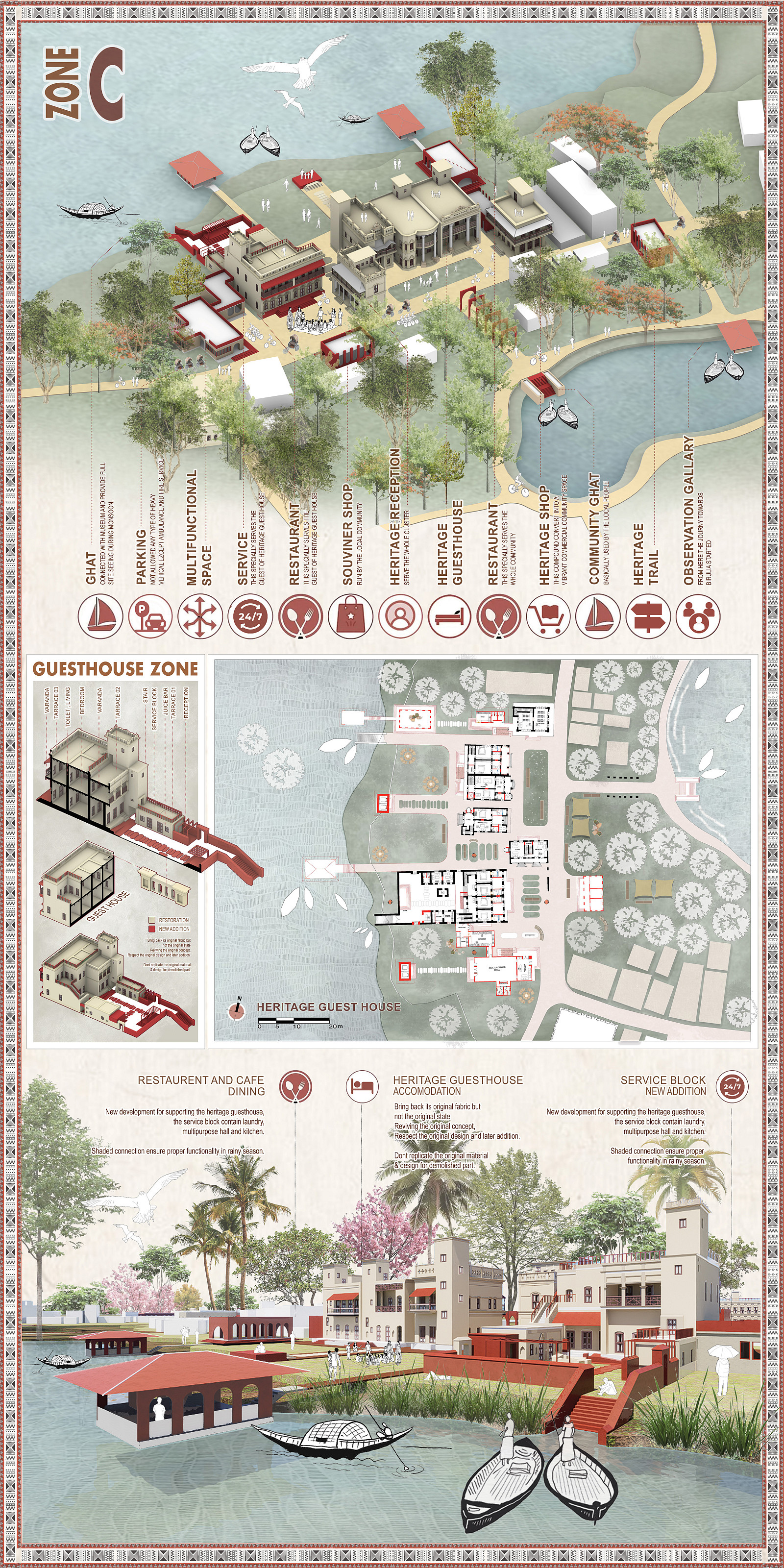
The Heritage Zone contains several historic houses now vacant or illegally occupied. Instead of leaving them as burdens, the proposal restores them through minimal intervention and converts them into a heritage guesthouse. This strategy safeguards authenticity while generating income, employment, and long-term community stewardship.
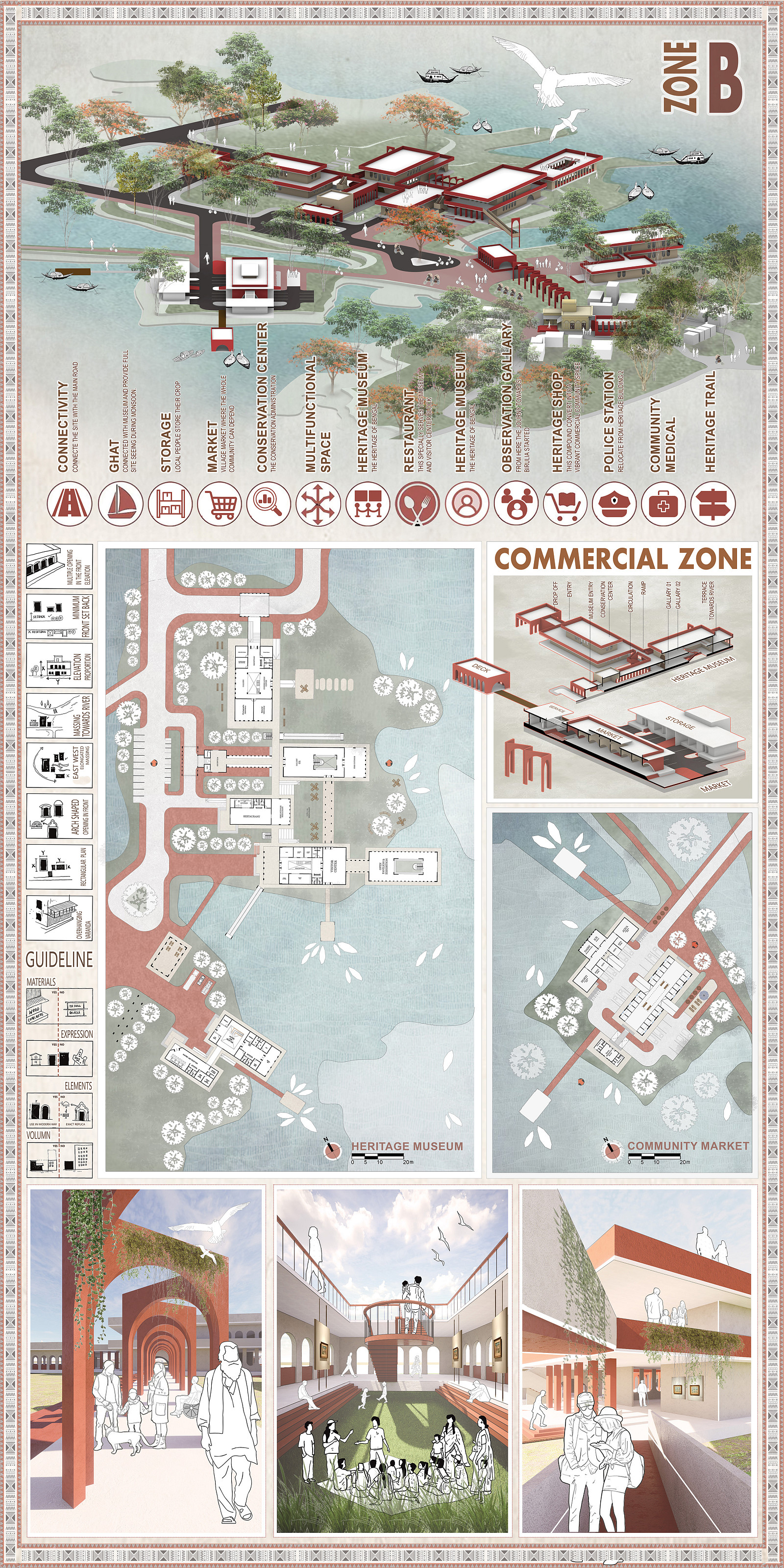
The Commercial Zone redefines arrival. A visually intrusive substation currently blocks access from the main road and weakens the identity of the place. By relocating it, the project establishes a new gateway anchored by a market, a museum, and research facilities, along with essential civic services. Visitors pass through this contemporary threshold before entering the historic fabric.
Together, the three zones create a gradient — from urban present to cultural past — allowing Birulia to evolve without losing its memory.
Created in:


Copyright © 2026 INSPIRELI | All rights reserved. Use of this website signifies your agreement to the Terms of Use, Privacy Policy, and use of cookies.