Myco-biotas


Project idea
The project explores a systematic circular economy that remedies 16 East Avenue, Fair Haven, CT, USA’s state of neglect and providing the Friend’s Center (New Haven, CT, USA) with stable and self-reliant residence and providing solutions for floods through the introduction of a system of myco-biotas.
Project description
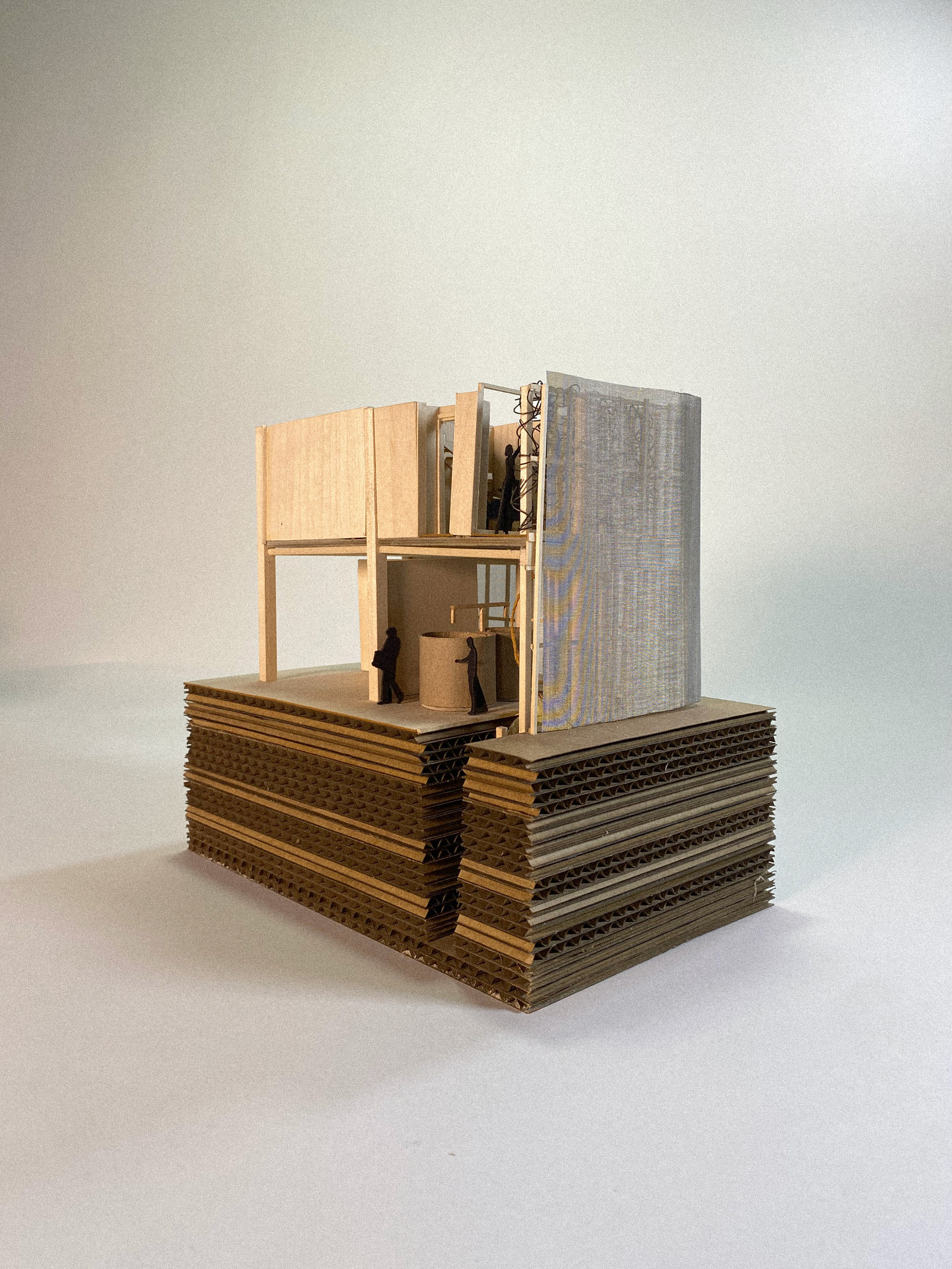
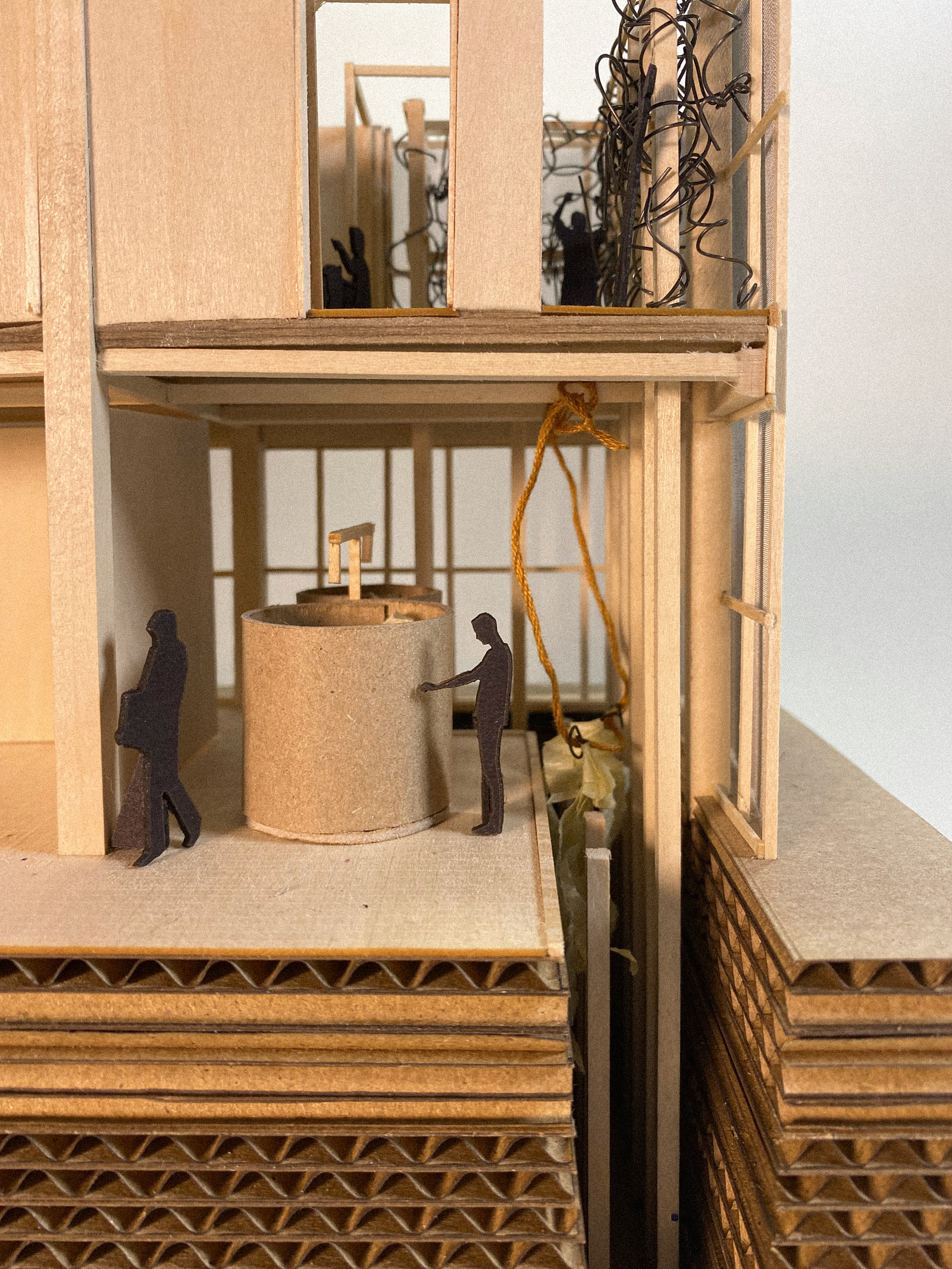
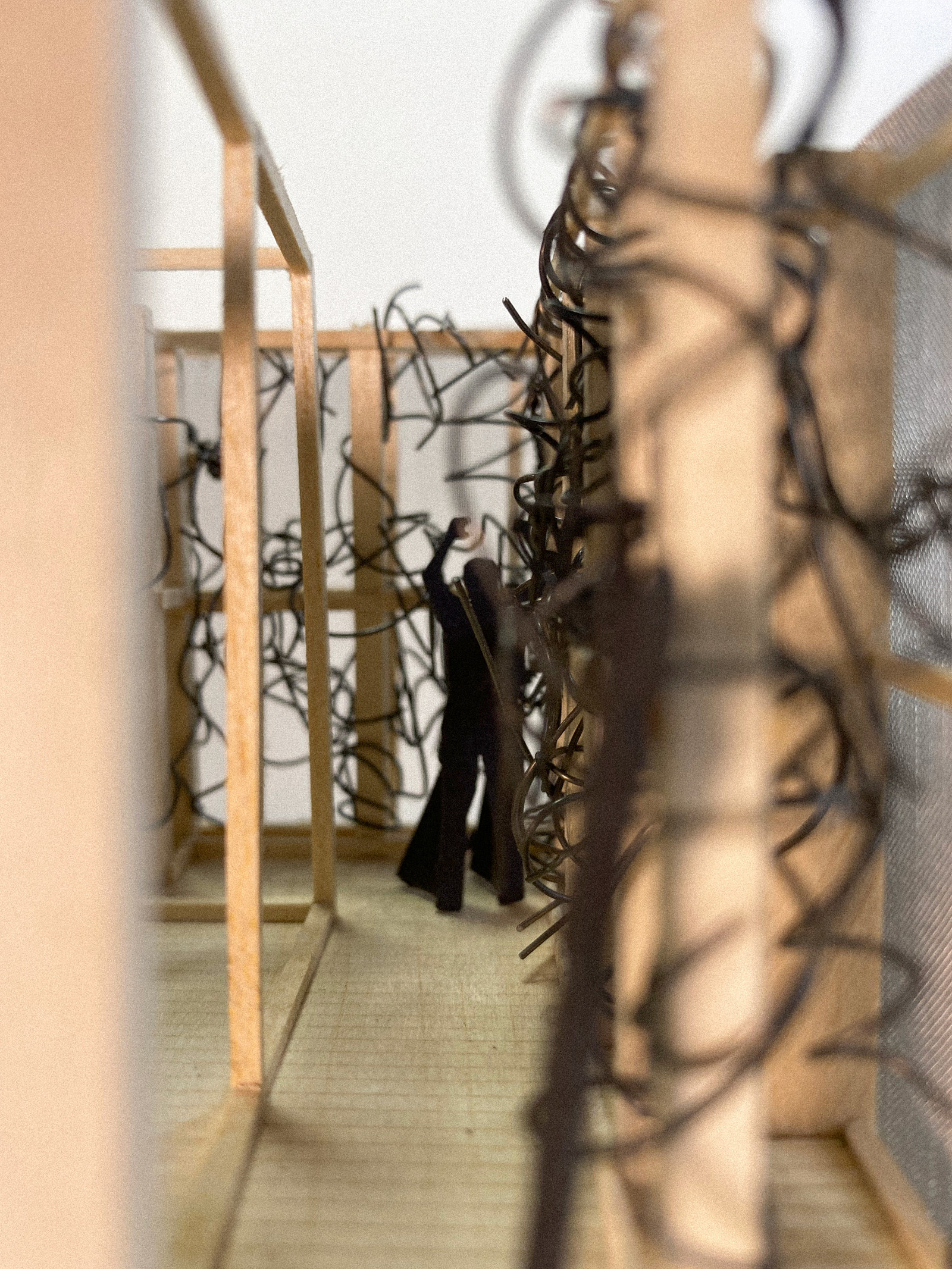
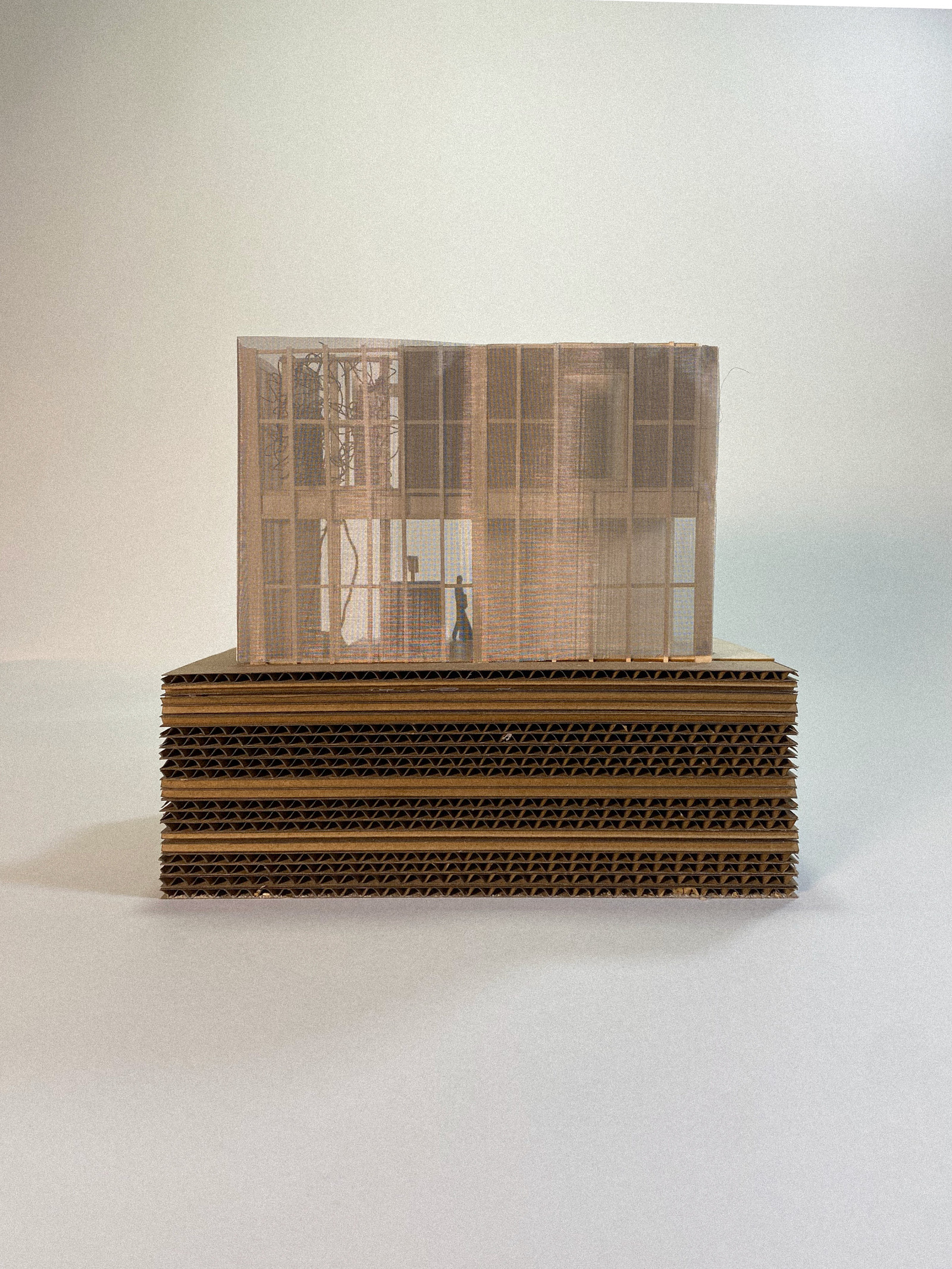
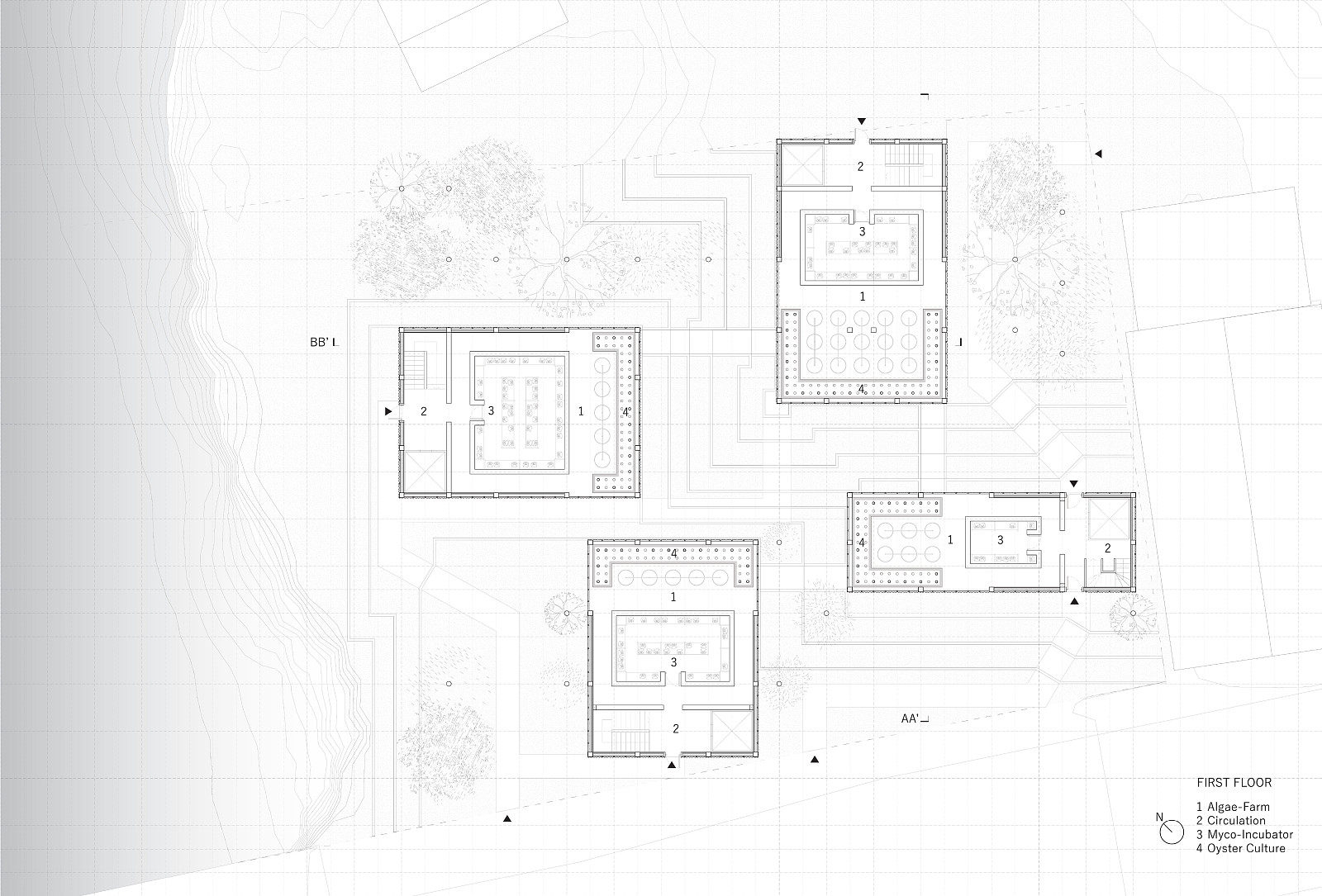
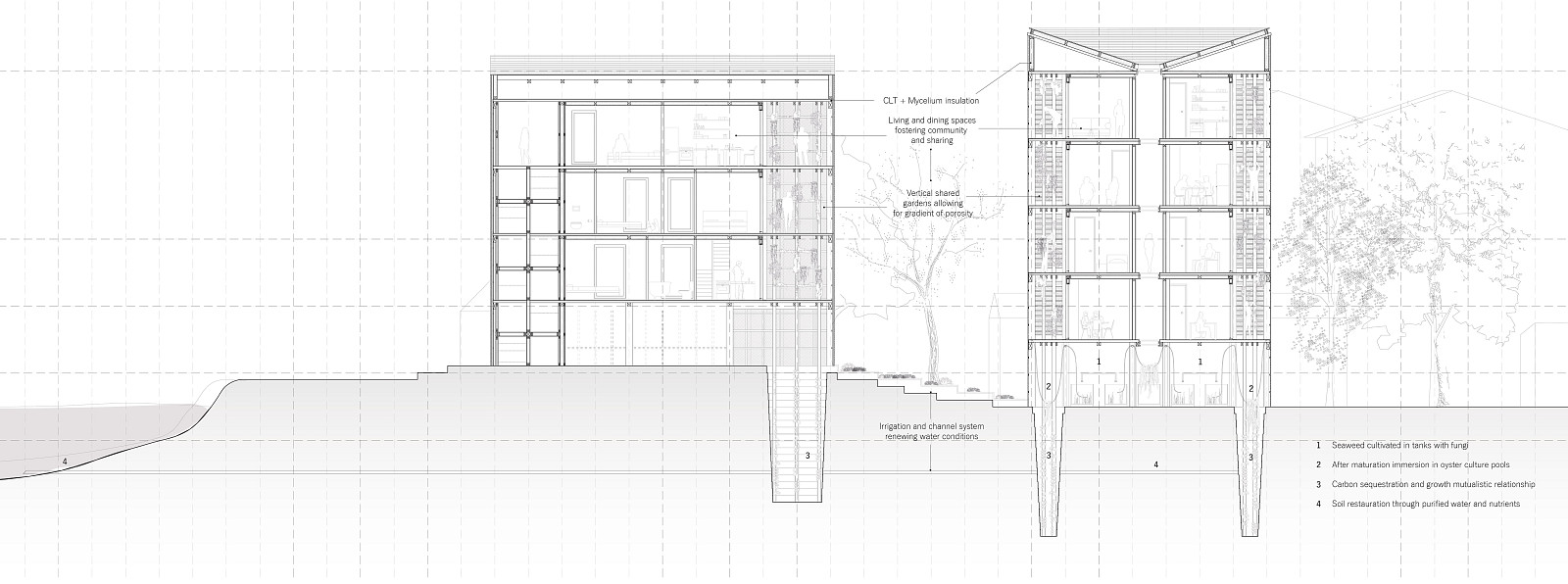
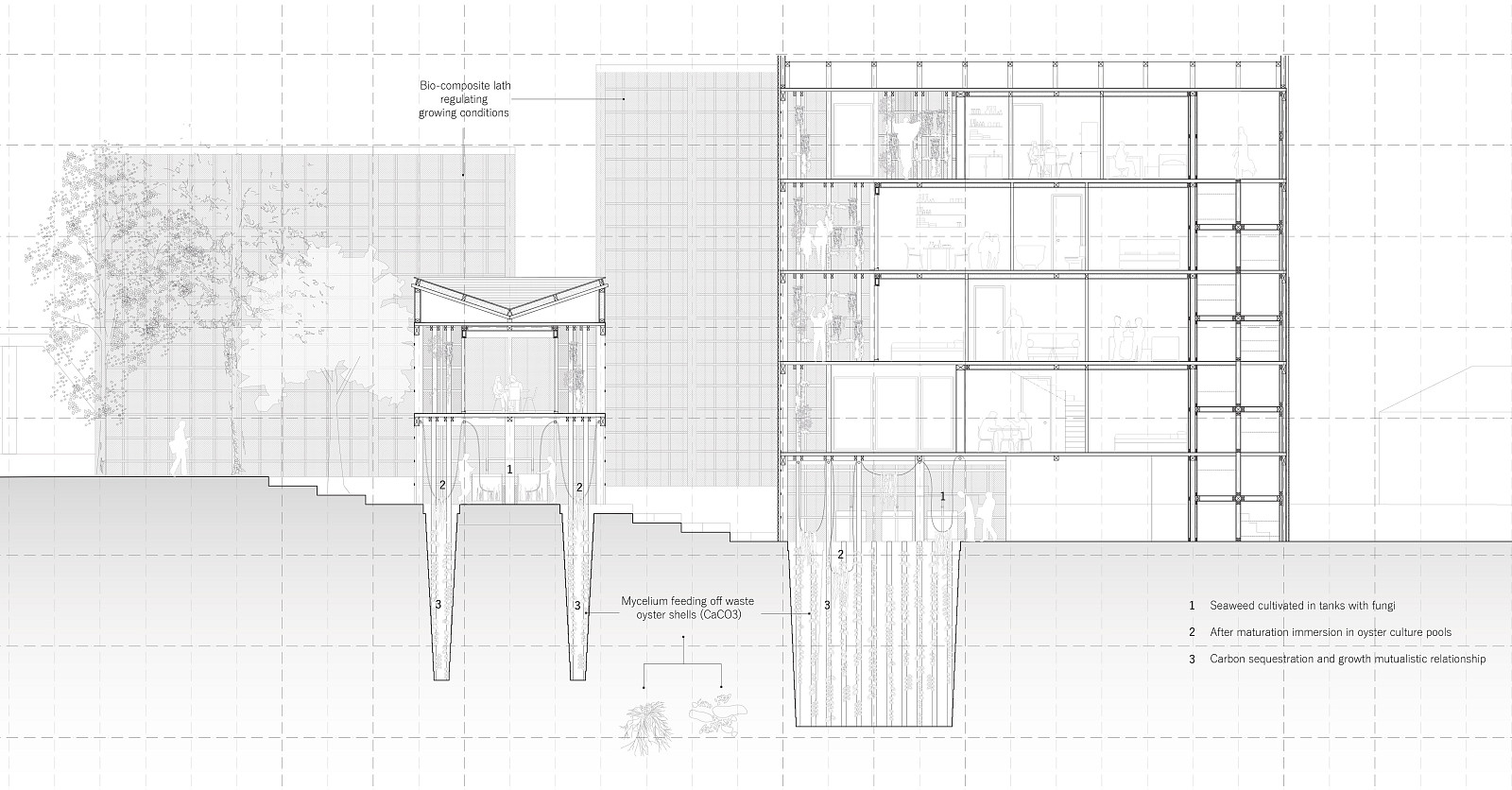
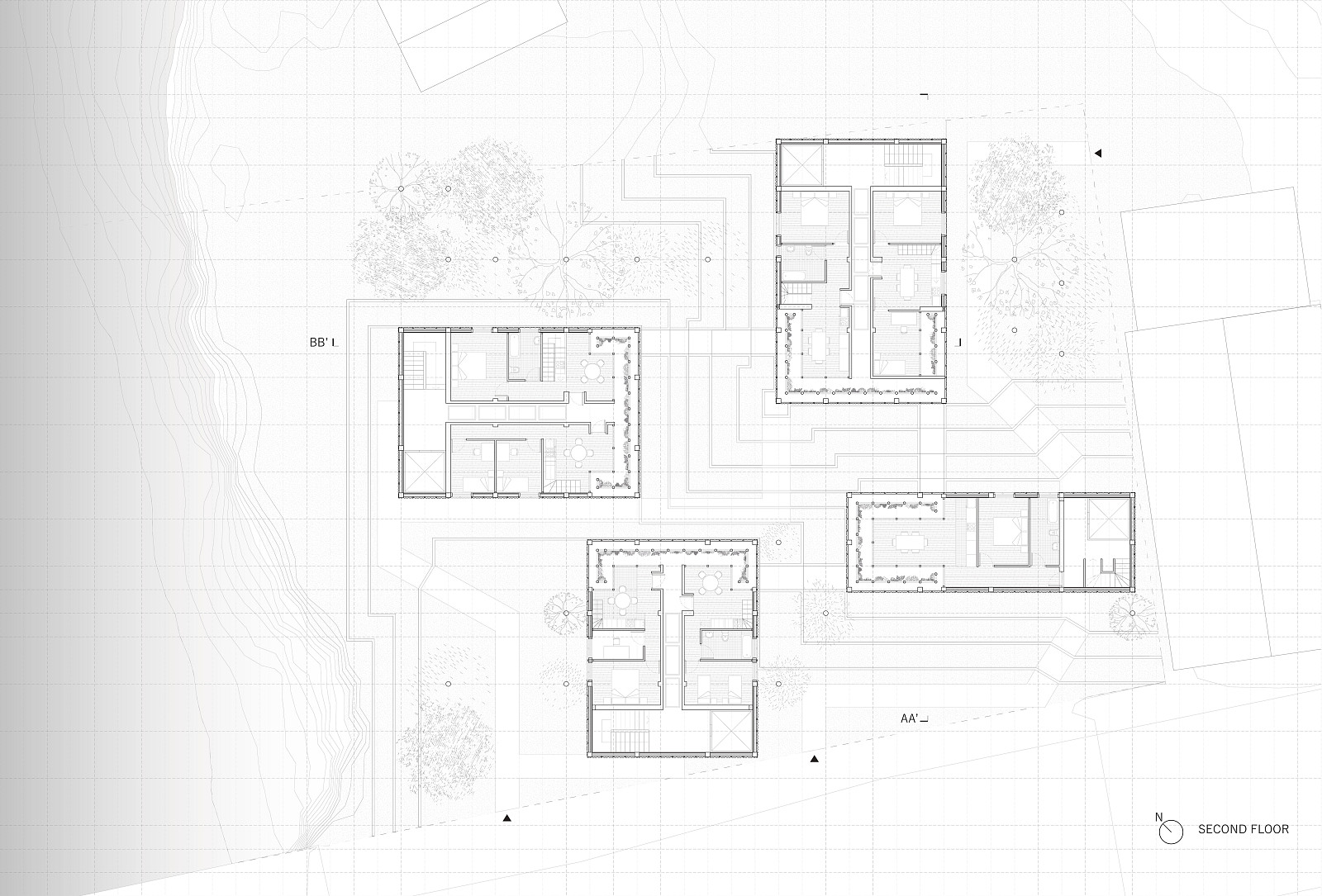
Responding to the urban grid, each myco-biota is composed of oyster farms, algae gardens, fungi incubators, residential units, and vertical gardens. The project acts at a micro scale through a regenerative approach and a macro scale by allowing the user to be autonomous in stable housing and food production. The myco-biotas support a trans-scalar circular economy, tending to humans and others.
Technical information
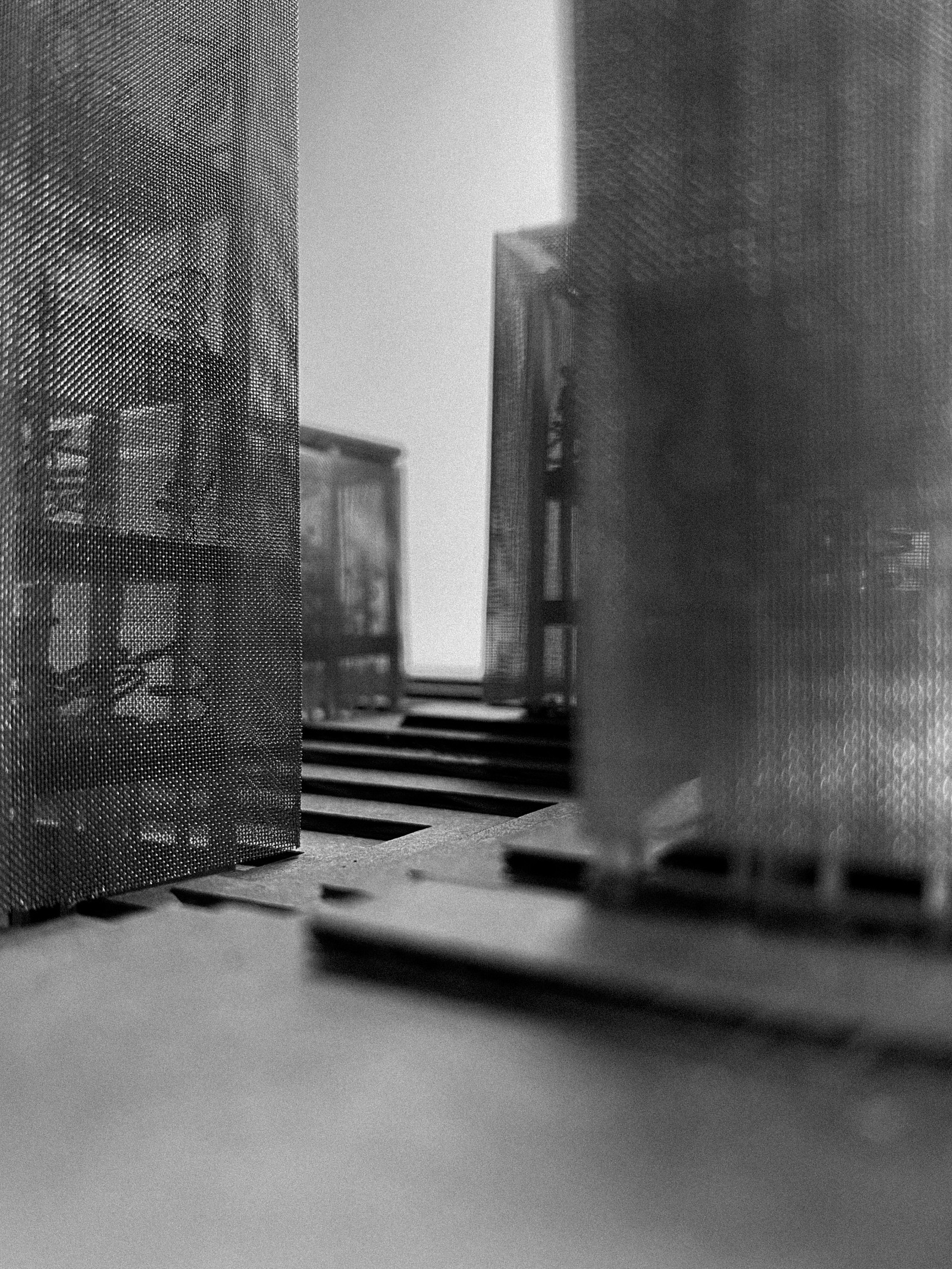
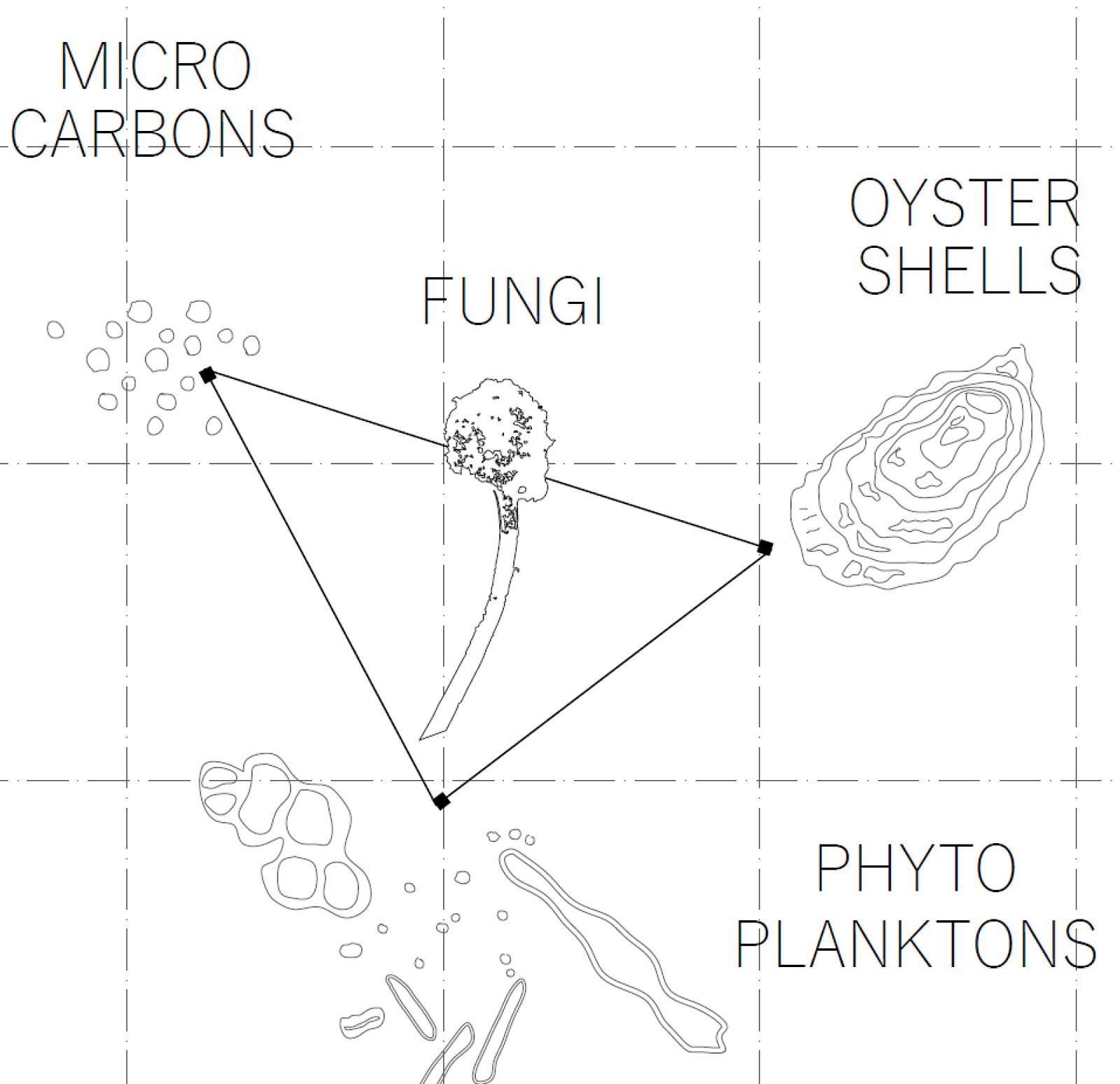
The Quinnipiac River is heavily polluted with high levels of micro carbons and is prone to flooding. By introducing fungi, the users are being tend to and water is treated to enhance space, growth, healing conditions, and food production. The myco-biotas offer varying levels of porosity as CLT and the bio composite lath filters the lighting conditions, protecting the users and growing programs. The 20 ft deep oyster farming pools are central to the myco-biotas. They benefit from algae gardens and fungi incubators supporting each program, all interconnected via the public square. The ground floor as a whole thus filters water and enhances slow farming production as well as recycling oyster shell waste into building material once consumed by the residents. The shared intimate spaces offered by the units and vertical gardens are flexible: residents can open their windows and become part of the second skin should they wish. From the ground plane – up, all the components of the myco-biotas foster mutualistic relationships supporting material and food production for the residents who can eat and share within flexible living and dining spaces Cultivating their shared gardens as they look down to view the farms.

Copyright © 2026 INSPIRELI | All rights reserved. Use of this website signifies your agreement to the Terms of Use, Privacy Policy, and use of cookies.