Recasting Pottery into Architecture: A Passive Daylight Filtering Façade for Batu Pahat.


Idea projektu
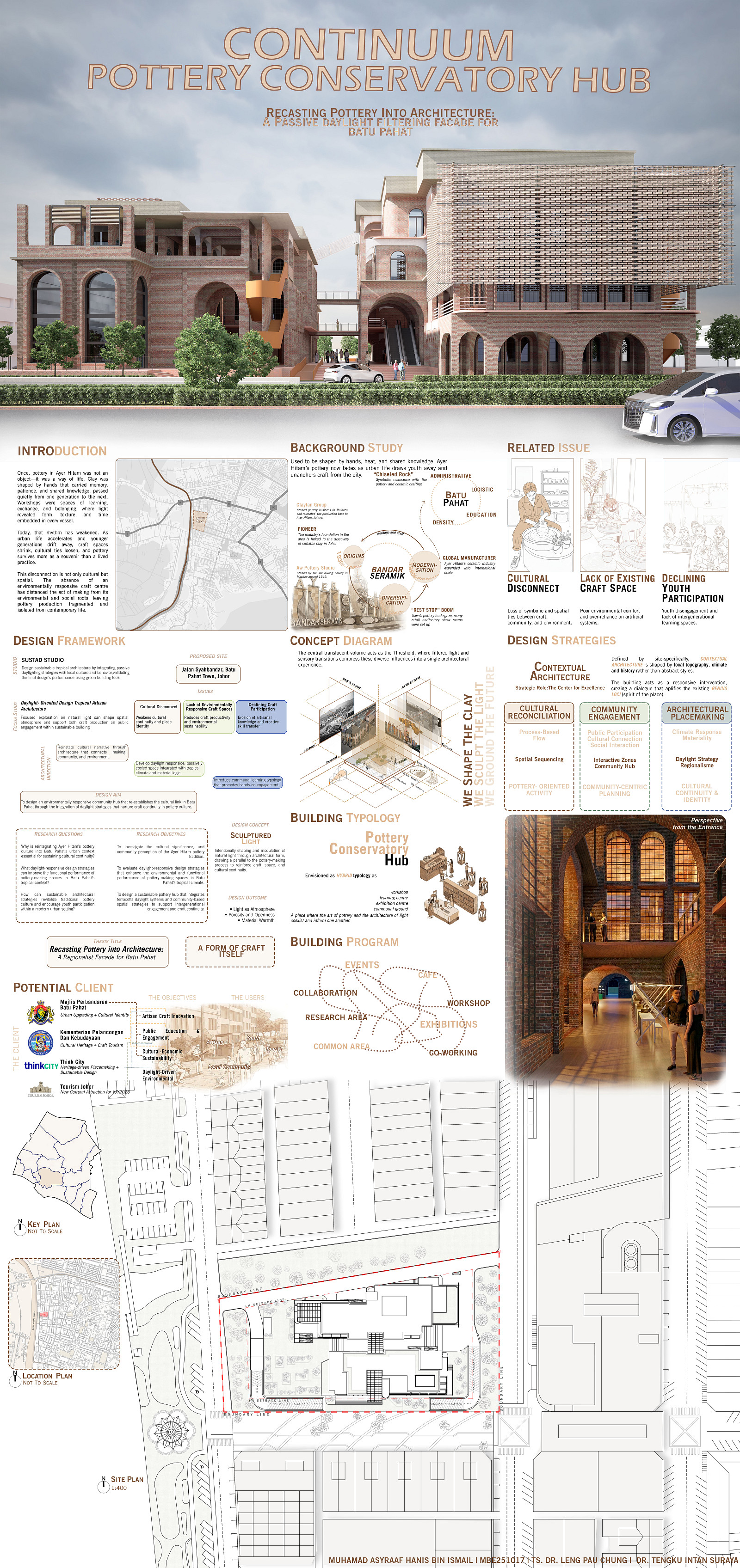
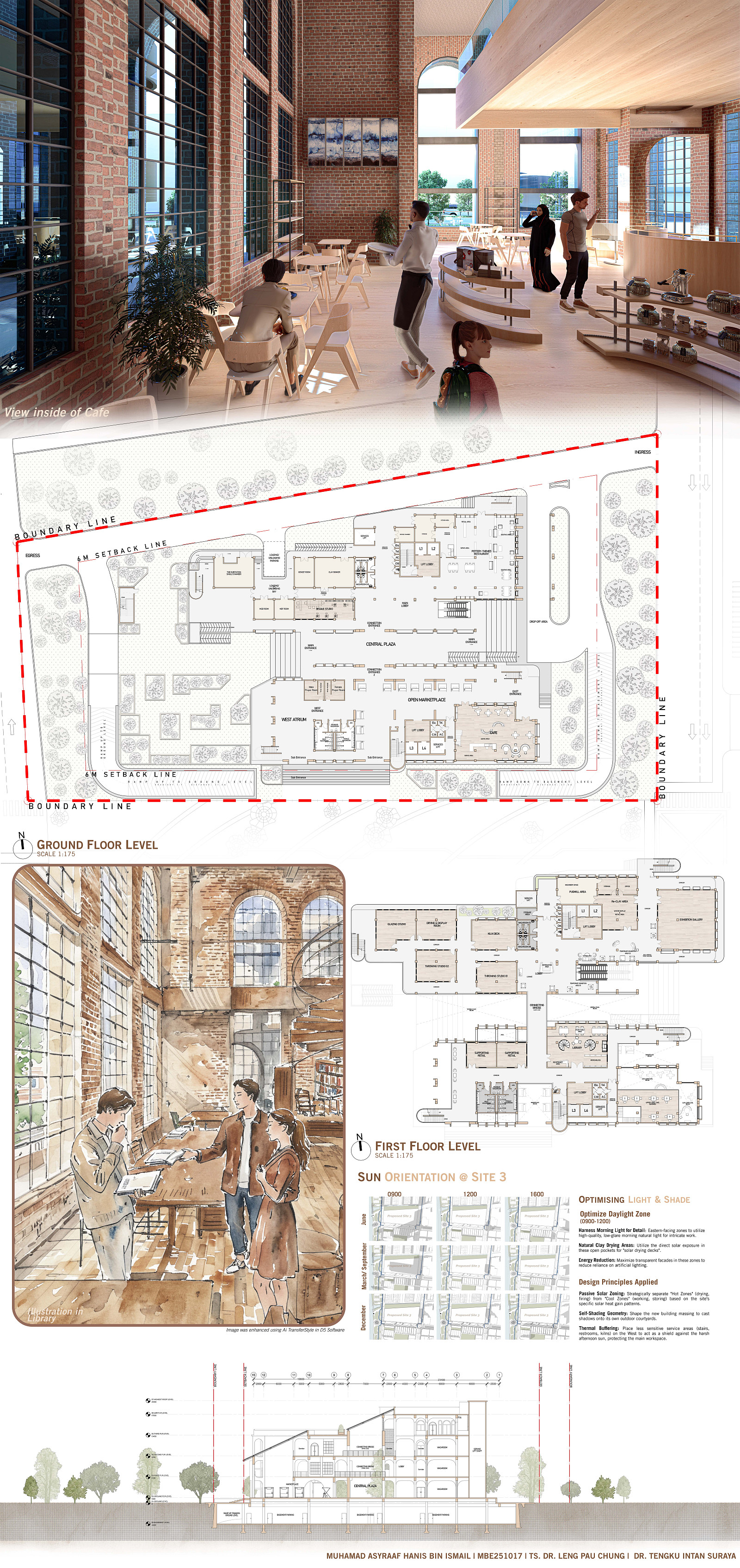
Once, pottery in Ayer Hitam was not an object—it was a way of life. Clay was shaped by hands that carried memory, patience, and shared knowledge, passed quietly from one generation to the next. Workshops were spaces of learning, exchange, and belonging, where light revealed form, texture, and time embedded in every vessel.
Today, that rhythm has weakened. As urban life accelerates and younger generations drift away, craft spaces shrink, cultural ties loosen, and pottery survives more as a souvenir than a lived practice.
This disconnection is not only cultural but spatial. The absence of an environmentally responsive craft centre has distanced the act of making from its environmental and social roots, leaving pottery production fragmented and isolated from contemporary life.
Popis projektu
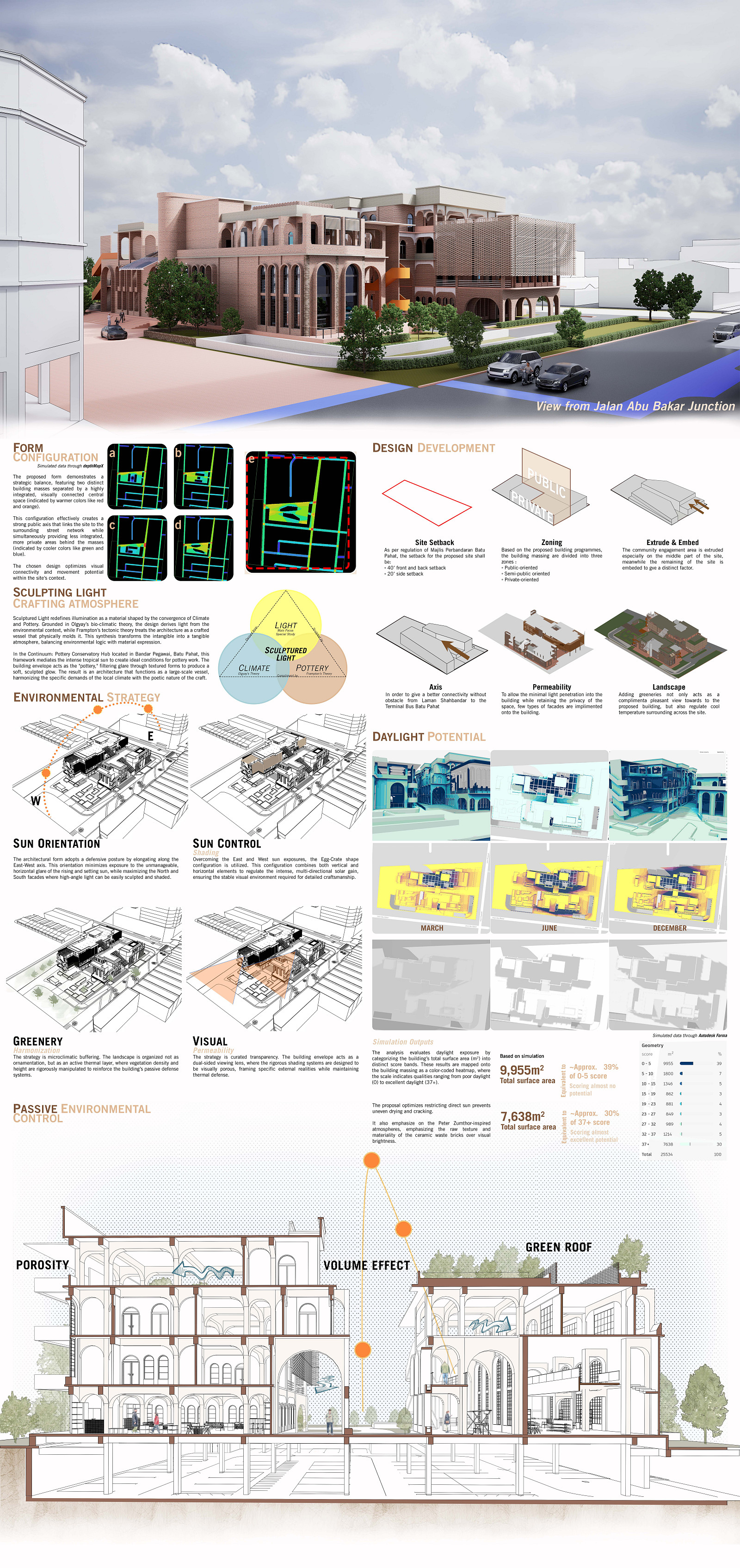
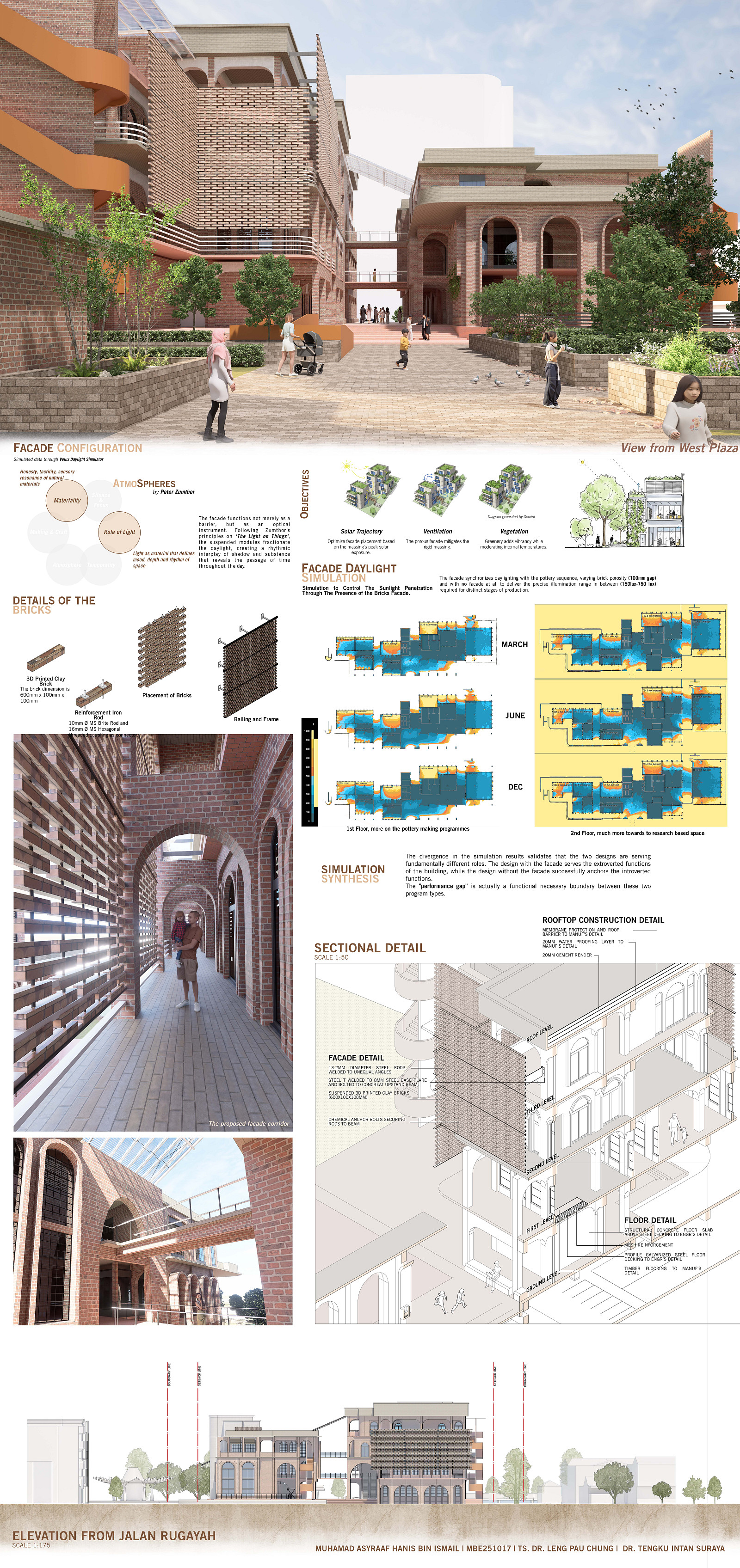
Sculptured Light redefines illumination as a material shaped by the convergence of Climate and Pottery. Grounded in Olgyay’s bio-climatic theory, the design derives light from the environmental context, while Frampton’s tectonic theory treats the architecture as a crafted vessel that physically molds it. This synthesis transforms the intangible into a tangible atmosphere, balancing environmental logic with material expression.
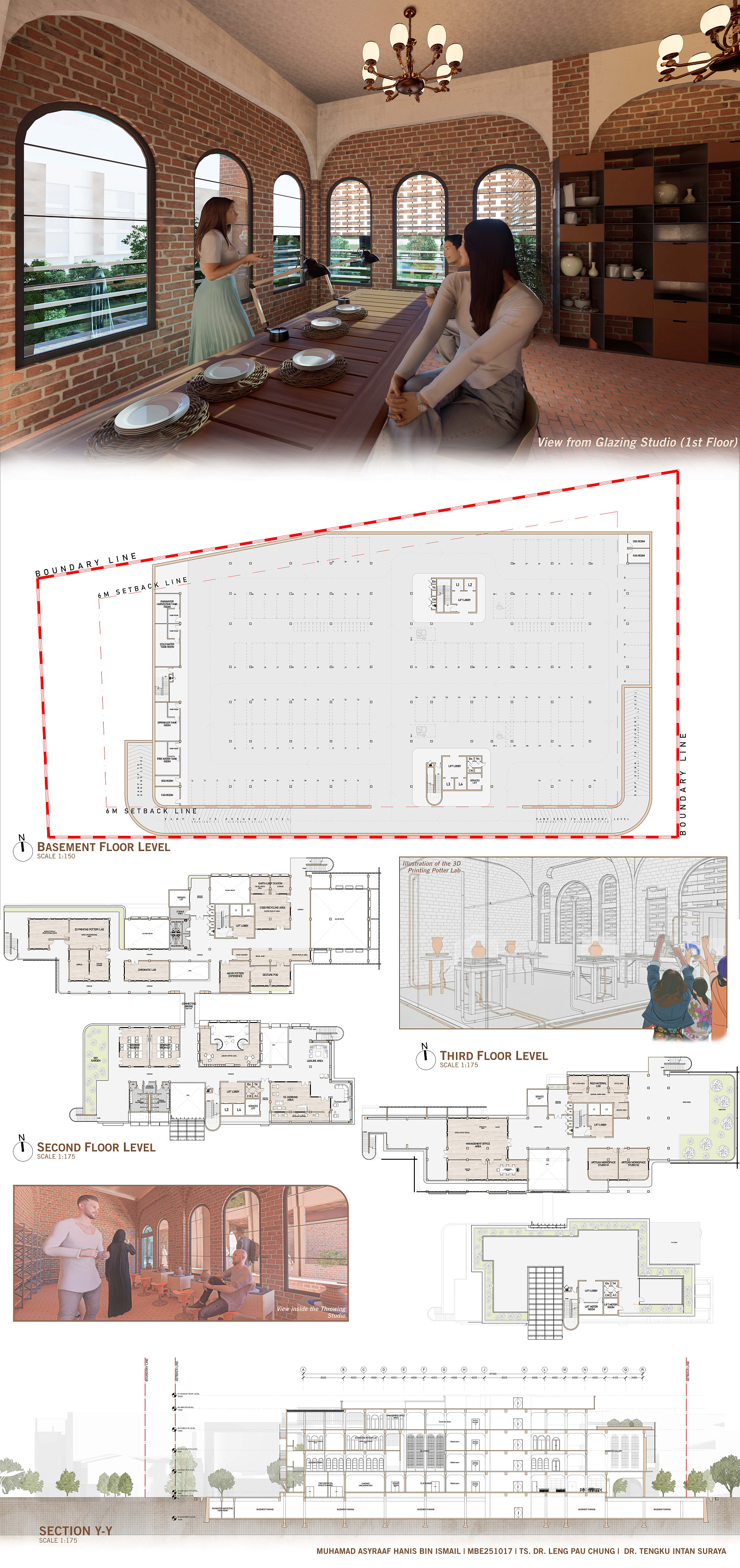
In the Continuum: Pottery Conservatory Hub located in Bandar Pegawai, Batu Pahat, this framework mediates the intense tropical sun to create ideal conditions for pottery work. The building envelope acts as the "pottery," filtering glare through textured forms to produce a soft, sculpted glow. The result is an architecture that functions as a large-scale vessel, harmonizing the specific demands of the local climate with the poetic nature of the craf
Technické informace
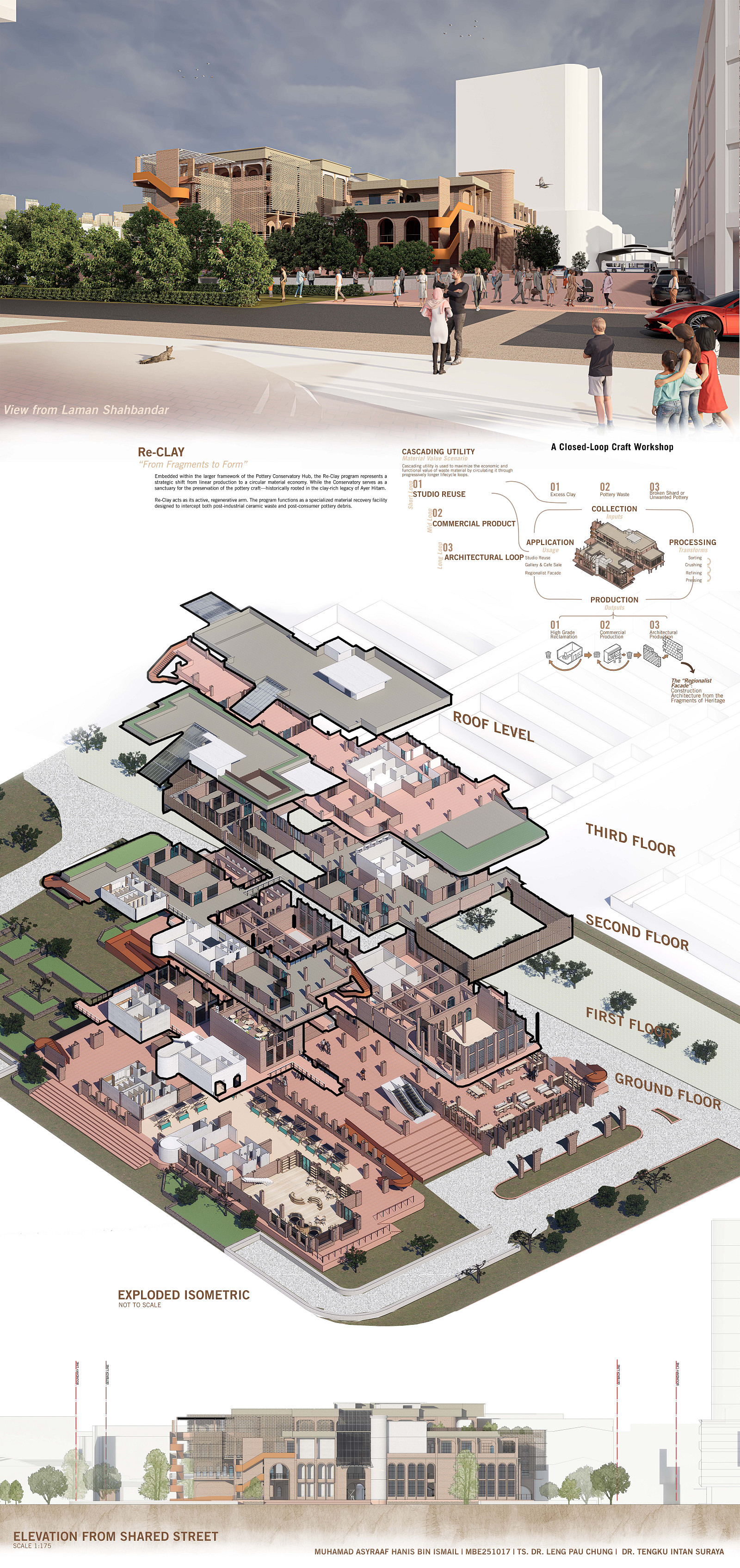
The Re-Clay initiative introduces a localized, circular material ecology for the Pottery Conservatory Hub by transforming regional ceramic waste into a high-performance architectural envelope. Utilizing large-scale 3D clay extrusion technology, the system upcycles crushed ceramic aggregate bound with raw clay to manufacture custom building modules. This additive manufacturing process not only significantly lowers the embodied carbon of the construction materials but also establishes a zero-waste loop that honors Batu Pahat's pottery heritage while advancing sustainable, closed-loop material practices.
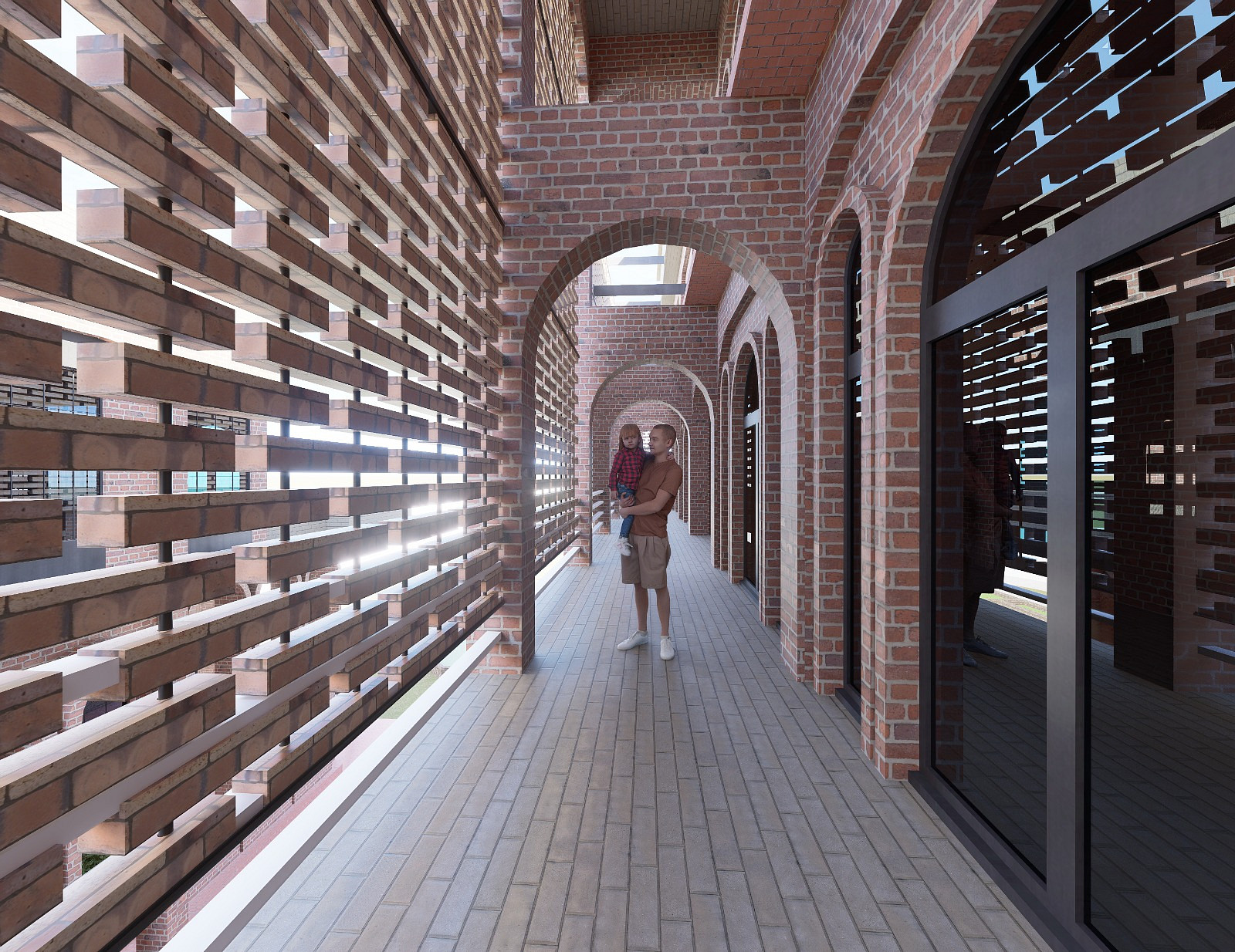
Technically, these 3D-printed clay modules are engineered to function as a dynamic, passive daylight-filtering facade system. The precision of the 3D printing process allows for complex geometric variations tailored to specific environmental data and local solar angles. This geometry effectively diffuses direct sunlight to optimize interior illumination and mitigate glare, while the inherent thermal mass of the recycled clay composition actively regulates heat gain. By integrating these strategies, the Re-Clay facade aligns strictly with bioclimatic design principles to create a comfortable, energy-efficient interior environment.

Copyright © 2026 INSPIRELI | All rights reserved. Use of this website signifies your agreement to the Terms of Use, Privacy Policy, and use of cookies.