KIZUNA PAVILION


Idea projektu
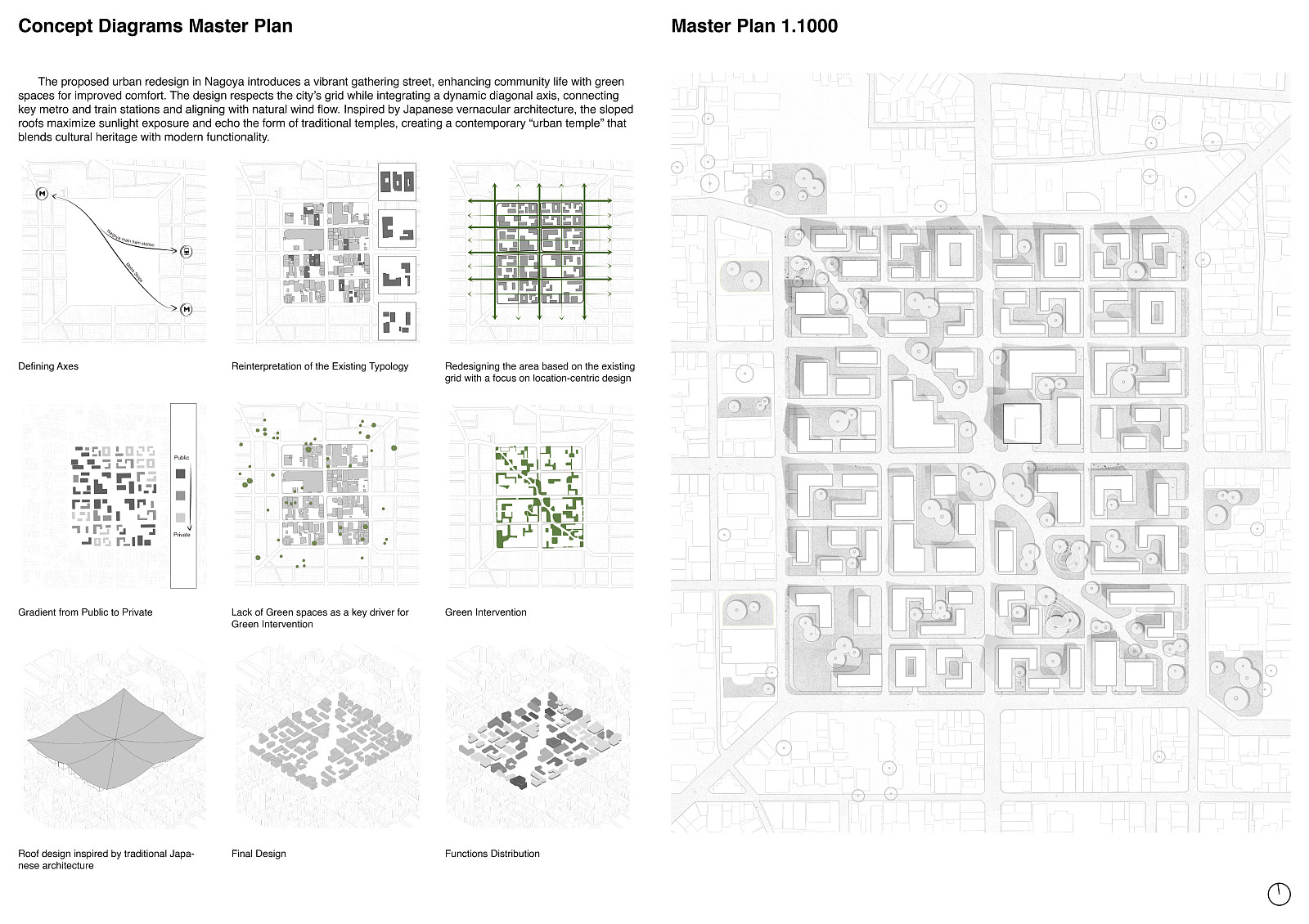
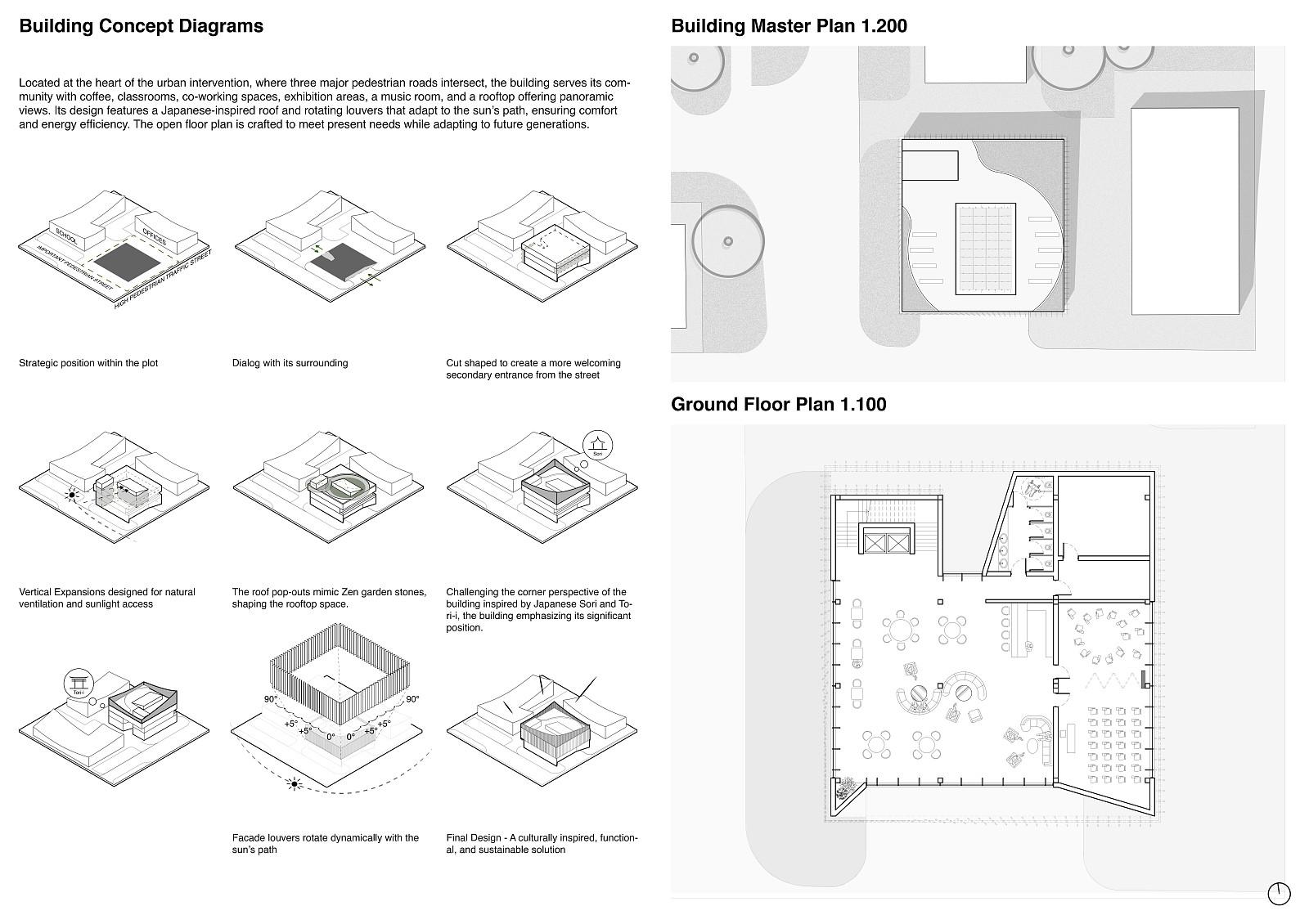
The Kizuna Pavilion emerges as a response to the growing absence of inclusive civic spaces within contemporary urban environments that enable meaningful coexistence between community life, ecological systems, and cultural engagement. Located within Nagoya’s rigid urban grid and positioned at the intersection of key pedestrian routes, the project seeks to transform movement corridors into active zones of interaction. Drawing inspiration from traditional Japanese temple typologies, the pavilion is envisioned as a contemporary civic interface that mediates between public activity, environmental performance, and social inclusivity. By integrating green interventions and climate-responsive spatial strategies, the project aims to create an adaptive framework that fosters collective engagement while responding to evolving urban needs.
Popis projektu
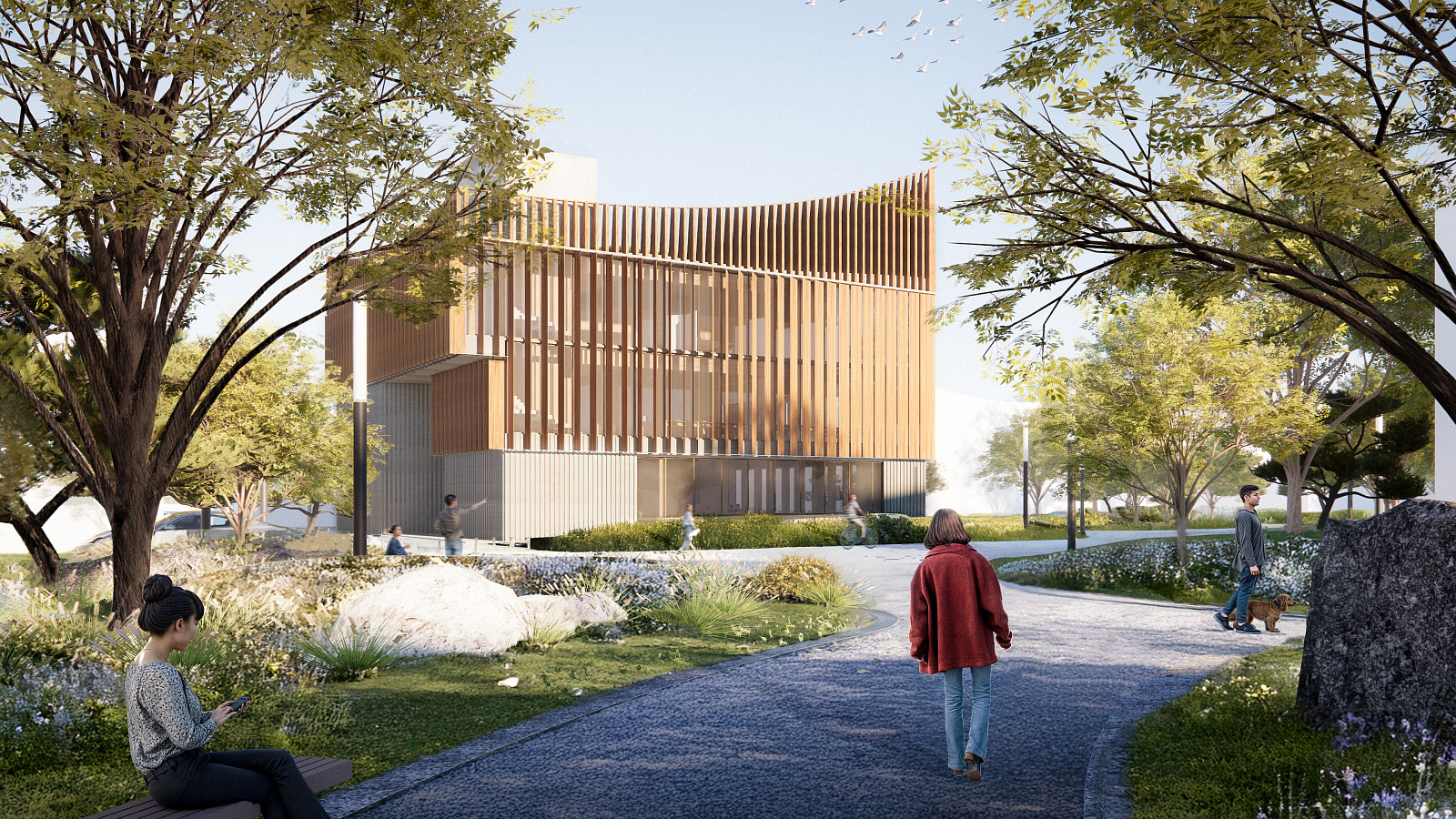
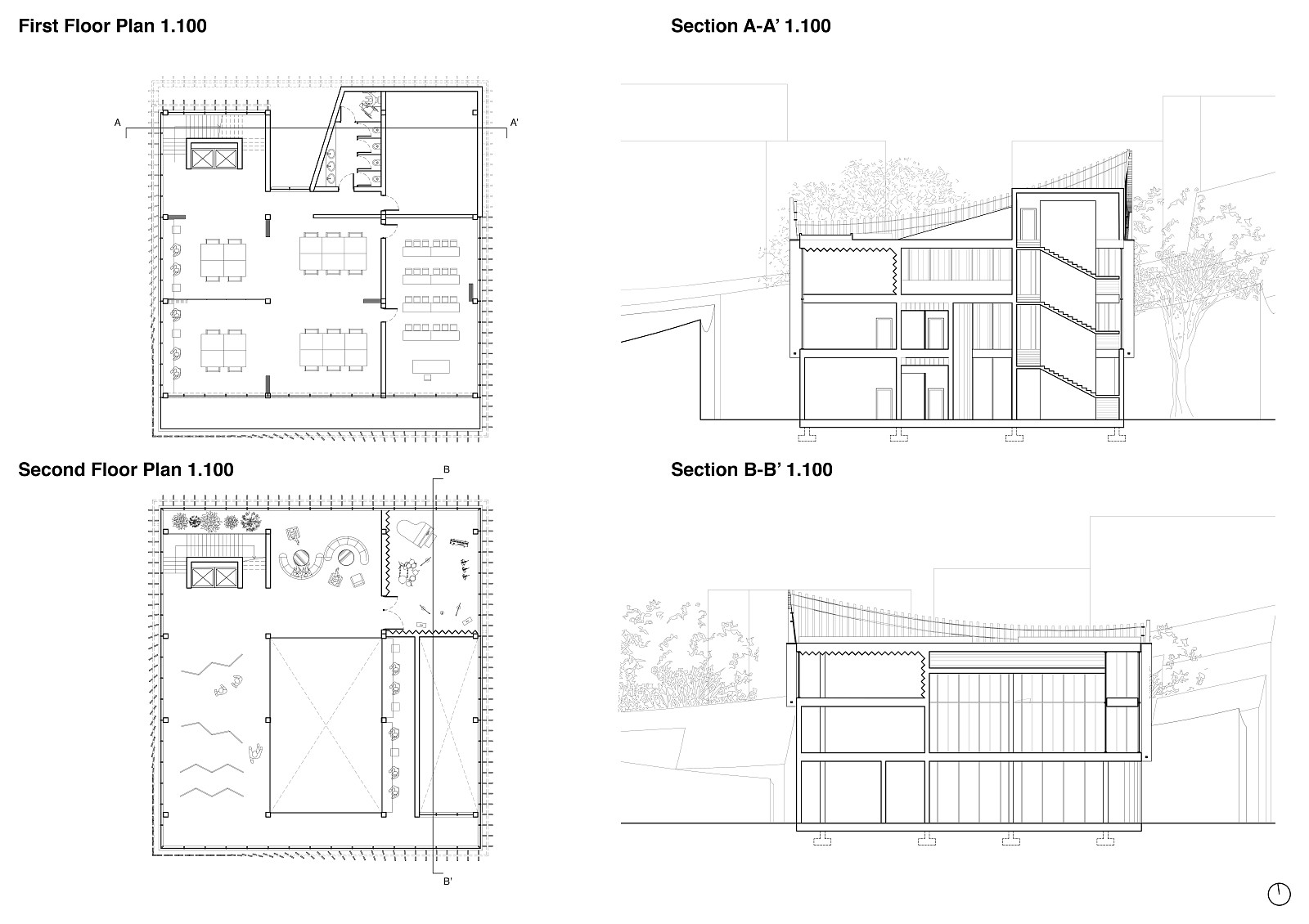
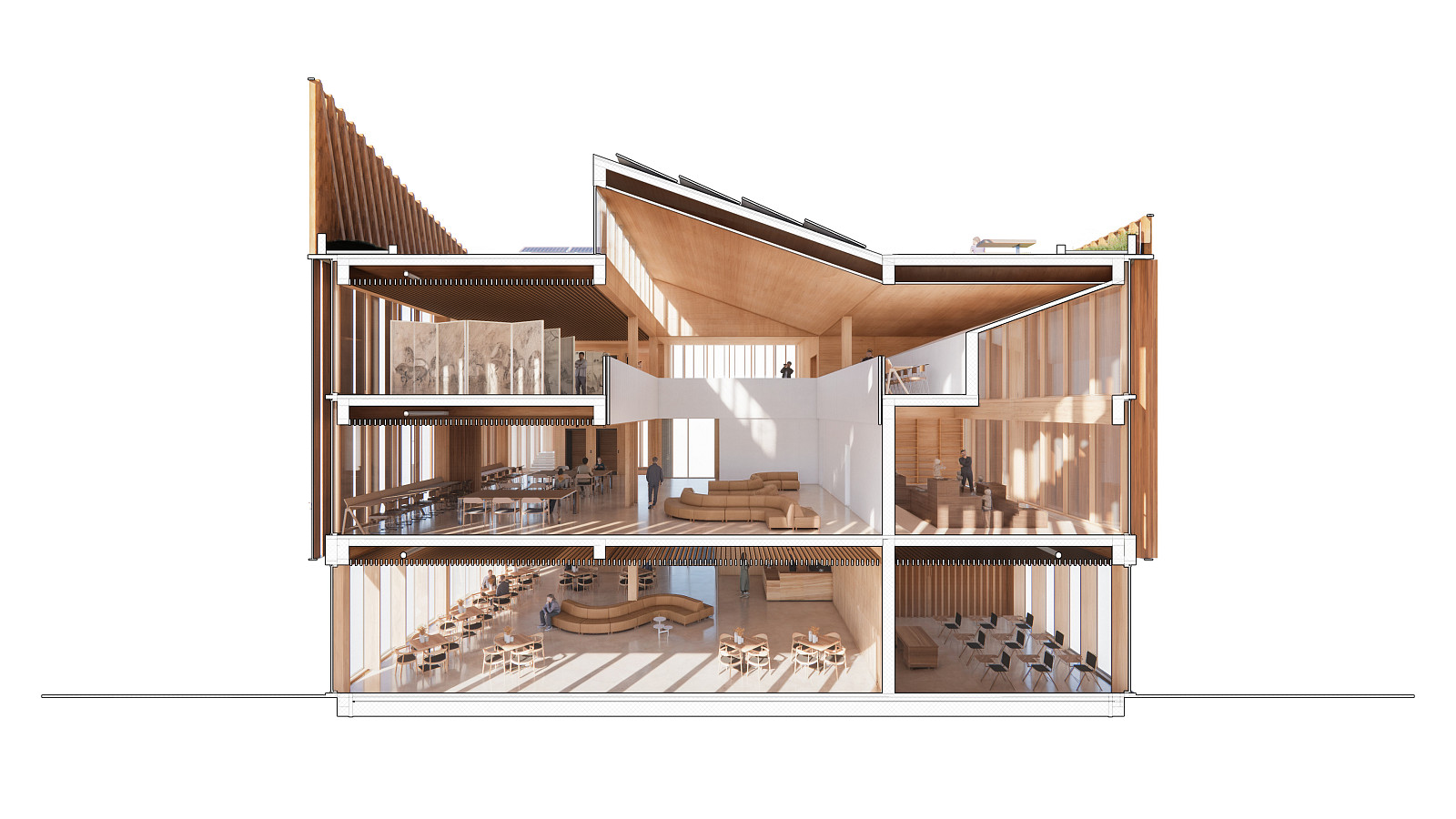
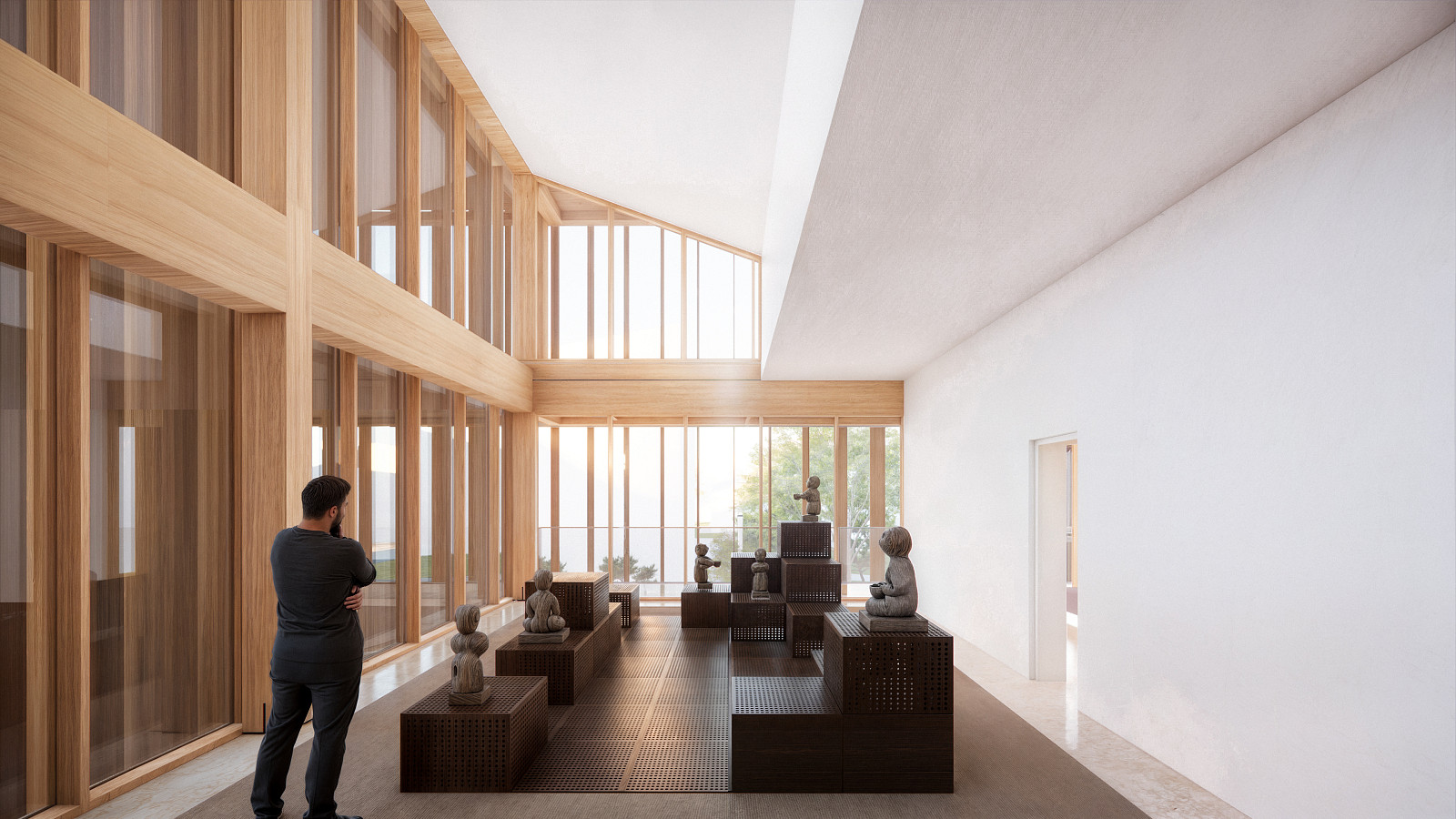
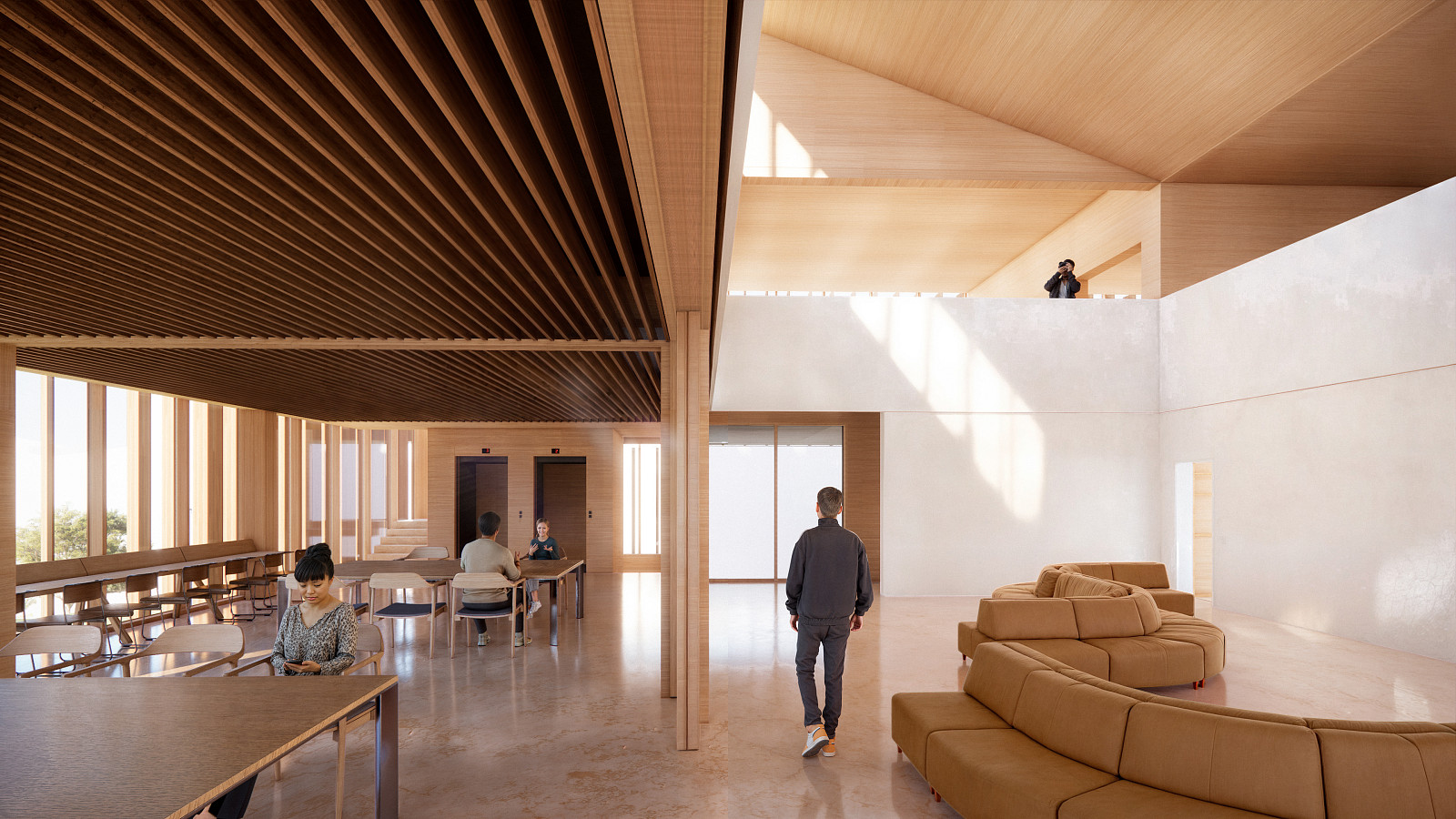
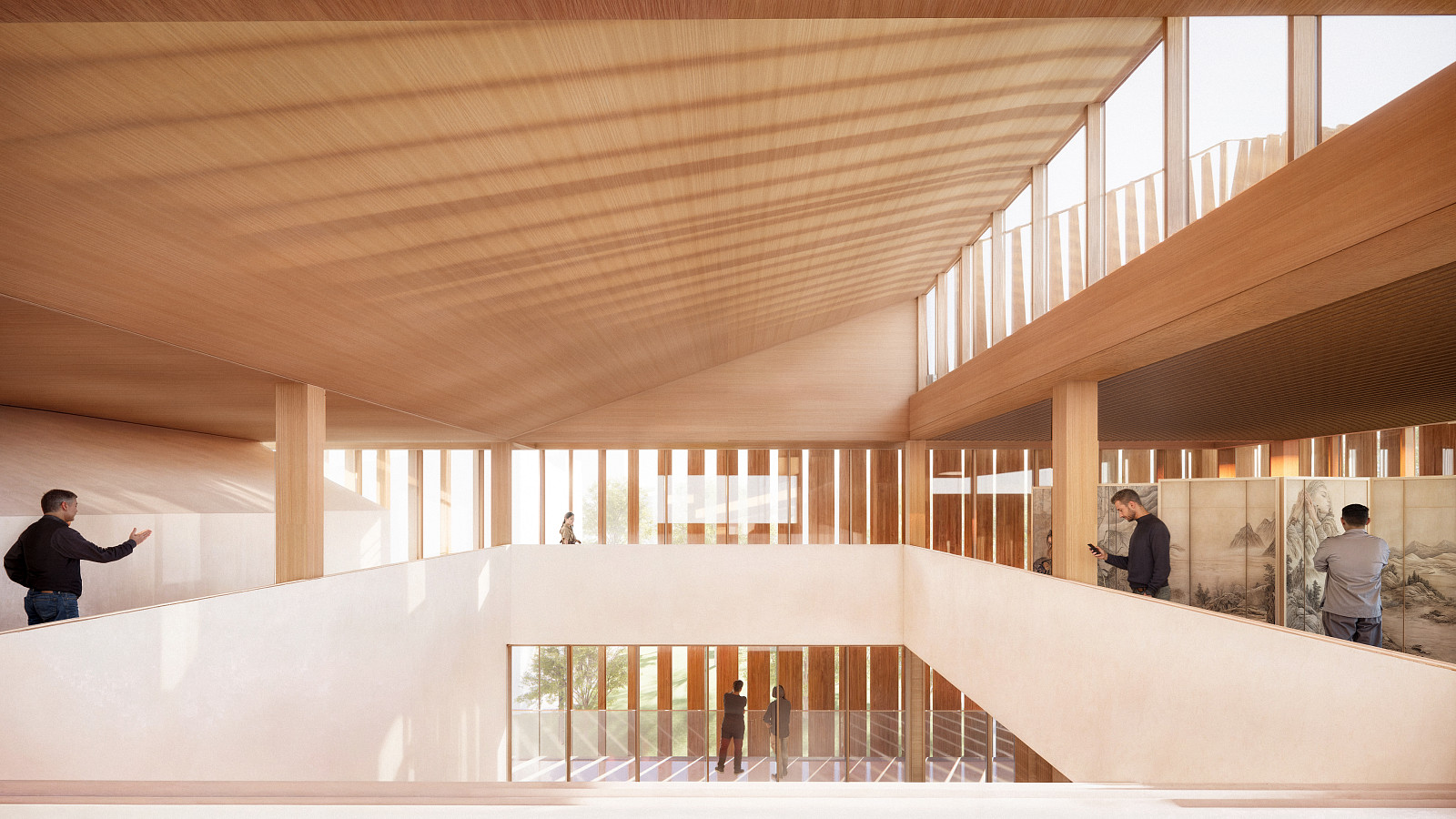
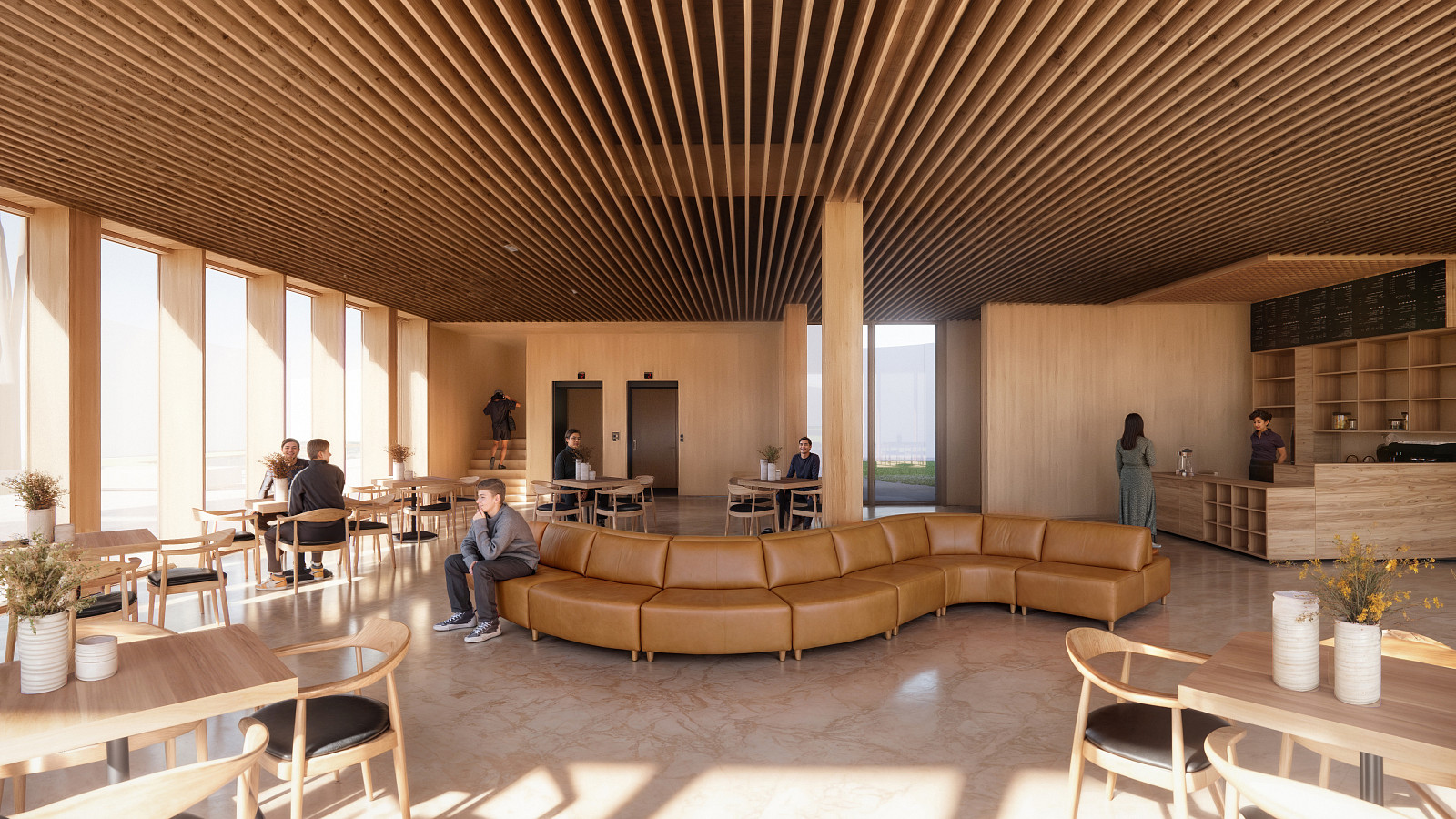
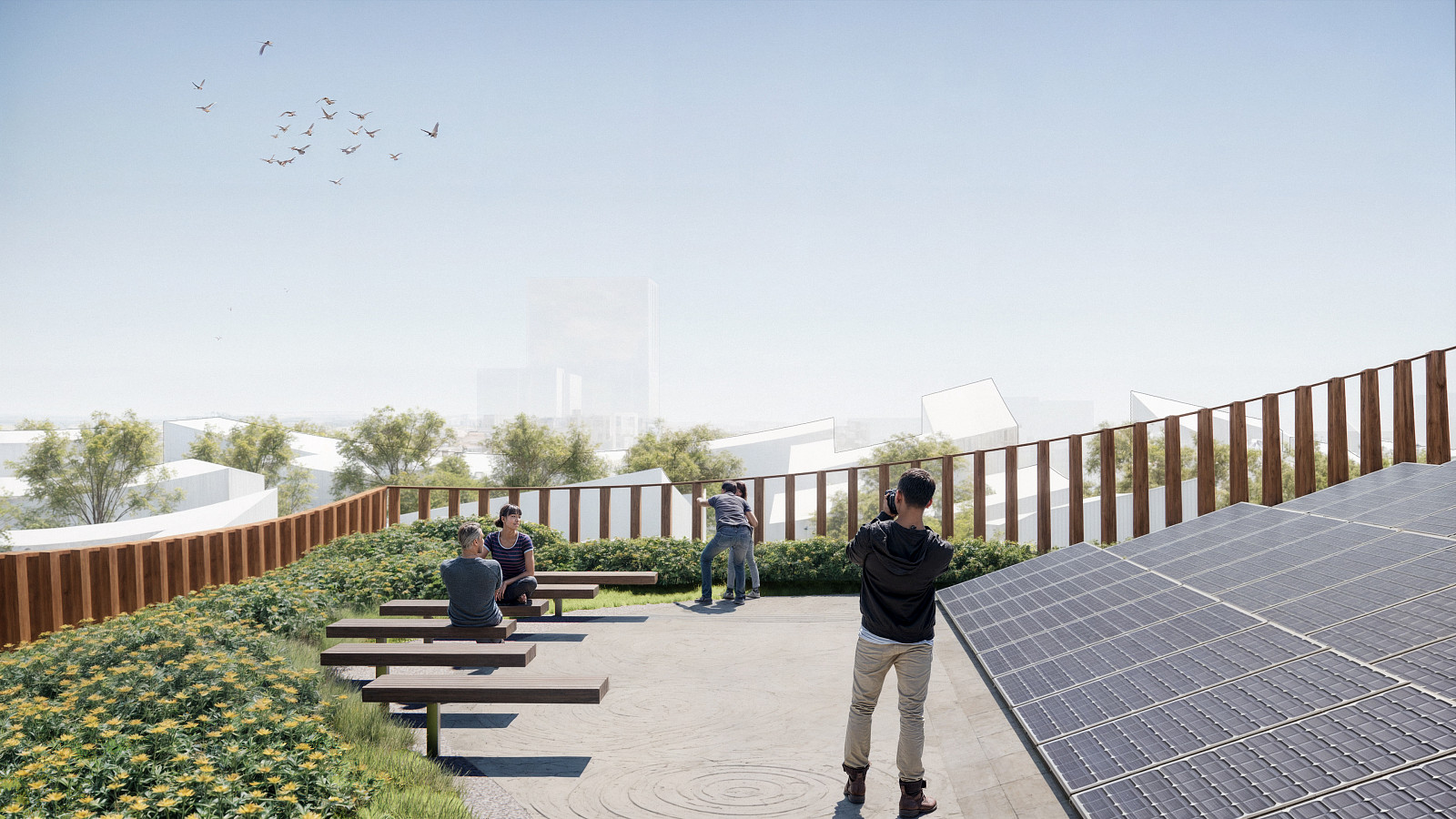
The project consists of a multi-functional civic pavilion designed to support learning, collaboration, cultural exchange, and informal gathering. Spatial organization follows a gradient from public to semi-private uses, incorporating exhibition spaces, cafés, classrooms, co-working areas, and music studios within a vertically layered ecosystem. Roof pop-outs form inhabitable terraces that encourage social interaction while providing visual connectivity with the surrounding urban landscape. The architectural form introduces vertical massing cuts to enhance natural ventilation and daylight access, while loggias and responsive façade elements mitigate solar gain. Together, these spatial strategies enable the building to function as a contemporary urban commons that integrates cultural memory with ecological responsibility.
Technické informace
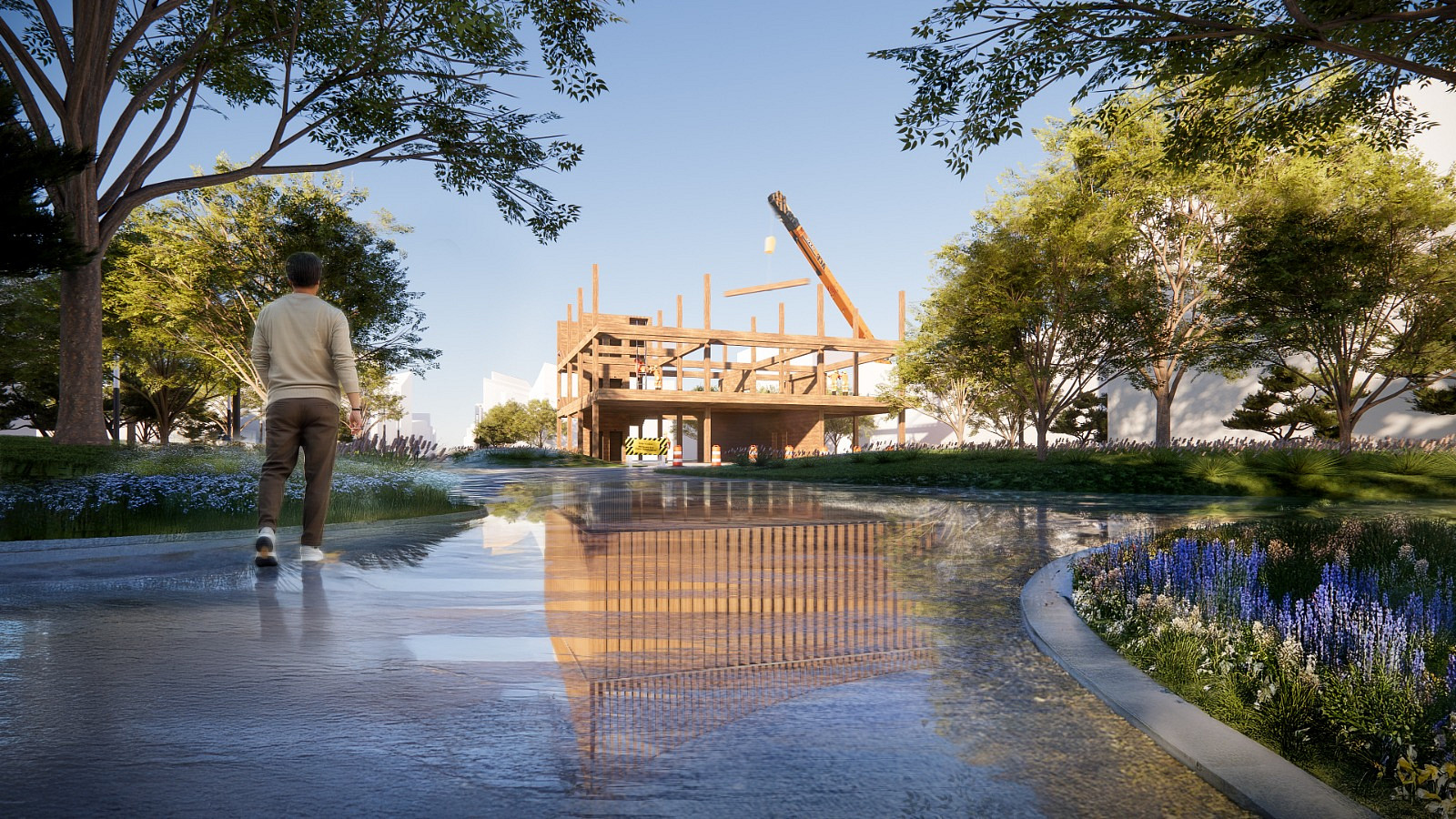
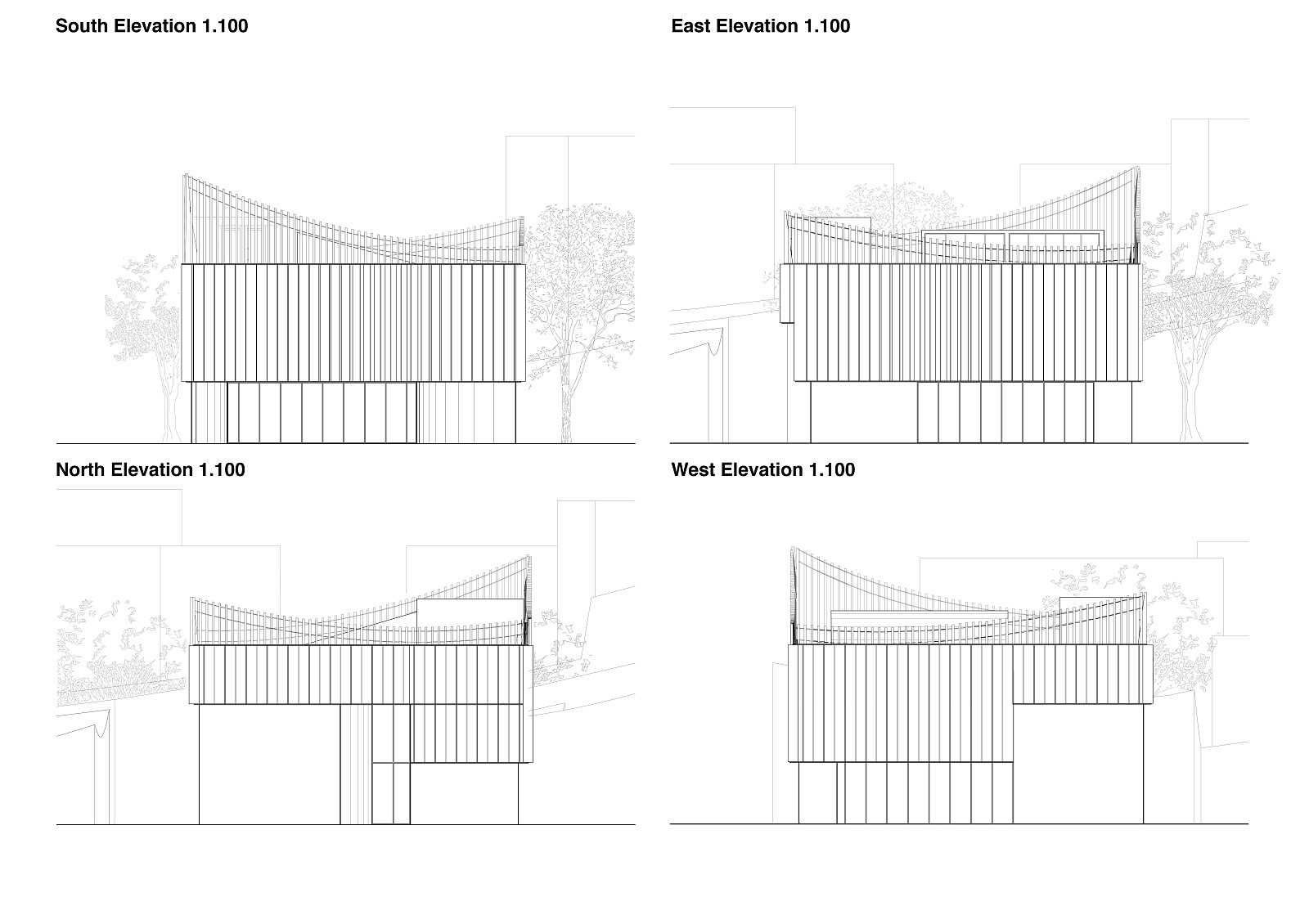
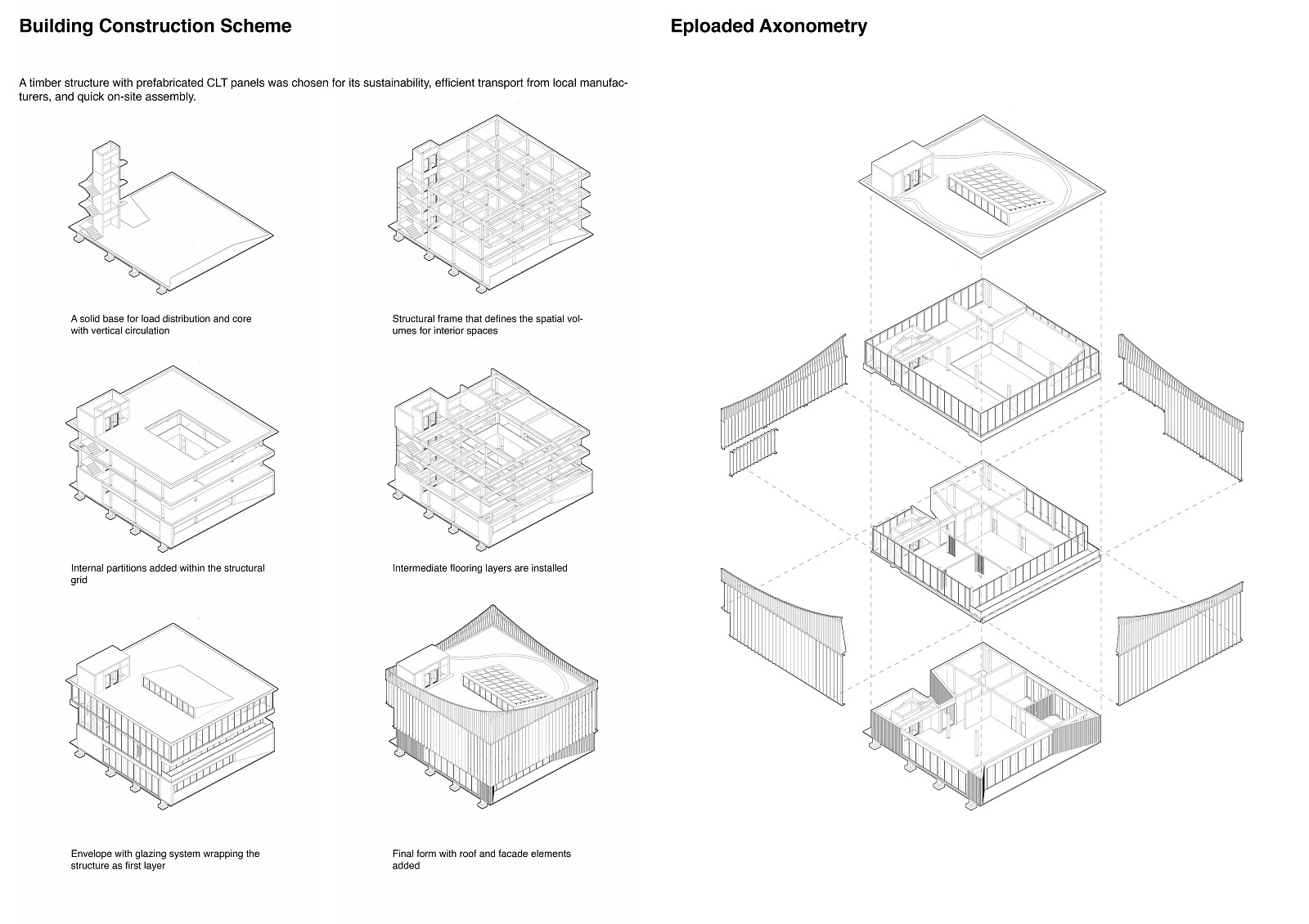
The building utilizes a prefabricated structural system composed of cross-laminated timber (CLT) panels and glulam members to reduce embodied carbon and enable efficient on-site assembly. Concrete is limited to foundational components to ensure structural stability while minimizing environmental impact. Rotating façade louvers are designed to respond to solar exposure, improving thermal comfort and daylight regulation. Vertical extensions within the massing facilitate passive ventilation through the chimney effect, enhancing indoor air quality and reducing reliance on mechanical systems. Double-glazed envelope systems improve thermal insulation and energy efficiency, supporting long-term durability and adaptability of the structure.


Copyright © 2026 INSPIRELI | All rights reserved. Use of this website signifies your agreement to the Terms of Use, Privacy Policy, and use of cookies.