Kaviani


 Professor Siamak Panahi
Idea projektu
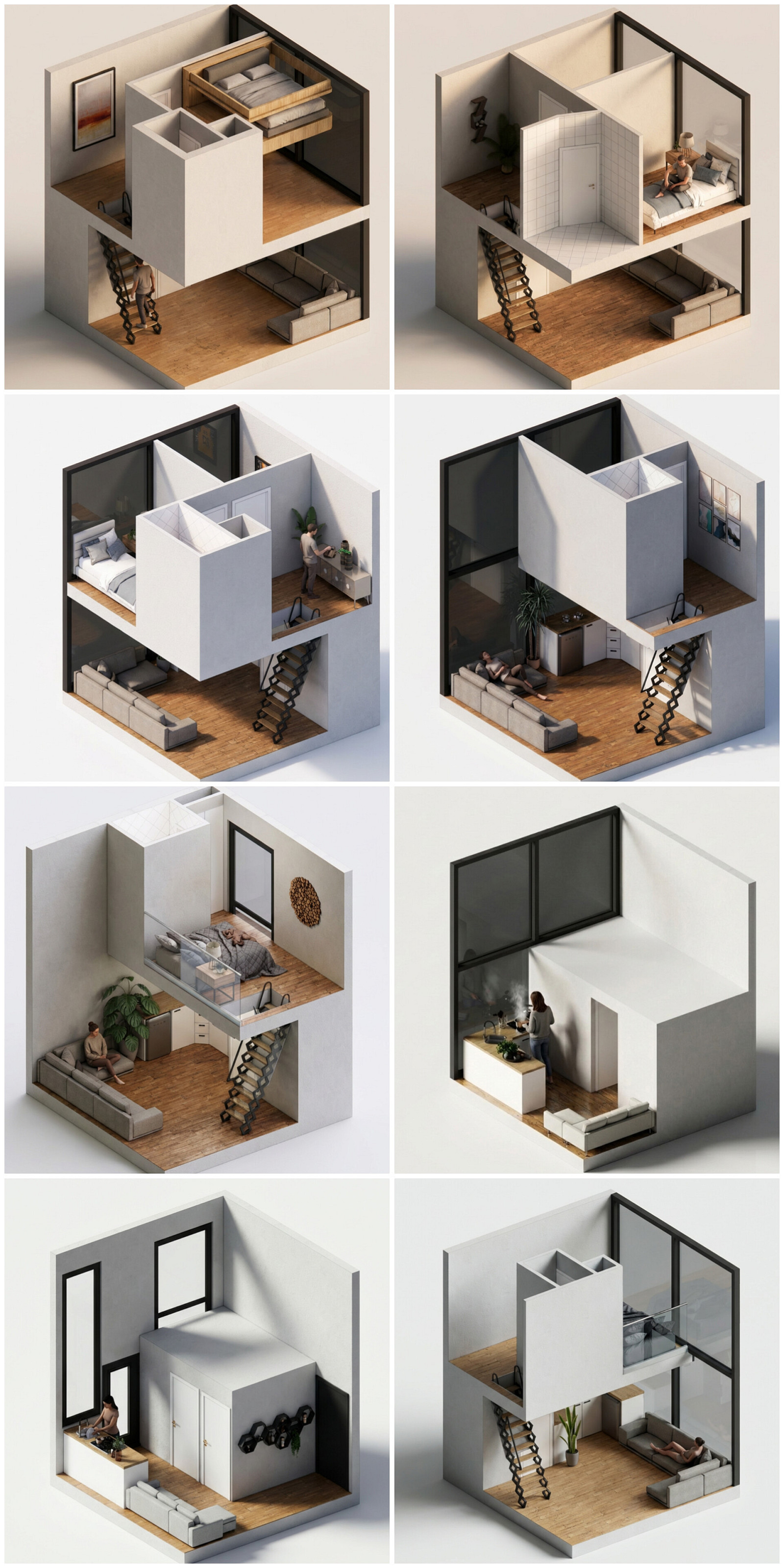
This project presents an architectural response to the housing crisis and the declining quality of urban life. With a human-centered approach, it seeks to propose a new model of contemporary living—one in which housing is not merely defined as a closed unit, but as part of a dynamic social, cultural, and urban structure. Kavian has been designed as a residential complex based on micro-housing units, aiming to address economic and spatial constraints while enhancing quality of life, social interaction, and connection with nature.
One of the project’s principal strategies is “building less.” By reducing the buildable footprint and incorporating balconies and terraces, the design prioritizes quality of living over quantity of construction. These semi-open spaces function as a contemporary reinterpretation of the traditional courtyard—now largely absent from modern life—providing opportunities for daily interaction with greenery and the outdoor environment.
Popis projektu
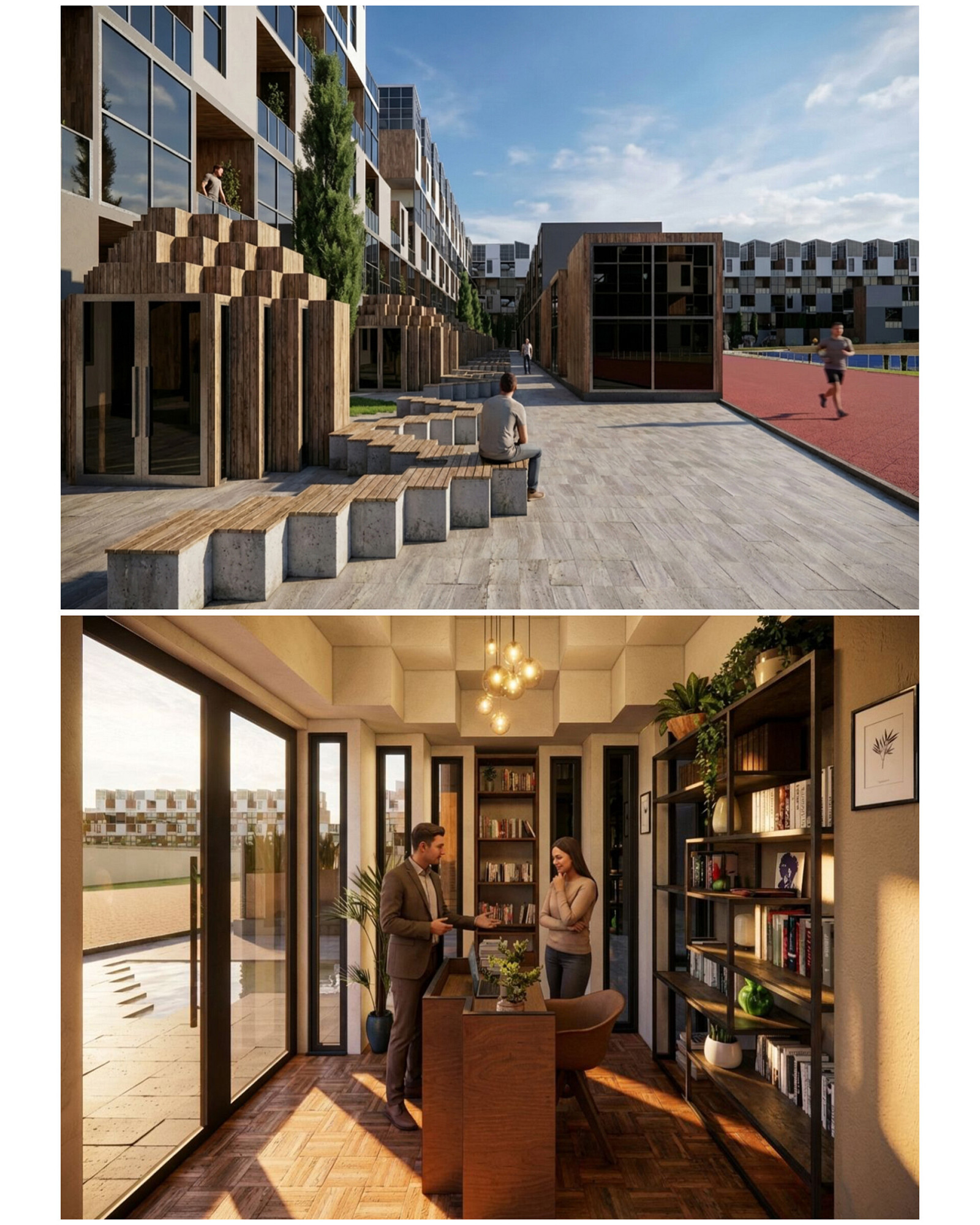
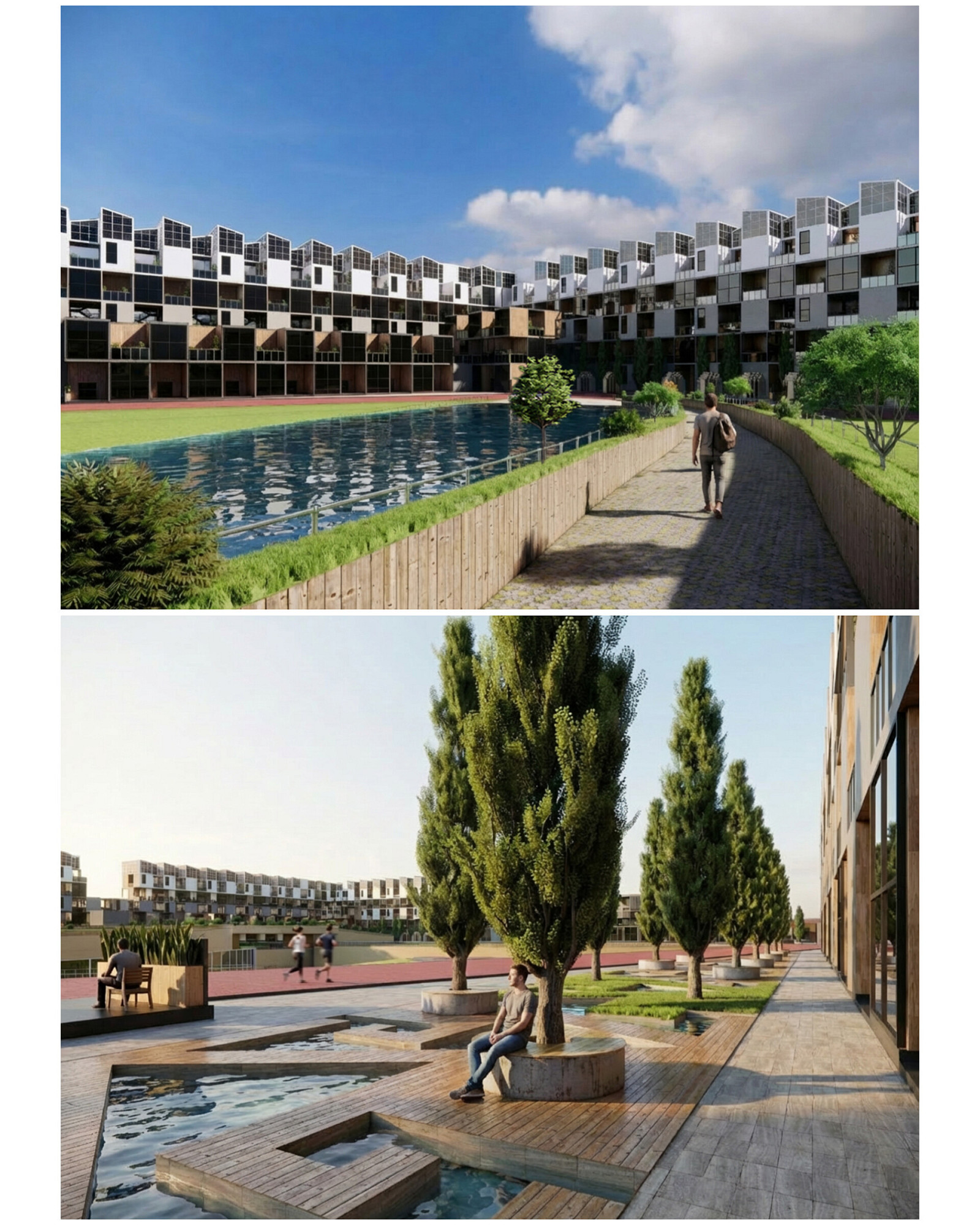
The design concept of the project is inspired by a range of cultural, artistic, and natural references. Traditional Persian carpets are among the most significant of these sources. The logic of weaving, repetition, and continuity embedded in these carpets forms the basis for the design of the open spaces between the buildings. The placement of commercial areas, benches, trees, and water elements throughout the project has been shaped in layered and continuous patterns inspired by carpet compositions. Circulation routes and pause points, much like the motifs of a carpet, are read together as an integrated whole, reinforcing a sense of belonging and human-scale presence.
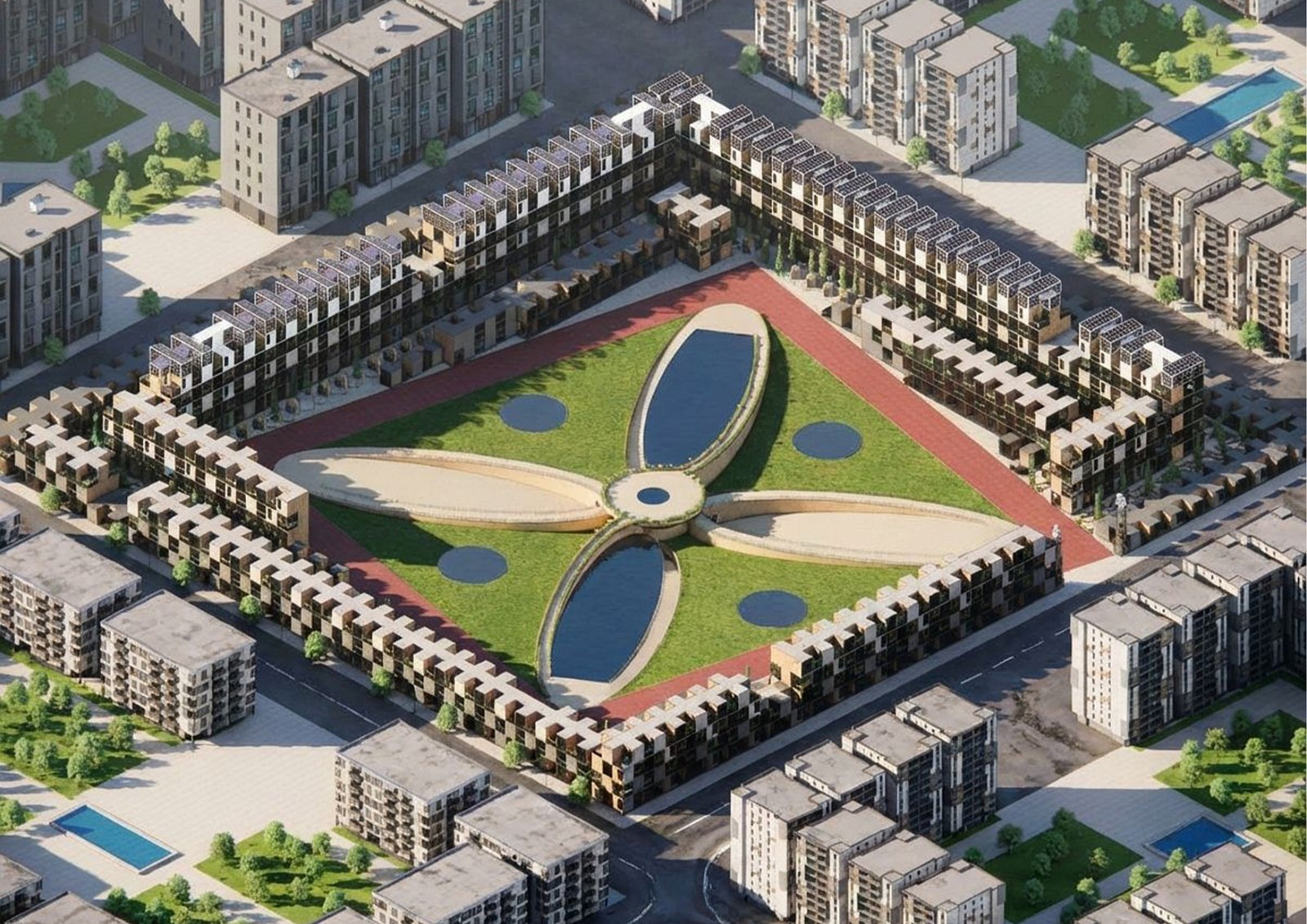
The painting White on White by Kazimir Malevich served as the conceptual reference for the design of the central plaza. The purity, visual silence, and emphasis on emptiness in this work led to the creation of an open, flexible, and serene urban plaza that allows for diverse interpretations and uses by its users. As the heart of the project, this intermediate space connects the residential, commercial, and collective areas.
Furthermore, the artwork Rokhne dar Ofoq by Bahram Shirdel, with its concept of subtraction and removal from volume, inspired the formation of carved-out building sections. This approach resulted in terraces, balconies, and semi-open spaces that reduce the building mass while bringing light, air, and greenery into the project, thereby enhancing the spatial quality of the residential units.
The Alborz mountain range, as one of the most significant natural elements surrounding Tehran, influenced both the form and color of the project. The gradual reduction in building height and volume recalls the rhythm of the mountains, and the project’s color palette transitions toward white at the highest levels—a choice that lightens the visual mass of the buildings and harmonizes them with the sky and natural backdrop.
Naqsh-e Jahan Square in Isfahan, as an outstanding example of a collective urban space, served as a model for organizing the project’s open spaces. Similar to this historic square, Kavian’s central plaza is a public and accessible space activated by the surrounding functions and uses, enabling presence, pause, and social interaction.
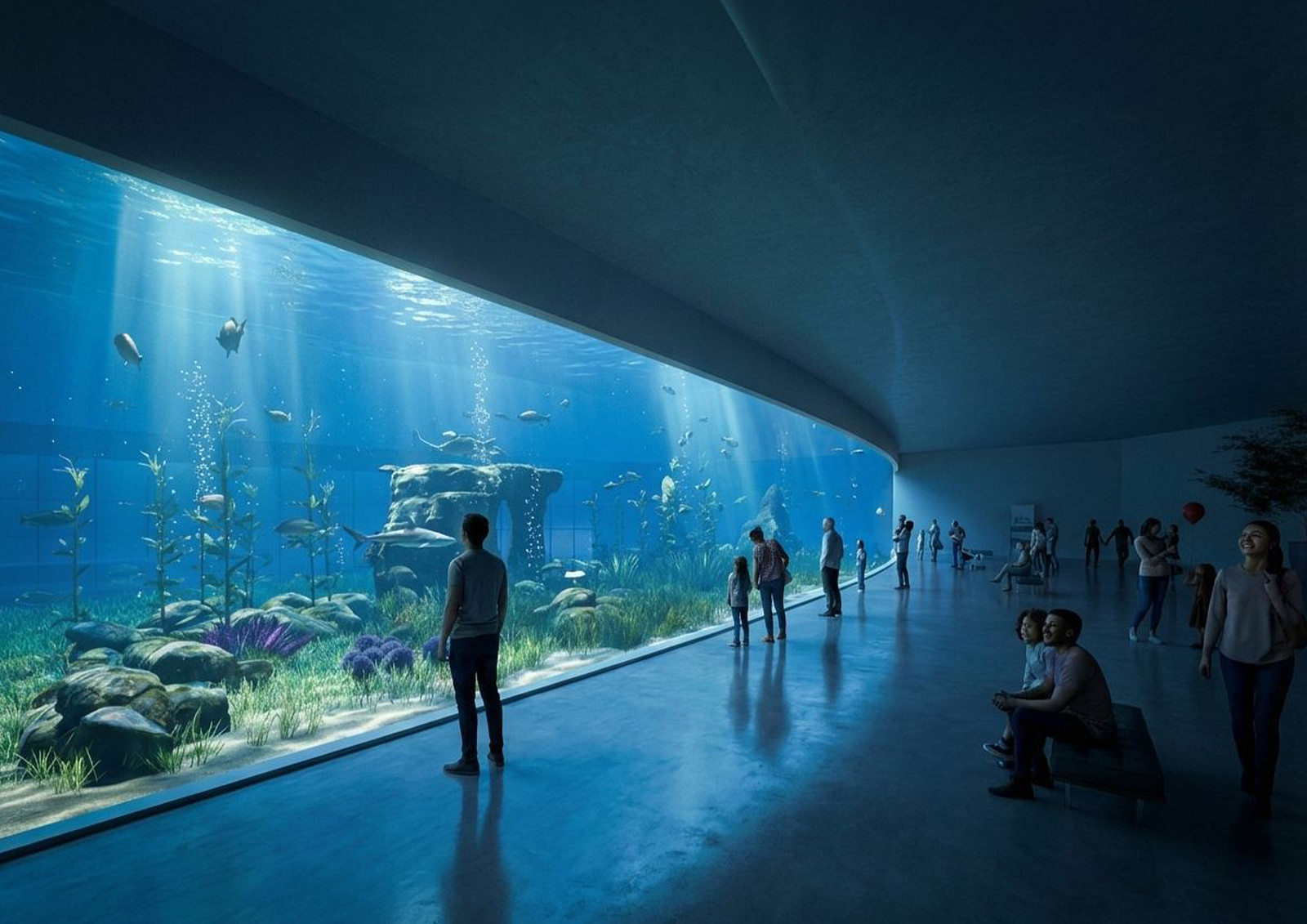
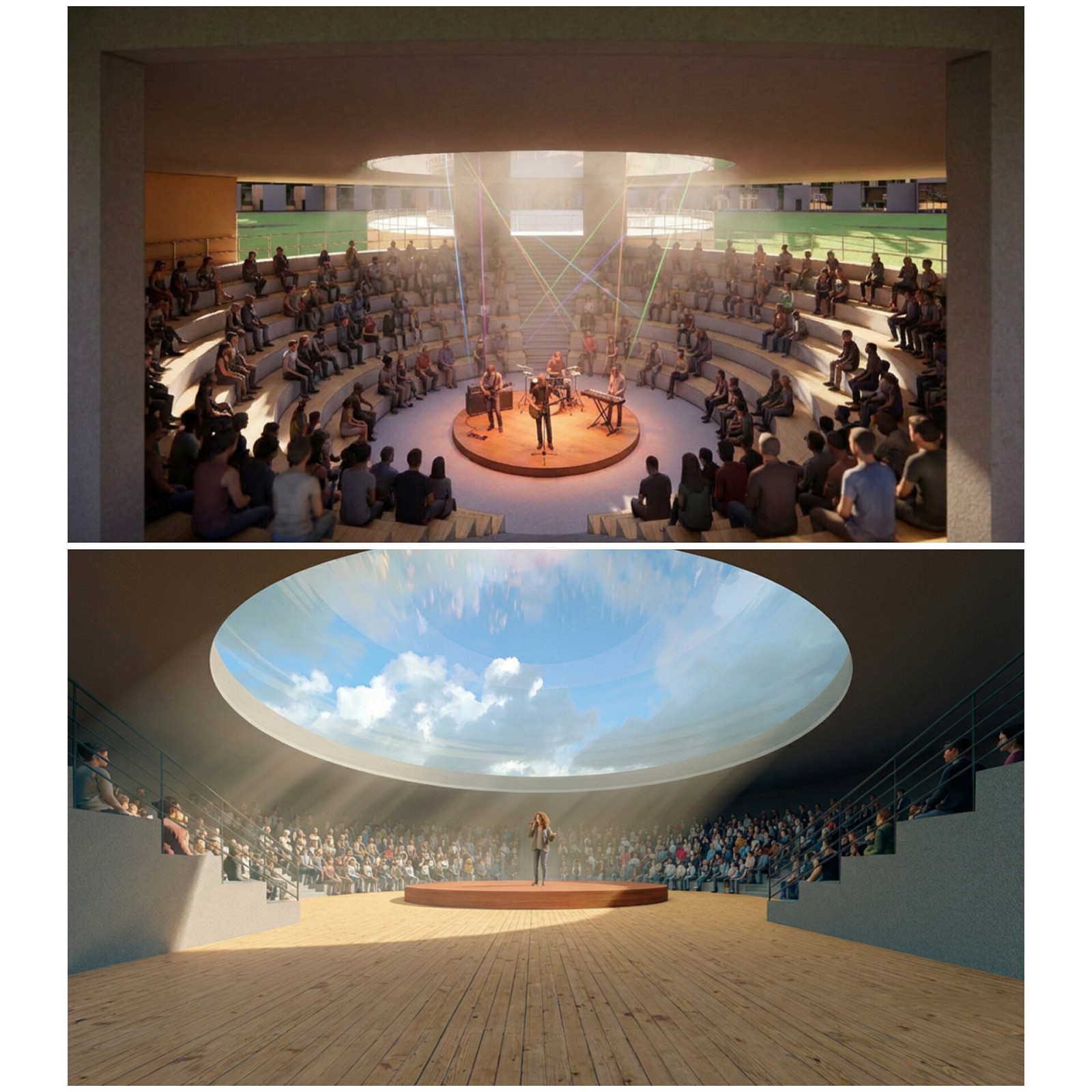
In the realm of collective spaces, the project offers a direct response to the shortage of intermediate spaces and the “third place” in Tehran. The absence of spaces between home and city life has contributed to the decline of social interaction in contemporary urban living. Accordingly, a variety of gathering spaces have been designed within the project, including three urban amphitheaters, two educational–recreational aquariums, and a health and walking path. These spaces provide a framework for social engagement, strengthen the sense of belonging, and foster collective urban life.
Technické informace
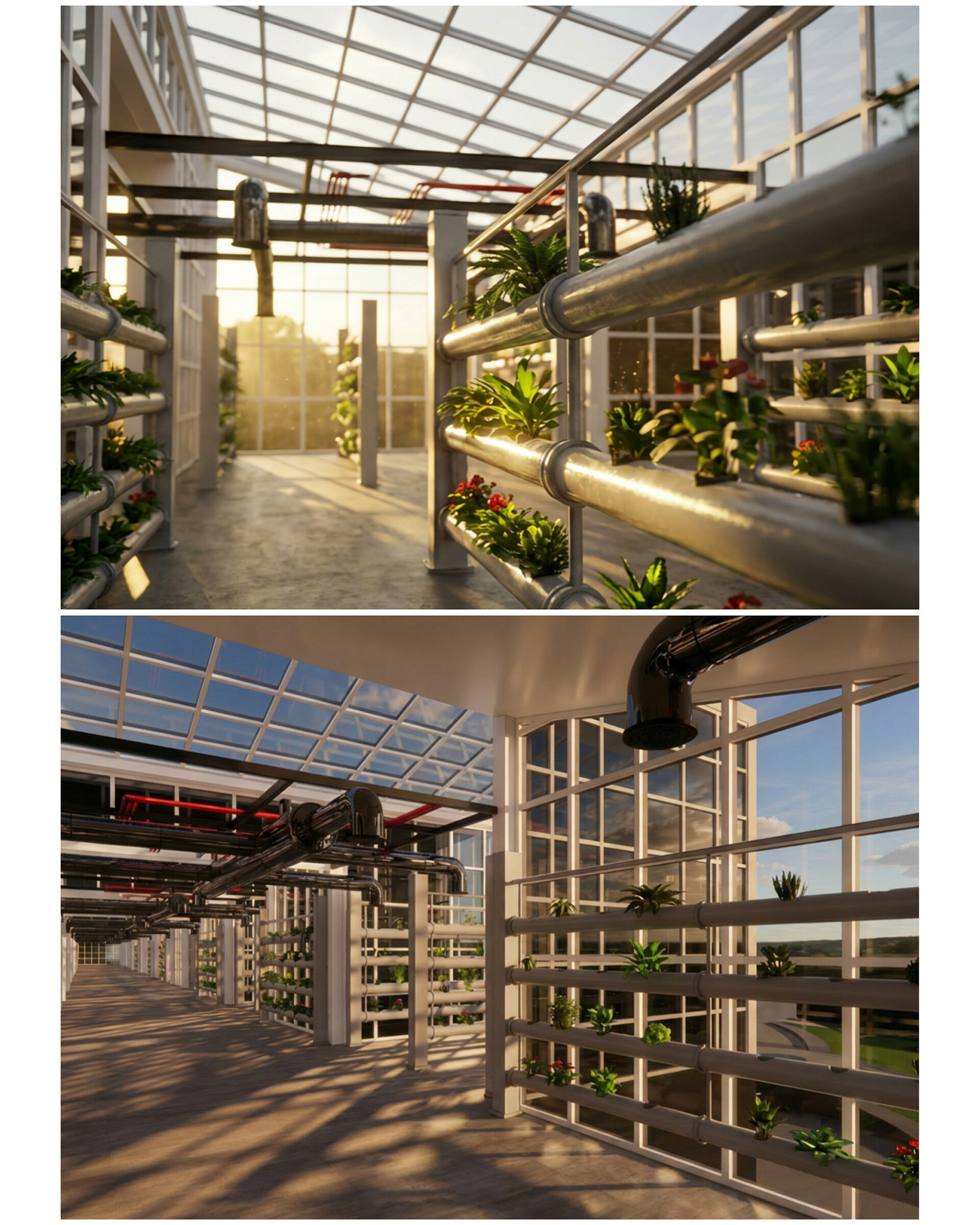
In this project, innovative technologies have been implemented to enhance sustainability and comfort. Electrochromic glass allows for the control of light and heat, piezoelectric flooring along circulation paths converts users’ kinetic energy into electricity, and photovoltaic panels installed on the greenhouse roofs provide a portion of the project’s required clean energy.
Overall, the project represents an effort to redefine contemporary living within the urban context of Tehran. By integrating culture, art, nature, and technology, it seeks to create architecture that is high-quality, sustainable, and socially responsive, placing quality of life at the forefront.


Copyright © 2026 INSPIRELI | All rights reserved. Use of this website signifies your agreement to the Terms of Use, Privacy Policy, and use of cookies.