WEAVE habitação


Idea projektu
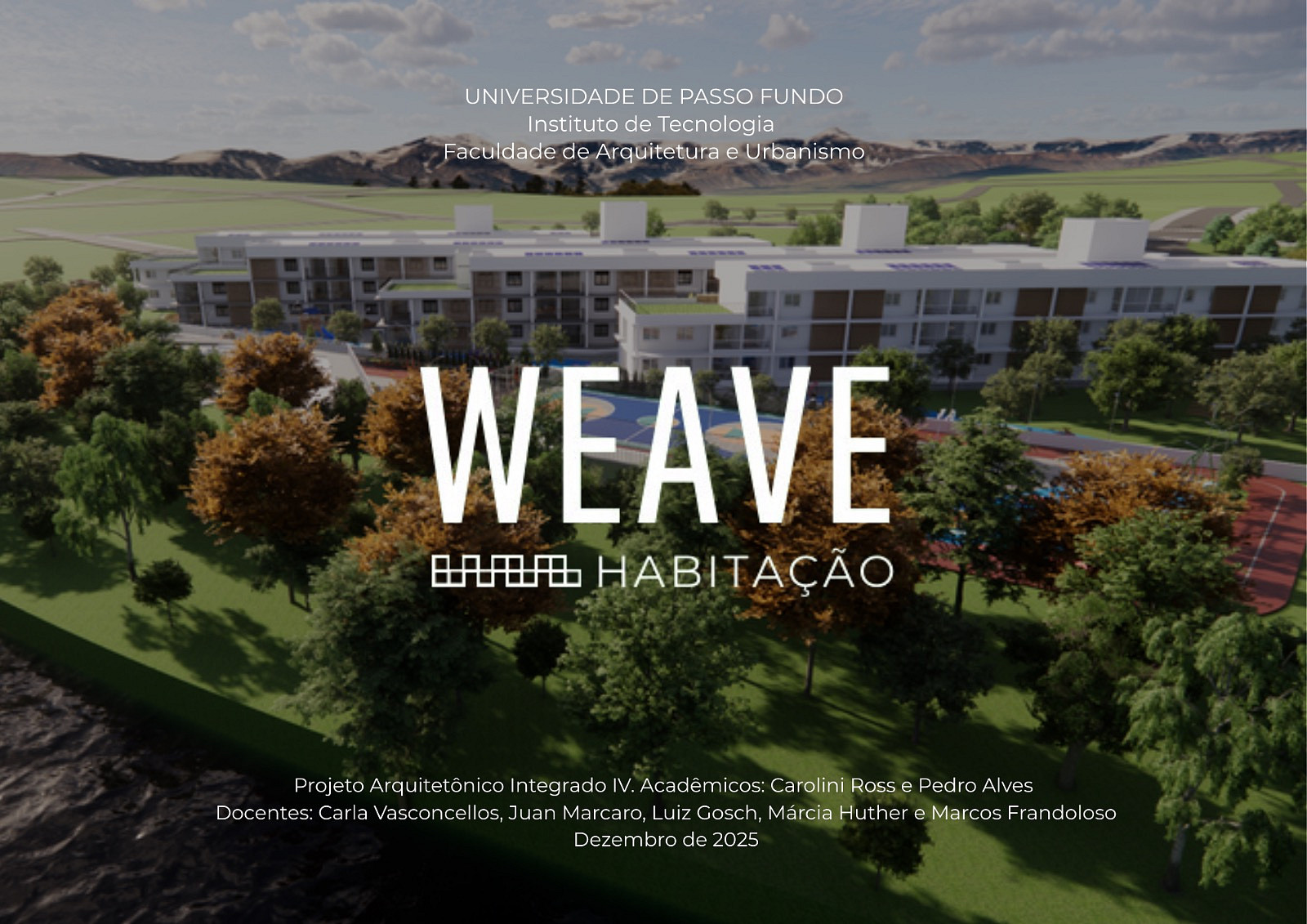
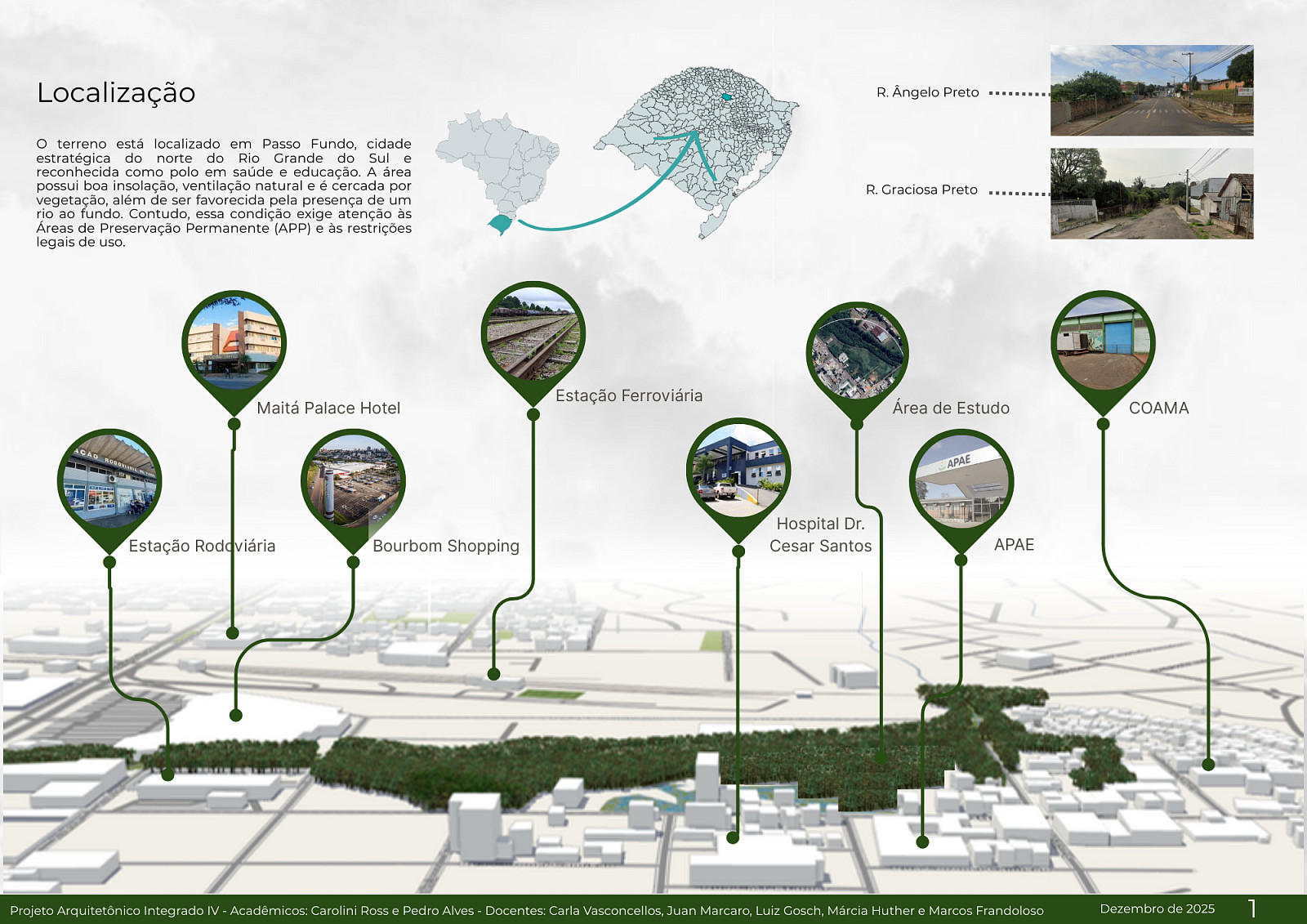
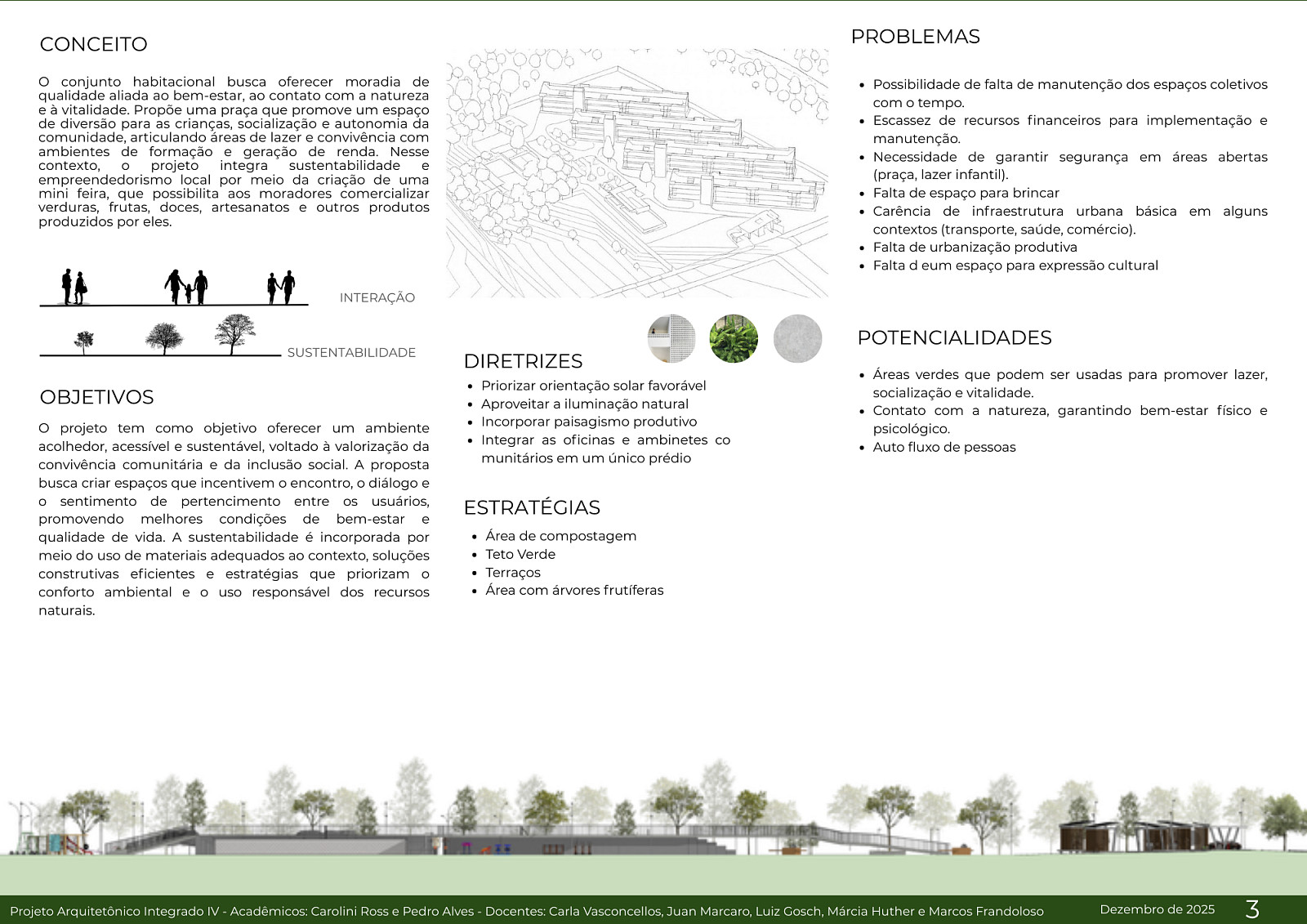
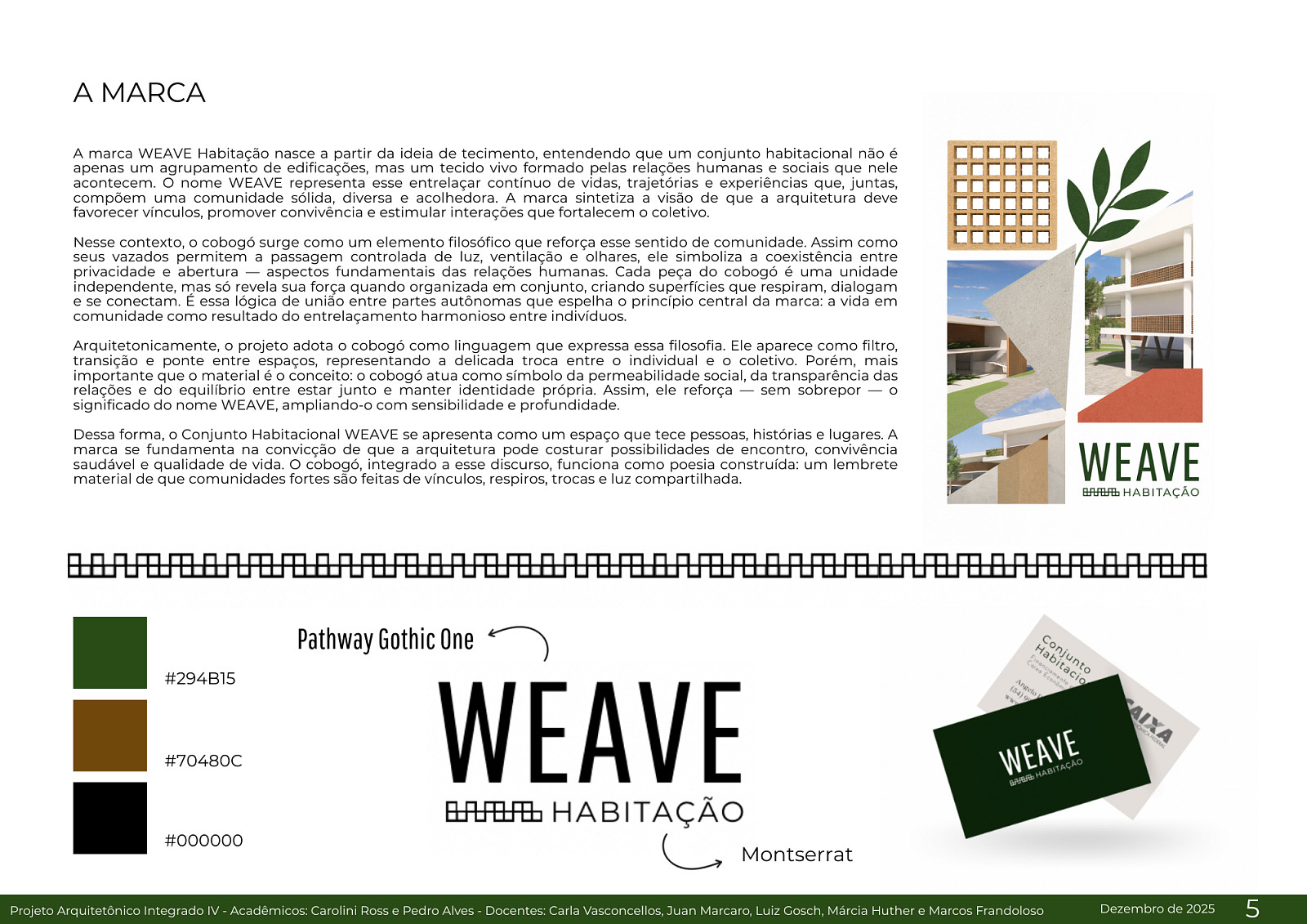
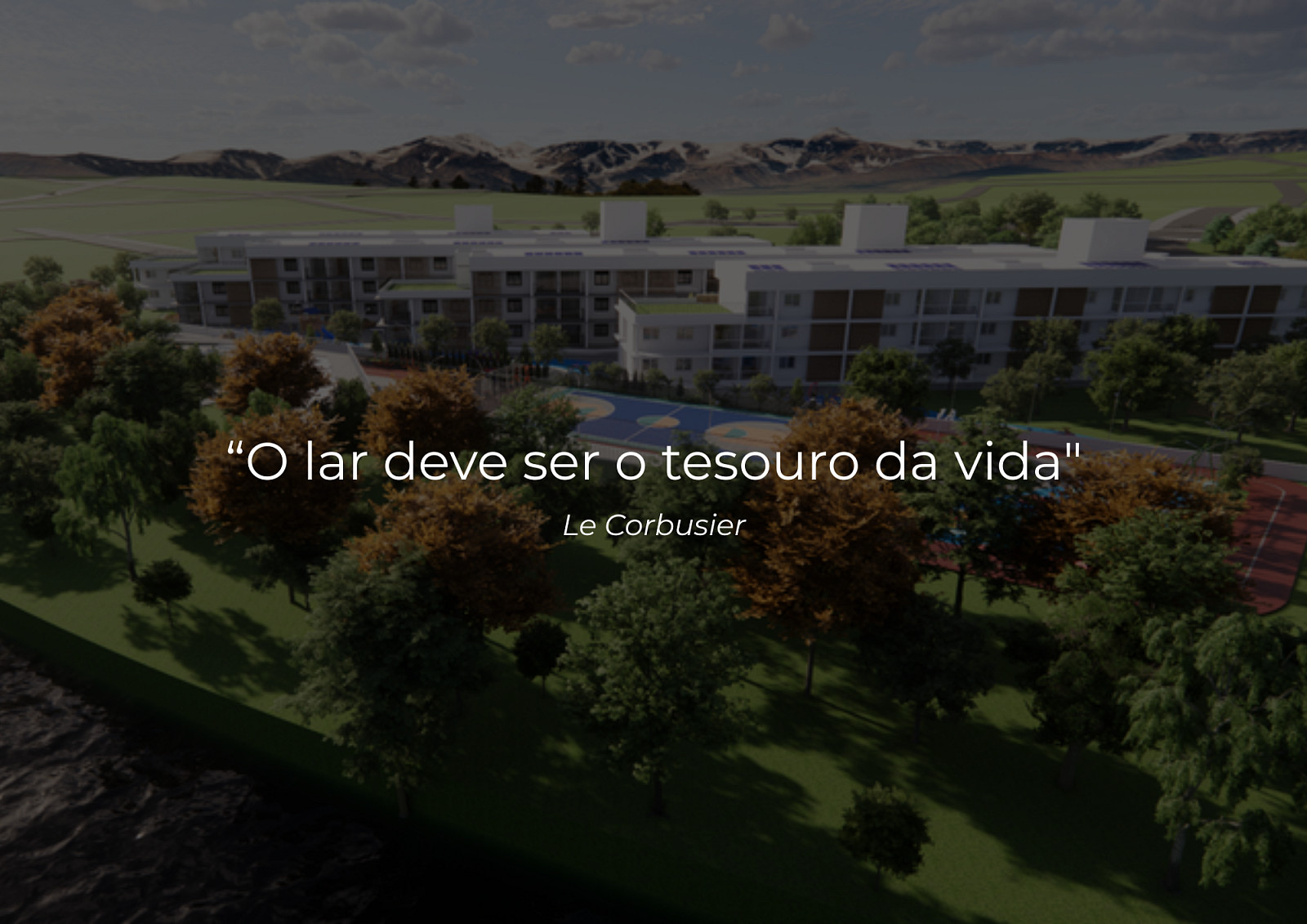
A social housing complex built in a peripheral area of the city of Passo Fundo, in the state of Rio Grande do Sul, Brazil. The objective of the housing complex is to create an urban ecosystem of human interactions. The name Wave refers to the intertwining of human relationships and highlights the importance of the urban connections fostered within that space.
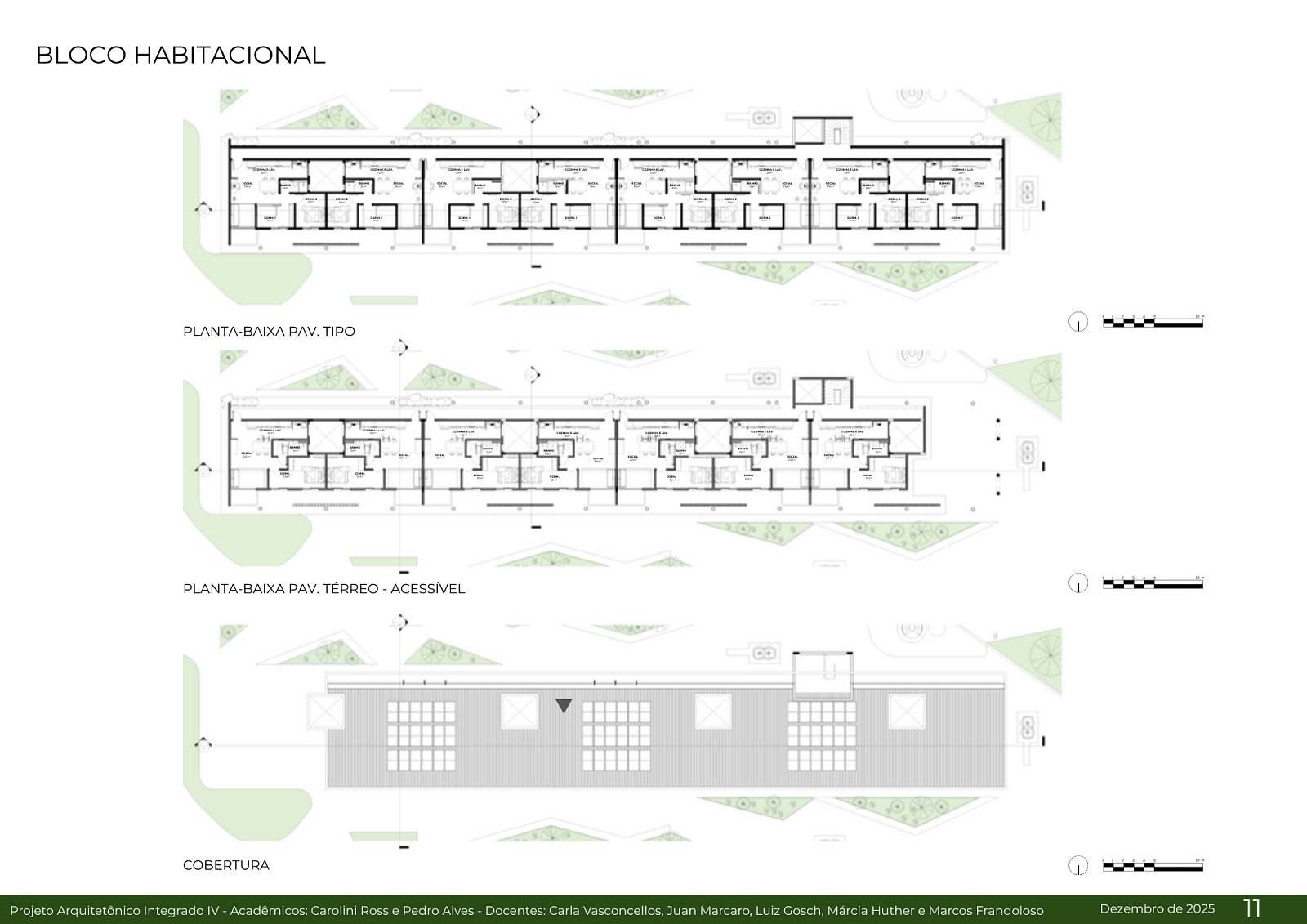
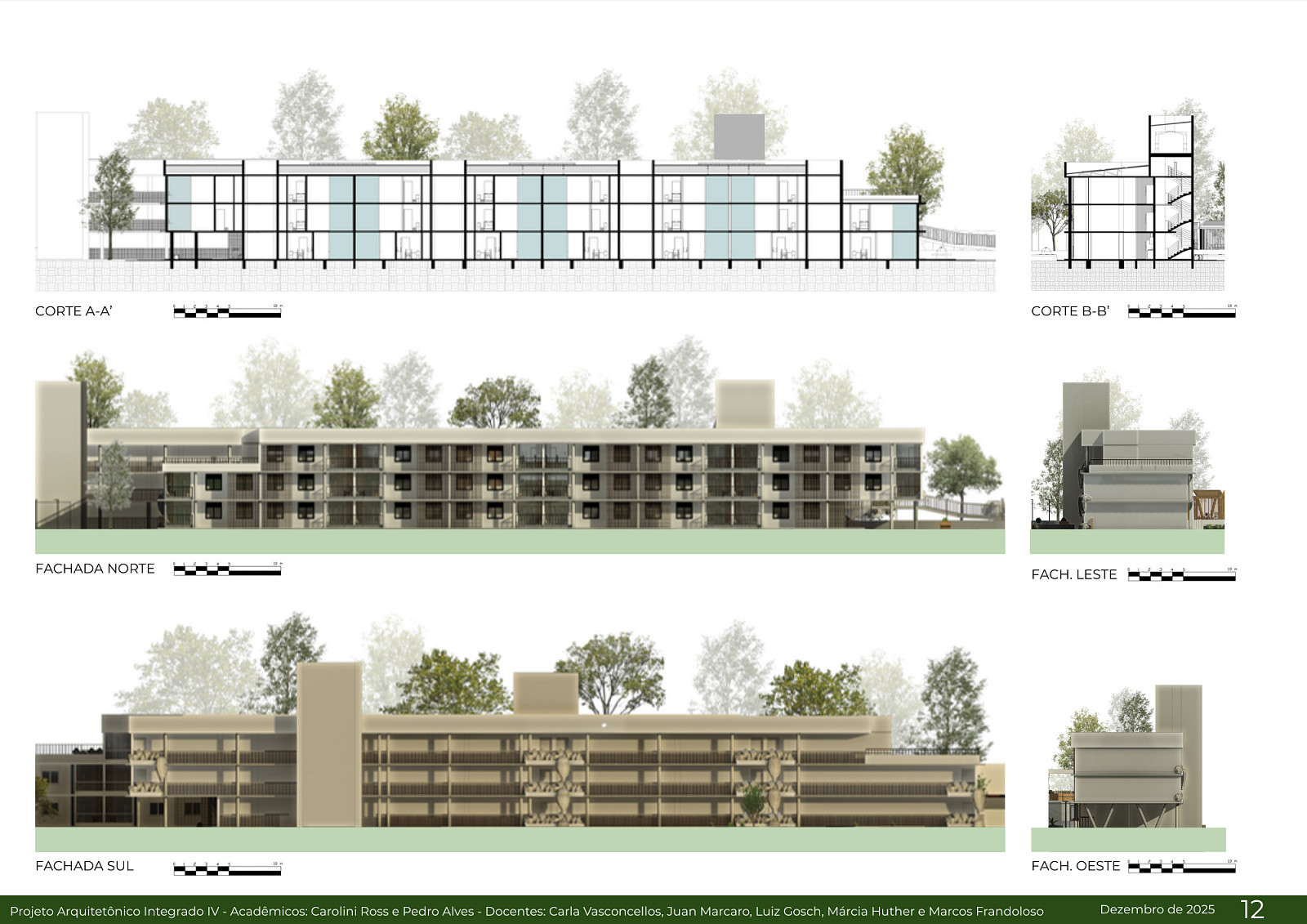
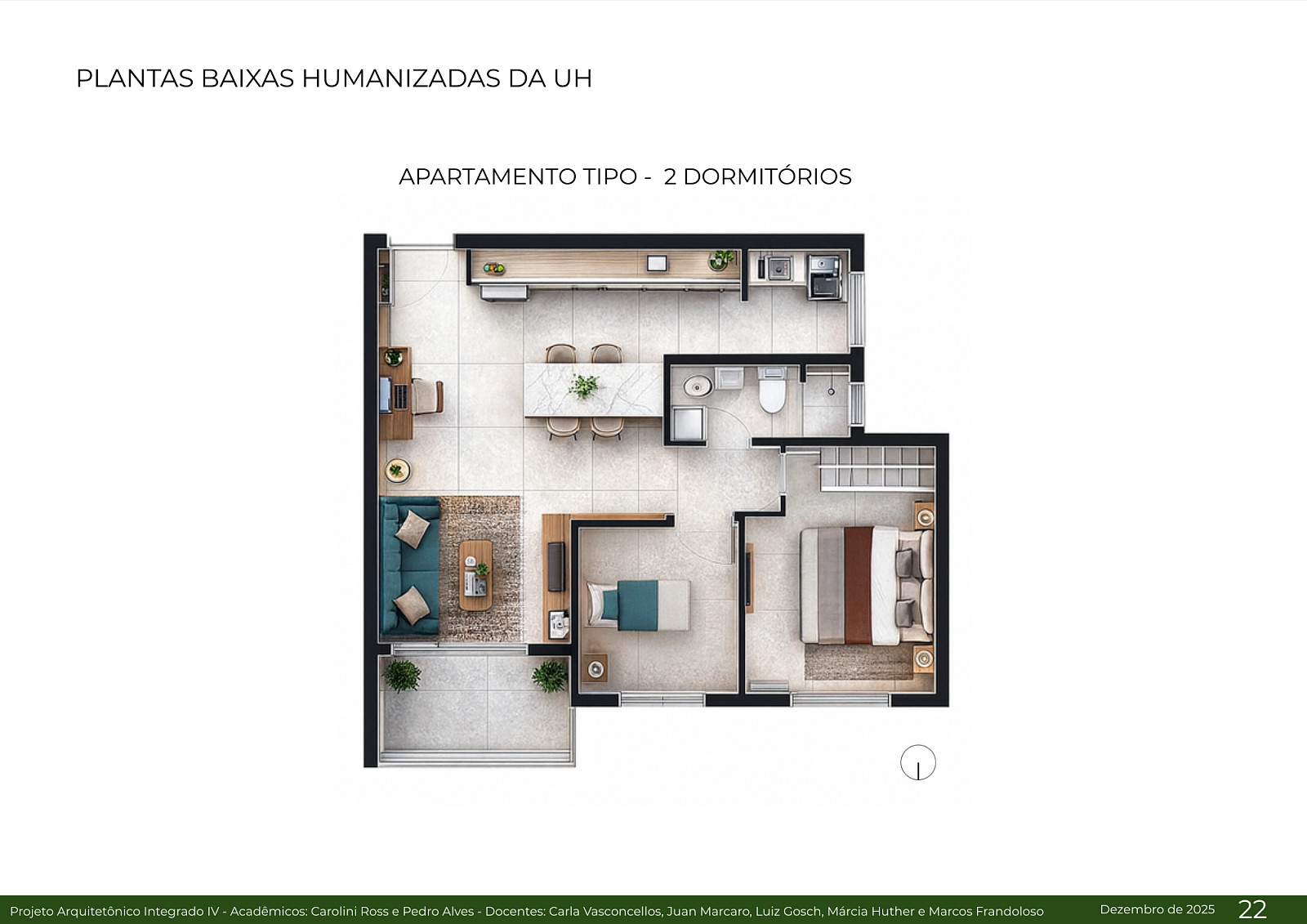
The housing complex consists of four large blocks, in which low-income residents will be able to finance their standardized 50-square-meter apartment through an economic housing system in Brazil, offered by Caixa Econômica Federal, which enables the purchase of real estate through long-term payment plans.
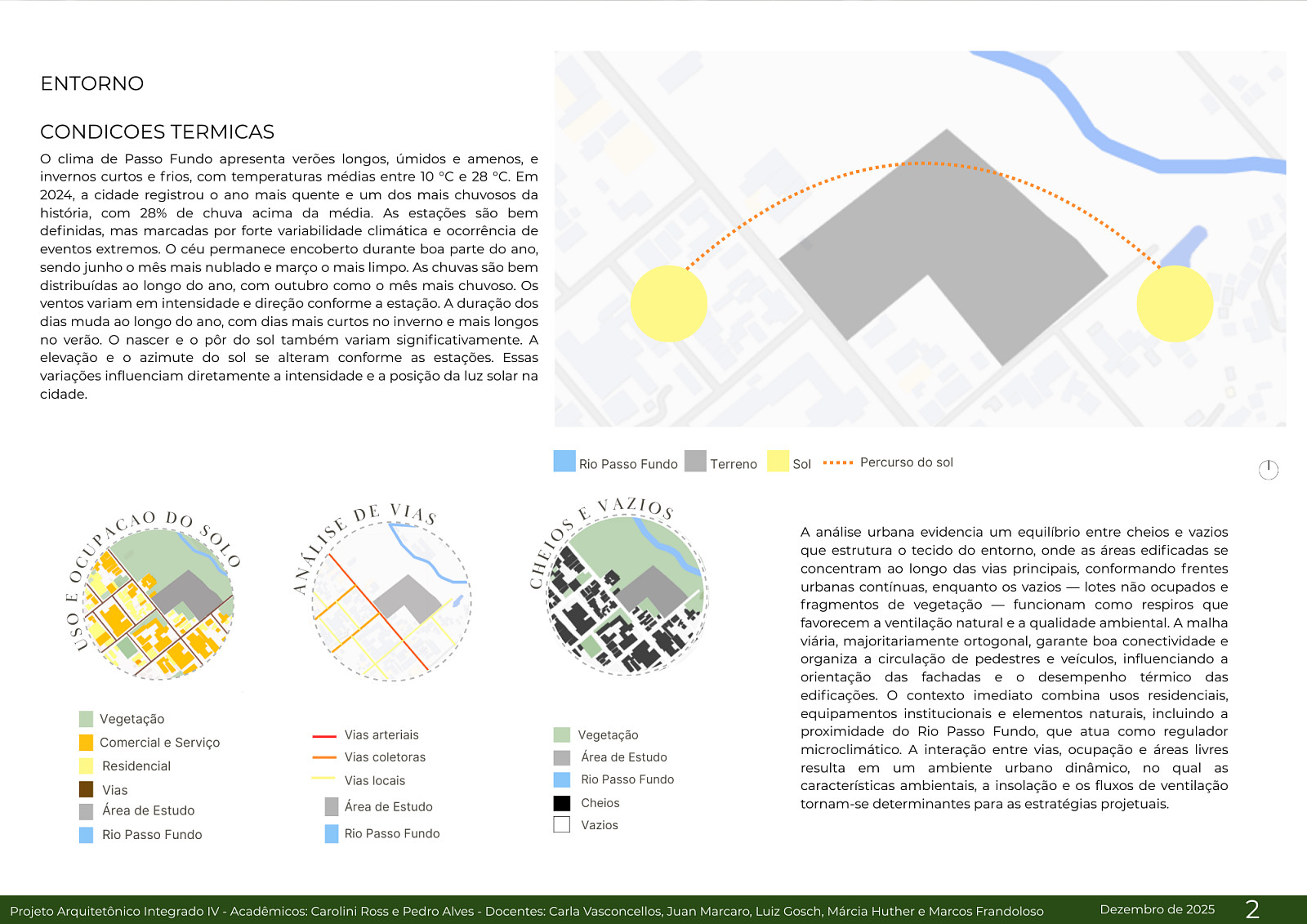
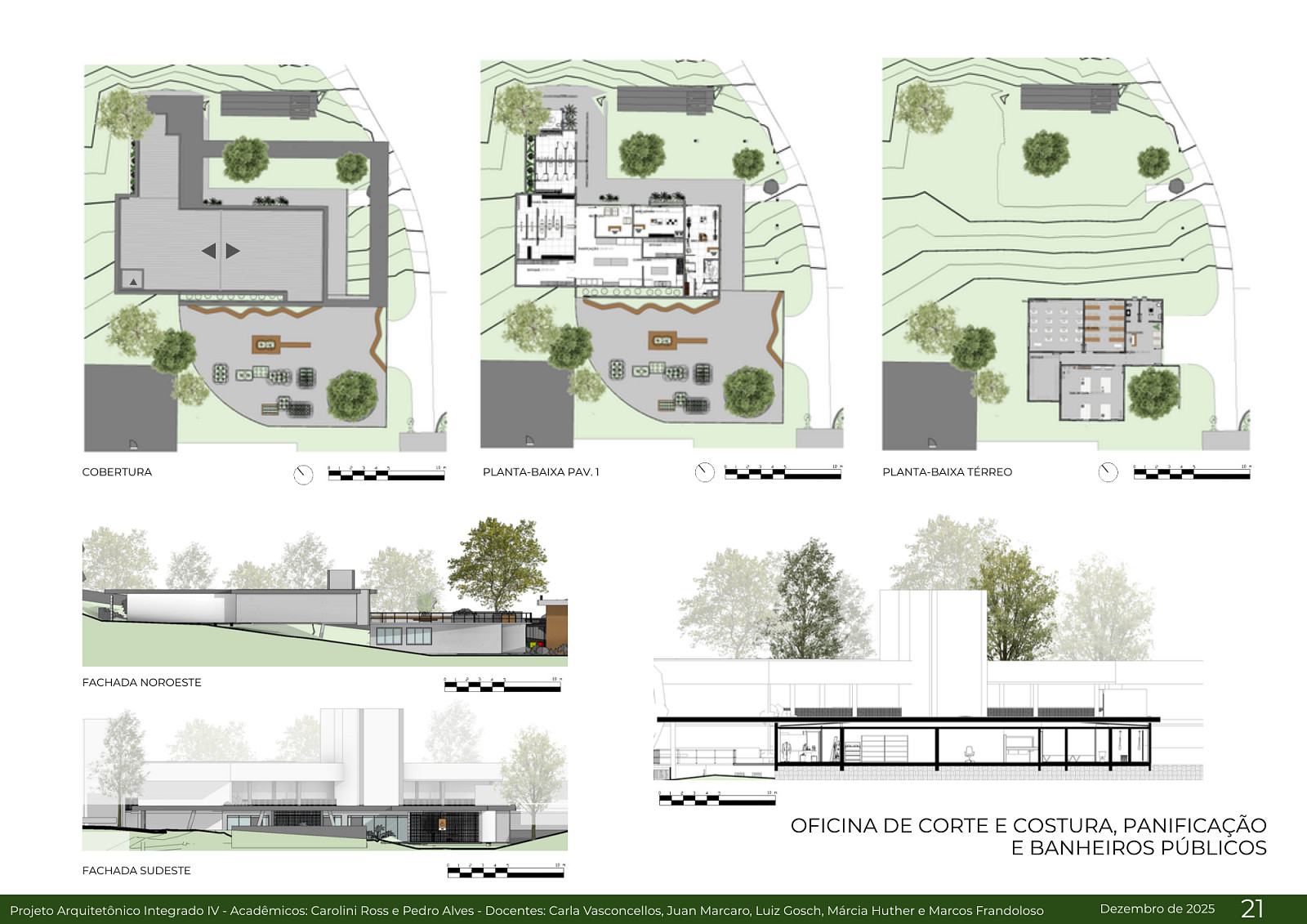
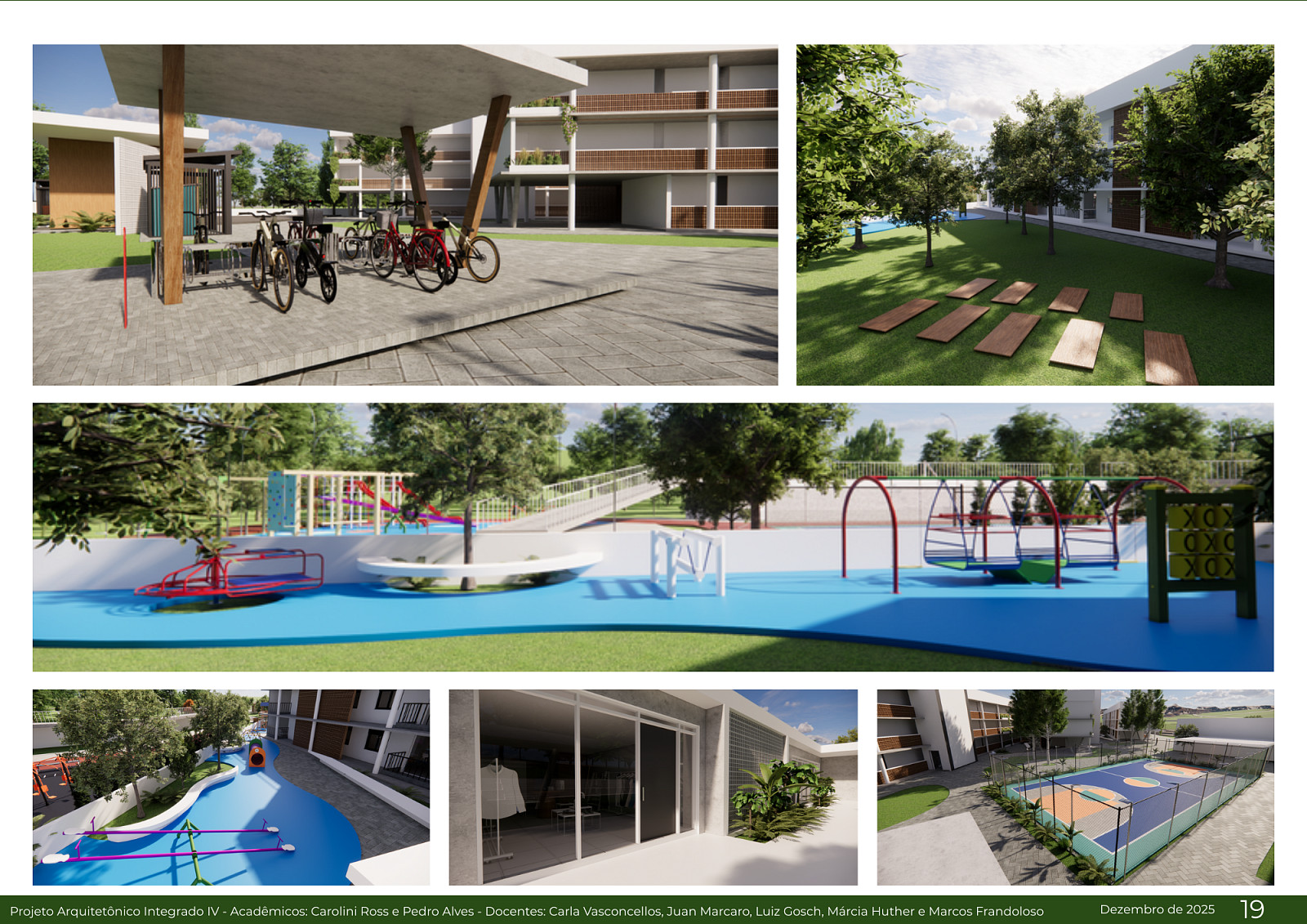
The project creates spaces for well-being, proper solar exposure, and makes use of regional materials and Brazilian construction techniques to establish a comfortable ecosystem and landscaping appropriate to the site. Solar orientation is one of the project’s main strengths, as the primary bedroom windows receive sunlight throughout the day, especially during winter. This region of Brazil experiences harsh winters, including occasional snowfall. The housing complex also includes a gym, leisure and sports areas, a library, and workshops for baking and sewing, open both to residents and to the surrounding urban community.
The entire project prioritizes universal accessibility, ensuring full inclusion for wheelchair users, visually impaired individuals, autistic people, and others with special needs. The design is carefully conceived to support elderly residents, allowing paths and human interactions to occur freely and without barriers. Within the housing complex, walkability is strongly encouraged, promoting pedestrian movement and reducing reliance on combustion-powered vehicles. This approach reinforces a healthier, safer, and more socially integrated urban environment.
Popis projektu
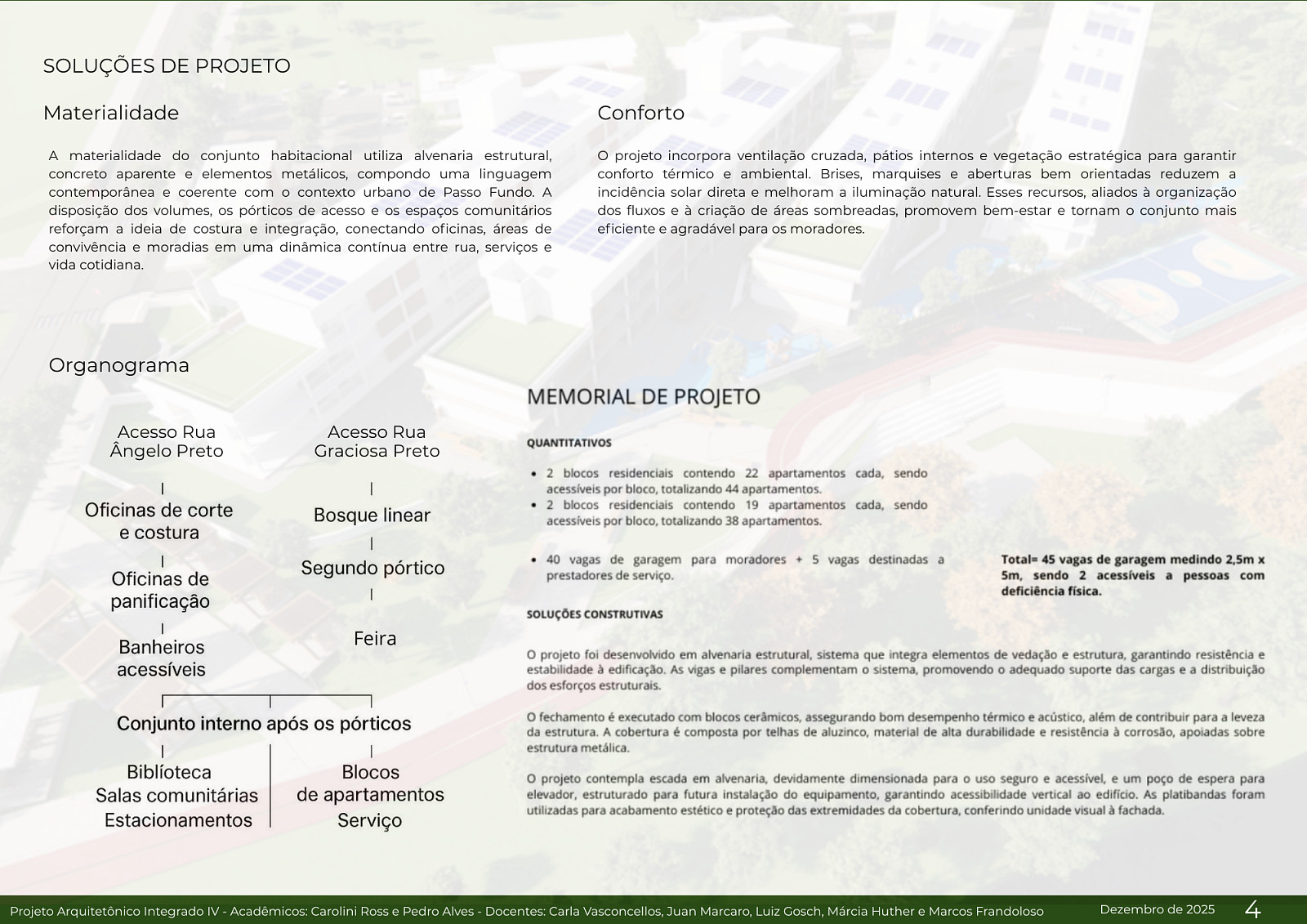
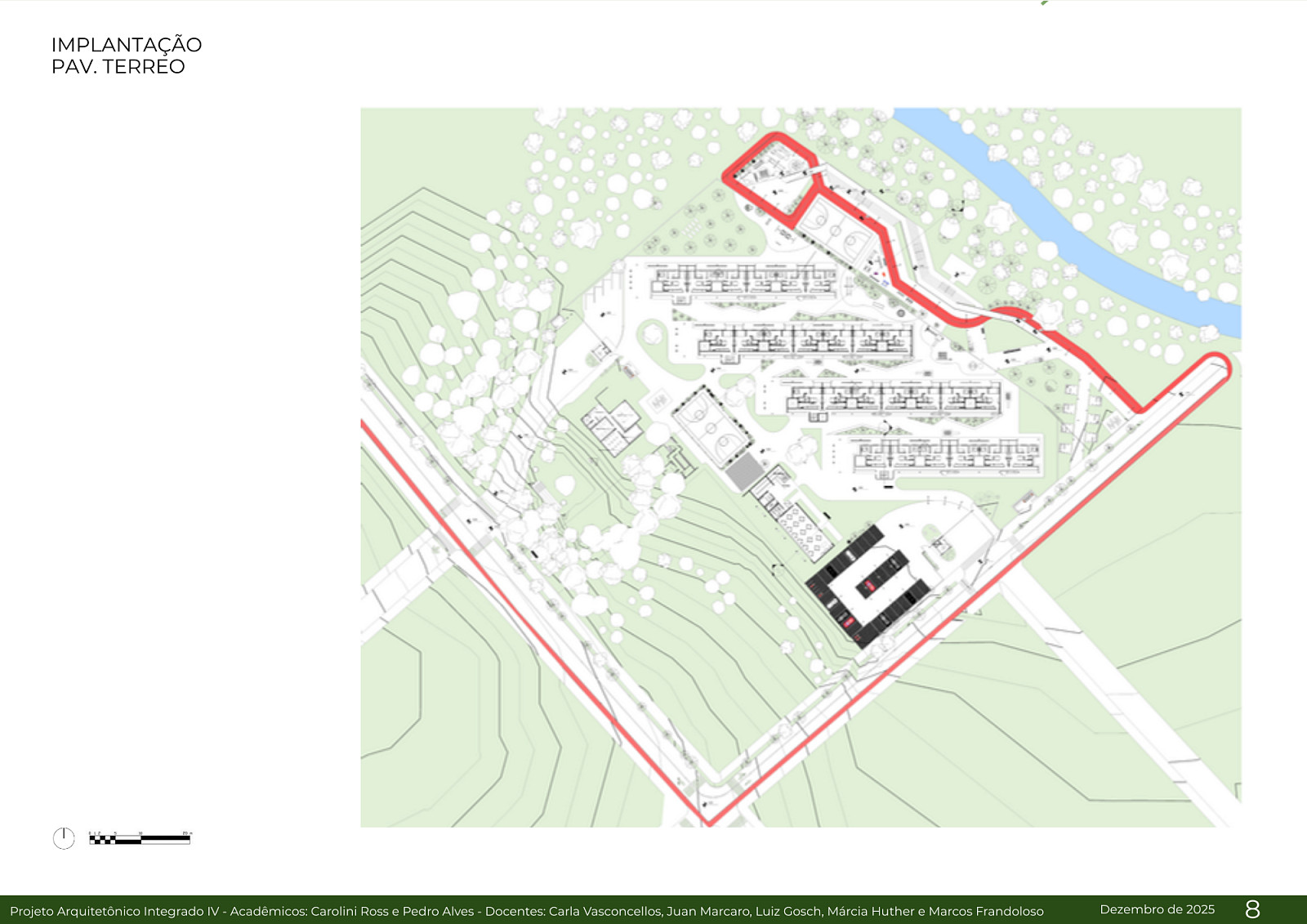
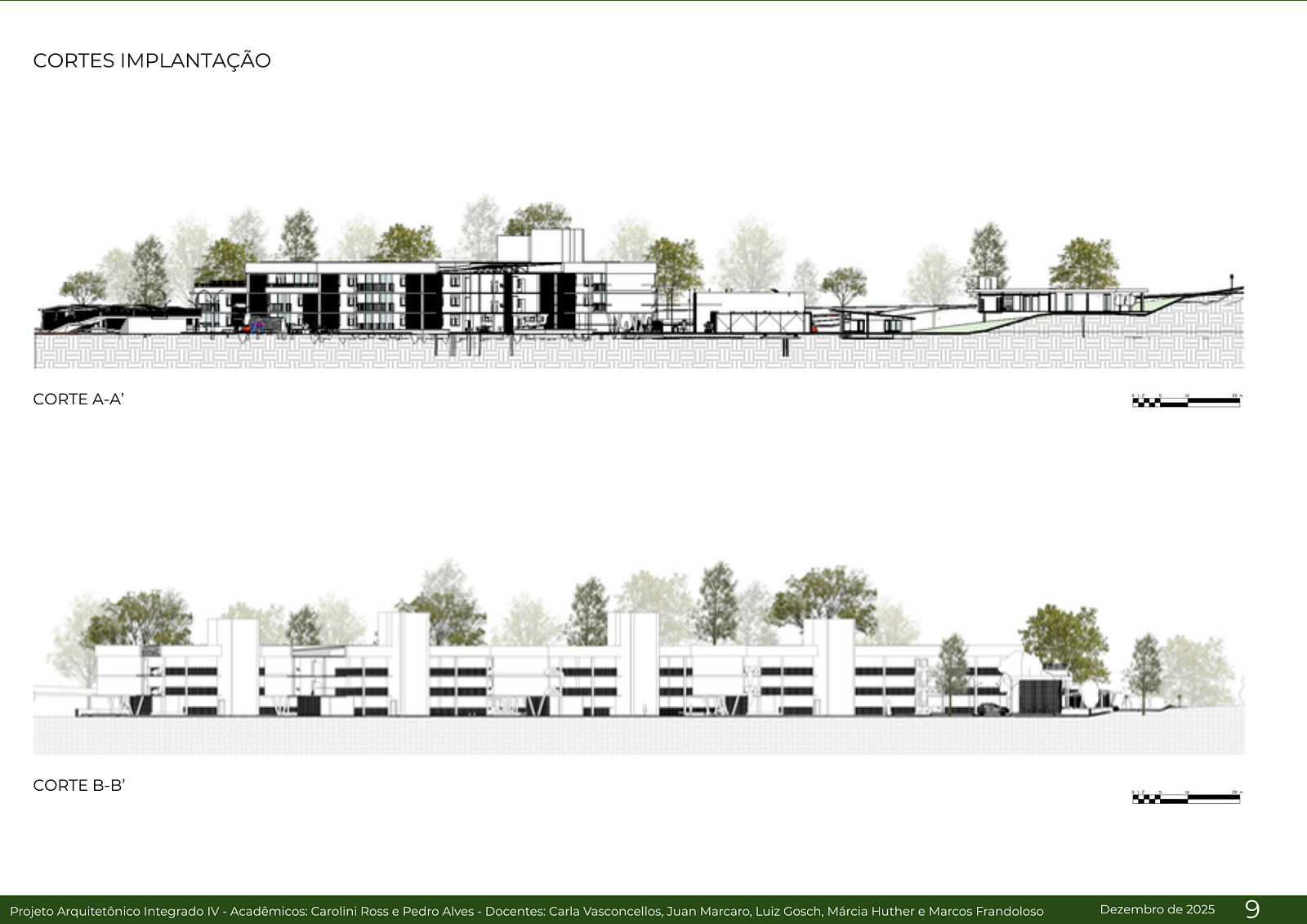
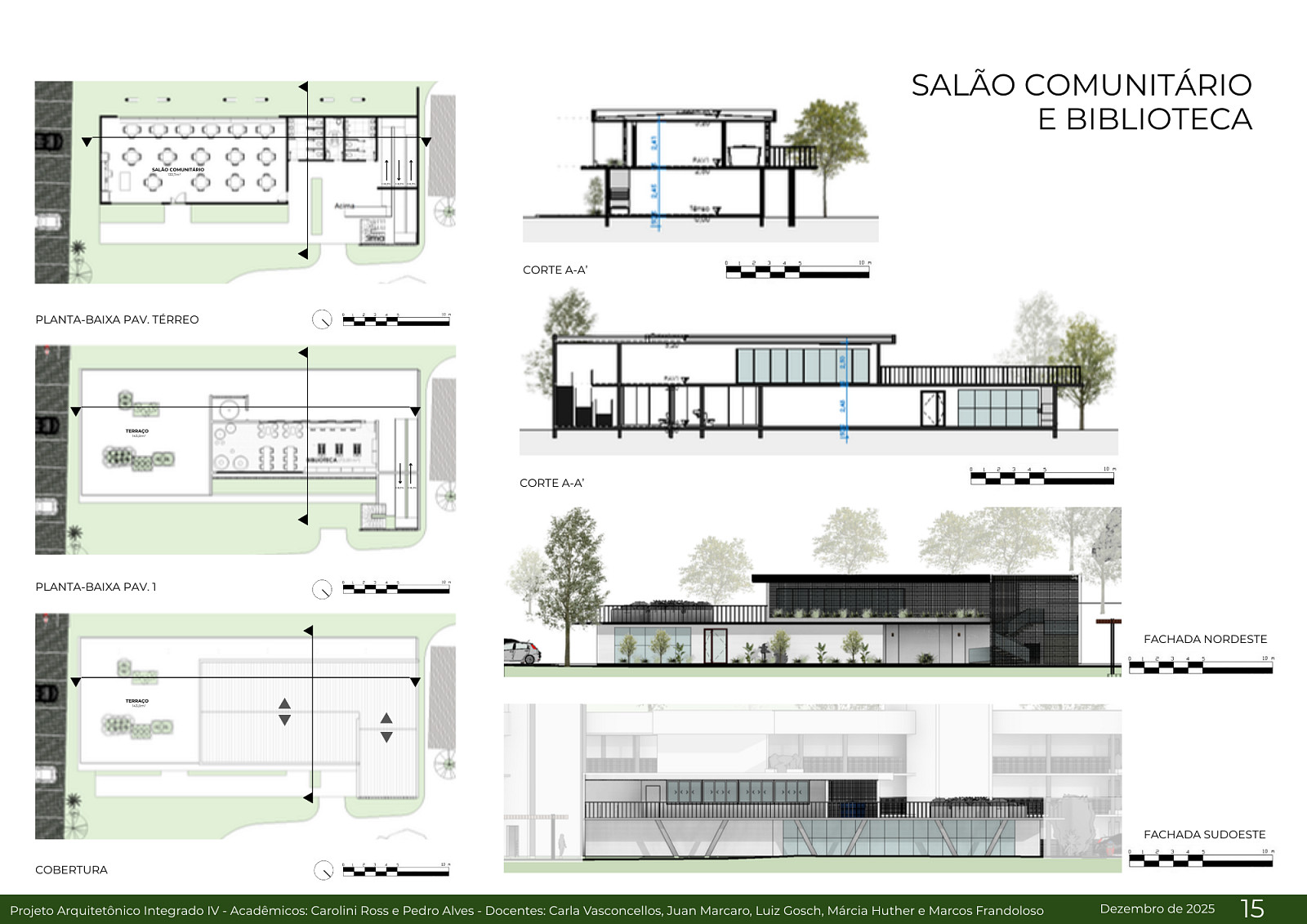
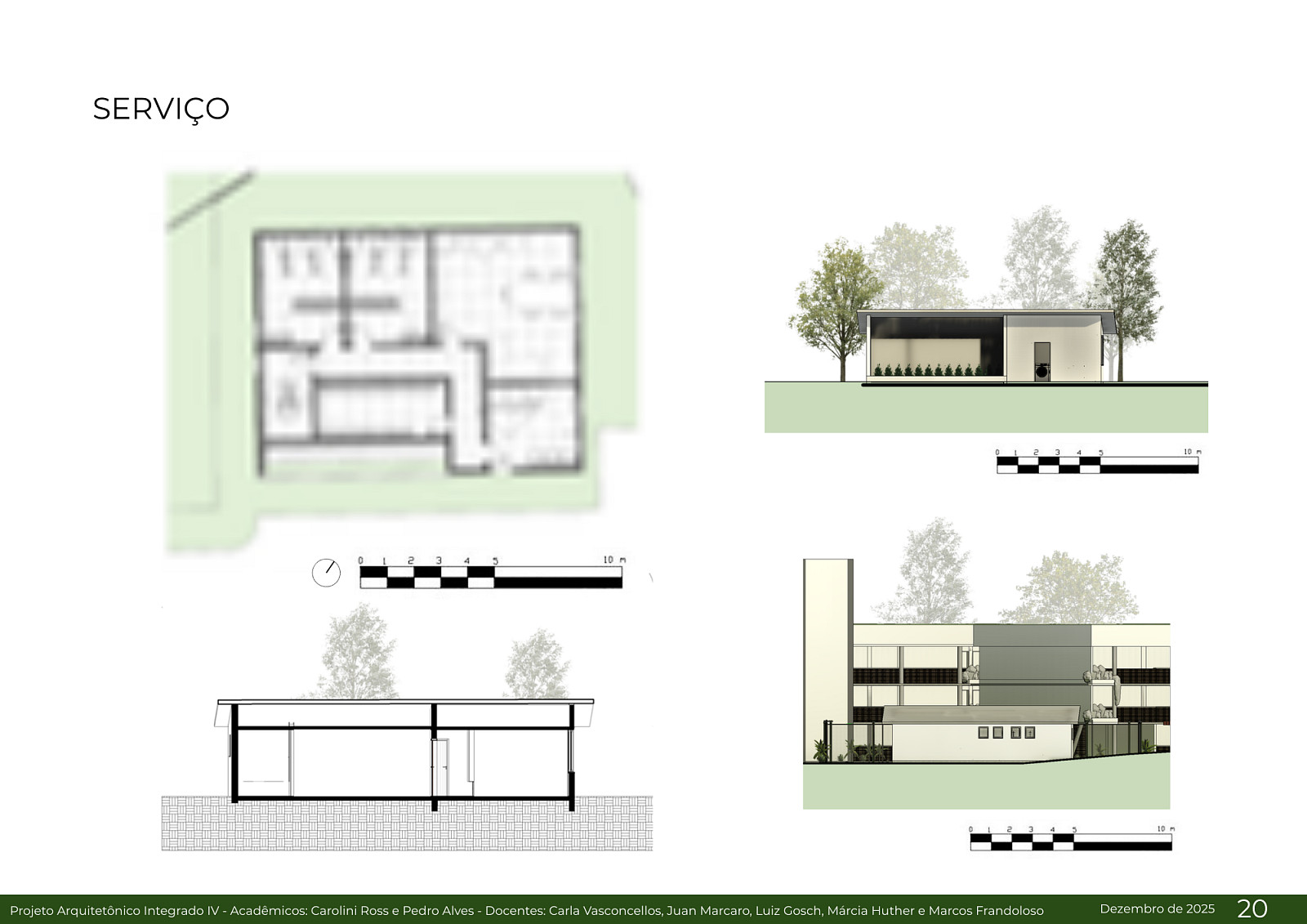
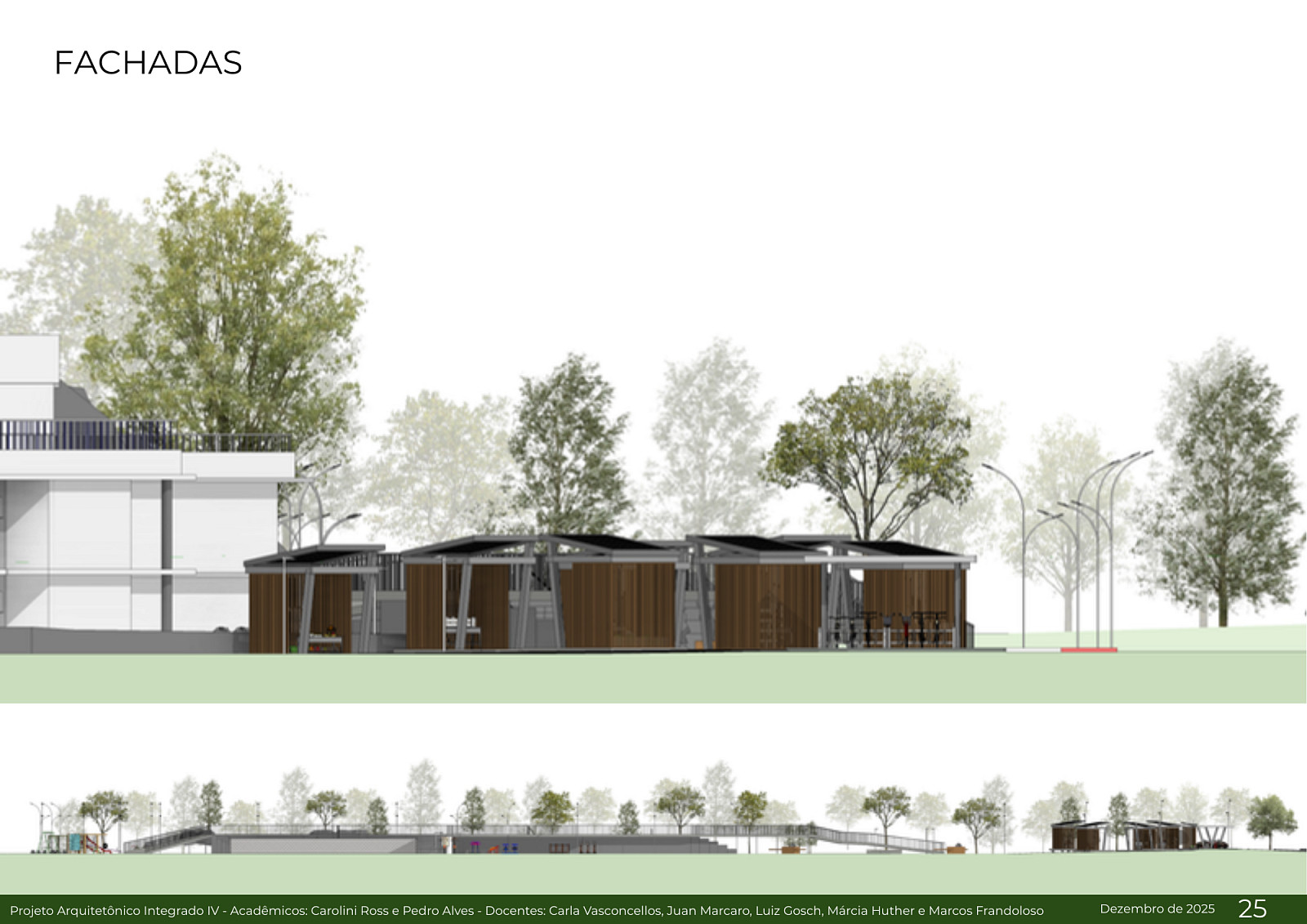
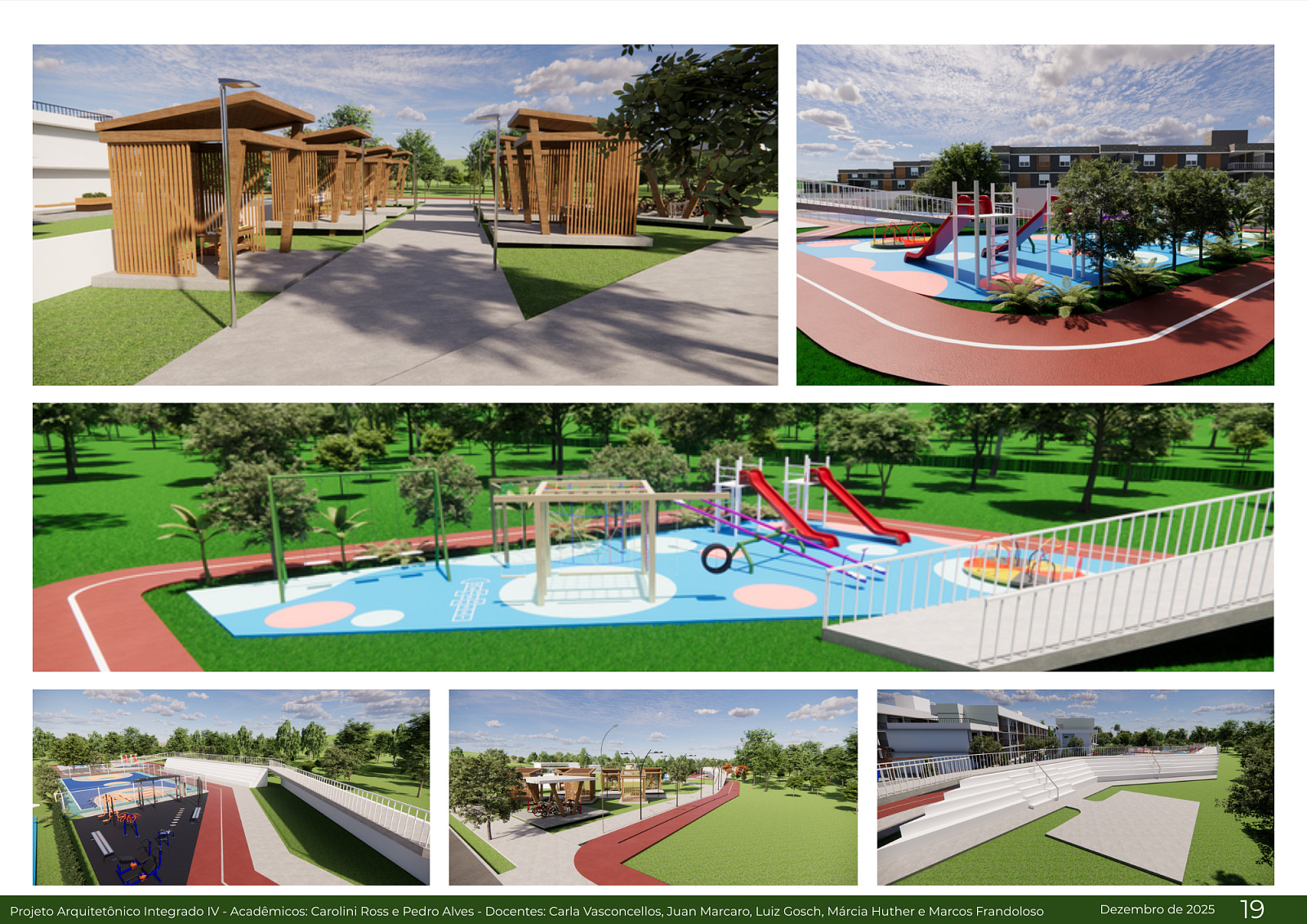
The project consists of four residential blocks totaling 80 apartments, 10% of which are fully accessible to people with special needs. In addition, it includes a fully accessible two-story building containing public restrooms and sewing workshops for the local community and surrounding urban area. The ground floor of this building also features an equipped multipurpose space.
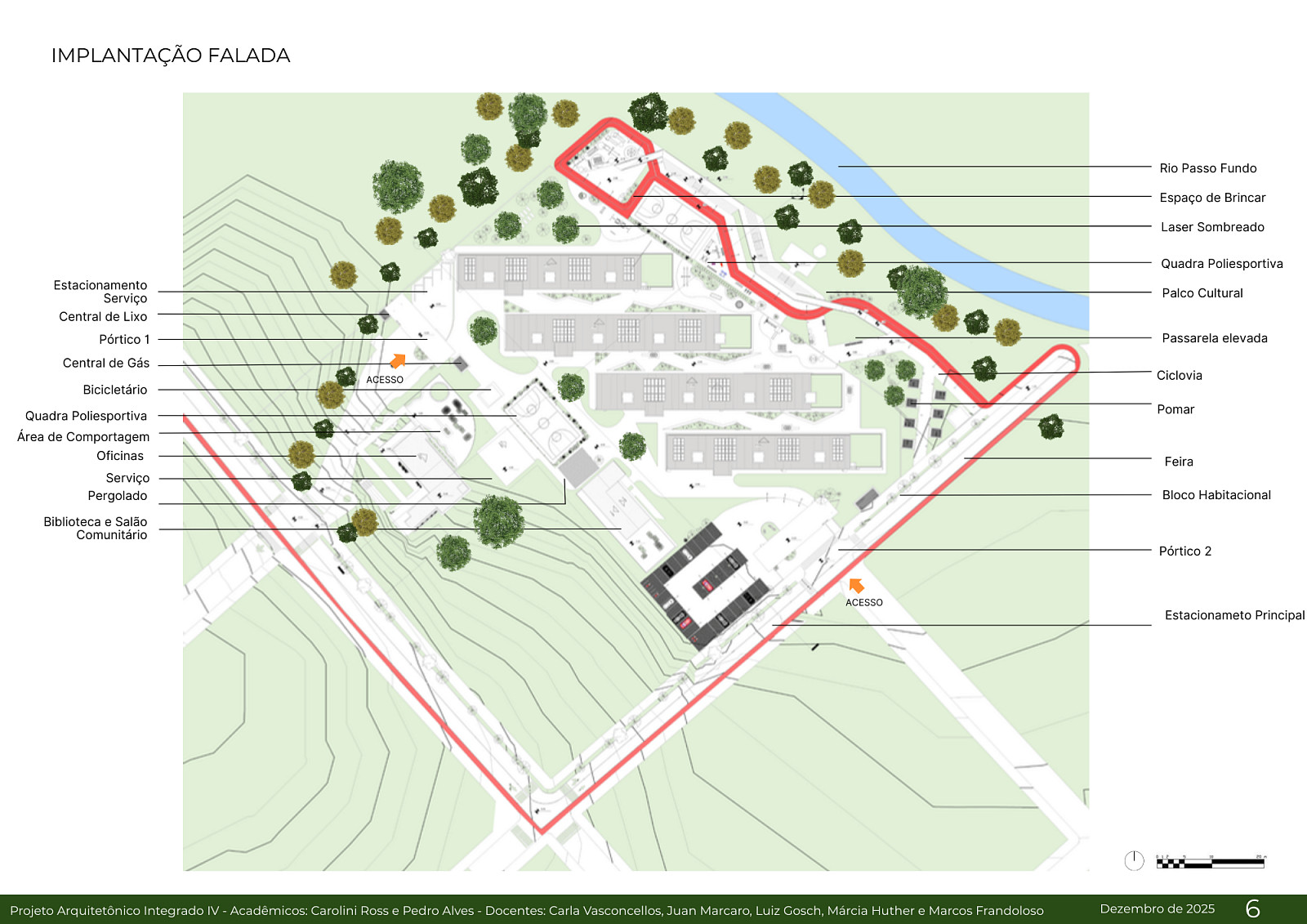
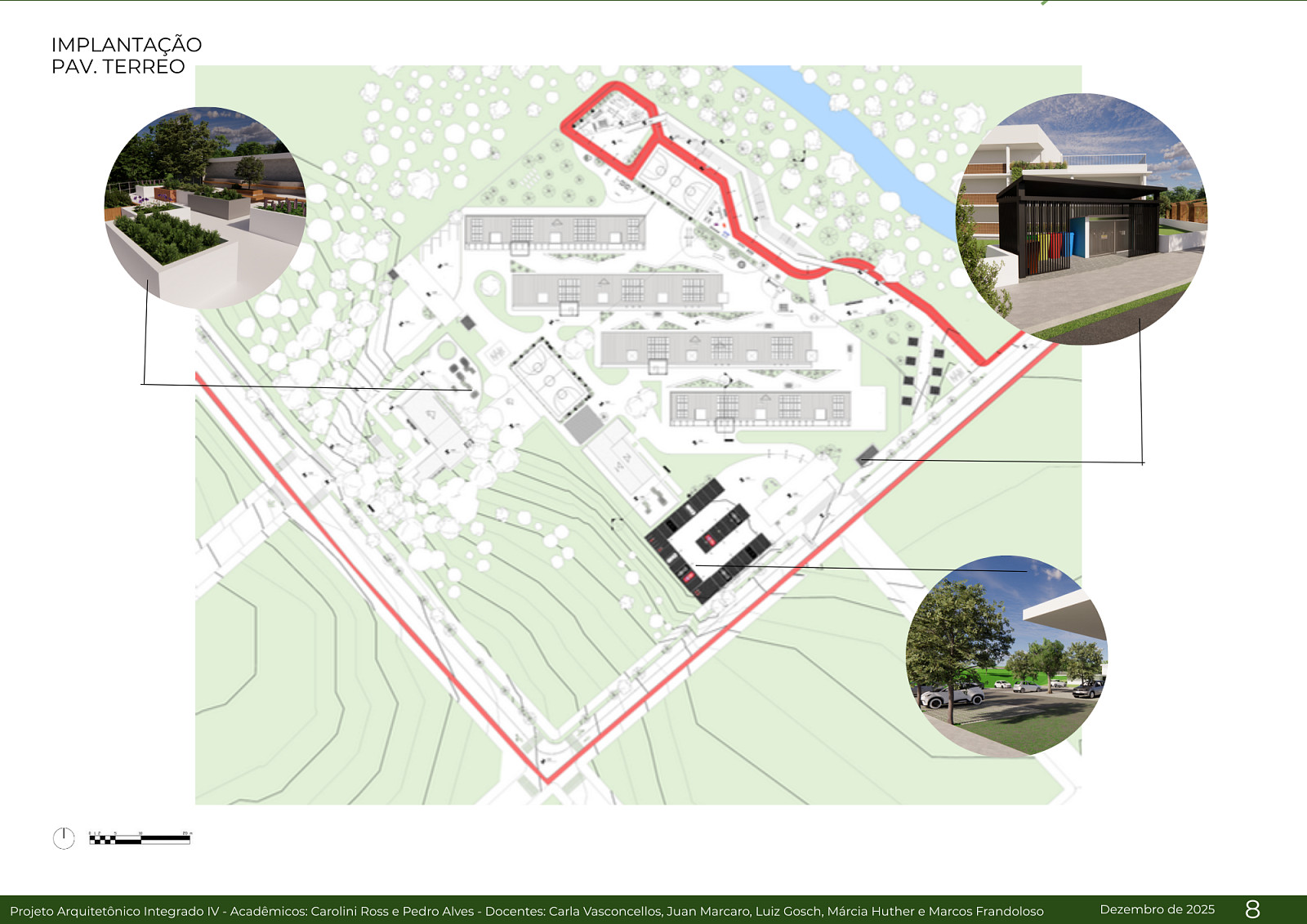
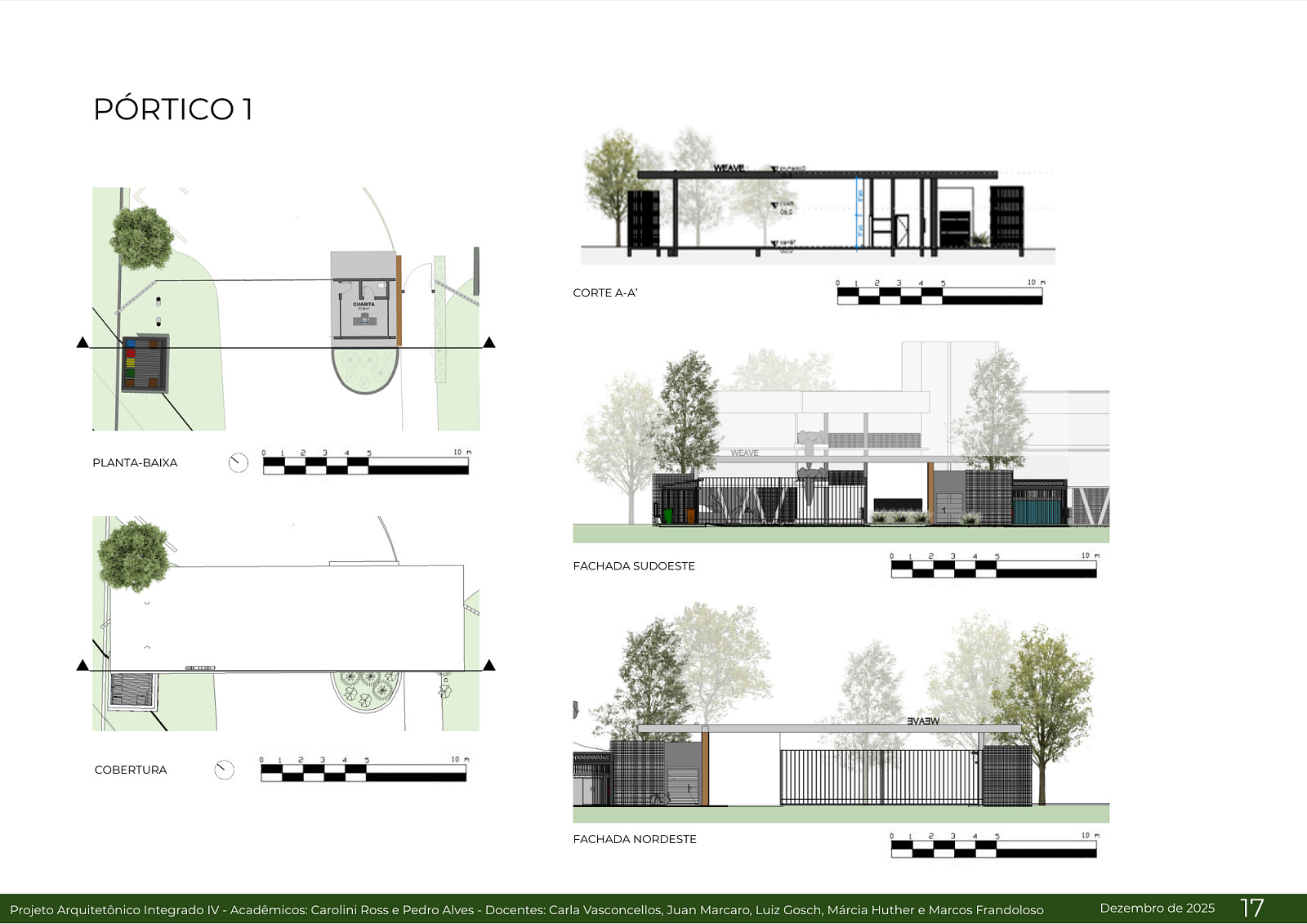
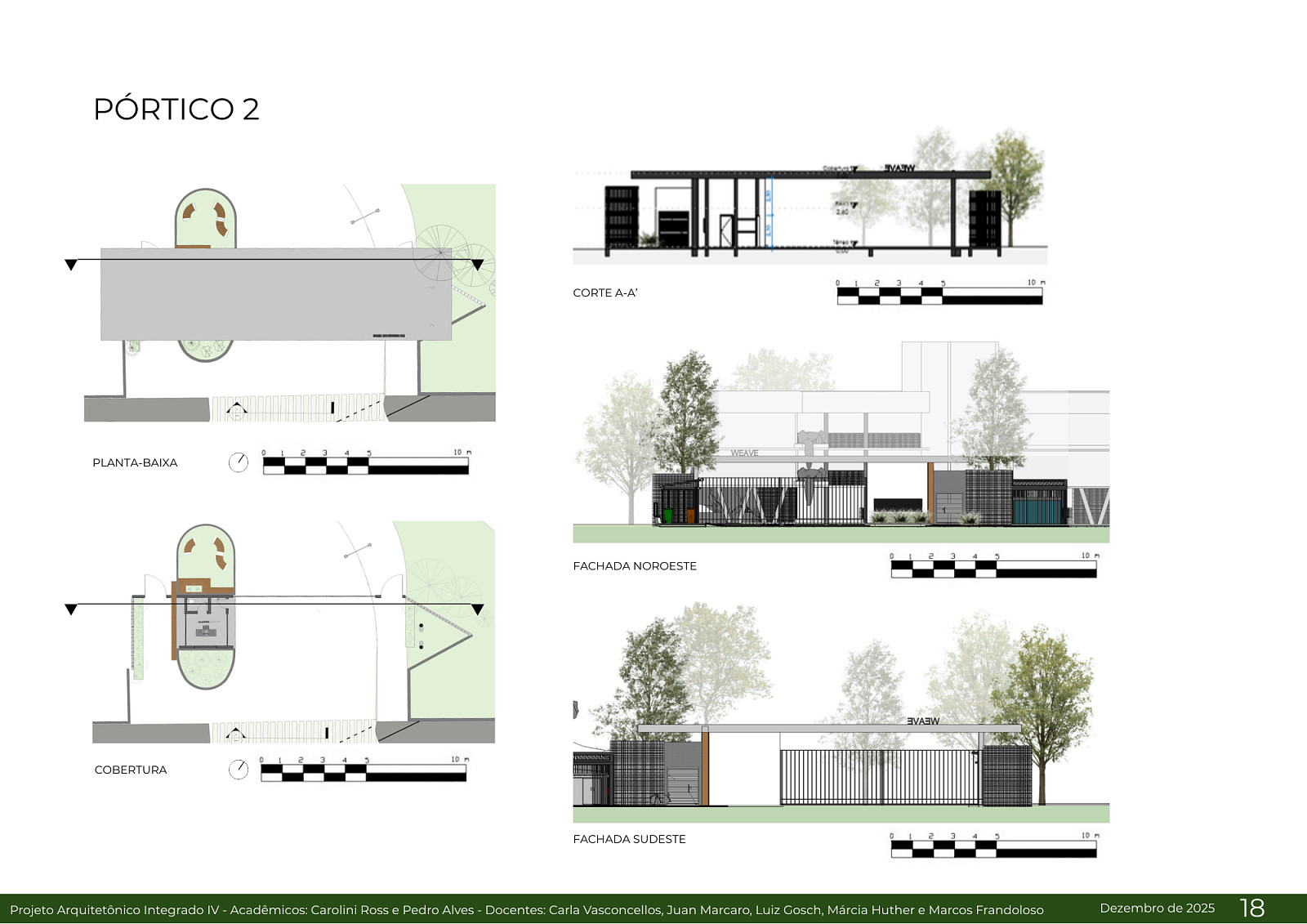
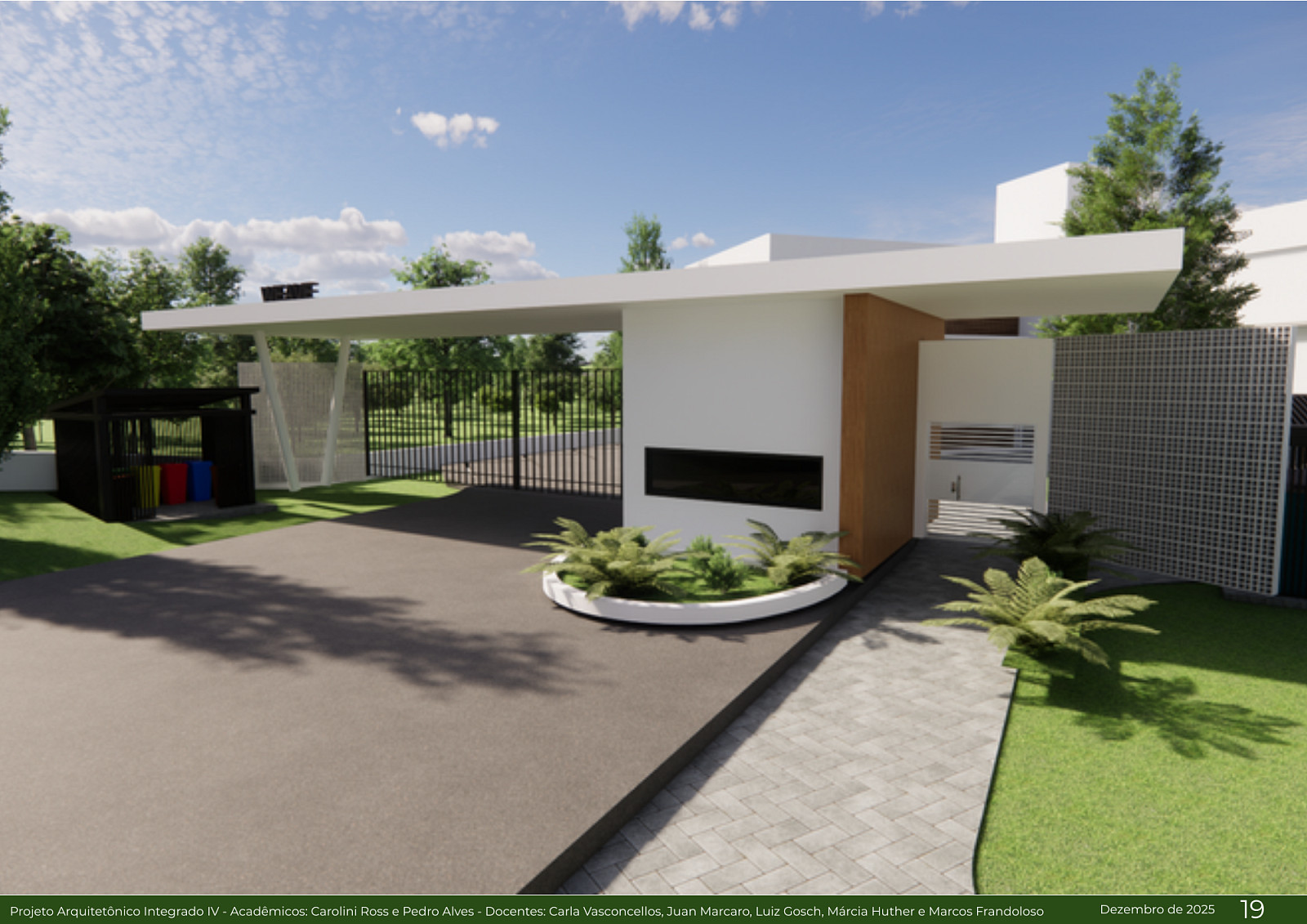
The complex has two entrances, defined as vehicle gateways, where cars are parked immediately after entry. All internal circulation is designed to occur through pedestrian pathways, reinforcing walkability and human interaction.
The development also includes another two-story building, with the upper floor dedicated to a fully equipped library for low-income families, providing computers and books for study. On the ground floor, there is a community space intended for meetings and occasional events within the housing complex.
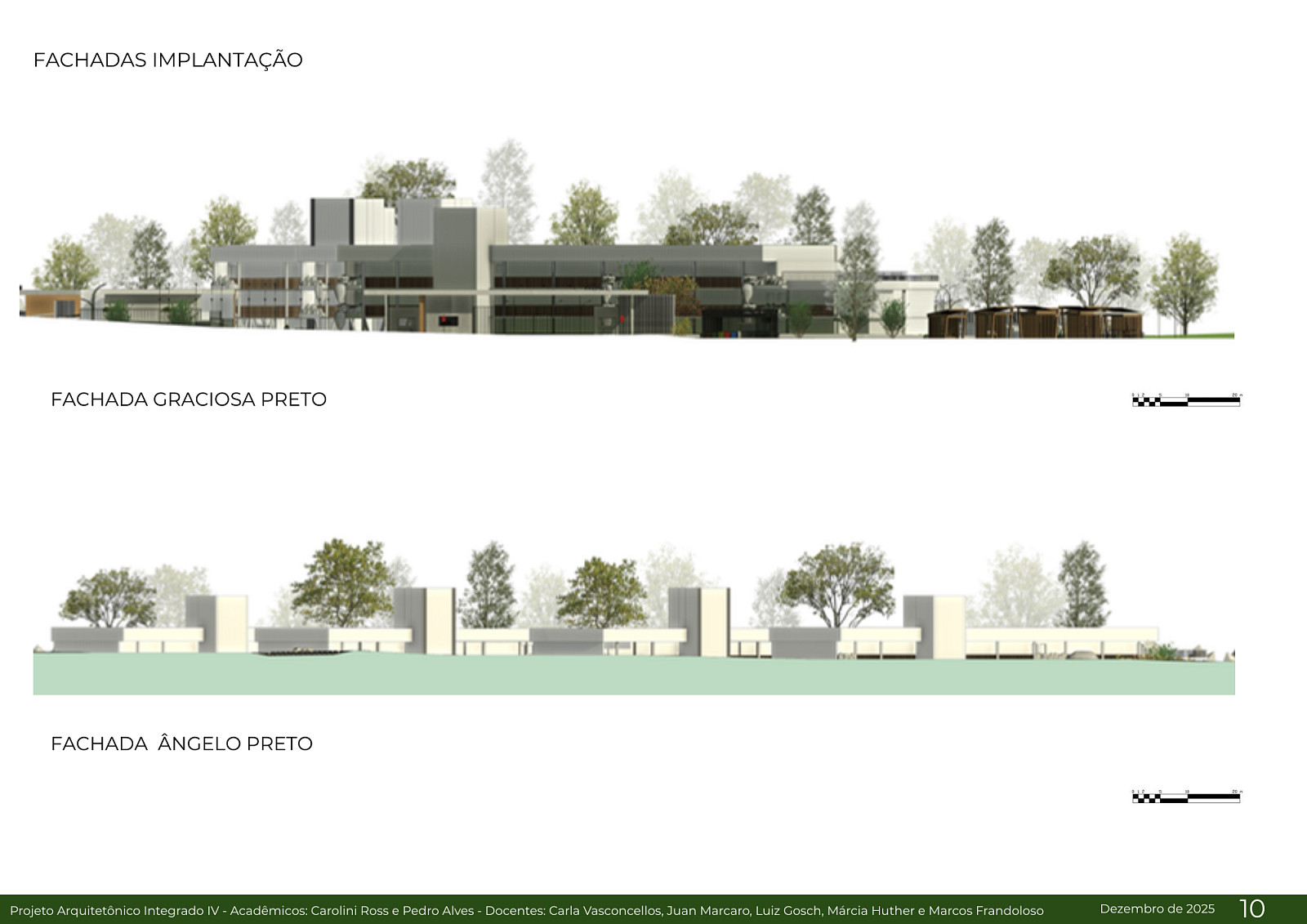
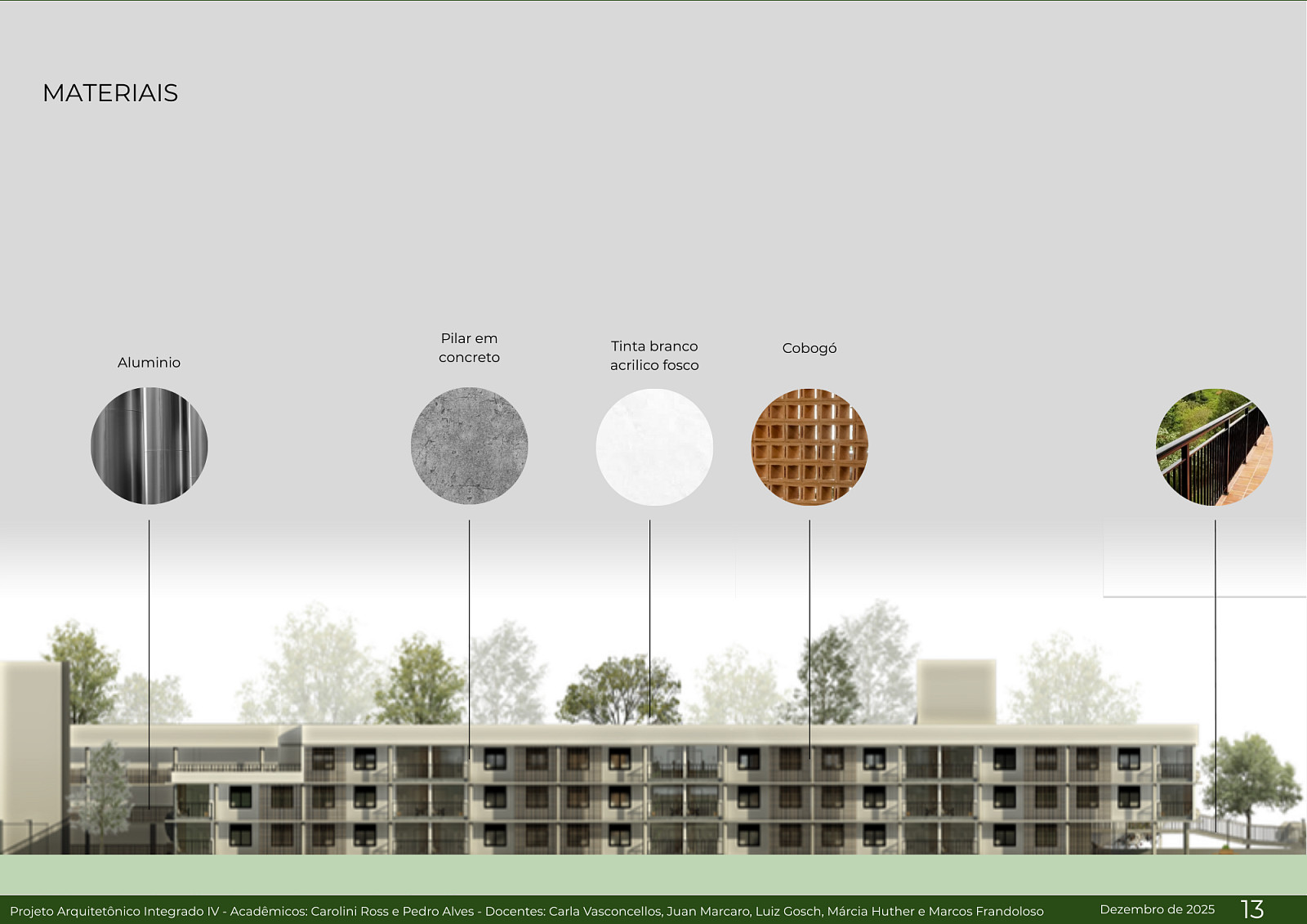
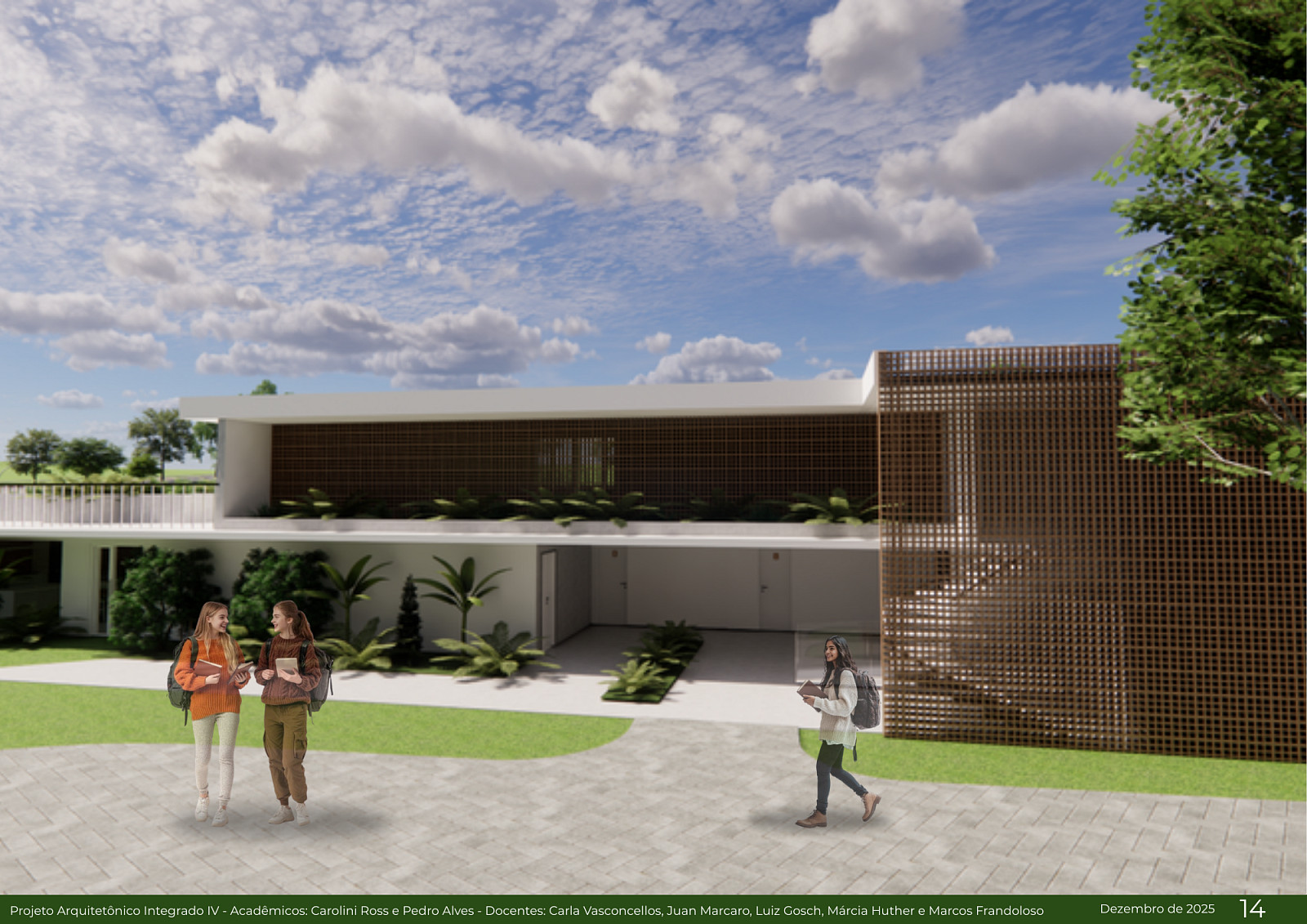
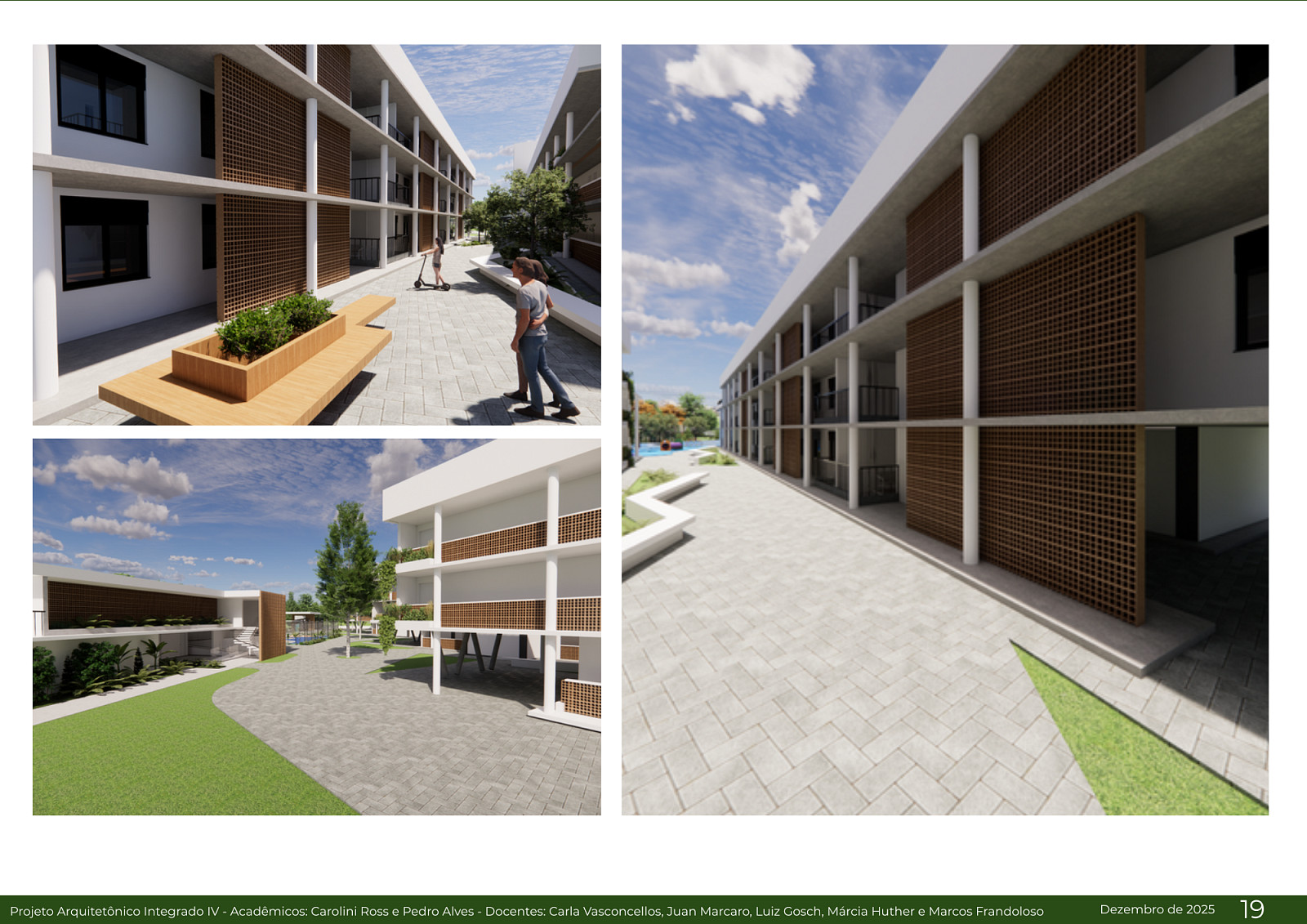
Furthermore, the complex features multi-sport courts, shared common areas, integrated landscaping, and sustainable solutions such as the use of photovoltaic energy. The apartments, each measuring 50 square meters, benefit from excellent solar exposure and natural ventilation. Elements such as the cobogó—a brick element developed in Brazil and widely used worldwide—are incorporated to allow controlled ventilation and sunlight penetration. Additional Brazilian construction techniques and regional materials were also integrated into the design.
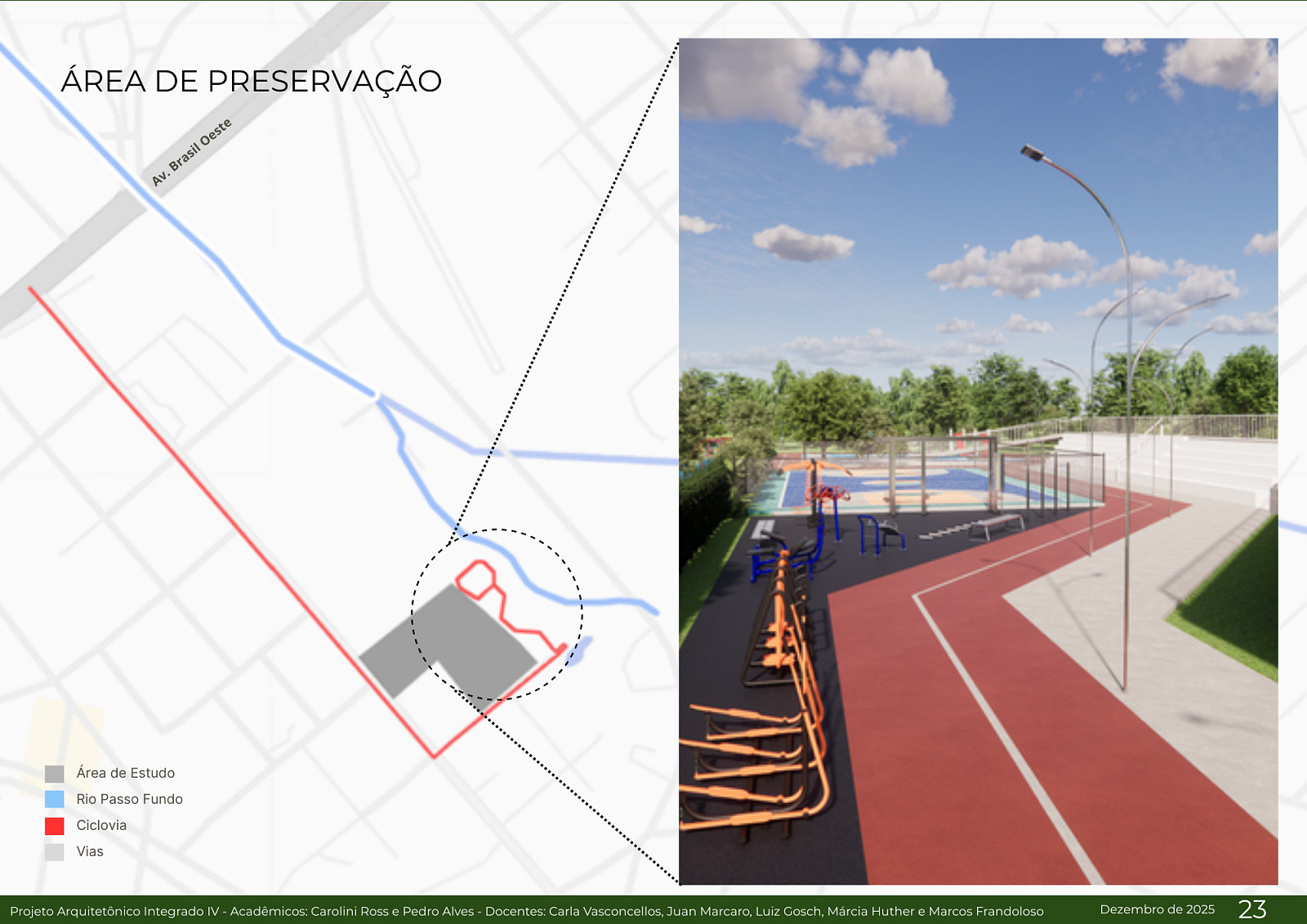
The required soil permeability rate has been respected in accordance with local regulations, and the project maintains a close relationship with the river located 50 meters away. A 20-meter-wide zone in the direction of the river has been designated as a common-use area, fully compliant with Brazilian environmental legislation, and is used to create leisure and social interaction spaces for the entire community.
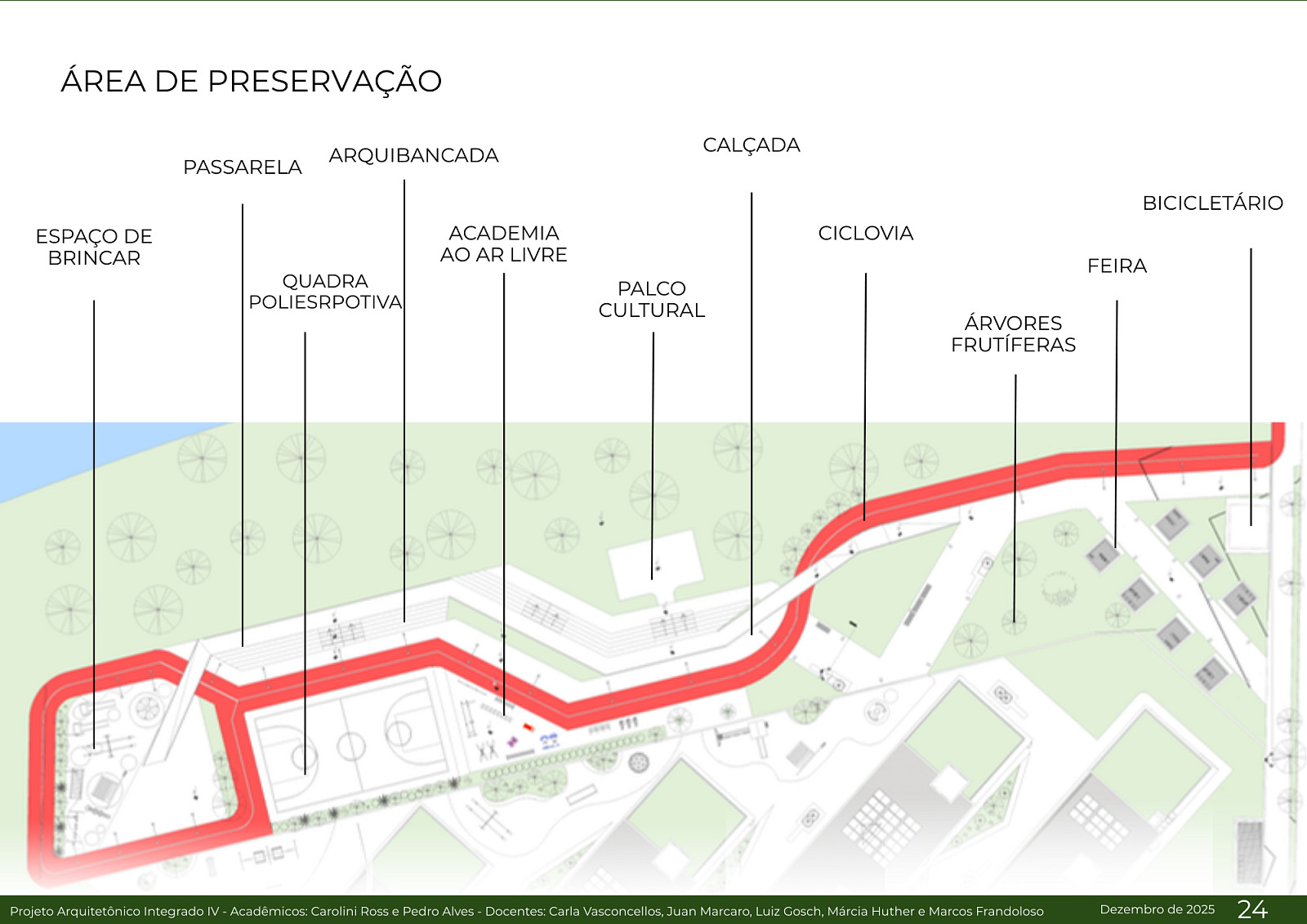
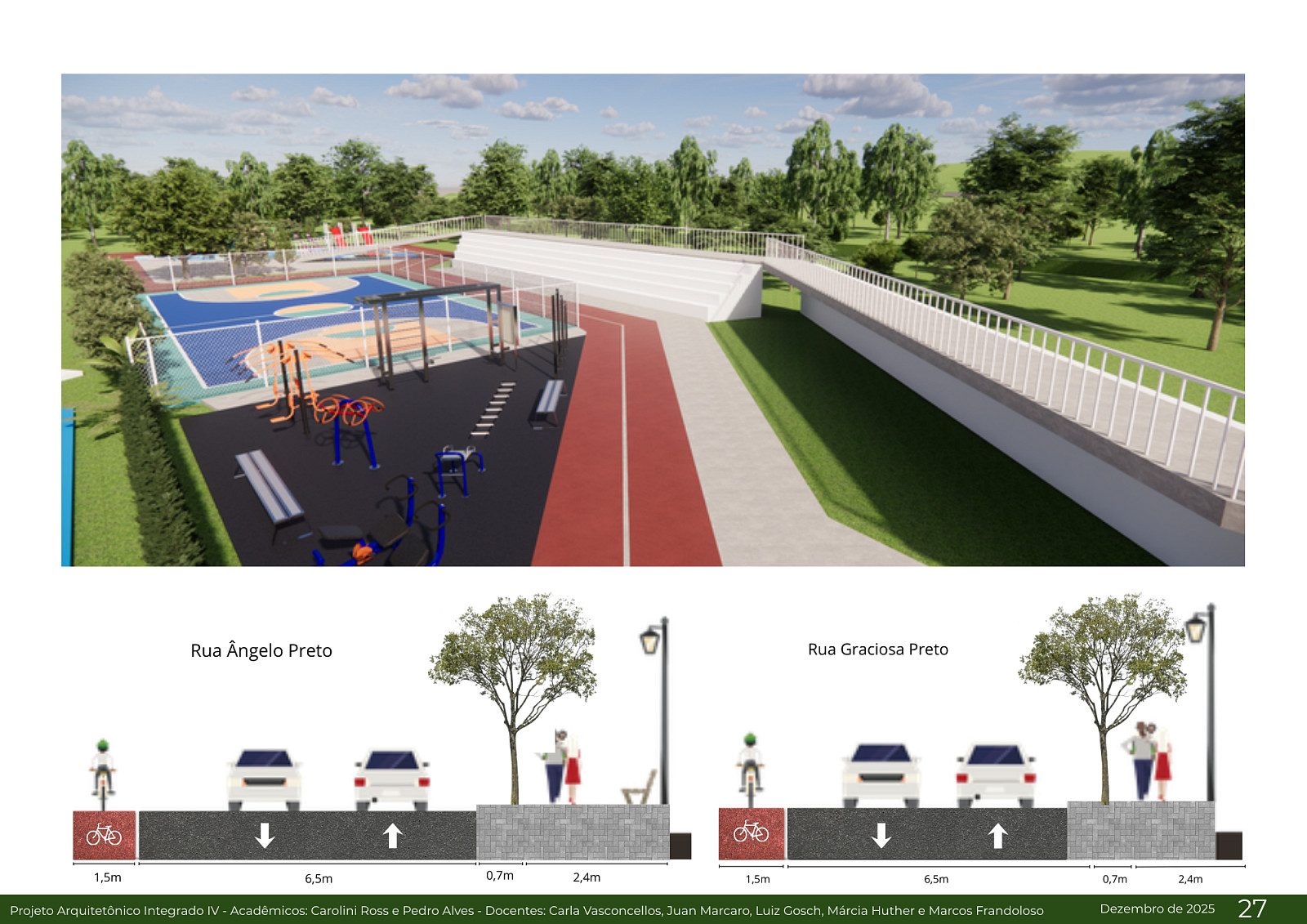
A bicycle lane has been incorporated into the urban design to promote fluid, sustainable, and interactive circulation. All existing green areas have been preserved, and the project proposes new urban landscaping interventions. The play areas are fully accessible, and the open-air market proposed near the river encourages local entrepreneurship, especially among women living in the region, while promoting the sale of locally produced goods.
The permanent preservation area has been fully respected, acknowledging the presence of wildlife near the river and ensuring that the relationship between fauna, the project, and the urban intervention remains balanced and environmentally responsible.
Technické informace
The project employs construction techniques such as structural masonry and reinforced concrete. Shallow foundations are used, along with reinforced concrete beams and columns, and masonry enclosure walls. The design incorporates the cobogó, a perforated element of Brazilian origin made from clay, as both an aesthetic and functional feature to promote ventilation throughout the space. This element is emphasized across the project, creating visual unity among the buildings.
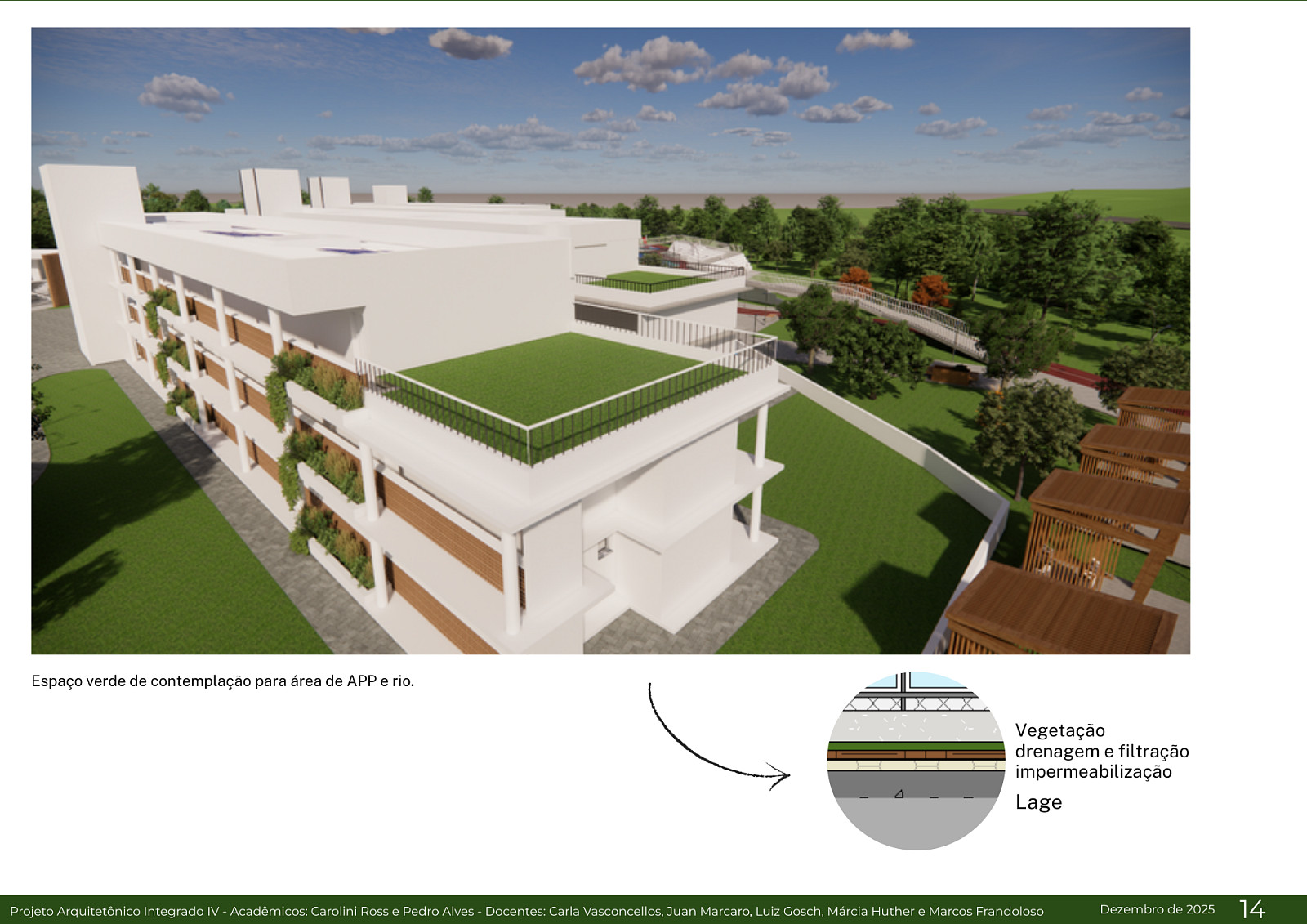
Materials such as glass and natural wood—an original and significant resource from Brazil—are used, along with sustainable, local landscaping composed of native plant species from the state of Rio Grande do Sul, Brazil. The roofs are designed with insulated tile systems incorporating expanded polystyrene (EPS) to enhance thermal comfort. In addition, rooftop terraces with grass покрытия are proposed to reduce solar heat gain on the buildings, contributing to improved thermal performance and creating well-being spaces at the top of the structures.
The entire complex incorporates rainwater harvesting systems for irrigation and for supplying cleaning areas. The primary water supply comes from the municipal treatment plant of the city of Passo Fundo. All electrical energy consumed by the complex is generated through photovoltaic panels, which produce energy throughout the day and operate within an on-grid system connected to the local energy infrastructure.
The urban design makes extensive use of concrete, interlocking paving systems, steel, and local construction techniques. Clay bricks and structural masonry are highlighted as essential architectural and structural elements, reinforcing the project’s connection to Brazilian construction traditions while ensuring durability, efficiency, and environmental responsibility.


Copyright © 2026 INSPIRELI | All rights reserved. Use of this website signifies your agreement to the Terms of Use, Privacy Policy, and use of cookies.