NEXUS


Idea projektu
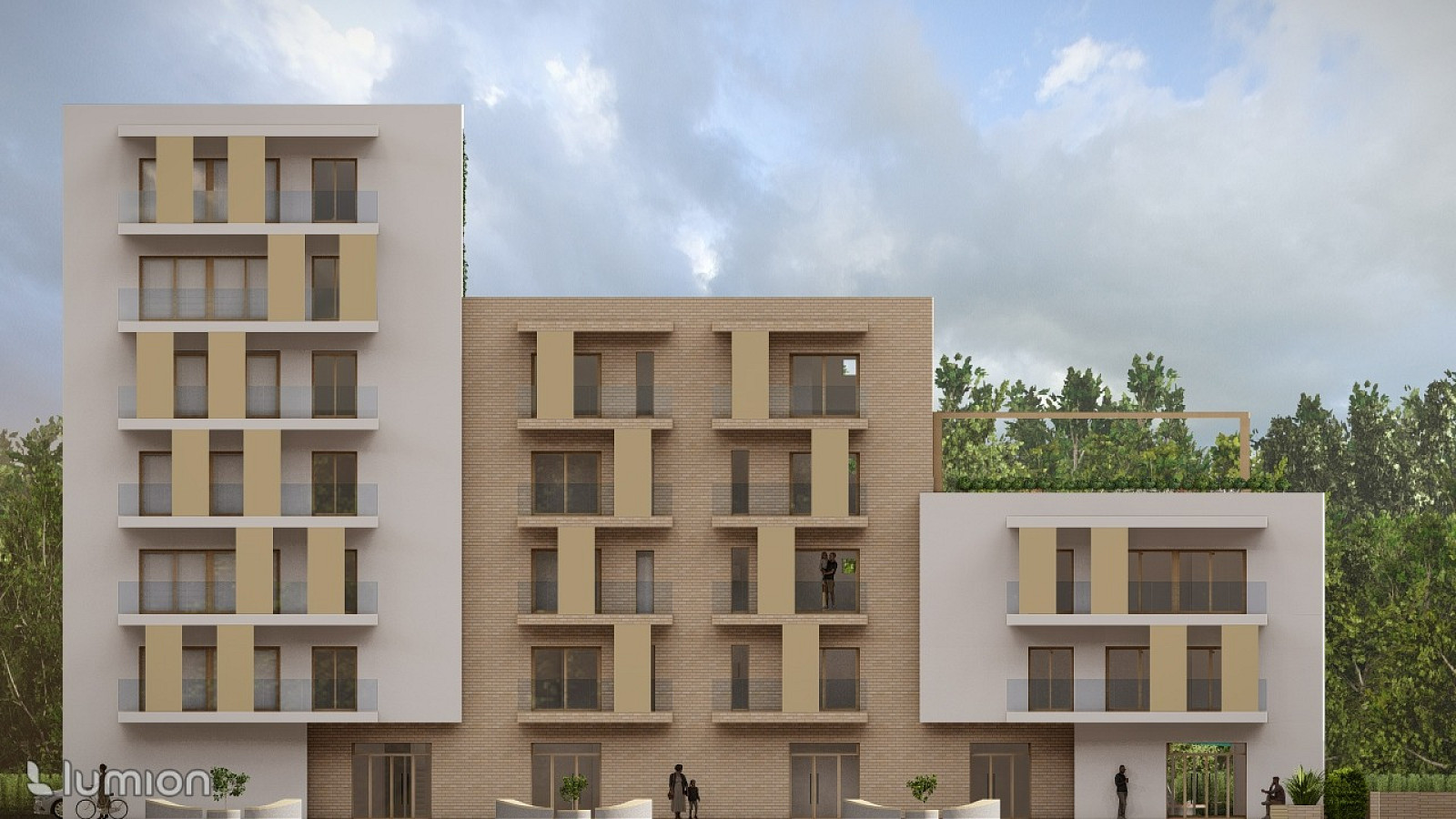
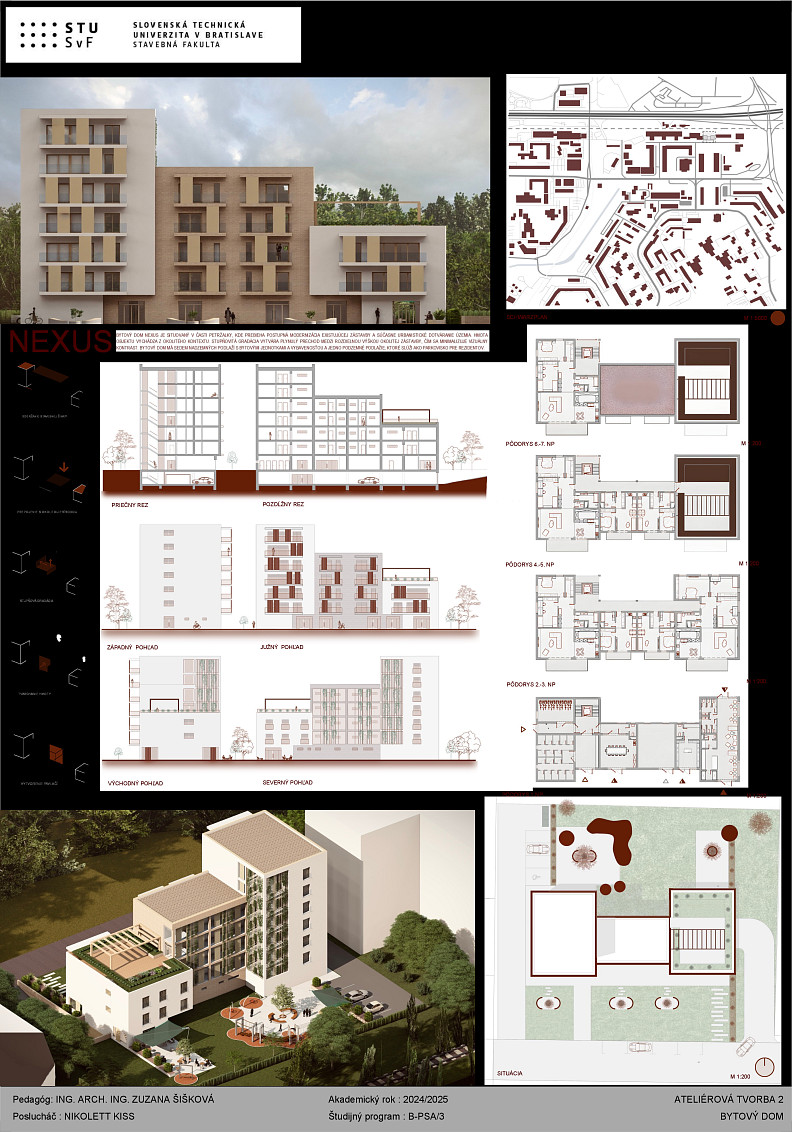
The core idea of the project is to create a contextual and balanced residential building within an established housing district characterized predominantly by older, panel-type apartment blocks. The project seeks to introduce a contemporary architectural expression that responds to current living standards while remaining respectful of its surroundings. The architectural massing is derived directly from the existing urban context, employing a stepped volumetric composition that mediates between the varying scales of the surrounding residential buildings. This strategy allows the new development to integrate naturally into the neighborhood, ensuring a smooth transition between different building heights. By carefully calibrating its form and scale, the design minimizes visual contrast, enhances spatial continuity, and prevents the building from appearing overly dominant, thereby achieving a harmonious integration into the existing urban structure.
Popis projektu
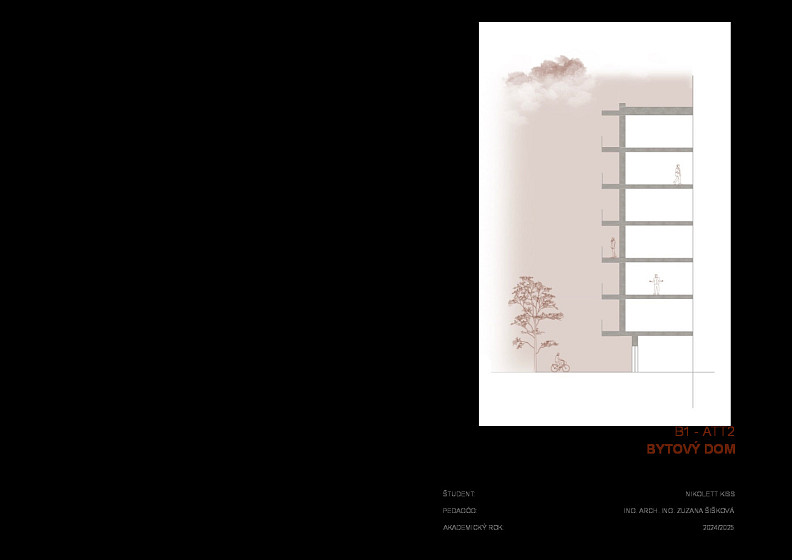
The NEXUS residential building is located in the Petržalka (BRATISLAVA, SLOVAKIA) district, where a gradual modernization of the existing development and the ongoing urban completion of the area are taking place. The massing of the building is derived from the surrounding context. A stepped gradation creates a smooth transition between the differing heights of the surrounding buildings, thereby minimizing visual contrast. The residential building has seven above-ground floors with residential units and amenities, and one underground floor that serves as parking for residents.
Technické informace
The building is designed as a reinforced concrete structure, with all primary load-bearing elements constructed in reinforced concrete to ensure structural durability, stability, and long-term performance. The project is conceived as a gallery-access (pavlač-type) residential building. Large glazed surfaces are incorporated to provide natural light to the residential units; shading of these areas is achieved through a combination of architectural elements and climbing vegetation positioned on the rear façade. This green shading strategy improves thermal comfort, reduces solar gain, and enhances the environmental quality of the building.
Dokumentace
Vytvořeno pomocí:


Copyright © 2026 INSPIRELI | All rights reserved. Use of this website signifies your agreement to the Terms of Use, Privacy Policy, and use of cookies.